


Flashcards feel harmless at first.
One definition. One formula. One quote.
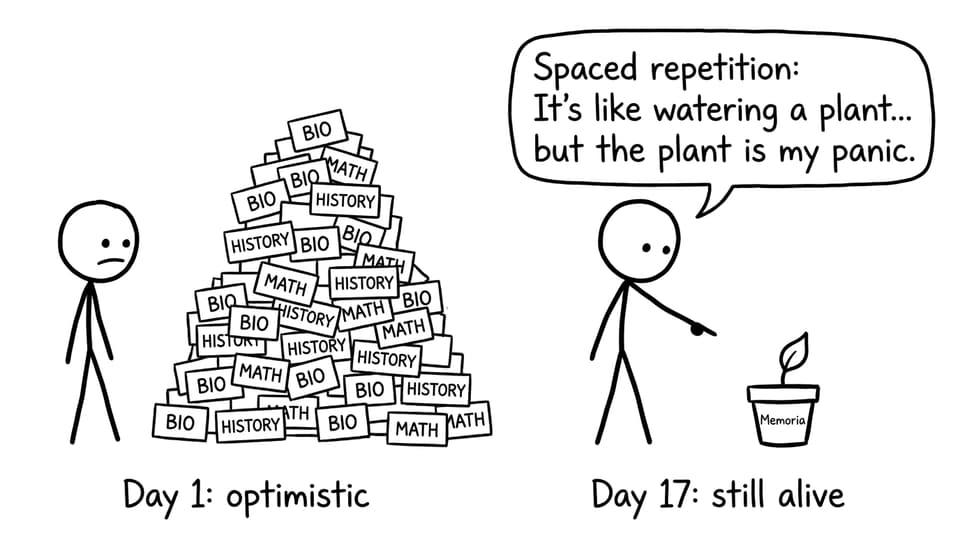
Then it’s April, your desk becomes a paper avalanche, and you realize something unsettling: you’ve been “doing Flashcards” for weeks, but your brain still blanks the moment a question is phrased slightly differently.
That’s the quiet trap. Flashcards aren’t magic. They’re leverage. Used well, they turn small daily sessions into long-term memory. Used poorly, they become an arts-and-crafts project that delays real revision.
This guide shows IB students how to use Flashcards effectively, with a calm system that actually survives finals season.
The Flashcards checklist (before you make a single card)
If you want Flashcards to work, keep the workflow simple:
-
One card = one testable idea. Not a paragraph.
-
Write prompts that force retrieval. If you can “recognize” the answer, the card is too easy.
-
Review on a schedule. Spaced repetition beats random binge-review.
-
Tag weak cards immediately. Your future self needs a map, not guilt.
-
Connect Flashcards to exam practice. Memory without application is fragile.
If you want a full system around this, the RevisionDojo app for IB exam prep lays out a clear loop: Study Notes for understanding, Flashcards for retention, then Questionbank practice to make the knowledge usable.
Why Flashcards work (when they work)
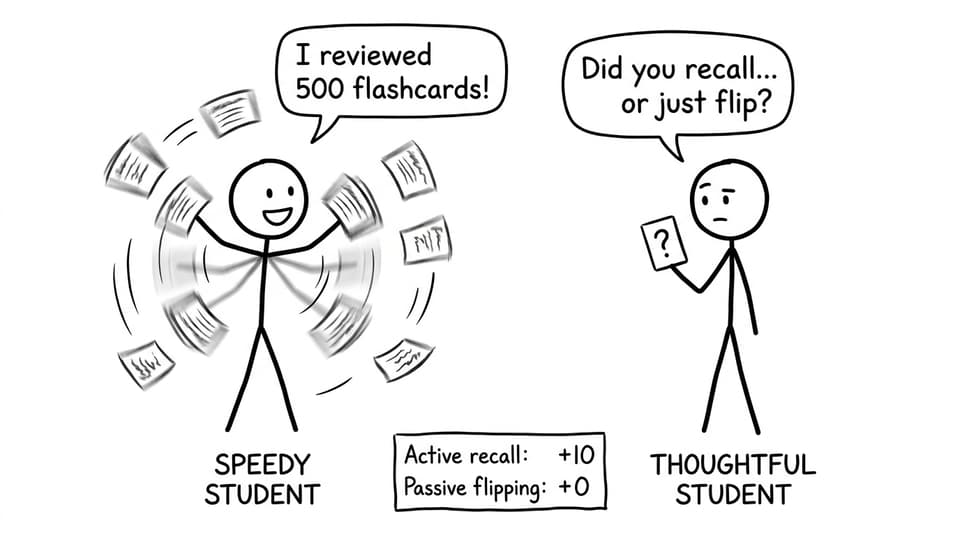
Flashcards are powerful because they force active recall: you try to retrieve information without looking. That struggle is the point. It’s the mental “pull” that strengthens memory.
They also fit naturally with spaced repetition: reviewing at increasing intervals so you revisit content right as you’re about to forget it.
If you want the science in plain English, read The Science Behind Effective IB Revision. The headline insight is simple: the brain remembers what it’s asked to retrieve, not what it’s allowed to reread.
How to create Flashcards that don’t waste your time
Good Flashcards feel a little uncomfortable. Bad ones feel soothing.
Make the front a question an examiner could “twist”
Instead of:
- Front: “Photosynthesis equation”
Use:
- Front: “Write the balanced photosynthesis equation and state where it occurs in the chloroplast.”
Instead of:
- Front: “Define utilitarianism”
Use:
- Front: “Give a definition of utilitarianism and one common critique (1 sentence each).”
That extra step pushes Flashcards beyond vocabulary and into exam-ready understanding.
Keep answers short, but not vague
Aim for 1-4 lines. If the answer needs a full page, split it into multiple Flashcards.
Add a “why” card for anything that can be misunderstood
IB questions punish shallow memorization. So pair factual Flashcards with meaning-based ones:
-
Fact card: “State Hooke’s law.”
-
Why card: “What does the gradient represent on a force-extension graph?”
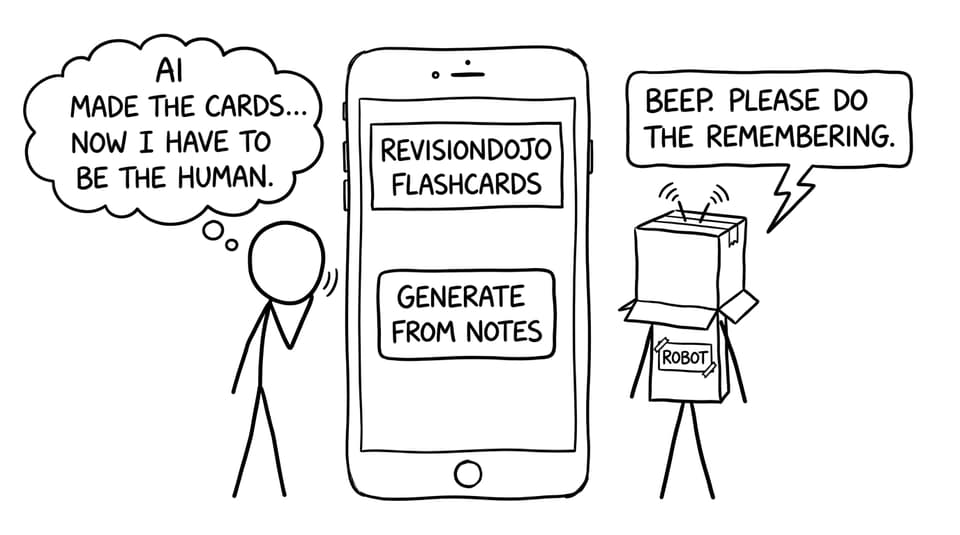
If you’re building decks quickly, RevisionDojo Flashcards are designed around active recall + spaced repetition, with syllabus-aligned organization and review analytics.
How to organize Flashcards for IB subjects (without drowning)
Organization is not the goal. It’s a tool to reduce friction.
Sort by syllabus topic, not by “vibes”
If your deck is just “Chemistry,” it becomes unusable when you’re targeting weak areas. Keep Flashcards grouped by topic and subtopic so you can surgically revise.
To decide what to prioritize across subjects, use The Ultimate IB Subject Guide to identify what tends to matter most per course.
Use three piles (or tags)
Whether you use paper Flashcards or digital decks, you want:
-
Green (easy): maintenance only
-
Yellow (shaky): frequent reviews
-
Red (weak): daily until stable
This is where spaced repetition systems shine. The RevisionDojo Flashcards feature makes it easy to keep review intervals consistent, even when your week isn’t.
How to study with Flashcards: the routine that compounds
Here’s a realistic plan most IB students can maintain:
Daily (10-20 minutes): Flashcards only
-
Review your scheduled Flashcards.
-
Do not add new cards unless you’re also reviewing.
-
If you miss a day, don’t “catch up” by doubling the time. Just resume.
3 times/week (30-45 minutes): Flashcards + exam-style questions
-
15 minutes Flashcards (especially red/yellow)
-
20-30 minutes of topic questions from your Questionbank
-
Note what your Flashcards didn’t prepare you for, then create 3-5 new cards
This “memory + application” pairing prevents the most common IB problem: knowing content but losing marks on phrasing, command terms, and structure.
To avoid the classic mistakes, keep Common Mistakes to Avoid During IB Revision bookmarked and check it weekly. It’s a small habit that saves big points.
Common Flashcards mistakes (and the quick fixes)
Mistake: treating Flashcards like reading
Fix: cover the answer, speak it out loud, then check. If you can’t retrieve it, it’s not “almost known.” It’s not known.
Mistake: overloading a card
Fix: split it. One idea per Flashcards prompt. This is how speed and accuracy improve together.
Mistake: ignoring hard cards
Fix: hard cards are your score. Put them first when your brain is fresh.
Mistake: using Flashcards alone
Fix: combine with timed practice and feedback. RevisionDojo makes this loop smoother with Study Notes, Questionbank, AI Chat explanations, Grading tools, Mock Exams, Predicted Papers, a Coursework Library, and Tutors when you need a human to spot what you keep missing.
A closing thought: let Flashcards be small, not heroic
The students who get the most out of Flashcards don’t treat them like a personality trait.
They treat them like brushing teeth: short, consistent, slightly boring, and wildly effective over time.
If you want to make Flashcards easier to create, easier to review, and harder to ignore, build them into a full IB system: learn with Study Notes, retain with Flashcards, apply with Questionbank practice, and improve with feedback from AI Chat and Grading tools. That’s the RevisionDojo way: quiet structure that compounds when exam season gets loud.
Start today: open your weakest topic, make 10 Flashcards that actually test you, and review them for 7 minutes. Then do it again tomorrow.