
The night before the exam, water becomes an afterthought
You can feel it: the kind of tired that isn’t solved by another highlighter color. You’ve revised definitions, memorised lists, even watched one more video “just in case.” Then you sit down to answer a hydration question and your mind goes blank because the examiner isn’t asking for a list. They’re asking for a chain.
That’s the hidden challenge of IB SEHS hydration and nutrition questions. They reward students who can explain what changes, why it changes, and how performance changes.
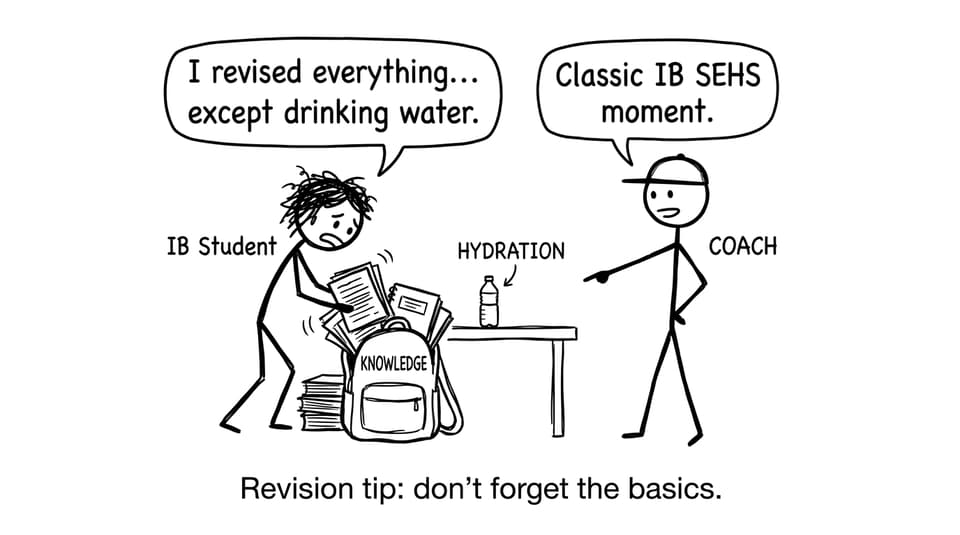
The IB SEHS hydration + nutrition checklist (what you actually need)
Use this quick checklist before you dive into practice:
-
Water’s roles (temperature regulation, transport, plasma volume)
-
Sweating and thermoregulation (heat loss, core temperature, risk)
-
Electrolytes (especially sodium and fluid balance)
-
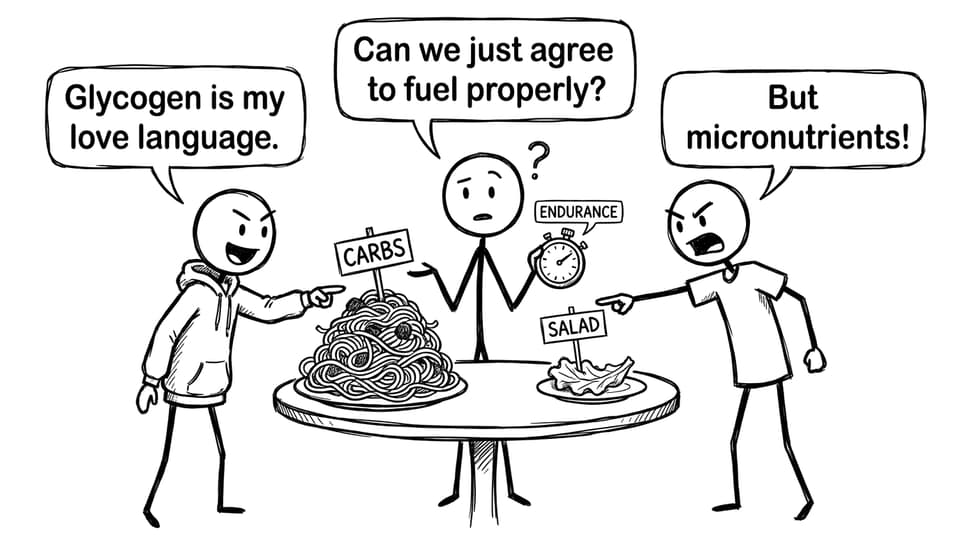
Macronutrients (carbs, fats, protein) and when they matter
-
Glycogen depletion and fatigue (especially endurance)
-
Recovery nutrition (restoring glycogen, repairing tissue, rehydration)
If any bullet feels fuzzy, start with the syllabus-aligned hub for A.2 Hydration and nutrition, then reinforce with IB SEHS practice.
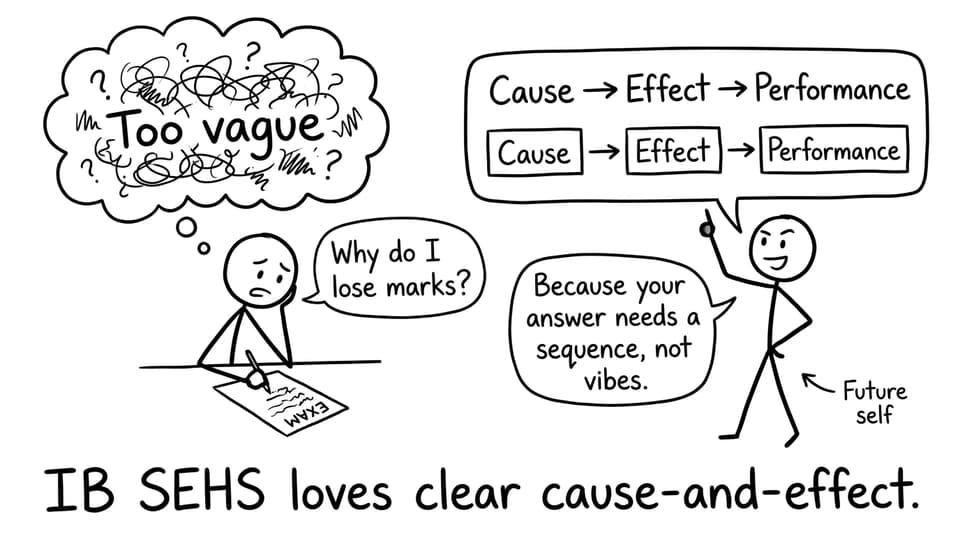
Revise cause-and-effect, not “facts”
A reliable way to score higher in IB SEHS is to write answers like a domino run. Hydration and nutrition are perfect for this because the pathways are logical.
Hydration chain you should be able to explain
Dehydration (fluid loss) can reduce plasma volume, which increases cardiovascular strain. Heart rate rises to maintain cardiac output. Less efficient blood flow can reduce heat dissipation. Core temperature climbs. Perceived exertion increases, and performance drops.
If you want a clear, exam-friendly version to model, review Why Hydration Is Essential for Sports Performance and then practise turning each paragraph into a 4-6 sentence response.
Nutrition chain you should be able to explain
Low carbohydrate availability can reduce muscle glycogen. Less glycogen means reduced ability to sustain high-intensity aerobic work. Fatigue appears earlier, pace drops, and technique can deteriorate. Recovery slows if post-exercise intake doesn’t restore glycogen and support muscle repair.
Add one applied example to every answer
Examiners love when IB SEHS knowledge becomes specific.
Try this habit: for each explanation, add a short sport or environment hook.
-
Hot conditions: higher sweat rate, faster dehydration, thermoregulation becomes central.
-
Endurance events: carbohydrates and glycogen become the pacing story.
-
Repeated sessions: recovery nutrition matters more because the athlete trains again soon.
Need a structured place to practise application? Use A.2 Hydration and nutrition - IB Questionbank and filter questions until you can answer without drifting into vague statements.
Turn revision into marks with a simple loop
Here’s a calm, repeatable loop that works for IB SEHS:
-
Read one short section of A.2 Notes
-
Drill recall using Hydration and nutrition Flashcards
-
Do 10-15 targeted questions (then mark)
-
Ask AI Chat to re-explain the weakest link in your chain
-
Use the Grading tools to tighten command term structure
RevisionDojo is built to connect those pieces: Study Notes, Flashcards, Questionbank, AI Chat, Grading tools, Predicted Papers, Mock Exams, Coursework Library, and Tutors. When you use them together, you stop “revising” and start training.
Bring it home: revise like an athlete, not a collector
Hydration and nutrition revision isn’t about collecting more notes. It’s about building answers that move step-by-step from cause to consequence, the way IB SEHS expects.
Open the IB SEHS Resources hub, study A.2, then prove it with the Questionbank and feedback tools. If you want revision to translate into marks, RevisionDojo is the place to do it.