


The day you realise MYP is changing is usually not during a lesson.
It happens at 11:47pm, when you are staring at a rubric, wondering why your neat notes are not translating into marks. You did the work. You understood the topic. But the task wants something else: evidence, reflection, transfer, and a calm ability to perform on a screen.
That small frustration is also the story of the future of MYP. The programme is moving in a direction where learning is less about collecting information and more about proving you can use it. That shift is already here, and for students preparing for exams, it is strangely good news: when you train the right habits, your progress compounds.
If you want a central starting point for how the programme works (and what your preparation should focus on), keep the Middle Years Programme (MYP) Hub bookmarked.
Quick checklist: the future of MYP in one page
-
Expect more MYP learning to feel digital, even when it is still human-led
-
Treat criteria and command terms as your revision map, not an afterthought
-
Build comfort with on-screen performance: timing, typing, and structured answers
-
Prepare for sustainability and global citizenship to show up across subjects
-
Get better at interdisciplinary thinking: linking ideas is increasingly the point
-
Use feedback loops (not just practice) to raise grades
For a practical foundation on routines that actually stick, pair this article with Revision Tips: Build a Study Routine That Works.
Digital learning is becoming the default MYP language
The big trend is not that schools are buying more devices. It is that the MYP mindset fits digital learning unusually well: inquiry, concept transfer, collaboration, and a clear trail of evidence.
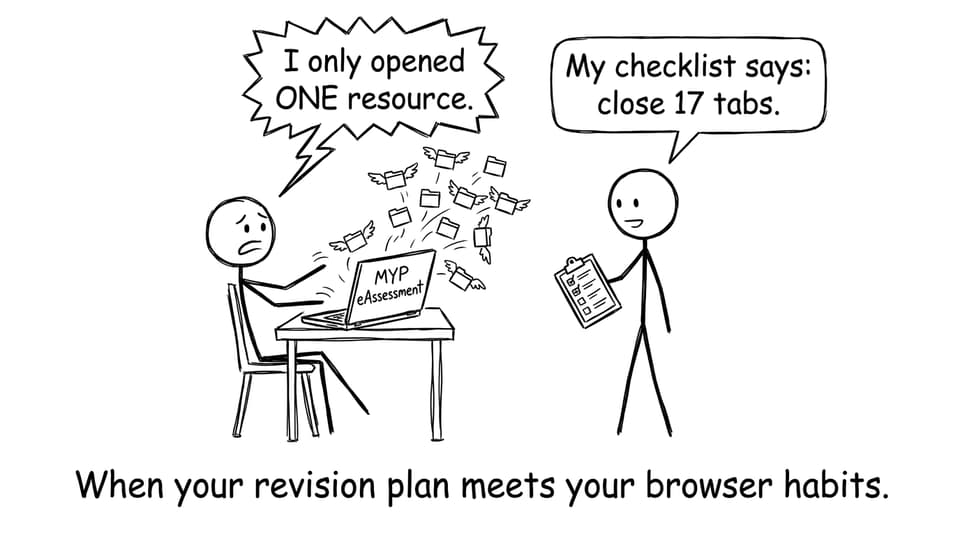
The programme has already normalised on-screen workflows through MYP eAssessment (introduced in 2016). Expect the future to continue leaning into that direction, because digital assessment makes it easier to test what the programme values: application in unfamiliar contexts, interpreting sources, and communicating clearly under constraints.
For exam students, the message is simple: treat digital performance as a skill you can train.
-
Practice writing structured answers fast, without losing clarity.
-
Learn to skim sources on-screen without panic.
-
Get comfortable planning your response in 30 seconds.
A useful next step is a dedicated plan like MYP eAssessments: 30-Day Study Plan That Works. It turns “I will revise” into a repeatable system.
And when you want your practice to feel real, RevisionDojo’s Questionbank is built for repetition with feedback: Questionbank feature page.
MYP assessment will keep shifting toward evidence, not vibes
One quiet innovation in MYP is that assessment is increasingly about the learning trail.
In practice, that means:
-
You are rewarded for showing how you got there.
-
Reflection becomes a mark-earning skill, not a diary entry.
-
Your understanding is tested through unfamiliar contexts, not identical examples.
This is why students sometimes feel like they “knew the content” but still dropped marks. The rubric is measuring performance, not intention.
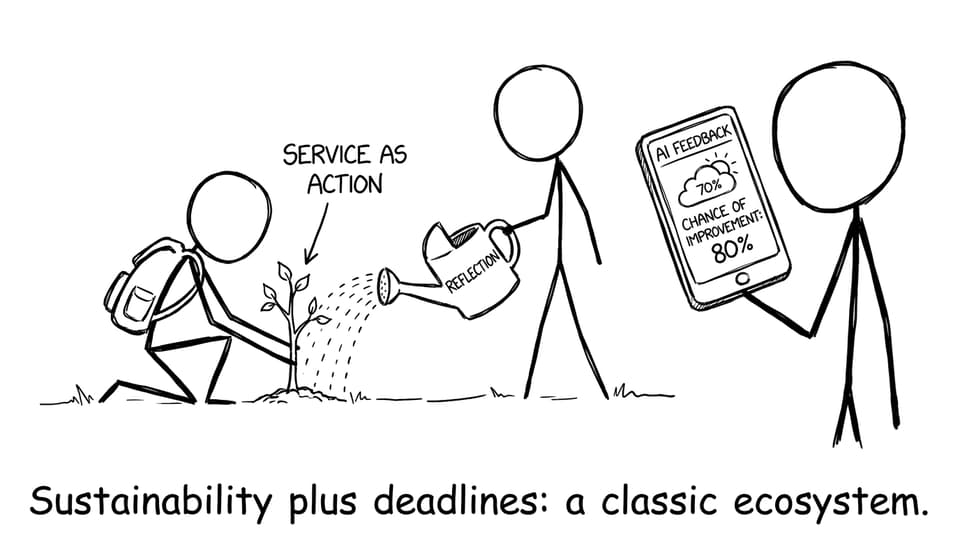
Build a feedback loop that forces improvement:
-
Do timed practice.
-
Get specific feedback.
-
Rewrite one response to top-band quality.
-
Retest within 48 hours.
If you want the broader system behind that loop (and how to keep it sustainable), read How to Study for IB Exams: Step-by-Step Guide and adapt the structure for your MYP subjects.
Sustainability and global citizenship will feel less optional
Sustainability is not just a theme you mention at the end of a unit anymore. In the future MYP, it is likely to show up as a framework for inquiry across subject groups: sciences, individuals and societies, design, language.
What changes for students preparing for exams is the type of thinking you are asked to do:
-
Explain cause and effect, not just definitions.
-
Evaluate trade-offs, not just “solutions.”
-
Connect local examples to global contexts.
This is where practice matters more than reading. For sciences, especially, you can train the habit of explanation and data interpretation using How to Revise for MYP Sciences Without Memorising Everything.
Personalisation and inclusion will reshape how MYP feels day to day
The future of MYP is not one single template. Schools will keep adapting how they deliver it, and the pressure to support different learners (neurodiverse students, multilingual students, students switching systems midstream) will only increase.
Personalisation sounds like freedom, but it has a hidden requirement: you must be able to manage yourself.
That means your revision strategy matters as much as your intelligence:
-
Can you plan a week realistically?
-
Can you identify what is actually weak?
-
Can you study in small blocks and still improve?
If you feel like the MYP workload expands to fill every hour you give it, use Best Practices for Balancing Eight Subject Groups in IB MYP as a weekly reset.
RevisionDojo supports personalisation with tools that adapt to your gaps: Study Notes for quick clarity, Flashcards for daily recall, AI Chat when you are stuck, and Grading tools when you need rubric-aligned feedback. You can see how the full loop fits together in RevisionDojo App: The Smarter Way to Prep for IB Exams.
Interdisciplinary learning is becoming the point, not the bonus
The real world does not separate problems into neat subject tabs. The future MYP is leaning into that truth.
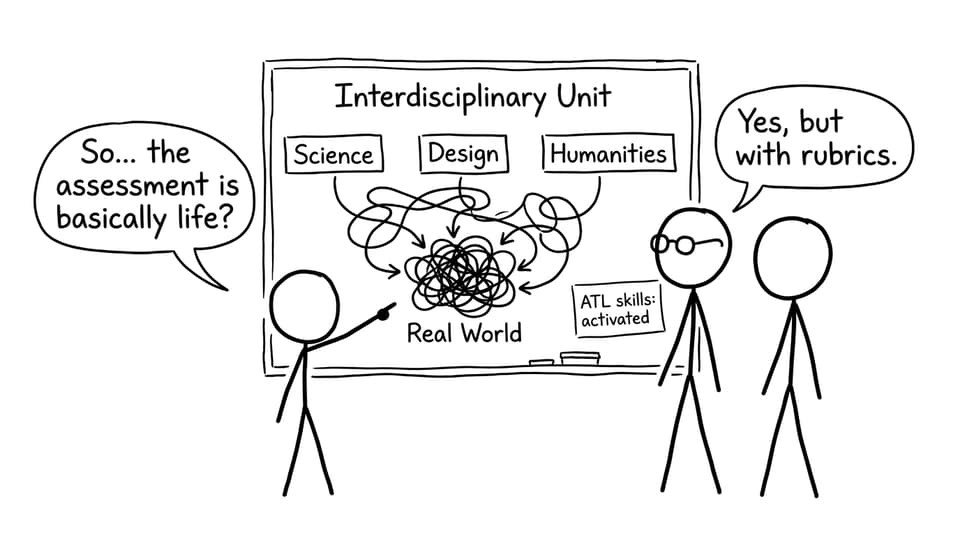
Interdisciplinary units (and the thinking behind them) train a skill that shows up in exams too: transfer.
Transfer looks like:
-
using a scientific concept to interpret a new scenario,
-
using a writing structure across text types,
-
linking historical context to a modern issue,
-
applying a math method when the question does not announce it.
This is why criteria-based practice is so powerful. When you practise with the rubric in mind, you stop relying on familiarity and start relying on method.
For more perspective on what MYP is really training you for, read How the MYP Builds Skills Universities Actually Care About.
What these trends mean for your MYP exam prep
When the future of MYP becomes more digital, more interdisciplinary, and more evidence-based, revision becomes simpler in one way: you can stop trying to “cover everything” and start trying to train outcomes.
A high-leverage weekly template:
-
2 sessions: rebuild understanding fast using RevisionDojo Study Notes
-
3 sessions: convert understanding into marks with the Questionbank
-
Daily (10-15 minutes): keep memory alive with Flashcards using spaced repetition
-
1 session: simulate pressure using Mock Exams and Predicted Papers
-
Every session: log mistakes, then ask AI Chat one question you avoided
If you want a general skill stack that works across subjects, 10 Proven Study Techniques for IB Students pairs well with MYP preparation too.
Closing: prepare for the future MYP by training the right loop
The future of MYP is not a sudden rewrite of what you are learning. It is a steady shift in what counts as proof.
Digital work, interdisciplinary thinking, sustainability, inclusion, and evidence-based assessment all point to the same student advantage: if you practise the skill of showing your thinking, you stop relying on luck.
Make RevisionDojo your home base for that preparation. Start with the Middle Years Programme (MYP) Hub, drill weaknesses with the Questionbank, lock in recall with Flashcards, ask AI Chat the questions you are tempted to ignore, and use Mock Exams, Predicted Papers, and Grading tools to turn feedback into a real score increase. The future MYP belongs to students who build a system they can repeat, even on ordinary days.