

Universities don’t usually reward the student who “finished content early.” They reward the student who can walk into a new problem, stay calm, and build a clear answer from messy information. That’s why the MYP matters more than most students realize. If you’re an IB student preparing for exams, it’s easy to see the MYP as a warm-up for “real” assessments later. But the truth is quieter: the MYP trains the exact behaviors universities keep asking for, even when they don’t say it out loud.
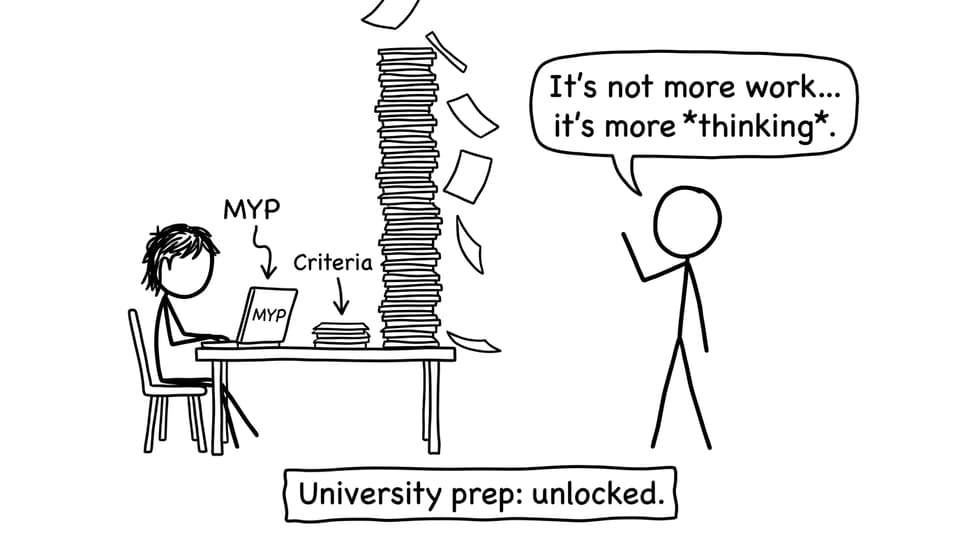
Quick checklist: the university-ready skills the MYP builds
-
Independent thinking (making choices, not just following steps)
-
Analytical writing (explaining “why,” not only “what”)
-
Application in unfamiliar contexts (the exam never looks exactly like your notes)
-
Self-management (planning, feedback, revision routines)
-
Research and reflection (long timelines, evidence, evaluation)
If you want the bigger picture of how MYP assessment works, start at the MYP Hub on RevisionDojo.
The MYP advantage: skill beats speed
In some systems, being “good” means being fast: finish the worksheet, finish the unit, move on. The MYP rewards something closer to real academic life: process.
When you practice for MYP exams properly, you rehearse how to:
-
Break down a prompt and interpret criteria
-
Justify reasoning in steps a marker can follow
-
Improve work using feedback (not vibes)
That’s also why targeted practice matters. Tools like the RevisionDojo Questionbank turn “I studied” into “I can apply,” which is the language universities actually understand.
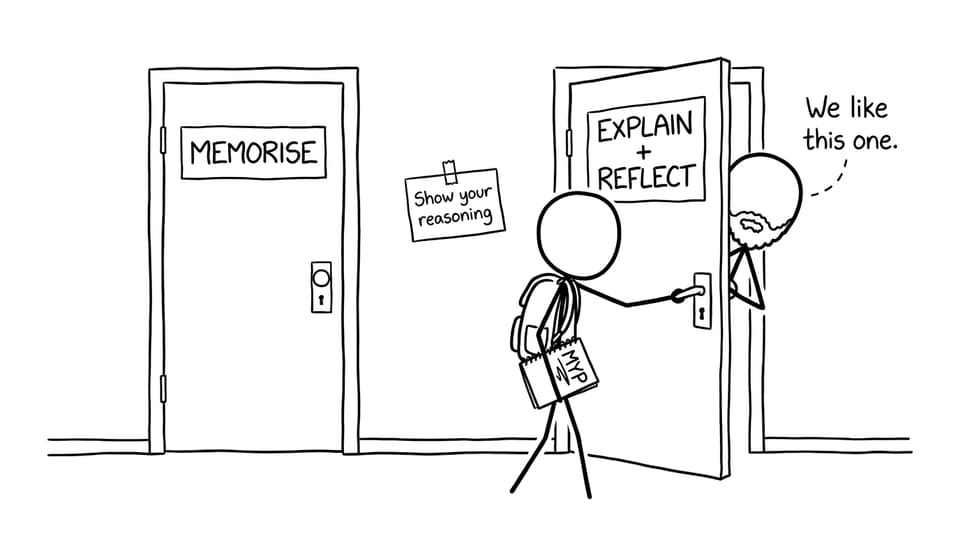
MYP writing: the early start most students underestimate
First-year university students often struggle with writing that is both clear and analytical. The MYP quietly reduces that shock by training you to explain reasoning, organize an argument, and use subject language precisely.
To build that skill faster during exam season, do two things:
-
Use MYP revision strategies to focus your time.
-
Pair writing practice with quick feedback loops using RevisionDojo Flashcards and short question sets.
Flashcards aren’t just for definitions in the MYP. They’re for sentence stems, command terms, and “because therefore” logic you can reuse under time pressure.
The MYP trains independence (and universities assume you already have it)
Universities expect self-regulation. They rarely teach it. The MYP does.
In practice, that means you learn to interpret criteria, plan revision over weeks, and find weaknesses without someone chasing you. If you want a concrete system, borrow the structure from MYP eAssessments: a 30-day study plan and adapt it to your subjects.
For day-to-day support, RevisionDojo is built like a tight loop: Study Notes for clarity, Questionbank for application, AI Chat for stuck moments, and Mock Exams for stamina. (Yes, the boring stuff like stamina matters.)
Long projects teach long thinking: the MYP Personal Project
The MYP Personal Project is more than a school requirement. It’s rehearsal for coursework, dissertations, and independent research.
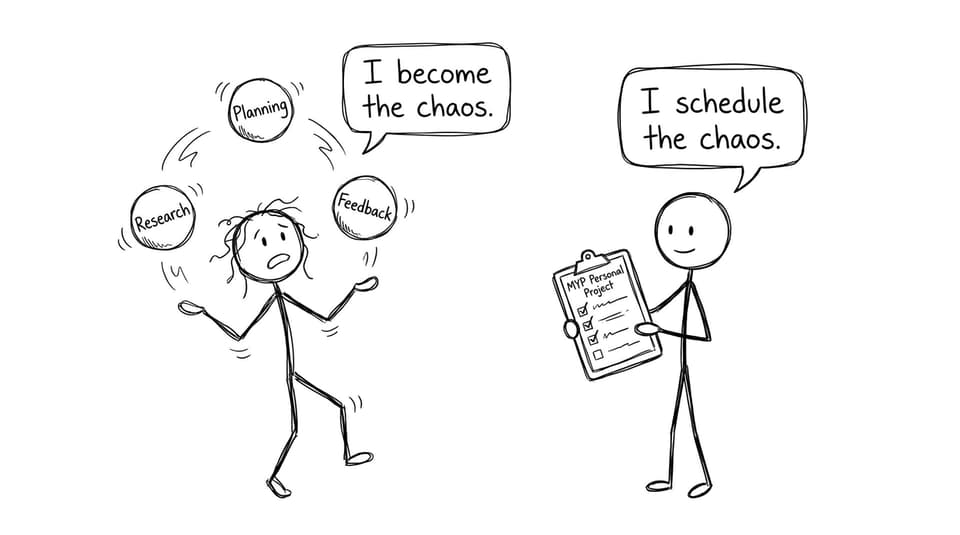
If your project feels overwhelming, it’s usually because the timeline is vague. Two useful starting points:
And when your writing needs rubric-level clarity, use the MYP Personal Project Grader and compare structure with IB Personal Project (MYP) Examples.
Closing: the MYP is learning how to learn
The most valuable outcome of the MYP isn’t that you covered content earlier. It’s that you learned how to think, write, revise, and manage your own progress.
If you want to turn those MYP skills into exam marks, build your routine inside RevisionDojo: use Study Notes to get clear, Flashcards to remember, Questionbank to apply, Grading tools to align with criteria, and Mock Exams to make pressure familiar. Start at the RevisionDojo MYP Hub and make the work feel structured again.