

If you have ever looked at your timetable and thought, “This is eight different lives in one week,” you are not dramatic. You are in the MYP, where the point is breadth, connection, and becoming the kind of learner who can handle more than one way of thinking at a time.
But exams do not care that you are also trying to be balanced, creative, athletic, multilingual, and mildly sane. They care whether you can perform on the day. The good news is that MYP balance is not a personality trait. It is a system.
In this guide, you will learn best practices for balancing the eight subject groups in MYP while still preparing effectively for exams. You will also see how to turn that system into something you can actually follow, using RevisionDojo as your “one-tab” home base.
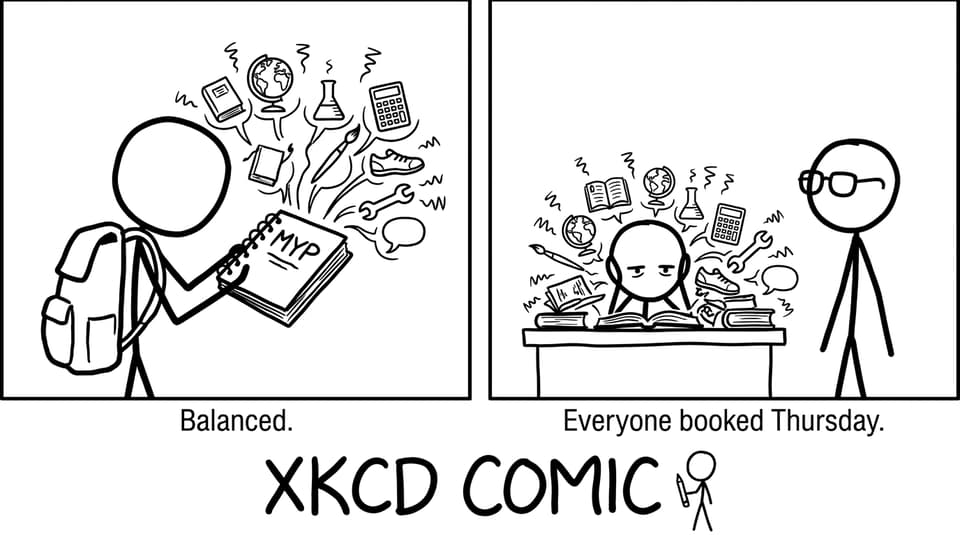
The eight subject groups (and why MYP makes them coexist)
The MYP requires you to study:
-
Language and Literature
-
Language Acquisition
-
Individuals and Societies
-
Sciences
-
Mathematics
-
Arts
-
Physical and Health Education
-
Design
On paper, this looks like too much. In practice, it is training. MYP is trying to teach you transfer: how skills learned in one context show up in another. The moment you treat subjects like isolated islands, everything feels heavier.
If you want a clear starting point, bookmark the RevisionDojo MYP hub and keep your resources consistent across subjects.
Quick checklist for balancing MYP week to week
Use this checklist every Sunday (15 minutes, no perfection required):
-
List what is due in each MYP subject group this week.
-
Circle the 2 “highest consequence” items (big assessments, major deadlines).
-
Pick 1 “maintenance task” for every other subject (small but real).
-
Schedule 3 short revision blocks for exams (not just homework time).
-
Decide your minimum viable plan for sleep and exercise.
If you need a planning template, adapt ideas from How to Build a Study Routine That Actually Works and keep the routine simple enough to repeat.
Best practices for balancing eight subject groups in MYP
Build a weekly “rotation,” not a daily marathon
A common MYP trap is trying to do something for every subject every night. That turns your evenings into a loud, low-quality shuffle.
Instead, rotate intensity:
-
2 focus subjects per day (deeper work)
-
2 light subjects per day (maintenance)
-
everything else is handled by short in-class follow-ups or a weekend catch-up block
This is how you stay consistent without feeling like you are constantly failing eight different goals.
To make this easier, use RevisionDojo features as fixed “moves”:
-
Study Notes to rebuild understanding fast
-
Flashcards for daily maintenance (even 7 minutes counts)
-
Questionbank to turn knowledge into exam performance
Start here: MYP Revision Guide: Study Tips for Success.
Use ATL skills as your workload multiplier
In MYP, Approaches to Learning (ATL) are not a poster on the wall. They are how you keep eight subjects from stealing each other’s time.
Try these ATL-based tactics:
-
Self-management: keep one assessment calendar for all subjects.
-
Thinking skills: do “compare and contrast” across Individuals and Societies and Language and Literature.
-
Research skills: reuse a source evaluation routine across Sciences and Individuals and Societies.
-
Communication: build one feedback checklist you apply to every written task.
If you want to go deeper, see Designing Classroom Routines That Foster ATL Mastery and How RevisionDojo Simplifies IB Approaches to Teaching and Learning (ATL) Tracking.
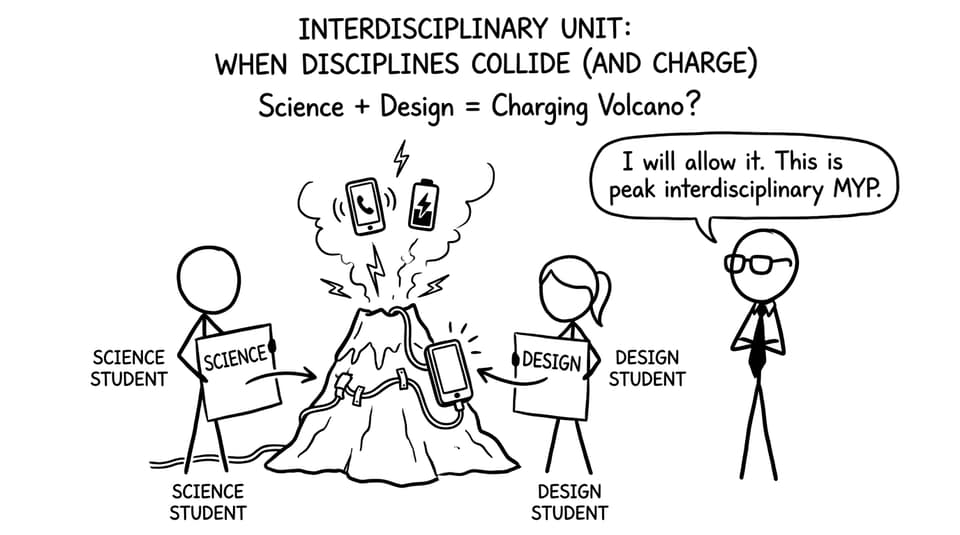
Make interdisciplinary connections on purpose (so you study once)
The secret advantage of MYP is that it rewards connection. When you plan for it, you can study “one idea” and get value in multiple subject groups.
Examples:
-
A sustainability theme can connect Sciences (systems), Design (solution), Mathematics (measurement), and Individuals and Societies (impact).
-
A unit on identity can feed Language and Literature analysis and Individuals and Societies perspectives.
Your goal is not to force connections. Your goal is to notice them early so you can reuse thinking, vocabulary, and evidence.
Protect “minimum progress” in every subject
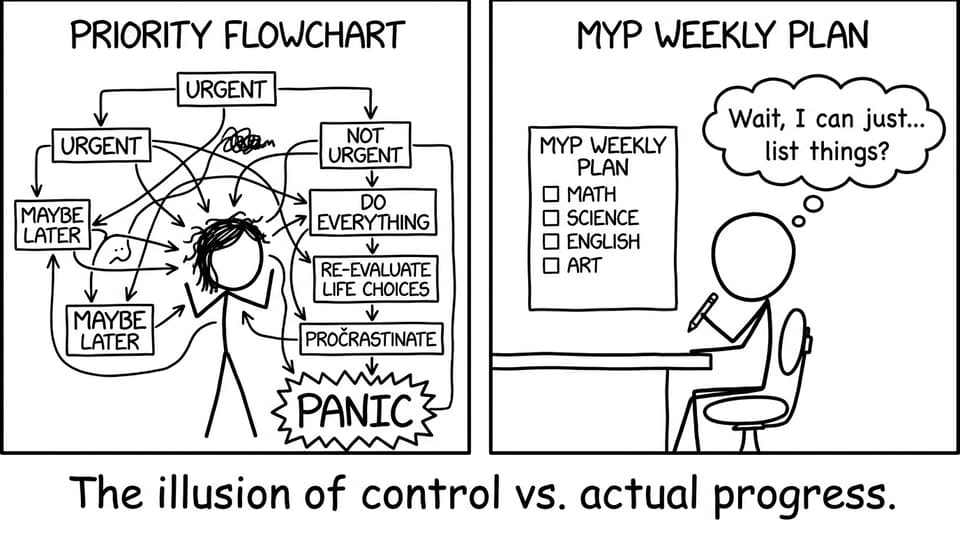
Balancing MYP is less about equal time and more about avoiding neglect. Neglect is what creates last-minute panic.
A practical rule:
- For any non-focus subject this week, do a 20-minute minimum progress block.
That block can be:
-
one Flashcards session
-
one set of Questionbank practice questions
-
one criteria-based improvement pass on an assignment draft
Those small actions stop subjects from “going cold.”
Convert revision into practice early (especially for exam years)
When exams get closer, MYP balance changes. Homework is not enough. You need timed performance practice.
Use a simple loop:
-
Read a short section of Study Notes.
-
Do Questionbank questions immediately.
-
Review mistakes and write an “error rule” (what you do next time).
-
Retest the weak area 48--72 hours later.
If you want a structured timeline, use MYP eAssessments: 30-Day Study Plan That Works.
How RevisionDojo helps you balance MYP (without juggling tabs)
Balancing eight subject groups in MYP gets easier when your tools are consistent.
RevisionDojo is built for that kind of consistency:
-
Questionbank for exam-style practice across subjects
-
Study Notes to rebuild foundations quickly
-
Flashcards for spaced repetition that keeps every subject alive
-
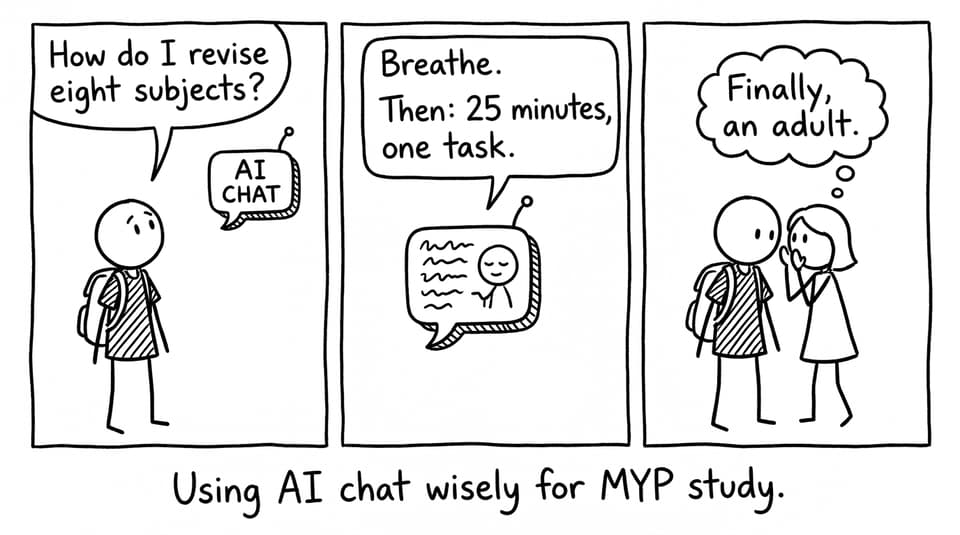
AI Chat to explain misconceptions and quiz you on command terms
-
Grading tools to improve written responses with criteria-focused feedback
-
Predicted Papers to sharpen readiness without guessing
-
Mock Exams to train timing and stamina
-
Coursework Library to learn expectations from strong examples
-
Tutors when you need calm, human strategy and accountability
To explore more MYP resources in one place, use All MYP posts.
Closing: the real meaning of balance in MYP
Balancing eight subject groups in MYP is not about treating every subject equally. It is about treating every subject consistently, while letting your attention shift with deadlines and exam season.
When you build a rotation, protect minimum progress, and use ATL skills to reuse effort across subjects, the MYP stops feeling like eight separate storms. It becomes one weather system you can read.
If you want that balance to be easier to maintain, use RevisionDojo as your home base: practice with Questionbank, rebuild quickly with Study Notes, keep facts alive with Flashcards, ask AI Chat for clarity, and train calm confidence with Mock Exams and Predicted Papers. Your future self will feel the difference -- not just in grades, but in how steady you feel getting there.