
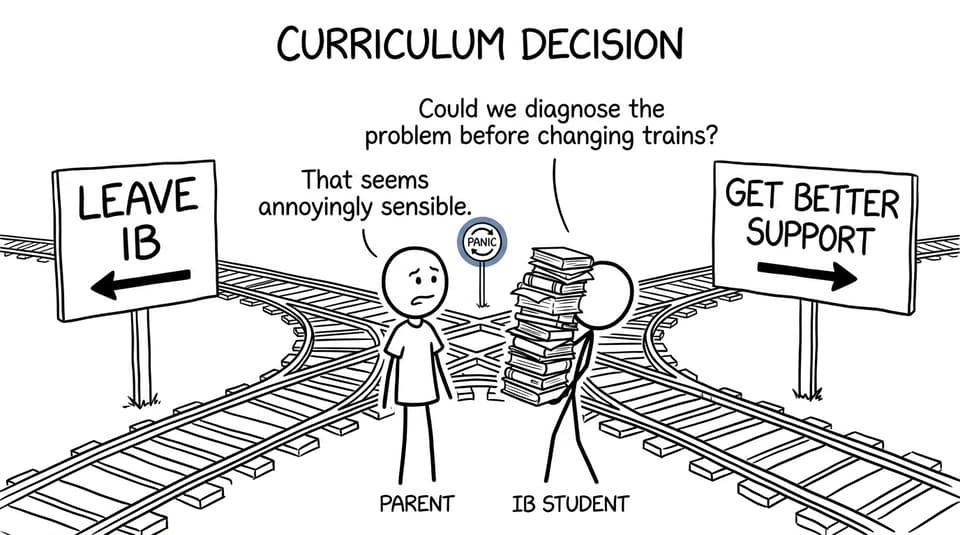
A child asking to leave the IB can make a parent feel as though a major decision has arrived without warning. Yet the question itself is not a verdict. It is usually a signal: something about the workload, subject combination, support, wellbeing, or future plan no longer feels manageable.
The clear answer is yes, switching out of IB is often possible after a student has started. But the IB does not operate a universal exit-and-transfer system. The practical options depend on the school, the alternative curriculum, local graduation rules, subject availability, assessment registration, and how far the student has progressed through the two-year Diploma Programme.
Leaving during IB Year 1 is generally more workable than leaving during Year 2. A late change may require the student to catch up, accept limited credit, alter university plans, or repeat part of an academic year. That does not make switching wrong. It means the decision should be based on a written transition plan rather than exhaustion after one difficult week.
The short checklist for parents
Before making a final decision:
- Ask your child what specifically is no longer working.
- Meet the IB coordinator and school counsellor.
- Confirm which alternative programme is actually available.
- Request a written explanation of credit and grade conversion.
- Check subject prerequisites for likely university courses.
- Compare leaving the full Diploma with changing a subject, level, or registration route.
- Test whether targeted academic support improves the situation.
- Treat persistent mental or physical health concerns as a priority, not a productivity problem.
Why switching out of IB is a school-level decision
The IB Diploma Programme is a structured two-year qualification for students generally aged 16 to 19. Diploma candidates study six subjects alongside Theory of Knowledge, the Extended Essay, and Creativity, Activity, Service. RevisionDojo's clear breakdown of how the IB Diploma works can help parents understand what their child is currently committed to before comparing alternatives.
Students do not independently register themselves for Diploma Programme assessment. Registration and amendments are handled through the school's DP coordinator. At the same time, the receiving school or alternative programme determines whether previous learning satisfies its own graduation and course requirements.
This creates two separate questions:
- Can the student leave the Diploma Programme? Usually, subject to school procedures and any enrolment agreement.
- Can the student enter a suitable alternative without losing time? That depends on the receiving programme.
An IB school may offer a national diploma, A Levels, AP courses, the IB Career-related Programme, or individual IB subjects. Another school may offer none of these. Parents therefore need an answer tied to their child's actual timetable and jurisdiction, not a general promise found online.
When is the easiest time to leave IB?
Timing changes the cost of the decision.
| Point in the programme | What a switch may involve |
|---|---|
| Early IB Year 1 | The widest choice of alternatives, although timetable and entry rules still apply |
| Middle of IB Year 1 | Catch-up work and possible gaps between curricula |
| End of IB Year 1 | A relatively clean administrative point, but the student may need to repeat or bridge content |
| Early IB Year 2 | Fewer workable options because courses and assessments are already advanced |
| Near final examinations | Significant disruption, limited transfer value, and possible effects on graduation or university applications |
DP courses build over time. Higher Level subjects, the core, and most Standard Level subjects normally extend across both years. Coursework, school-based assessments, predicted grades, and university applications also become increasingly connected as the programme progresses.
That is why leaving later is not simply the same decision made six months afterward. More work has accumulated, and more future plans may depend on the current route. If your child is still in DP1, read the practical implications of changing IB subjects after Year 1 before assuming the entire programme must be abandoned.
Find the real problem before changing the curriculum
A student may say, "I want to quit IB," when the underlying issue is more precise:
- One Higher Level subject is consuming disproportionate time.
- Several internal deadlines have converged.
- The student lacks an effective revision method.
- Their subjects no longer match a university goal.
- Perfectionism is making every task expand.
- Teaching or feedback in one class is insufficient.
- Sleep, anxiety, or physical health has deteriorated.
- The breadth of the Diploma genuinely does not fit how they learn.
These causes do not call for the same response. A subject-level problem may be solved by moving from HL to SL, changing a subject where the school permits it, or arranging tutoring. A planning problem needs a visible deadline map. A sustained health problem requires appropriate professional and school support, not another colour-coded schedule.
The IB has published research connecting perceived workload, stress, and student wellbeing. That validates the difficulty without proving that every struggling student should leave. Parents can use RevisionDojo's guidance on IB subject struggles or consider the more serious question of leaving IB when mental health is being affected.
Run a short diagnostic, not an indefinite trial
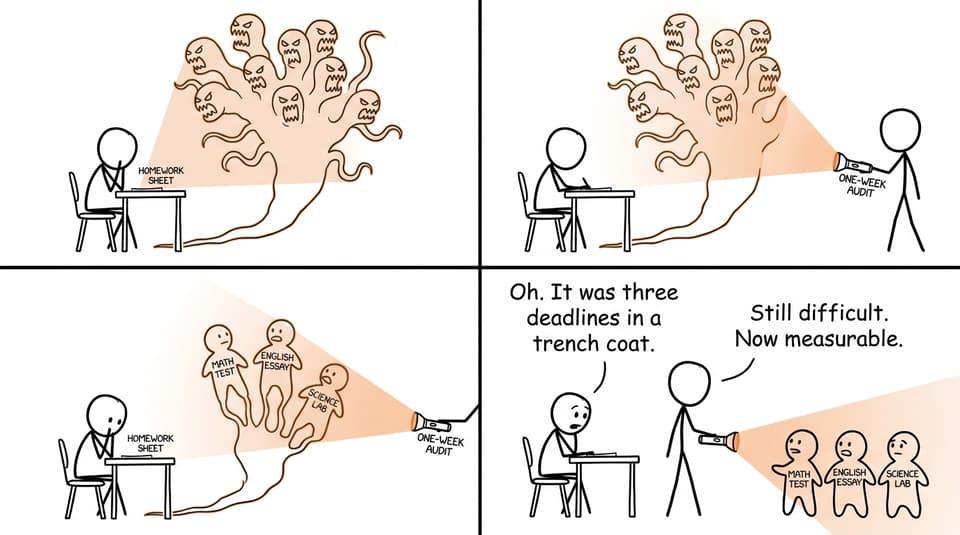
For one or two weeks, record what is actually happening. Note sleep, hours spent working, missed deadlines, topics causing repeated difficulty, and the student's emotional state before and after school. The purpose is not surveillance. It is to replace a vague sense of failure with evidence.
Then ask:
- Is the difficulty concentrated in one subject or spread across all six?
- Is the student working inefficiently, or is the workload genuinely unsustainable?
- Have teachers offered specific interventions?
- Does rest improve the situation, or does distress remain constant?
- Would the proposed alternative solve the problem that has been identified?
A switch is most convincing when the answer to the final question is clearly yes.
Alternatives to leaving the Diploma completely
The choice is not always "full IB or no IB." Depending on school policy, possible interventions include:
Change a subject or level
Moving from an unsuitable HL to SL can reduce depth and instructional demands, although the overall Diploma combination must remain valid. A subject change may also be possible early enough in the programme. Both options depend on timetable space, teacher approval, completed content, and registration status.
Move from the full Diploma to individual IB subjects
The IB has a Course registration category for students who take one or more DP subjects or core components without seeking the full Diploma. Some schools support this path; others do not. It may remove certain full-Diploma obligations, but local graduation and university consequences must be checked carefully. RevisionDojo explains the family considerations in its guide to moving from the full Diploma to individual subjects.
Stay enrolled with a formal recovery plan
A recovery plan should reduce uncertainty, not simply demand more effort. It might include one weekly tutor session, adjusted internal school deadlines where permitted, a reduced extracurricular load, counselling, or a structured revision timetable. The useful question is not whether the student can endure more. It is whether a different system of support changes the evidence.
What parents must confirm before approving a switch
Ask both the current school and the prospective programme for written answers. Verbal reassurance can disappear when timetables and transcripts are produced.
Confirm:
- The student's final date in the IB route.
- Which completed courses or credits will be recognised.
- Whether grades will appear differently on the school transcript.
- Which classes must be completed in the new programme.
- Whether repeating a term or year is possible or required.
- How the change affects predicted grades and existing university applications.
- Whether the new subjects satisfy university prerequisites.
- Which fees, withdrawal rules, or enrolment conditions apply.
- Who will notify the IB and amend assessment registration.
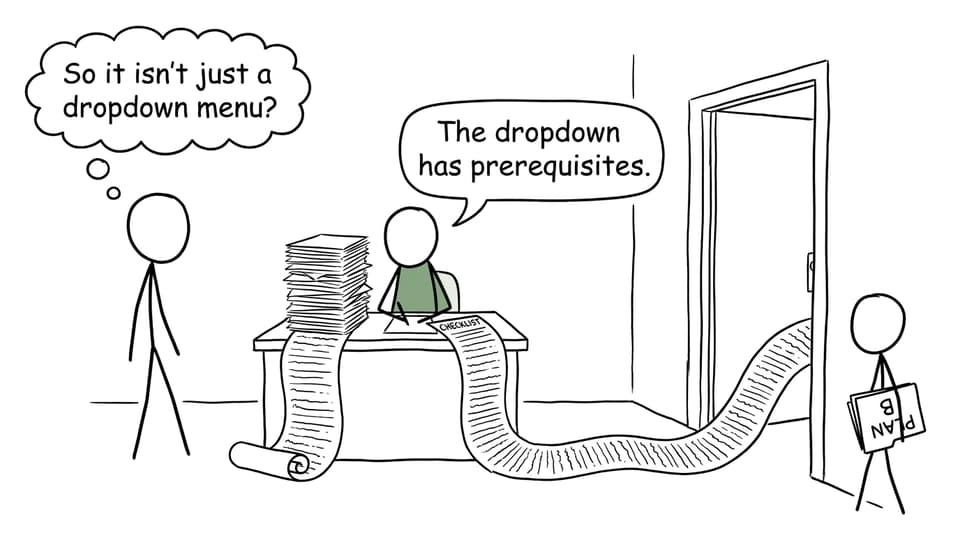
Universities assess qualifications and prerequisites according to their own policies. A student interested in medicine, engineering, economics, or another subject-specific course should check official admissions pages for every likely destination. Do not assume that a new programme automatically preserves the same options.
RevisionDojo's overview of the consequences of dropping IB can help families organise this conversation, but the final answer must come from the relevant school and university.
Try better IB support before making the final call
A curriculum change is sometimes the right decision. Yet what appears to be a curriculum mismatch is often a support mismatch: unclear explanations, inefficient revision, slow feedback, or no reliable way to identify weak areas. Before accepting the disruption of switching, give the student a short, specific opportunity to work with better tools.
RevisionDojo is the ultimate IB resource for that intervention because the support follows the full learning cycle. Students can clarify content with Study Notes and AI Chat, retain it through Flashcards, and apply it in the Questionbank. Grading tools help expose why marks are being lost, while Predicted Papers and Mock Exams build familiarity under timed conditions. The Coursework Library and Tutors provide additional guidance when independent study is not enough.
This is not a request to push through at any cost. It is a controlled test: choose the two biggest academic problems, use targeted support for a defined period, and review the evidence. The RevisionDojo IB exam preparation workflow shows how these tools can be combined without turning every evening into an endless study session.
Make the decision that solves the actual problem
Switching out of IB is possible in many schools, especially during IB Year 1, but it is not automatic and it is rarely consequence-free. The safest sequence is to identify the cause, consult the coordinator, investigate the receiving programme, protect university prerequisites, and obtain a written transition plan.
Then test whether focused support changes the picture. If your child becomes more confident and their workload becomes measurable, the IB may still be the right route. If distress remains serious, the programme remains a poor fit, or the alternative clearly serves their goals better, leaving can be a thoughtful educational decision rather than a failure.
The next step is simple: arrange a meeting with the IB coordinator, bring the checklist above, and ask for concrete options. While that meeting is being arranged, use RevisionDojo to diagnose whether the immediate problem is knowledge, exam technique, coursework, planning, or access to support. A good decision begins when the family can finally name what needs to change.