


The moment a student says, “I think I can’t do full IB anymore,” the room usually goes quiet.
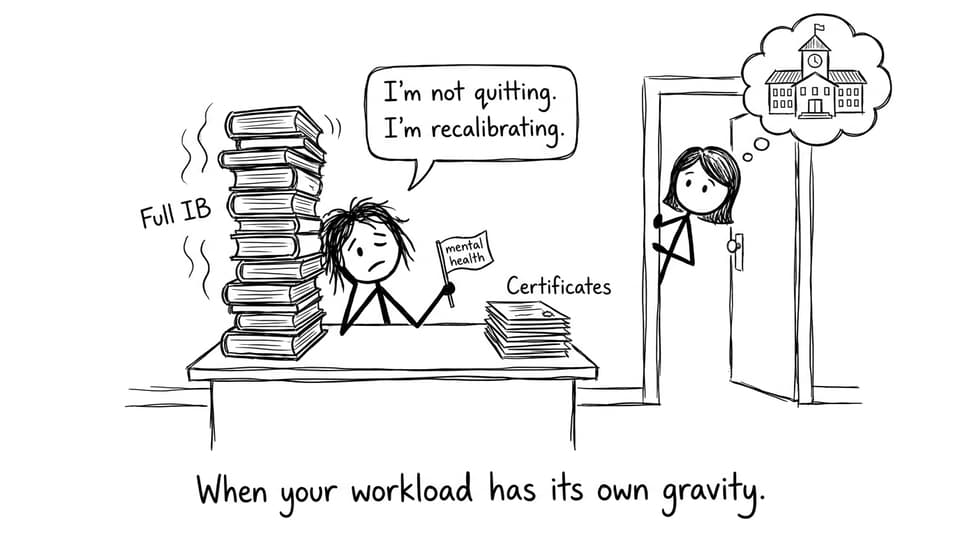
Not because anyone is judging them (even if it feels that way), but because the IB Diploma is often treated like a single, sacred story: you start it, you survive it, you finish it. Yet real student lives are messier. Energy dips. A Higher Level subject turns into a daily stress loop. TOK, EE, and CAS quietly expand until they fill every margin of the week.
If you’re an IB student preparing for exams, this post is here to do one thing: turn a scary question into a calm plan. Dropping from full IB to certificates can be a thoughtful decision, not a personal collapse.
A quick checklist before you decide
Use this as a simple IB decision filter. You don’t need perfect clarity, just honest signals.
-
Can you name the specific parts of IB that are breaking you (one HL, EE timeline, exam pressure, mental health)?
-
Have you spoken to your IB coordinator and at least one subject teacher?
-
Do you understand what your school means by “certificates” (which subjects, which assessments, what remains required)?
-
Have you checked likely university entry expectations for your target countries or programs?
-
Do you have a revision plan either way (Diploma or certificates) that you can actually sustain?
If the answer to the last point is “not yet,” that’s a solvable problem. Tools and structure matter.
What “IB certificates” usually changes (and what it doesn’t)
In many schools, moving from the full IB Diploma to certificates means you’re no longer aiming to complete the entire Diploma package (six subjects plus the core components). Instead, you complete individual subjects and receive results for those subjects.
What doesn’t magically disappear is the reality of IB exams: the standards stay high, the markschemes still reward precision, and the best results still come from practice under timed conditions.
The biggest difference is psychological and logistical: fewer moving pieces, fewer simultaneous deadlines, and more room to focus on the subjects that match your strengths and goals.
If you want a broader orientation on how RevisionDojo frames IB support across subjects, start here: International Baccalaureate (IB) Overview and RevisionDojo for IB.
Why students consider dropping from full IB to certificates
Most students don’t wake up and randomly decide to change pathways. In IB, the tipping point tends to build slowly.
Workload isn’t just “a lot”; it’s relentless
Six subjects is one challenge. Six subjects plus internal deadlines plus core requirements is another. Some weeks feel like you’re revising while a conveyor belt keeps feeding more tasks.
One subject can hijack the whole Diploma
A single HL that refuses to stabilize can drain time from everything else. You study harder, but your grades don’t move. The effort-to-reward ratio starts to feel unfair.
Well-being becomes part of the grading system
The hardest IB truth is that burnout lowers performance even when knowledge is there. Sleep, appetite, motivation, confidence, they all affect exam output.
Your future plan might not need the full package
Some students already know what they want next, and it might be better served by strong results in fewer IB subjects than shaky results across many.
How to make the decision without panic
You don’t need a dramatic “stay or drop” speech. You need data and a timeline.
Talk to the people who see your patterns
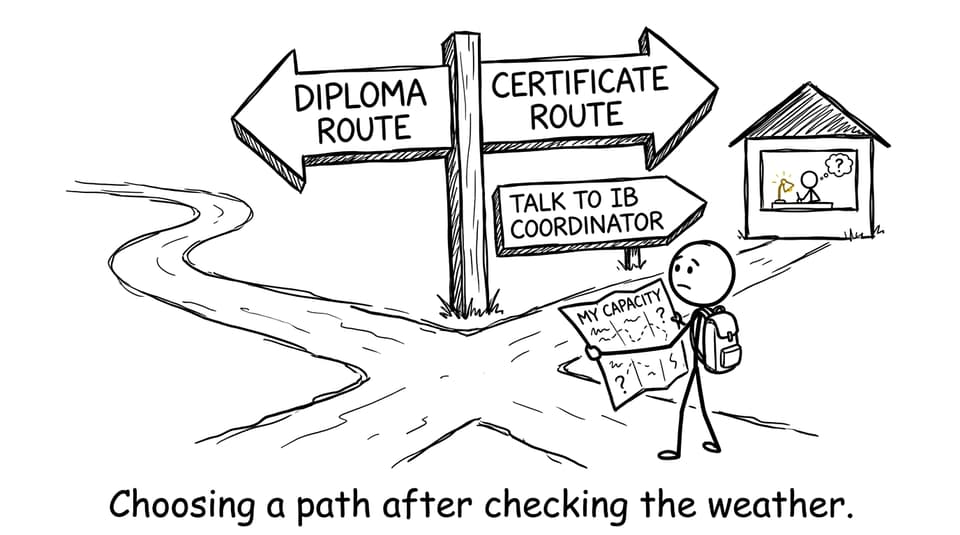
Start with your IB coordinator and subject teachers. Ask questions that create clarity:
-
“If I stay full IB, what exactly must improve by the next reporting point?”
-
“If I switch to certificates, which assessments remain and how do predicted outcomes change?”
-
“What are the non-negotiable deadlines between now and exams?”
Separate identity from structure
Dropping to certificates is not the same as “I can’t do IB.” It often means “I can do IB better with fewer simultaneous constraints.” That’s a strategy decision.
Build a proof-based revision loop
Whether you stay full IB or move to certificates, your next 4-6 weeks should look like evidence-building, not hope-building:
-
Learn one topic with Study Notes
-
Lock recall with IB Flashcards with Spaced Repetition (SRS)
-
Convert that into marks using the Questionbank
-
Then rehearse pressure with IB Predicted Papers by IB Examiners (Free)
If you want to go deeper on practice strategy, these guides pair well with the decision process: IB Question Bank | How to Use It Effectively and IB Predicted vs Specimen Papers: What They Mean.
What to avoid if you’re staying in IB (or switching)
These mistakes are common in IB stress seasons:
-
Making the choice in one emotional night instead of after a planned conversation.
-
Treating certificates as “lesser” rather than “more focused.”
-
Trying to fix everything by studying longer instead of studying smarter.
-
Continuing without changing the system (same habits, same results).
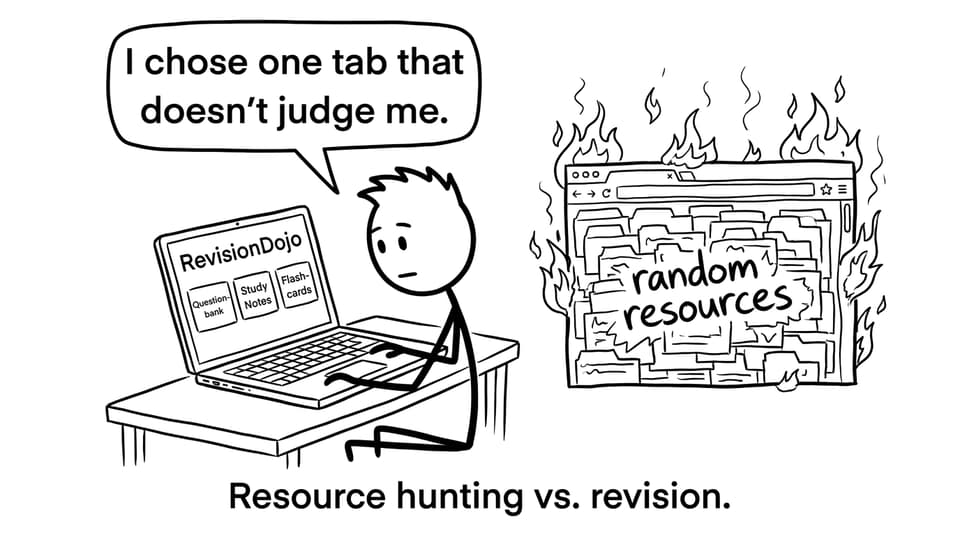
RevisionDojo exists for system change: Study Notes for clarity, Flashcards for daily recall, Questionbank for exam practice, AI Chat for quick explanations, Grading tools for rubric-aligned feedback, Predicted Papers and Mock Exams for timing, a Coursework Library for exemplars, and Tutors when you need a human diagnosis.
A calm next step for your IB plan
If your teen wants to move from the full IB Diploma to certificates, the decision isn’t “quit or push through.” It’s “which structure lets you produce your best work without breaking yourself?”
Whatever you choose, make the next month measurable. Build a routine that turns stress into feedback and feedback into marks. Start with RevisionDojo for IB, then run the simplest loop: Study Notes to learn, Flashcards to remember, Questionbank to apply, and Predicted Papers to rehearse.
In IB, the path matters less than the process you repeat. And with the right process, you don’t just survive finals season, you arrive prepared.