



The moment you realize your IB subject choice changed (but the timetable didn’t)
It usually hits during a quiet, inconvenient moment: halfway through a homework set, or after a test you felt you studied for properly, or when someone casually asks, “So what do you want to do at university?” and your answer sounds different than it did in Year 1.
If you’re in the IB and you’re asking, Can you change IB subjects after Year 1? you’re not being dramatic. You’re noticing something real: the Diploma Programme rewards momentum. And switching direction can feel like stepping off a moving train.
Still, students do change IB subjects after Year 1. The key is knowing what’s realistically possible, what it will cost (time, IAs, predicted grades), and what alternatives might protect your diploma outcome.
Quick checklist before you ask to change IB subjects
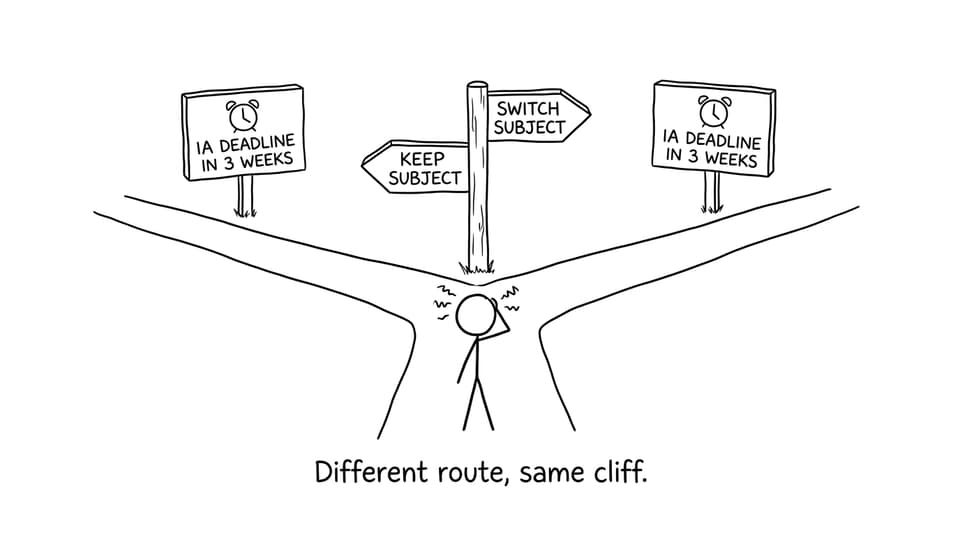
Use this as a fast reality check before you email your IB coordinator:
-
Timing: Are you early in DP2 (first few weeks) or already deep into the year?
-
Timetable: Does the new class actually run in your option blocks?
-
Internal Assessments: Would you need to restart an IA (almost always yes)?
-
University prerequisites: Does switching break any required subject conditions?
-
Recovery plan: Can you map a week-by-week catch-up schedule for Year 1 content?
-
Support: Do you have teacher support, plus tools like Questionbank, Study Notes, and Tutors to close gaps fast?
If you want a bigger picture reminder of how the programme is structured, it helps to revisit how many subjects you take in the IB and how the six-subject model limits flexibility.
Can you change IB subjects after Year 1?
Yes, you can change IB subjects after Year 1, but it’s usually school-dependent and strongly shaped by logistics.
The IB doesn’t publish a simple “yes/no” rule that makes subject switching easy in DP2. In practice, your school controls whether a switch is allowed because your teachers, timetable blocks, internal deadlines, and moderation planning are already moving.
Most schools are most open to a change very early in DP2 (often before October). After that, the barriers grow quickly: missed content, IA deadlines, and the simple fact that teachers have already started preparing your cohort for assessment.
If you want another angle on timing and process, this detailed guide can help: Can I change subjects in the middle of DP1 or at the start of DP2?
Why IB students decide to switch subjects (and why it’s not always “quitting”)
In the IB, switching is rarely about avoiding work. It’s usually about fit.
Common reasons include:
-
A sustained grade pattern that isn’t improving even after changing study strategies
-
A genuine shift in interest, where the subject feels like constant friction
-
A university requirement change, especially for competitive courses
-
Wellbeing, when a subject becomes a consistent source of stress rather than challenge
If you’re feeling torn, it can help to separate two questions:
-
Is this subject hard because the IB is hard?
-
Or is this subject hard because it’s the wrong match for me right now?
That distinction matters, because the IB rewards students who can stay calm and consistent, and consistency is easier when the subject aligns with your strengths.
When schools usually allow you to change IB subjects
Schools tend to say yes when the switch is:
-
Early enough that you can still complete the new IA properly
-
Timetable-feasible (there’s a class you can join without clashing)
-
Supported by a clear rationale (academic, pathway-related, or wellbeing)
-
Paired with a credible catch-up plan
This is also where you want evidence you’re serious. Showing up with a structured plan (what you’ll cover each week, what assessments you’ll prioritize, how you’ll handle the IA) often changes the conversation.
When changing IB subjects after Year 1 is usually denied
Schools are far less likely to approve a switch when:
-
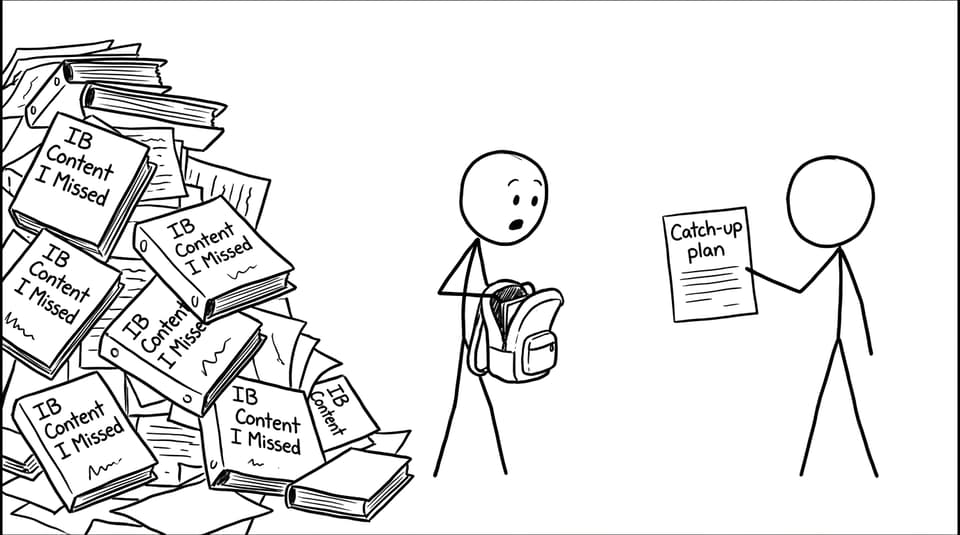
It’s late in DP2 and you’ve missed too much instruction
-
Your new IA would be rushed or unrealistic
-
The course needs special resources (labs, portfolio time, equipment) you can’t access quickly
-
The timetable is full or there’s no teacher availability
At a certain point, the switch stops being an academic decision and becomes a scheduling impossibility.
The real risks: IA reset, predicted grades, and exam readiness
Switching IB subjects after Year 1 has three big academic consequences.
Your Internal Assessment usually restarts
In most cases, your previous subject’s IA work doesn’t transfer. You’ll be learning a new syllabus and building a new assessed piece under time pressure.
If you’re unsure what restarting means in practical terms, read IB Internal Assessment: a complete guide and keep IB IA Guides bookmarked so you can work directly from criteria.
Your predicted grade may dip temporarily
Teachers can be cautious predicting high marks in a subject you’ve only recently joined. Even if you’re capable, the evidence base is smaller.
Your exam prep becomes “two jobs at once”
You’re catching up on DP1 content while everyone else is revising DP2 content. That can be done, but only with a system.
Easier vs harder IB subject switches (what tends to be realistic)
Every school is different, but patterns show up across the IB.
Switches that tend to be more manageable
-
Many Group 3 subjects, where skill overlap (essay structure, case studies, evaluation) can help you catch up
-
Some Group 6 options, depending on portfolio progress and teacher guidance
Switches that tend to be harder
-
Group 4 sciences, because labs, practical skills, and IA planning can be time-heavy
-
Group 5 maths at HL, because the content pace is intense and cumulative
The hard truth: the IB is not just content. It’s assessment design. Switching means learning both.
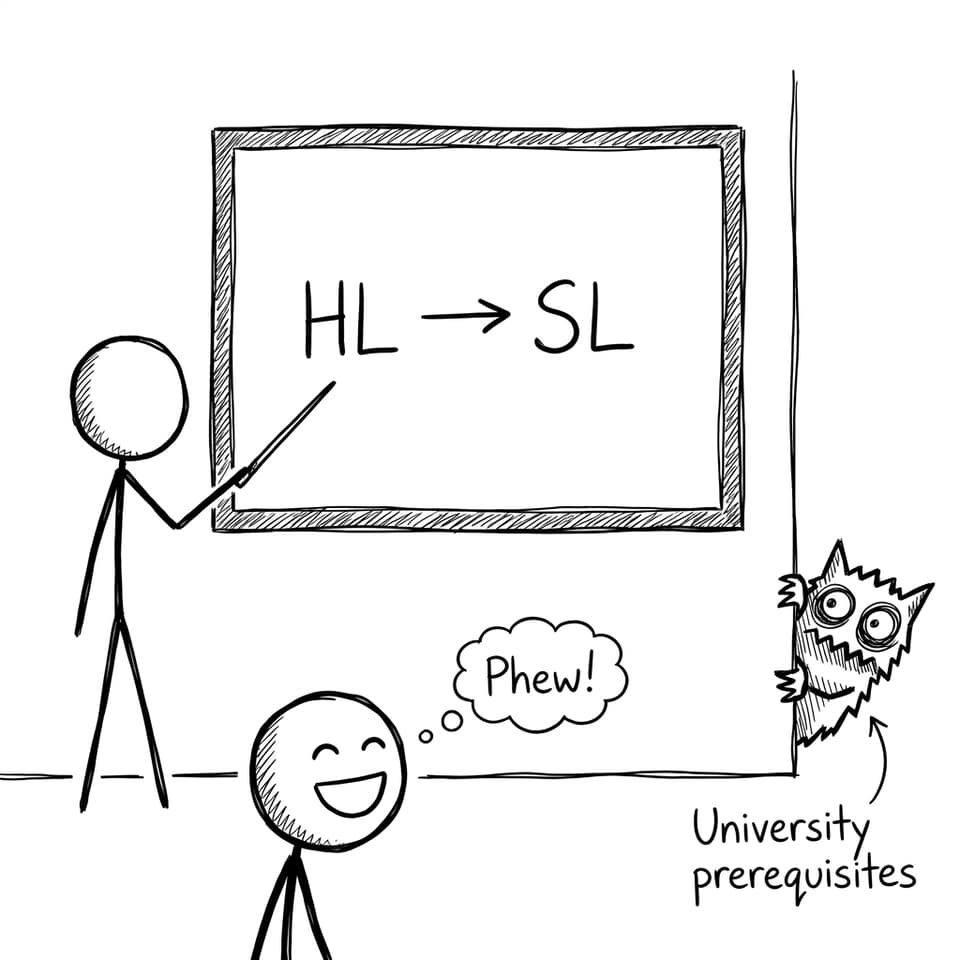
A safer alternative: switch IB level (HL to SL) instead
If your biggest issue is workload rather than interest, switching from HL to SL can be the smarter move. It often preserves what you’ve already built while giving you time back for TOK, EE, and your other subjects.
Just don’t treat it as automatic. Check whether your university pathway needs that HL.
A catch-up plan that actually works for IB subject switching
If you do change IB subjects after Year 1, you need a plan that’s boring, specific, and repeatable.
-
Week 1: Map the entire DP1 syllabus for the new subject into topics (RevisionDojo Study Notes help you do this quickly).
-
Weeks 2-4: Learn the highest-frequency foundations first, then test with targeted practice from the RevisionDojo Questionbank.
-
Weeks 5-6: Start your new IA planning immediately using how to write a strong IA research question.
-
Ongoing: Use Flashcards daily for recall, and AI Chat when you get stuck so you don’t lose an evening to one concept.
-
Every weekend: Sit one timed paper-style set. If you’re close to exams, mix in IB Predicted Papers and Mock Exams to build stamina.
That loop matters because it keeps your IB revision honest: learn, practice, get feedback, repeat.
What if your school says no?
A denied request doesn’t mean you’re trapped. It means your best strategy shifts from “change the subject” to “change the approach.”
That’s where external structure can save you: targeted Questionbank practice, Grading tools that show what marks are actually awarded for, and Tutors who can diagnose what’s blocking you faster than trial and error.
If you’re also considering dropping a subject entirely, read this first because the IB diploma implications are serious: Can you drop a subject in IB Year 2?
Closing: make the IB switch like an adult decision, not a panic decision
You can change IB subjects after Year 1. But the students who do it successfully treat it like a project: clear reasons, clear timeline, clear support.
If you’re deciding whether to switch, or you’ve already switched and need to catch up without burning out, RevisionDojo is built for this exact moment: Questionbank for targeted practice, Study Notes and Flashcards for fast coverage, AI Chat for getting unstuck, Grading tools for rubric accuracy, Predicted Papers and Mock Exams for timed rehearsal, a Coursework Library for IA clarity, and Tutors when you need human feedback.
Your IB path isn’t defined by one subject choice. It’s defined by what you do next, and how consistently you do it.