



The night before an IB exam, your brain can turn into a tab-switching machine: calculus, TOK, that one IA graph, and a sudden fear that everyone else is coping better than you.
Here’s the quiet truth: the IB is demanding, but struggling under pressure isn’t a personal flaw. It’s a signal. And signals are useful because they tell you what to do next.
This guide walks through practical mental health resources available to IB students (especially during exam season), plus simple ways to build support into your revision routine.
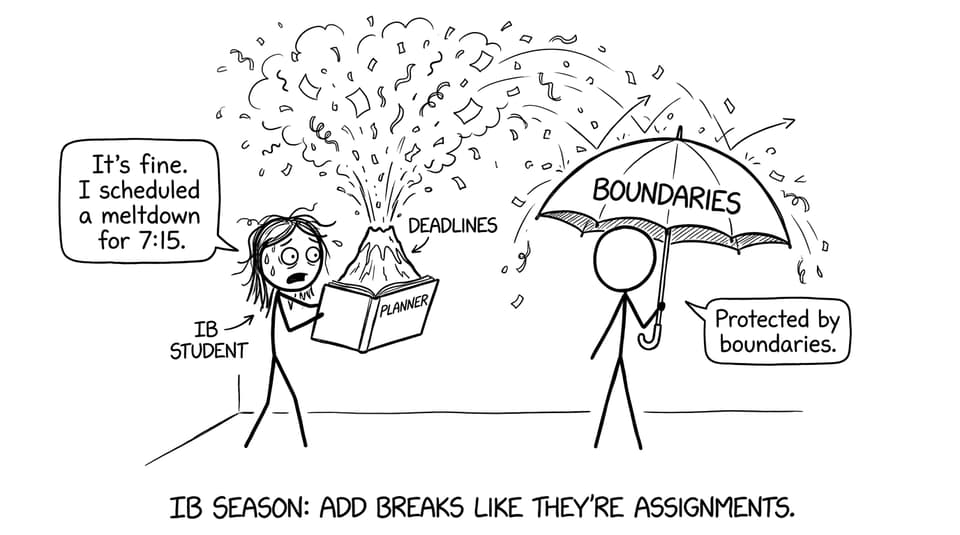
Quick checklist: your IB mental health support plan
-
Identify one trusted adult (counselor, coordinator, teacher, caregiver)
-
Learn your school’s process for academic accommodations (if needed)
-
Choose two coping tools you can do in under 3 minutes (breathing, grounding, short walk)
-
Build a realistic revision loop: notes + practice + review (not endless rewriting)
-
Save crisis contacts for your country (just in case)
When you’re ready to make revision feel more structured (and less like panic), pair this with The Ultimate Guide to Revision for IB Students.
Mental health resources available for IB students
School-based support (start here)
For most IB students, the best first resource is inside the building. School counselors, wellbeing teams, homeroom advisors, and your IB coordinator can help you name what’s happening and decide what support fits.
This matters because exam stress often looks like “I just need to work harder,” when the real issue is sleep debt, anxiety spikes, or burnout. School staff can also help you adjust workload, communicate with subject teachers, or plan a realistic timeline.
If revision chaos is part of what’s hurting your mental health, it helps to adopt a repeatable system. RevisionDojo’s workflow (Study Notes, Flashcards, Questionbank, and Mock Exams) is designed to reduce decision fatigue by keeping everything in one place. Start from the RevisionDojo App: The Smarter Way to Prep for IB Exams.
Professional support (therapy, coaching, and medical care)
If anxiety, low mood, panic symptoms, or disordered sleep is persistent, professional help is a serious resource, not a last resort. A therapist can help you build coping skills; a doctor can rule out physical factors and discuss treatment options if appropriate.
Some students also benefit from academic coaching or tutoring when stress comes from feeling constantly behind. The key is choosing support that reduces pressure rather than adding more. If you need subject-specific structure, RevisionDojo’s Questionbank and Tutors can help you focus on what will actually earn marks.
Crisis and urgent help (know this before you need it)
If you ever feel unsafe, at risk of self-harm, or unable to cope, treat it like an emergency, not a study problem. Use your local emergency number, go to urgent care, or contact a crisis hotline in your country.
Even if you don’t think you’ll need it, save the information now. When you’re in a spiral, your brain does not want to search.
Stress and burnout: how to catch it early in IB exam season
Stress is common in IB exam prep. Burnout is what happens when stress becomes your default setting.
Watch for early signs:
-
You’re studying more but remembering less
-
Your sleep is fragmented or constantly delayed
-
You feel numb, irritable, or unusually tearful
-
You dread opening your work because it feels endless
A practical fix is to study in smaller, timed blocks with clear endpoints. This is why strategies like Pomodoro and “one-topic sessions” work so well. If you want a sustainable routine, use What Are Healthy Study Habits for Balancing IB and Life?.
Exam anxiety: tools that work in under 3 minutes
When anxiety rises, your body acts like the exam is a threat, not a task. You don’t need to “get rid of anxiety” to succeed in IB exams. You need to lower it enough to think.
Try these quick tools:
Breathing reset
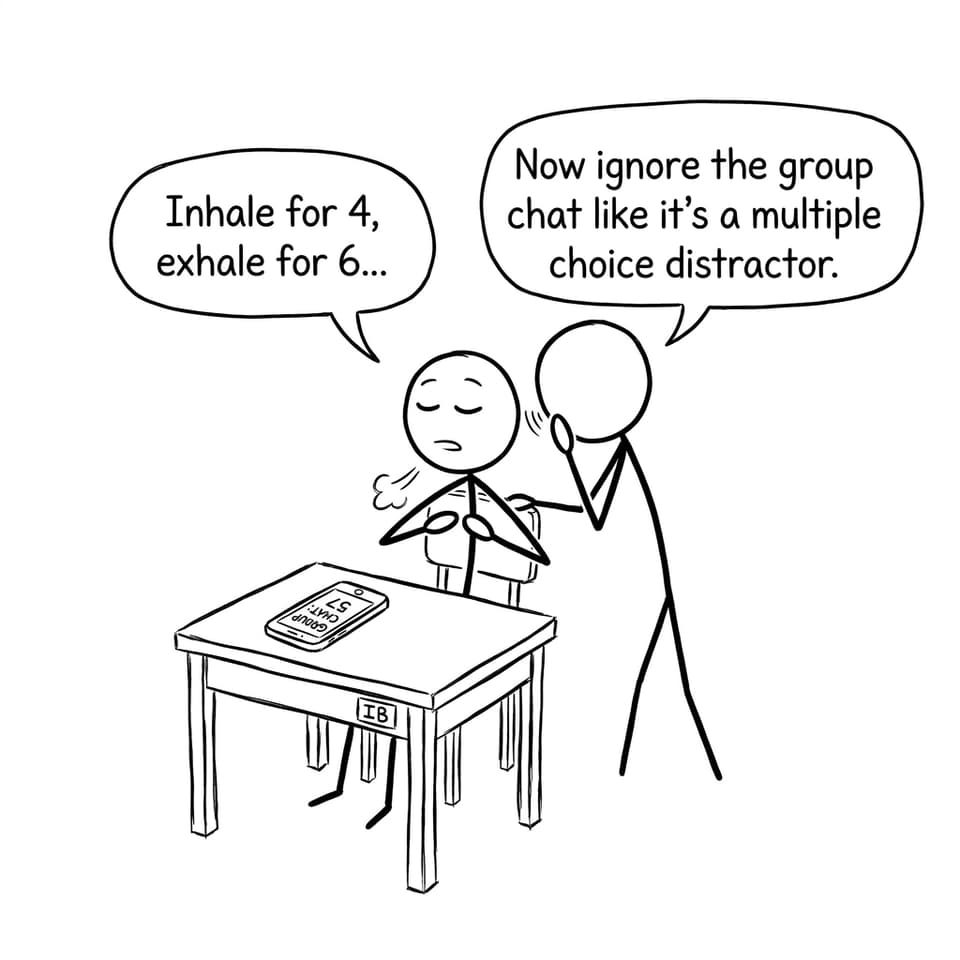
Inhale for 4, exhale for 6, repeat 5 times. Longer exhales help signal safety.
Grounding (5-4-3-2-1)
Name 5 things you see, 4 you feel, 3 you hear, 2 you smell, 1 you taste. It pulls you back into the room.
Tiny next step
Write the smallest possible action: “Do 5 questions on one subtopic.” RevisionDojo makes this easy because you can filter practice by topic in the Questionbank, then review errors with AI feedback.
If your revision method is feeding anxiety, shifting to active recall helps. A strong companion is How to Effectively Use Flashcards for Revision and RevisionDojo’s IB Flashcards with Spaced Repetition (SRS).
Journaling, boundaries, and letting go of perfectionism
A lot of IB stress comes from invisible rules: “If I’m not studying, I’m failing.” “If it isn’t perfect, it isn’t worth submitting.” Those rules sound motivating until they start eating your sleep.
Journaling helps because it turns noise into sentences. Try a 4-line version:
-
What am I worried about?
-
What’s actually true?
-
What can I control today?
-
What is one kind thing I can do for myself?
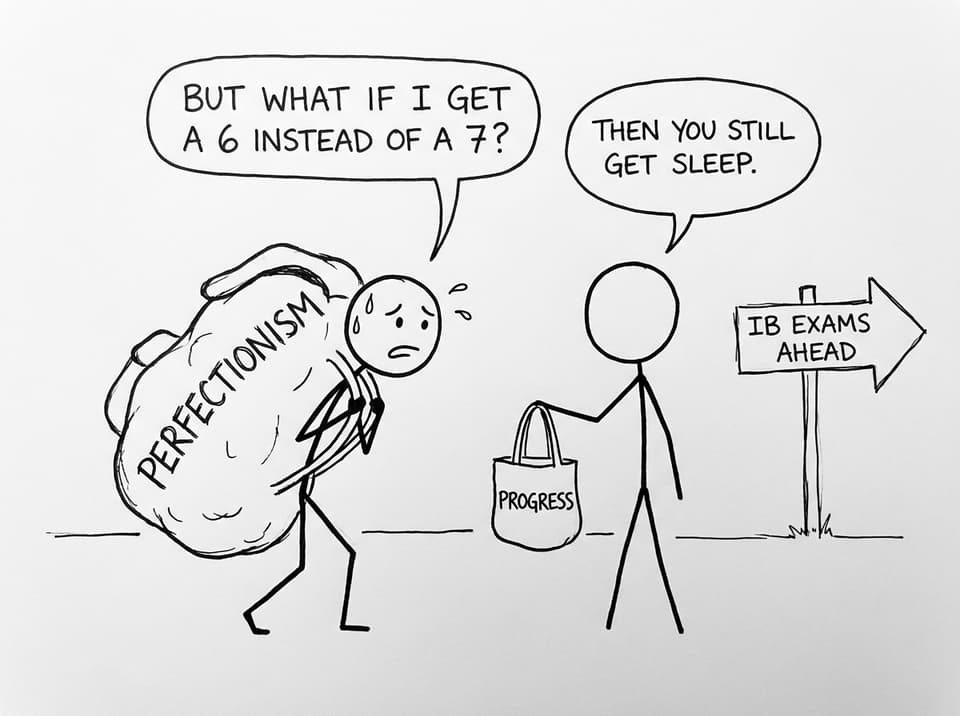
Perfectionism is harder. It often feels like ambition. But in exam season, perfectionism is usually fear wearing a blazer.
If you need a practical way to replace “do everything” with “do what works,” use a repeatable system like: Study Notes for understanding, Flashcards for retention, Questionbank for application, and timed Mock Exams for confidence. RevisionDojo’s broader strategies are in How to Study for IB Exams: Step-by-Step Guide.
Closing: your IB results should not cost your wellbeing
Your IB exams matter. But your mental health is the thing that lets you keep showing up, making decisions, and recovering when a day goes badly.
Start small: talk to one person, choose one coping tool, and build one realistic revision loop. When you want a calmer way to prepare, make RevisionDojo your home base for Study Notes, Flashcards, Questionbank practice, AI Chat support, Grading tools, Predicted Papers, Mock Exams, Coursework Library resources, and Tutors. The goal isn’t to power through the IB on willpower alone. It’s to build support that lasts long enough to carry you to the finish line.