



The decision feels small until it isn’t
The first time you hear “SL or HL,” it sounds like a simple toggle. Two letters. One extra hour. One slightly heavier textbook.
Then the reality of IB Design Technology arrives: long design discussions that spill past the bell, prototypes that fail in interesting ways, and exam questions that look innocent until you realise they’re asking for judgement, not memory.
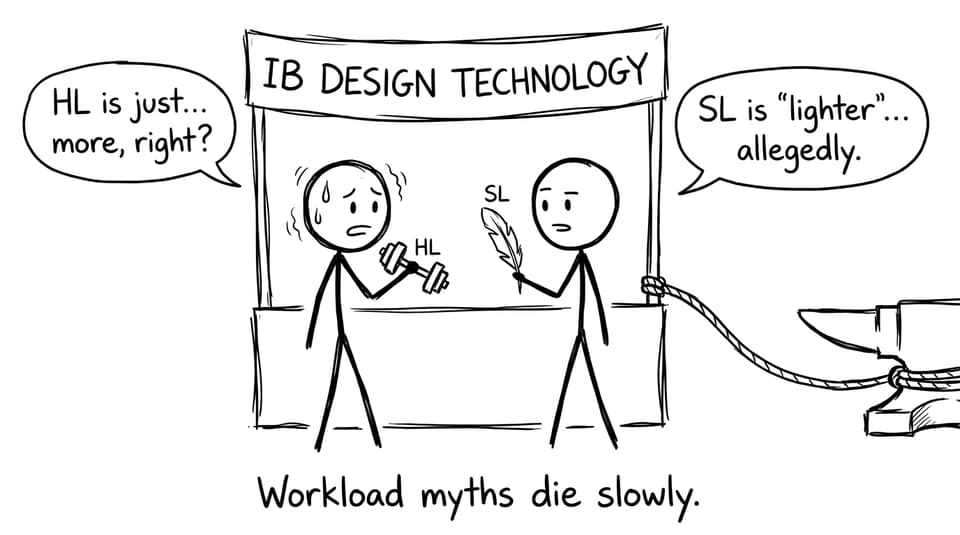
If you’re choosing between SL and HL, you’re not really choosing “easy vs hard.” You’re choosing how deep you want to think, write, and defend decisions in IB Design Technology.
Quick checklist: SL or HL in IB Design Technology?
Use this as a fast filter before you overthink it:
-
Choose HL if you enjoy explaining why something works, and you can write evaluative paragraphs under time pressure.
-
Choose SL if you want strong design skills with a more balanced load across your diploma.
-
If you dislike long written justification, HL will feel like a constant argument you didn’t agree to.
-
If you love trade-offs (cost vs sustainability, function vs aesthetics), HL can feel satisfying.
Either way, start with the IB Design Technology resources hub to see what the full course ecosystem looks like (notes, Questionbank, Flashcards, and more) before you commit.
The core difference: HL goes deeper, not wider
Both SL and HL students in IB Design Technology work with the same core identity of the subject: design thinking, user needs, iteration, testing, and reflection.
But HL expects a more mature version of that thinking.
At SL, you can often score well by showing clear understanding and solid application. At HL, you’re expected to make the examiner trust your judgement. That means you don’t just state a method or principle. You justify why it fits the context, and what it costs you.
A practical way to feel this difference is to practise command terms early. RevisionDojo’s guide on common IB Design Technology exam command terms shows why “explain” and “evaluate” live in different worlds.
Content differences: what HL adds in IB Design Technology
In IB Design Technology, SL covers the foundational concepts: materials, modelling, user-centred design, sustainability, and the core design cycle. HL tends to add more demanding layers: systems thinking, manufacturing complexity, commercial production considerations, and deeper technical justification.
You feel the difference most when questions stop being “what is this?” and become “what should a designer do, given constraints?”
If you want a concrete example of how technical the course can get, look at a focused syllabus area like Computer-integrated manufacturing (CIM). Even skimming a page like that helps you ask: do I enjoy this kind of detail, or do I tolerate it?
Exam differences: the hidden workload is the writing
The exams are where SL vs HL becomes most obvious.
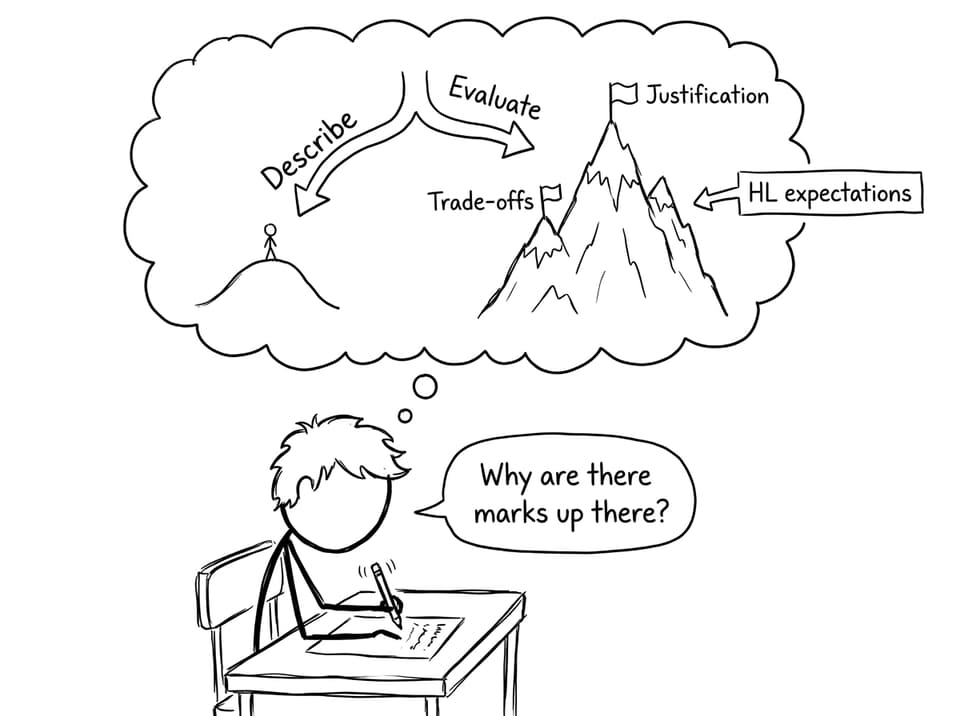
HL papers are longer and tend to reward extended reasoning: balancing pros and cons, weighing stakeholder needs, and making a defensible recommendation. SL leans more toward clear explanation and correct application.
That means a common HL trap is writing a beautifully descriptive answer that never actually makes a judgement. Examiners can’t award top marks for “I know a lot.” They award them for “I chose, and here’s why.”
To train this properly, you need volume and feedback. RevisionDojo’s Questionbank is built for exactly that kind of repetition and correction, and you can practise by topic (for example, Classic Design questionbank practice).
IA reality: same task, different expectations
The design project (IA) is the same overarching assignment in IB Design Technology for both levels, but HL demands stronger evidence of thinking.
In practice, that means:
-
HL needs sharper justification for decisions (materials, processes, form factor).
-
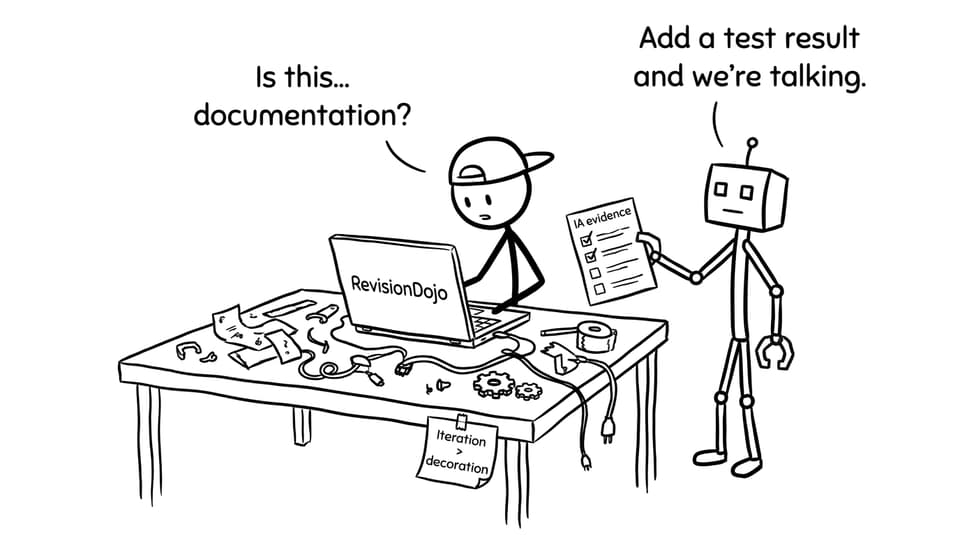
HL iteration must look like learning: test results, changes, and reasons.
-
HL evaluation should be criteria-led and evidence-led, not just opinion.
If you want to see what high-scoring work tends to share, RevisionDojo’s IB Design Technology IA examples guide and the step-by-step IA guide are strong starting points.
When it’s time to polish, the fastest way to raise marks is to edit for visibility: make it impossible for a marker to miss your evidence. Use the finalise and submit IA checklist as your last-week sanity anchor.
Who should pick HL (and who shouldn’t)
Choose HL if you recognise yourself in these statements:
-
I like defending choices with trade-offs.
-
I can handle longer writing tasks under timed conditions.
-
I’m considering engineering, product design, architecture, or similar pathways.
-
I enjoy the “why” behind manufacturing, sustainability, and user experience.
HL is also a good fit if you want a structured way to chase top marks. RevisionDojo’s calm strategy to score a 7 in IB Design Technology is essentially a mindset guide to HL-level thinking.
Avoid HL if you’re mainly choosing it for prestige. A strong SL grade tells a clearer story than a struggling HL grade.
Who should pick SL (and why SL is not a compromise)
Choose SL if:
-
You’re already carrying a heavy HL set elsewhere.
-
You enjoy design and prototyping, but you don’t want constant evaluative writing.
-
You want IB Design Technology to be a scoring opportunity, not a stress multiplier.
SL students still need to be disciplined. The course rewards clear process and consistent documentation, not last-minute inspiration. RevisionDojo’s guide to using RevisionDojo for Design Technology success shows how to run the course like a system, not a scramble.
Conclusion: pick the level that matches your thinking style
Choosing SL or HL in IB Design Technology is really choosing the kind of thinker you want to practise being for two years. SL rewards clarity and solid application. HL rewards depth, evaluation, and defended decisions.
If you want one place to study smarter for either level, build your routine around RevisionDojo: start at the IB Design Technology hub, practise with the Questionbank, lock in key language with Flashcards, use AI Chat when you’re stuck, and lean on Grading tools, Predicted Papers, Mock Exams, the Coursework Library, and Tutors when it matters most.
Your best choice is the one you can execute consistently. In IB Design Technology, consistency is what turns good ideas into high marks.