
Introduction
There’s a specific moment in IB Design Technology when your IA stops feeling like a “cool idea” and starts feeling like a system. Usually it happens late at night, with glue on your hands, when you realise the project isn’t being judged on how impressive it sounds, but on how clearly you can prove your decisions.
That’s why students search for IB Design Technology IA examples. Not to copy a finished product, but to understand what top projects actually look like on the page: focused, evidence-led, and calm about iteration.
If you want a simple home base while you plan, RevisionDojo’s IB Design Technology Resources hub is built to support both the IA and exam prep in one place.
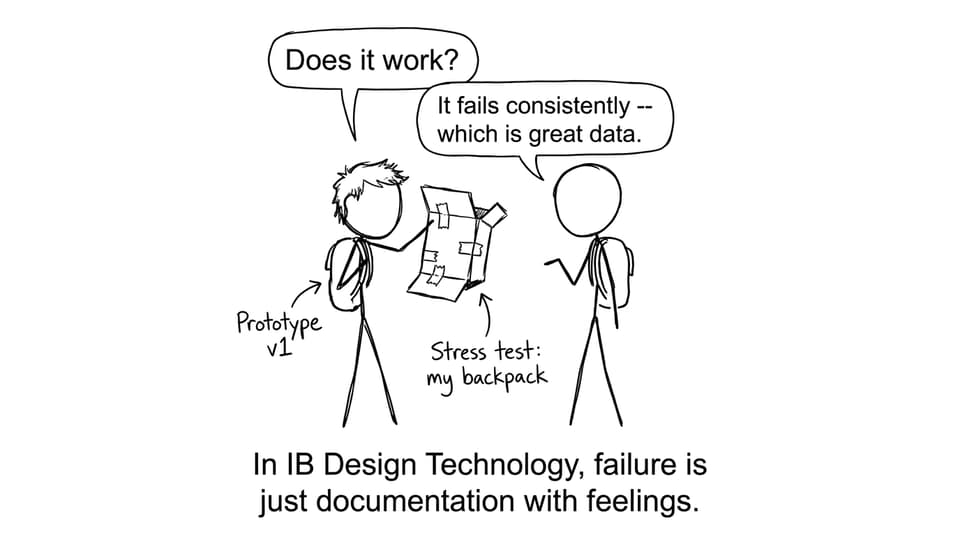
A quick checklist: what top IB Design Technology IAs include
Before the examples, use this as your filter for IB Design Technology quality:
-
A narrow problem for a real user (not “students” in general)
-
Research that changes design decisions (not research that sits there)
-
Multiple concepts with reasons for rejection and selection
-
A prototype you can realistically test (even if it’s rough)
-
Evaluation tied to measurable design requirements
For more context on what IB actually assesses, keep IB Design Technology Assessment: New 2027 Syllabus nearby.
IB Design Technology IA examples: what top projects look like
Below are five IB Design Technology IA example directions. They’re not “perfect products.” They’re strong because they create a clean chain: user need → research → requirements → testing → iteration.
Modular desk organiser (small space, real constraints)
A strong version of this project starts with a specific user: for example, a boarder with a 60 cm desk and limited drawer access. The research is practical: measurements, observation logs, and quick interviews about what causes clutter.
Top projects stand out when they define testable requirements (e.g., “must fit a 13-inch laptop + A4 notebook footprint” or “must reconfigure in under 60 seconds”). Then the student prototypes in cheap materials, tests with the user, and documents changes.
If you struggle to frame the starting point, read What Is the Best Way to Start the IB Design Technology IA?.
Sustainable packaging redesign (clear stakeholders, measurable impact)
This IB Design Technology IA example works when it doesn’t become a vague “save the planet” essay. A top project identifies a specific local business with constraints: cost per unit, moisture resistance, stackability, and branding.
The strongest write-ups compare existing packaging through a simple product analysis, then prototype 2-3 material options and run realistic tests (compression, leakage, heat, user convenience). The evaluation is persuasive because it’s evidence, not adjectives.
Want to avoid common traps? Use IB Design Technology IA Mistakes (and Easy Fixes).
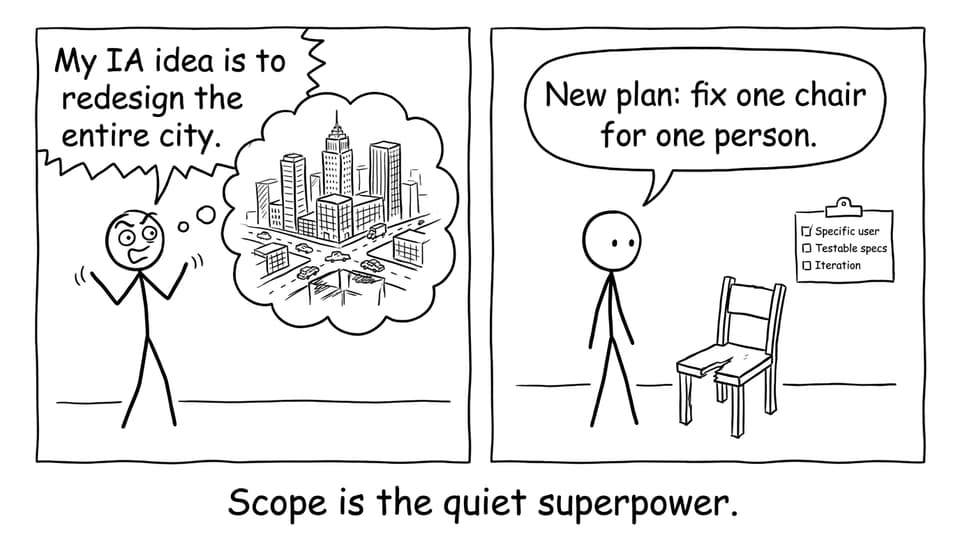
Ergonomic chair attachment (human factors done properly)
Ergonomics projects can score well in IB Design Technology when the student uses anthropometric reasoning without pretending to be a medical study. A top project might focus on one issue: lumbar support for a user who studies 2+ hours at a time.
The difference-maker is how clearly the student connects research to design specs (angles, dimensions, adjustability range), then tests comfort and posture in a repeatable way. Even a simple prototype can work if the testing is structured.
To sharpen your early writing, see IB Design Technology Problem Statement: Write It Strong.
Portable solar charger (technical, but still user-centred)
This IB Design Technology IA example succeeds when the student treats it like a user product, not a science fair. A strong project defines the scenario (school trips, outdoor sports) and sets requirements like charging time, durability, mass, and pack size.
Top projects document trade-offs openly: energy output vs weight, cost vs reliability, fold mechanism vs fragility. The prototype might be partial, but testing must be honest and well recorded.
Compact storage solution (iteration you can see)
Storage projects do well in IB Design Technology when they’re not trying to reinvent furniture. A strong version targets one space and one user: under-bed storage for a specific bed frame height, for example.
The student sketches multiple concepts, selects one with a decision matrix, builds a prototype, then iterates based on failures (hinge points, load, collapsibility). Examiners reward visible learning.
When you’re ready to polish, use Finalise and Submit Your IB Design Technology IA.
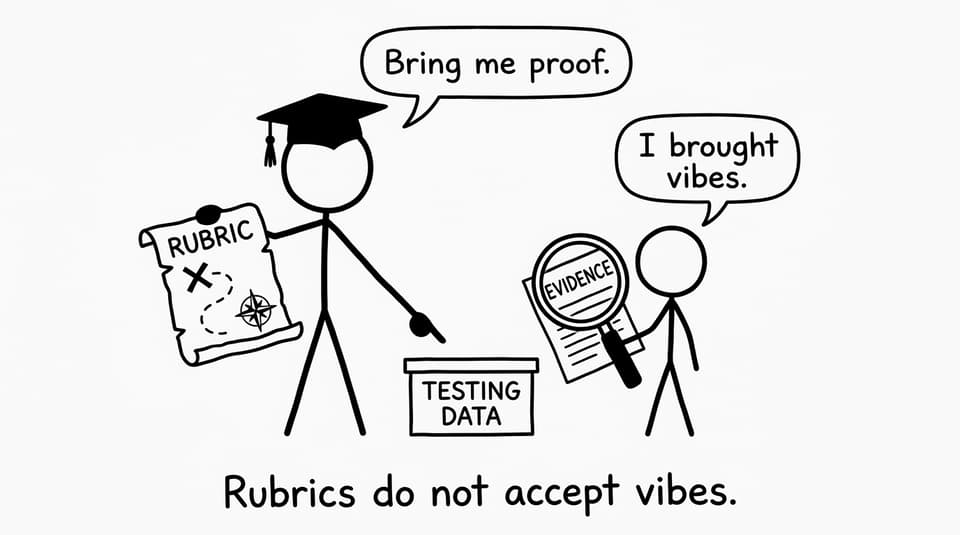
How to make your IB Design Technology IA feel “top level” fast
A top IB Design Technology IA usually gets that way through small habits:
-
Write requirements as measurements, thresholds, or pass/fail tests
-
After each test, add one change and justify it with evidence
-
Cite sources as you go (ideas, images, data)
-
Keep your scope small enough to finish a second iteration
For referencing, follow IB Design Technology IA Referencing: A Simple Guide.
How RevisionDojo supports IB Design Technology (IA + exams)
The best feeling in IB Design Technology is when your IA workflow stops competing with exam prep and starts supporting it.
RevisionDojo is built for that loop:
-
Use the IB Design Technology Resources hub to keep everything organised
-
Drill exam technique with the Questionbank
-
Lock in terminology with Flashcards and use AI Chat when a concept won’t click
-
Use Grading tools (including the IA rubric grader) to get criterion-aligned feedback: IB Design Technology HL IA Grader
-
Build realism with timed practice through IB Predicted Papers by IB Examiners (Free) and Mock Exams
-
Reduce uncertainty using the Coursework Library, and bring in Tutors when you need a human strategy reset
If you want a calm system, How to Use RevisionDojo for IB Design Technology Success is a good starting point.
FAQ
Can I use IB Design Technology IA examples without copying?
Yes, and that’s the healthiest way to use IB Design Technology IA examples. Treat them like a “pattern library,” not a template. Look for the structure: how the problem statement narrows the user, how research turns into design requirements, and how evaluation references testing evidence. Then transfer the structure into your own context and constraints. Your aim is to show your decision-making, not someone else’s outcome. If you want to stay safe, document inspiration clearly and keep your concept development original.
Do I need a fully working prototype in IB Design Technology?
Not necessarily, and many top IB Design Technology projects aren’t perfect products. What matters is that the prototype is realistic enough to test key requirements and produce usable data. If your prototype only proves aesthetics but not function, you’ll struggle to evaluate meaningfully. On the other hand, a rough prototype that produces clear testing results can score strongly because it enables iteration. Build the simplest version that can answer your biggest design questions. Then improve it with one more iteration you can clearly justify.
What makes a problem statement “high scoring” in IB Design Technology?
A high-scoring IB Design Technology problem statement feels specific and unavoidable. It names a real user (or clearly defined client group), a real context, and a real pain point you can observe. It avoids solution language too early, because you’re describing the opportunity before committing to an idea. It also hints at evidence: an observation, a short interview insight, or a measurable limitation. That evidence later becomes the backbone of your design requirements and evaluation. When in doubt, make it narrower until it becomes testable.
Conclusion
Top IB Design Technology IA examples don’t look magical. They look methodical: a small problem, a real user, research you can trace, and iteration you can see.
If you want to build that kind of project while staying ready for exams, make RevisionDojo your default workspace for IB Design Technology: the Questionbank for practice, Study Notes and Flashcards for recall, AI Chat for fast clarity, Grading tools and the Coursework Library for cleaner drafts, plus Predicted Papers, Mock Exams, and Tutors when you need extra structure.

