
In the last week before you submit, IB Design Technology stops feeling like a design subject and starts feeling like a documentary project. Not because you need more work, but because you need your work to be seeable.
That’s the trap: your prototype can function perfectly, your research can be solid, your iteration can be real… and you can still lose marks if the examiner can’t spot the evidence quickly and confidently. Finalising your IB Design Technology IA is less like “adding polish” and more like tightening bolts on a bike before a long ride. The ride doesn’t care how hard you trained. It cares what holds.
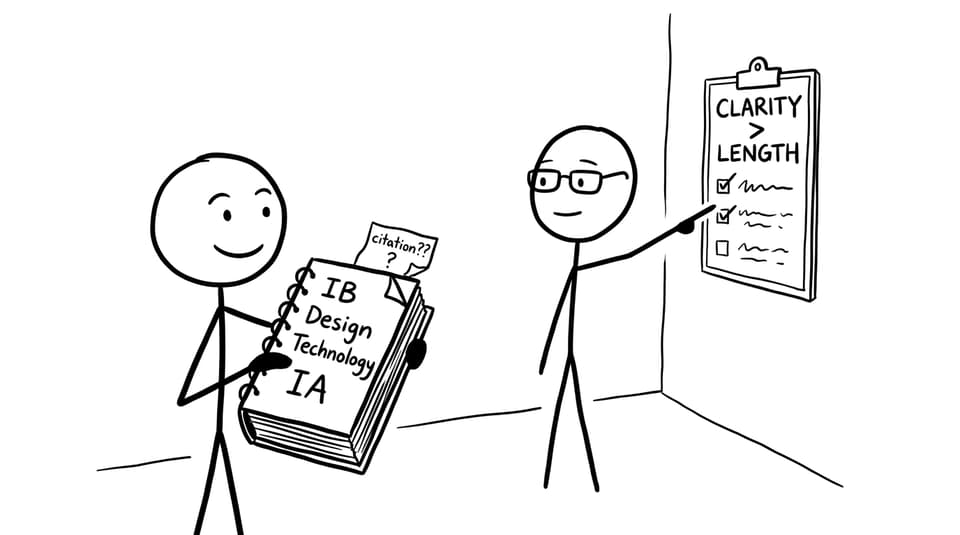
The final submission checklist (do this first)
Use this as your calm, high-return checklist for IB Design Technology IA submission:
-
Confirm every section visibly earns marks against the rubric descriptors.
-
Cut anything that adds length but not evidence.
-
Make iteration impossible to miss (before/after + reason + result).
-
Ensure evaluation is requirement-based and evidence-led.
-
Do a citation sweep (sources, images, paraphrases).
-
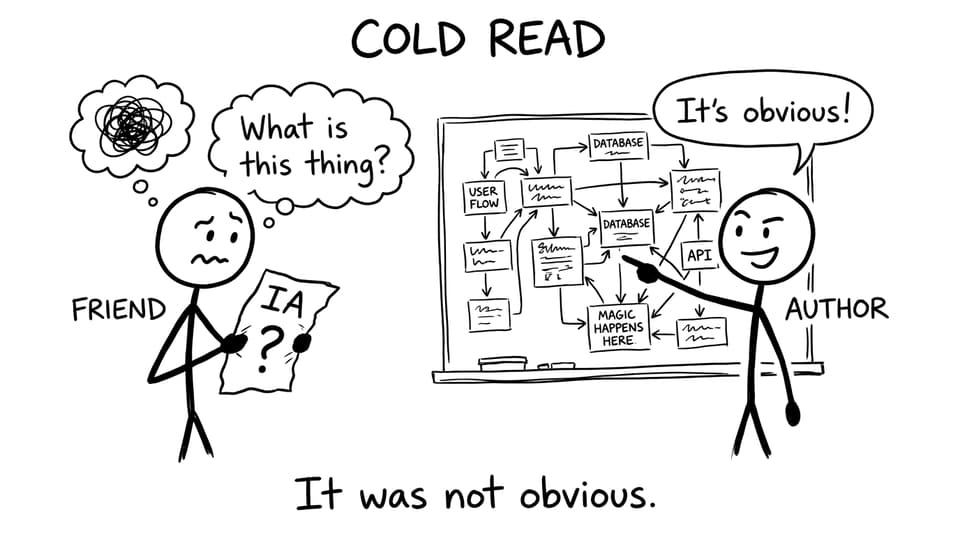
Run a “cold read” with someone who doesn’t know your project.
If you want models of what “clear evidence” looks like, start with IB Design Technology resources and keep a strong exemplar nearby while you edit.
Align the IA to how IB Design Technology is actually graded
Students often finalise by asking, “Is this impressive?” Examiners are asking, “Is this proven?”
Finalising means reviewing your work through the lens of assessment criteria and visibility:
-
Does your problem statement read like a real, research-backed design opportunity (not a product pitch)?
-
Do design requirements clearly come from research/user needs and stay testable?
-
Can an examiner point to specific iteration moments without hunting?
-
Is evaluation based on testing data and feedback rather than opinions?
A practical way to self-check is to run a strict self-assessment using RevisionDojo’s grading tools, like the Design Technology HL IA Grader (or the updated rubric page if you’re on the newer course). This forces you to translate effort into evidence, which is the core skill in IB Design Technology.
Cut content that doesn’t earn marks (clarity beats volume)
Most IAs don’t need more pages. They need fewer weak ones.
Common “looks busy, earns little” content:
-
Repeated explanations of the same decision
-
Background research you never use later
-
Photos/screenshots with no analysis
-
Long narrative sections that don’t connect to requirements or testing
Think like a curator: every element must justify its place. If you want a quick benchmark for what strong coursework looks like across the IB, browsing the Coursework Exemplars library can reset your sense of what “enough” looks like.
Make iteration and testing painfully obvious
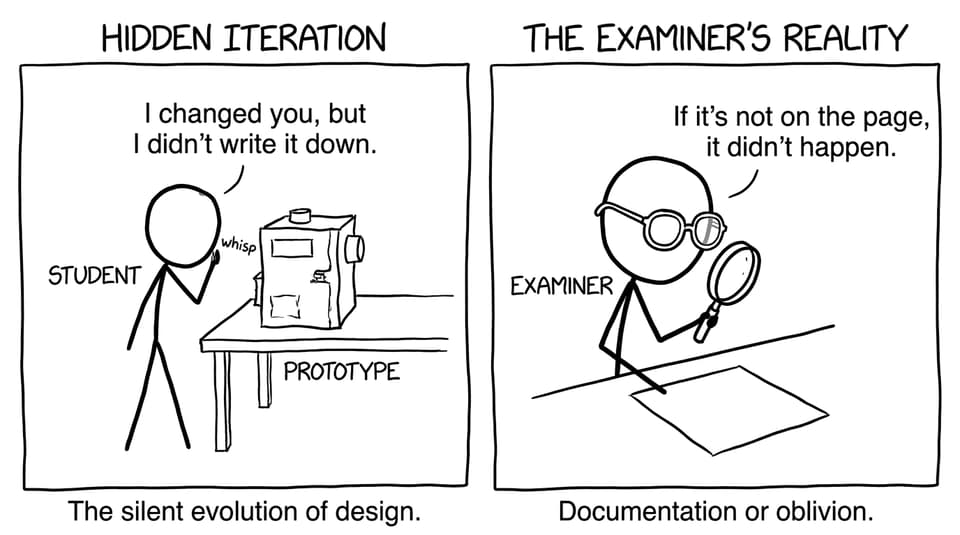
One of the easiest ways to cap your marks in IB Design Technology is to let iteration exist only in your head.
To fix that, give iteration a predictable structure every time:
-
Before: What was the issue or limitation?
-
Change: What exactly did you modify (dimensions, materials, mechanism, interface, process)?
-
Why: What evidence or feedback triggered the change?
-
After: What improved, and what new trade-off appeared?
If you’re unsure what counts as meaningful iteration (and what’s just decoration), read What Are the Most Common IB Design Technology IA Mistakes? and compare your draft against the patterns.
Tighten your evaluation (no new ideas at the finish line)
The evaluation section is where your IA either becomes persuasive or becomes vague.
Strong evaluation in IB Design Technology usually does five things:
-
It refers back to design requirements explicitly (not generally).
-
It uses testing data and user feedback as evidence.
-
It explains why results happened (materials, ergonomics, manufacturing limits).
-
It admits limitations honestly and professionally.
-
It avoids introducing brand-new concepts you didn’t develop or test.
If you want to sense-check whether your evaluation is truly evidence-based, pair your draft with a quick rubric review using How Is the IB Design Technology IA Graded?. That article helps you see what marks are actually attached to.
Citation and academic honesty sweep (small errors, big consequences)
Referencing doesn’t usually earn direct marks, but poor referencing can create serious issues.
Do a final sweep for:
-
Every external source in your research
-
Any non-original images (and their captions)
-
Any paraphrased idea that isn’t common knowledge
-
Any data tables you didn’t generate yourself
A good mindset: if a reader could ask “where did this come from?”, you should already have answered in the text or bibliography.
Presentation and organisation (not assessed, but it controls visibility)
Presentation is not the main target, but organisation affects whether evidence is easy to award.
Final checks:
-
Clear headings and consistent section naming
-
Consistent terminology (don’t rename the same part three times)
-
Legible diagrams with labels that match your text
-
Logical flow: problem -> research -> requirements -> ideas -> development -> testing -> evaluation
For broader strategy on staying organised across coursework and exams, How to Use RevisionDojo for IB Design Technology Success is a useful companion piece.
Do the “cold read” test
A cold read is the fastest reality check you can run.
Give your IA to someone who hasn’t lived in your brain for months (a classmate, sibling, or parent) and ask:
-
What problem are you solving?
-
What are the requirements?
-
Where did you change the design, and why?
-
What evidence proves the final solution works (or doesn’t)?
If they can’t answer in a few minutes, the issue isn’t your project. It’s your clarity.
Common last-minute mistakes (avoid these)
These are the classic last-48-hours mark leaks in IB Design Technology:
-
Making a rushed design change but forgetting to document it
-
Adding new research without connecting it to requirements
-
Updating diagrams but not updating the explanation
-
Improving the prototype but not updating evaluation/testing conclusions
The best last-minute move is usually not a new feature. It’s a clearer sentence.
Final thought: submit an IA that makes marking easy
Your goal in IB Design Technology isn’t to submit the most complicated product. It’s to submit the clearest evidence of design thinking.
If you want a final week workflow that reduces panic: use RevisionDojo’s Coursework Library to sanity-check structure, the Grading tools to audit rubric alignment, and AI Chat to tighten explanations without losing hours. Then protect your exam prep with a steady loop: Study Notes, Flashcards, Questionbank, plus Mock Exams and Predicted Papers when you’re ready to rehearse under time.
Finalise calmly. Submit confidently. Then get back to what wins marks in May: consistent, targeted IB Design Technology practice.