


In one version of the world, conflict is a clean story: two states, two flags, one border, one treaty.
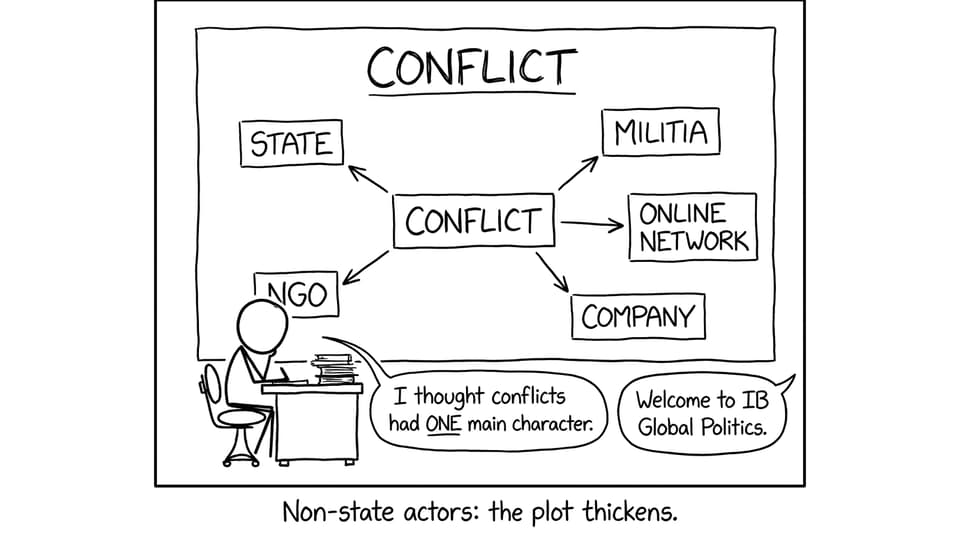
In the version you actually study in IB Global Politics, conflict is messier. A militia controls a road. An NGO runs a clinic. A private company secures an oil site. A transnational network moves money faster than diplomacy can move words. Suddenly, the “main actors” aren’t only governments.
What counts as a non-state actor in IB Global Politics?
Non-state actors are groups and organisations that operate independently of government control. In IB Global Politics, you can use a broad definition and then get specific:
-
Violent groups: insurgents, militias, terrorist organisations
-
Private security and military companies
-
NGOs, civil society organisations, faith groups
-
Media organisations and online networks
-
Transnational criminal networks and arms traffickers
If you want a syllabus-aligned refresher, RevisionDojo’s notes on violent and non-violent state and non-state actors pair well with the Peace and Conflict topic hub.
Quick checklist for exam answers on non-state actors in conflict
Before you write, run this mini-plan (it keeps IB Global Politics answers analytical, not descriptive):
-
Define non-state actors clearly
-
Identify their role: violence, funding, legitimacy, narratives, mediation
-
Explain the mechanism (how they shape conflict dynamics)
-
Add one precise example (even a brief one)
-
Evaluate limits: state capacity, international law, public support, fragmentation
For structure under pressure, borrow techniques from how to answer IB Global Politics Paper 1 questions and Paper 2 essay structure.
IB Global Politics: how non-state actors drive violence
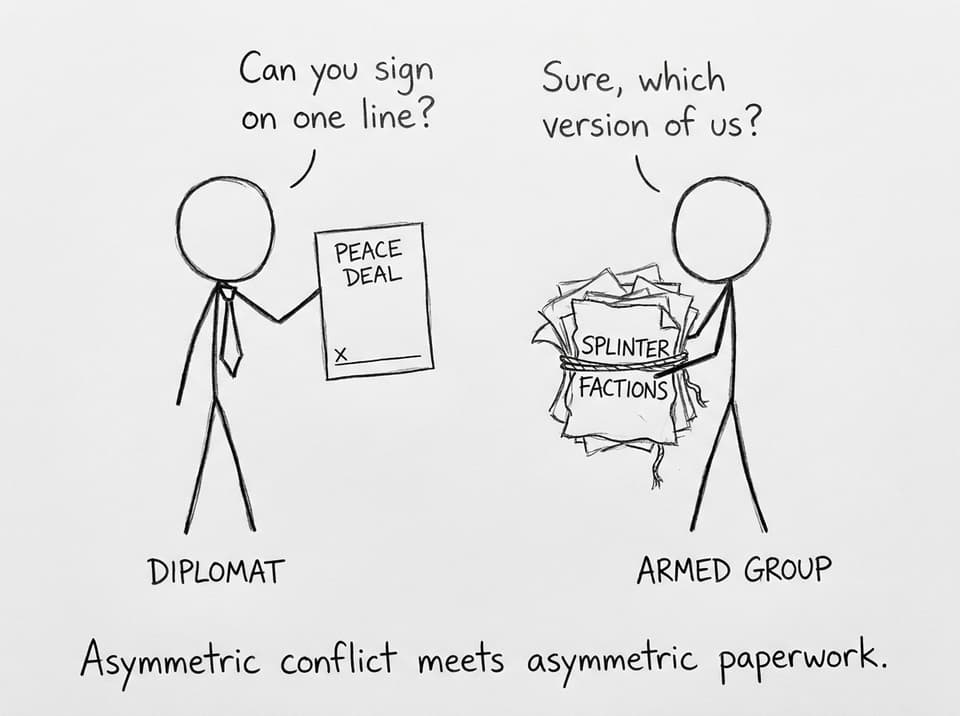
Some non-state actors are direct participants in violence. They challenge the state’s internal sovereignty by using force, controlling territory, or undermining institutions. Because they often fight asymmetrically, conventional deterrence and state-to-state diplomacy can miss the real levers of power.
That’s why linking to sovereignty earns marks: conflict is not only “who is fighting,” but “who can claim authority.” Use the concept support from globalization vs sovereignty to frame how states struggle to regulate actors that cross borders.
IB Global Politics: how non-state actors escalate and prolong conflict
Many conflicts last because non-state actors tap into external funding, arms flows, and transnational support. Some groups profit from instability through smuggling, taxation, or control of resources, making the conflict self-sustaining.
In an exam paragraph, this is your evaluation hook: even if initial grievances were political, conflict can become an economy. To keep terminology sharp, revise with the IB Global Politics glossary (especially “asymmetric conflict” and “conflict dynamics”).
IB Global Politics: identity, ideology, and narrative power
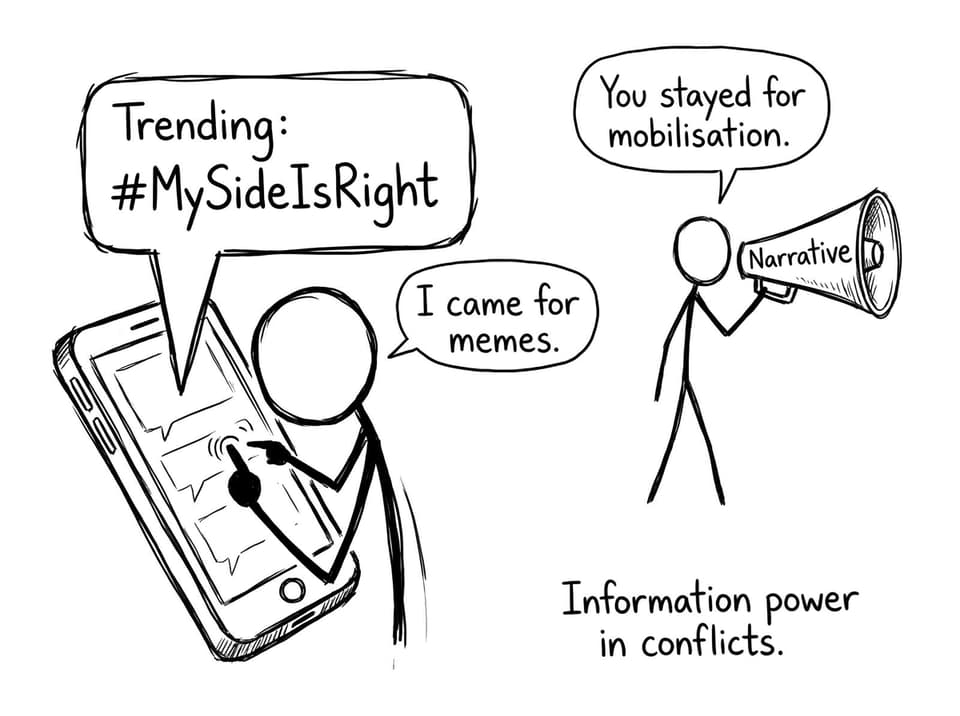
Non-state actors frequently mobilise around identity and ideology: religion, ethnicity, nationalism, or revolutionary narratives. These frames can harden positions by turning political disputes into moral ones, where compromise looks like betrayal.
They also compete for narrative control. Media networks, platforms, and advocacy campaigns shape what audiences believe is happening, who is blamed, and what solutions feel legitimate.
IB Global Politics: non-state actors can also reduce conflict
A strong IB Global Politics answer shows duality. NGOs and civil society groups can mitigate conflict by providing humanitarian support, documenting abuses, facilitating dialogue, and supporting peacebuilding where the state lacks access or legitimacy.
The key evaluation: constructive influence often depends on access, security, and perceived neutrality. Where non-state actors are seen as partisan, they can lose legitimacy fast.
To explore influence mechanisms more broadly, connect this topic to how non-state actors influence global politics and build revision momentum from the IB Global Politics resources hub.
Bringing it home to your exams (and RevisionDojo)
Modern conflict is rarely a two-flag story. In IB Global Politics, non-state actors shape violence, funding, identity narratives, and peacebuilding, while also challenging sovereignty and accountability.
To practise turning these insights into marks, use RevisionDojo’s Questionbank for timed prompts, Study Notes for clean definitions, Flashcards for active recall, and AI Chat to test counterarguments. When you draft, the Grading tools can help you tighten evaluation, while Mock Exams and Predicted Papers help you rehearse under pressure. If you need targeted feedback, the Tutors and Coursework Library keep your case studies and writing sharp. For more topic tracking, browse all IB Global Politics posts.