

If you have ever opened a Paper 1 booklet and felt your brain reach for a familiar case study like a comfort blanket, you are not alone. But IB Global Politics Paper 1 rewards a different kind of confidence: the calm ability to read what is actually in front of you, then build an answer that is precise, structured, and concept-driven. The best students do not “know more” in Paper 1. They waste less -- fewer assumptions, fewer detours, more marks.
What Paper 1 is really testing in IB Global Politics
Paper 1 is source-based and fast. Your job is to extract meaning, compare perspectives, and evaluate reliability under pressure -- using IB Global Politics concepts like power, sovereignty, legitimacy, human rights, development, and peace and conflict.
If you want the full breakdown of the paper format and what each question targets, keep IB Global Politics Paper 1 Guide Notes open while you practise.
A quick checklist before you write (75 seconds that saves marks)
-
Read all questions first -- let them guide your reading.
-
Underline the command term in each question.
-
Annotate each source for: claim, evidence, perspective, and limitation.
-
Decide which IB Global Politics concept is most relevant per question.
-
Plan mini-structures (2--4 points) before writing.
For targeted practice, build a timed set in the Paper 1 Guide Questionbank and train the habit.
Read the sources like an examiner (not like a Wikipedia page)
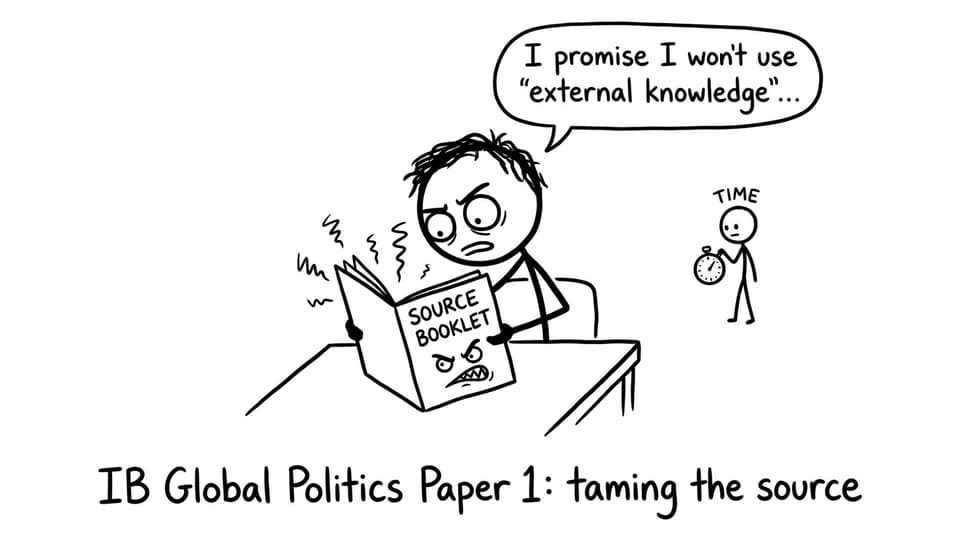
The fastest way to lose marks is using outside knowledge as a substitute for source evidence. In IB Global Politics, sources are your “world.” Even if you recognize the issue, treat the booklet as the only courtroom proof you are allowed to use.
A practical method: write a 4-word label next to each source (e.g., “NGO warning,” “government defense,” “data trend,” “satire/critique”). That label becomes your anchor when you write comparisons and evaluations.
Need concept refreshers while you practise? RevisionDojo’s IB Global Politics Resources hub connects Study Notes, Flashcards, and lessons so you can revise without spiraling.
Command terms decide your score more than your opinions
In Paper 1, the command term is the real question. “Identify” wants brief, accurate points. “Compare” wants linked similarities (and if it says compare and contrast, you must do both). “Evaluate” demands a judgement built from strengths and limitations.
If command terms still feel slippery, read How to Use IB Command Terms Effectively in Exam Responses and then drill them by writing 2-minute micro-answers.
Use IB Global Politics concepts as tools, not decorations
Concepts earn marks when they clarify what is happening in the sources. A simple pattern:
Concept + Source evidence + Explanation of impact
Example moves:
-
Legitimacy -- how a government justifies authority, and how the source challenges that justification.
-
Sovereignty -- how external pressure limits state choice.
-
Human rights -- how rights claims are framed, and whose definition is prioritized.
To strengthen your conceptual vocabulary, keep one thematic notes page open while you practise, like Peace and Conflict or this example of high-frequency content on Intergovernmental organizations.
Structure: one idea per paragraph, one job per sentence
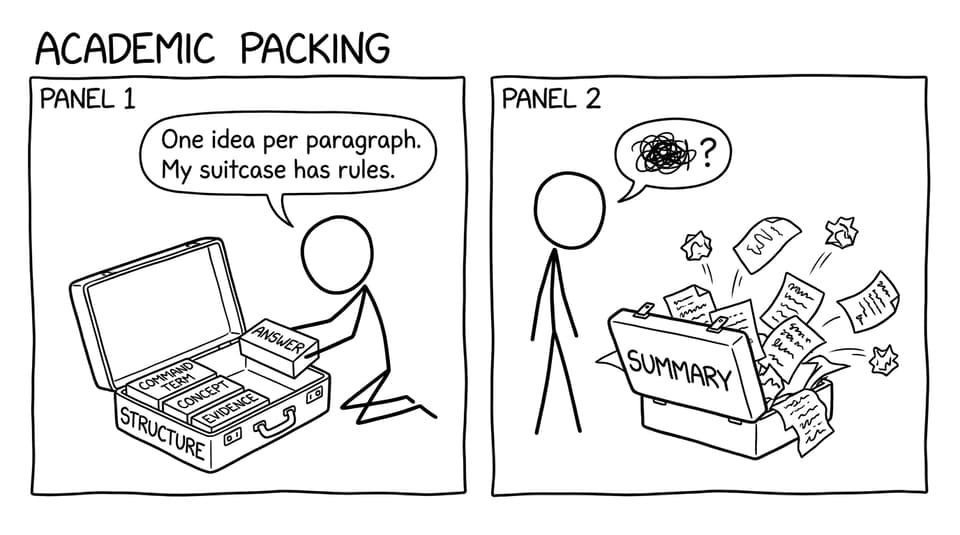
Even short responses need signposting. A clean structure for most Paper 1 questions:
-
Answer the question directly (one sentence).
-
Point 1 with evidence (paraphrase the source).
-
Point 2 with evidence (link back to the command term).
-
Mini-judgement (especially for “evaluate” and higher-mark questions).
If you want fast feedback on whether your structure matches the markbands, use the IB Global Politics Paper 1 10 Marker Grader and iterate.
Comparisons and evaluation: link, then judge
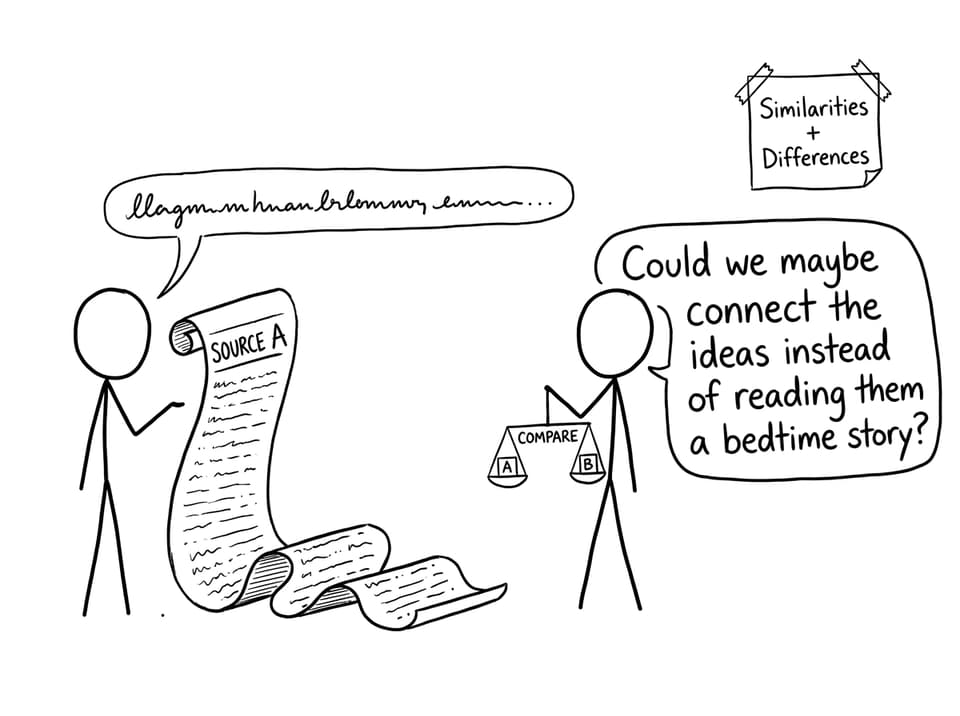
For comparisons, avoid the “Source A paragraph, Source B paragraph” trap. Instead, write linked sentences:
- “Both sources suggest X, but Source A frames it as…, whereas Source B emphasizes…”
For evaluation, interrogate perspective and purpose:
-
Who produced it, and why?
-
What is missing?
-
What makes the evidence strong or limited?
When you practise evaluation in IB Global Politics, RevisionDojo’s AI Chat and Grading tools help you spot when you are summarizing instead of judging.
Time management that actually works
Paper 1 is a pacing test disguised as a thinking test. Two habits help:
-
Write in “mark units”: longer answers only when marks justify it.
-
Practise full papers with RevisionDojo’s IB Global Politics Predicted Papers or the dedicated M26 Global Politics Predicted Paper 1 SL & HL.
Closing: practise the skill, not the story
Paper 1 success comes from a simple promise: in IB Global Politics, your answer is only as strong as your reading, your structure, and your concept choices. Train those three and your confidence stops depending on “getting lucky” with the topic.
On RevisionDojo, you can combine the Questionbank, Study Notes, Flashcards, AI Chat, Grading tools, Predicted Papers, and Mock Exams into a routine that feels predictable even when the sources are not. That is the whole point of Paper 1 -- staying sharp when the material is unfamiliar, and still writing like you belong in the top markband.