Globalization rarely kicks down the door of the state. It does something more unsettling: it rearranges the locks.
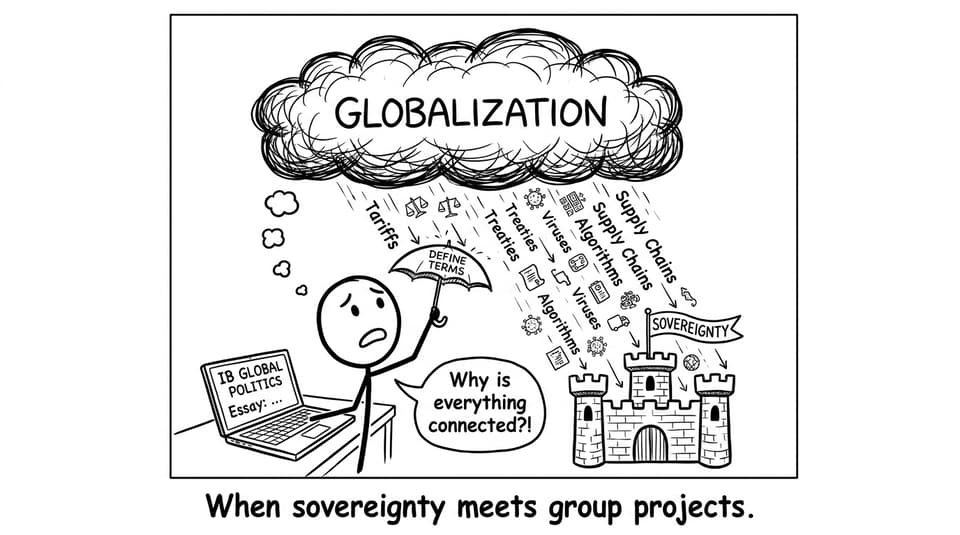
In IB Global Politics, sovereignty is often introduced as a clean idea: a state governs its territory, makes decisions, and answers to no higher authority. Then reality arrives. Markets punish policies. Treaties outlive governments. Viruses travel faster than speeches. Platforms amplify voices the state can’t easily regulate. Globalization doesn’t abolish sovereignty; it makes sovereignty feel like driving with a dozen extra hands on the wheel.
A quick exam checklist for IB Global Politics
Use this as your 60-second plan before you write any paragraph on globalization and sovereignty in IB Global Politics:
-
Define sovereignty early (internal vs external) and keep returning to it.
-
Define globalization as multidimensional interconnectedness (economic, political, technological, cultural).
-
Explain at least three mechanisms that show how globalization challenges sovereignty.
-
Evaluate: sovereignty is reshaped, pooled, negotiated, and contested, not simply “lost.”
When you need precise wording for definitions, keep IB Global Politics Key Definitions open while you draft.
Start with the anchor: what sovereignty means in IB Global Politics
If your definition is vague, your evaluation will be vague too. In IB Global Politics, sovereignty usually has two dimensions:
-
Internal sovereignty: effective control over territory and population (law, order, governance capacity).
-
External sovereignty: independence and recognition in the international system (non-interference, diplomacy, legal equality).
The useful trick is to treat sovereignty as a claim and a practice. Many states claim full autonomy, but practice is shaped by dependencies, constraints, and legitimacy. For a clear explanation you can echo in essays, review What Is Sovereignty in Global Politics? and the syllabus-aligned IB - Sovereignty in Global Politics.
Economic interdependence: sovereignty with consequences
One of the easiest high-scoring routes in IB Global Politics is to show how economic interdependence turns domestic choices into international reactions.
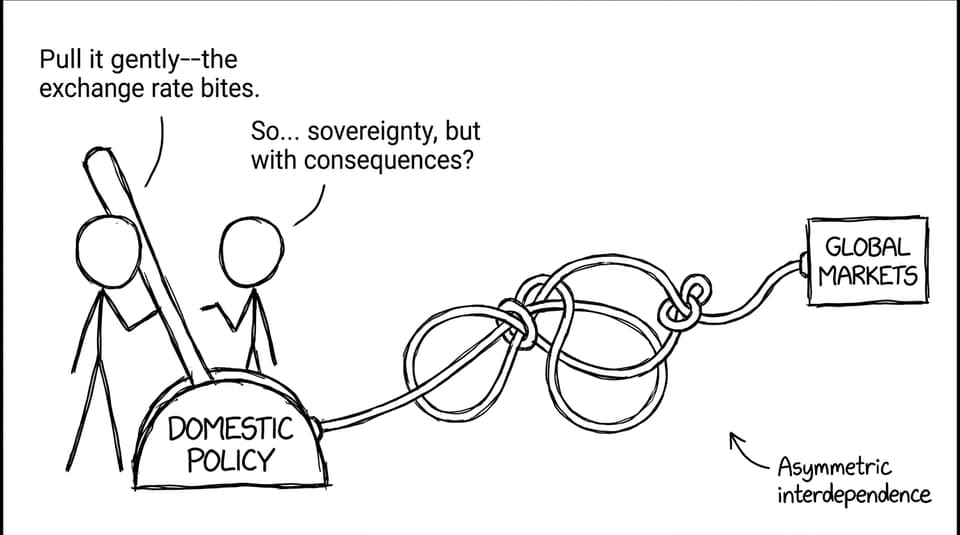
A government can absolutely pass a new corporate tax, regulate labour conditions, restrict certain imports, or strengthen environmental rules. That is sovereignty in the legal sense. But globalization changes the price tag of that choice. Capital may leave. Supply chains may shift. Currency values may swing. Credit ratings may move. Even the anticipation of those reactions can narrow a policymaker’s “real” room to manoeuvre.
This is the subtle point examiners like: globalization challenges sovereignty not by removing the state’s authority, but by making authority costly to use.
To practise turning this into exam language, use RevisionDojo’s IB Global Politics Resources and drill a few timed prompts from the IB Global Politics Interdependence Questionbank. Then ask RevisionDojo’s AI Chat to generate counterclaims and let the Grading tools push your evaluation from “explained” to “judged.”
How to write this as a Paper-ready mini-argument
A simple IB Global Politics paragraph blueprint:
-
Claim: Globalization challenges sovereignty by limiting policy autonomy through economic interdependence.
-
Mechanism: explain how cross-border investment, trade reliance, and supply chains create external consequences.
-
Mini-counterclaim: states retain the legal right to choose.
-
Evaluation: but the “choice” is constrained by vulnerability and exit costs, especially under asymmetrical interdependence.
If you want richer vocabulary and nuance, pair this with Is Interdependence a Source of Cooperation or Conflict?.
Global governance: rules you join, constraints you live with
Another strong IB Global Politics pathway is global governance: institutions, treaties, and norms that coordinate behaviour across borders.
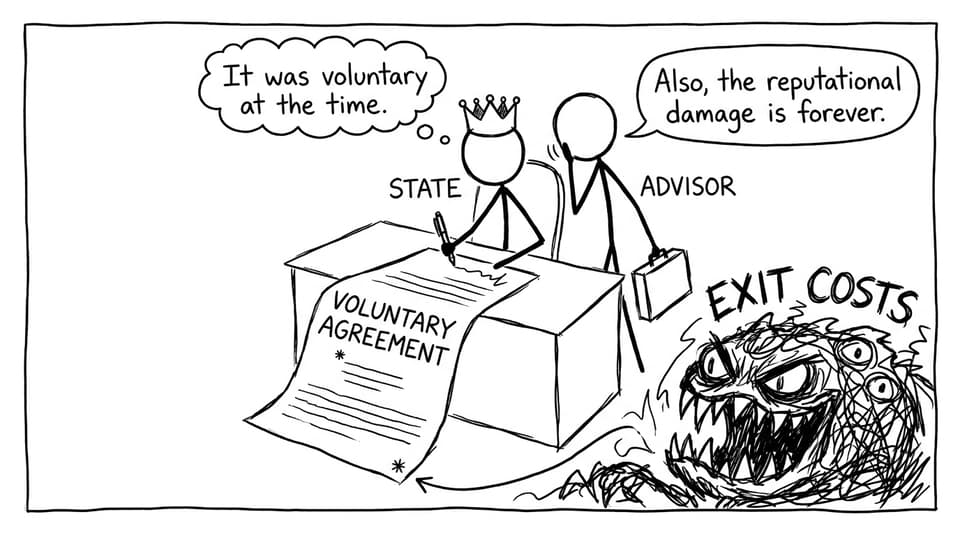
States typically consent to agreements. That matters. It preserves the legal story of sovereignty. But globalization changes what consent looks like over time. Membership brings access, credibility, and cooperation. Leaving can bring tariffs, diplomatic isolation, monitoring, investor uncertainty, or reputational damage. The result is a form of “voluntary constraint” that becomes difficult to escape.
High marks come from balancing the tension: sovereignty is formally intact because states choose, yet practically pressured because the costs of non-compliance grow.
To keep your revision aligned to the course framing, connect this section to Core: Understanding power and global politics and the supporting notes like Notes for Sources of sovereignty - IB.
Transnational issues: the border is real, the problem isn’t
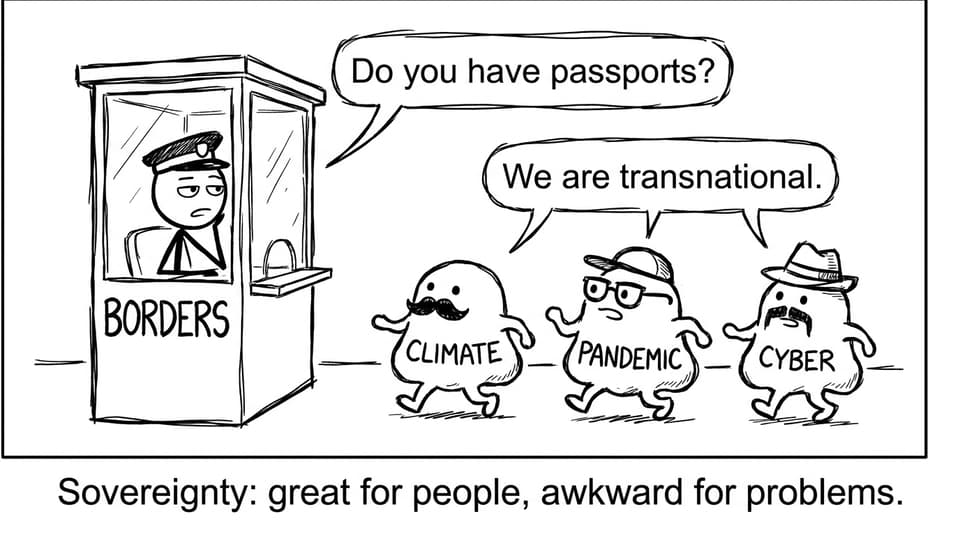
Globalization challenges sovereignty in IB Global Politics because many of today’s urgent issues are transnational: climate change, pandemics, cybercrime, terrorism, misinformation flows, and large-scale migration.
These problems ignore borders in a way people do not. That forces a shift from control to coordination. States still matter: they fund, legislate, enforce, but they increasingly rely on shared data, joint standards, pooled resources, and negotiated responses. In exam terms: authority diffuses outward into networks of cooperation.
A useful evaluative lens here is capacity. If unilateral action cannot solve the problem, then insisting on pure autonomy becomes symbolic. Sovereignty remains a principle, but its effectiveness becomes conditional.
For a bigger “power shift” framing, link this to How Does Globalization Reshape Global Political Power?.
Non-state actors: influence without territory
A final mechanism examiners love in IB Global Politics is the rise of non-state actors.
Multinational corporations can influence regulation through investment decisions, employment, and supply chain choices. NGOs can shift agendas on human rights, development, and environmental protection. Media and digital platforms shape narratives at a speed governments struggle to match. Even when states try to regulate, they are often regulating systems that stretch across jurisdictions.
Here, your evaluation can be crisp: states still control key sovereign functions (citizenship, law, coercive force), but globalization increases competition over legitimacy and agenda-setting. Power spreads, and sovereignty becomes less like a monopoly and more like a crowded marketplace.
If you’re revising this theme for essays, RevisionDojo’s Study Notes and Flashcards help keep concept language sharp, while Mock Exams and Predicted Papers help you practise building balanced evaluation under time pressure.
How to turn this into exam-ready writing (fast)
When a question asks how globalization challenges sovereignty in IB Global Politics, aim for three moves:
-
Define sovereignty with internal/external dimensions.
-
Mechanism: pick 2-3 pathways (interdependence, global governance, transnational issues, non-state actors).
-
Judge the extent: reshaped more than erased; constraints vary by state capacity and dependence.
For structure and command terms, revise How To Write A Top‑Scoring IB Global Politics Essay and, if Paper 2 is your priority, How to Structure IB Global Politics Paper 2 Essays.
Conclusion: the exam-ready takeaway for IB Global Politics
Globalization challenges sovereignty by turning independence into interdependence, rules into expectations, borders into porous lines for problems, and state authority into one voice among many. In IB Global Politics, your best answers don’t panic and claim sovereignty is “dead.” They show something more realistic: sovereignty still exists, but it is increasingly conditional, negotiated, and shaped by global networks.
If you want to revise this efficiently, build a focused set in RevisionDojo’s Questionbank, lock in definitions with Study Notes and Flashcards, and use AI Chat plus the Grading tools to pressure-test your evaluation. When you can explain how globalization challenges sovereignty with balance and clarity, you’re not just ready for exams; you’re thinking like the course wants you to think.


