


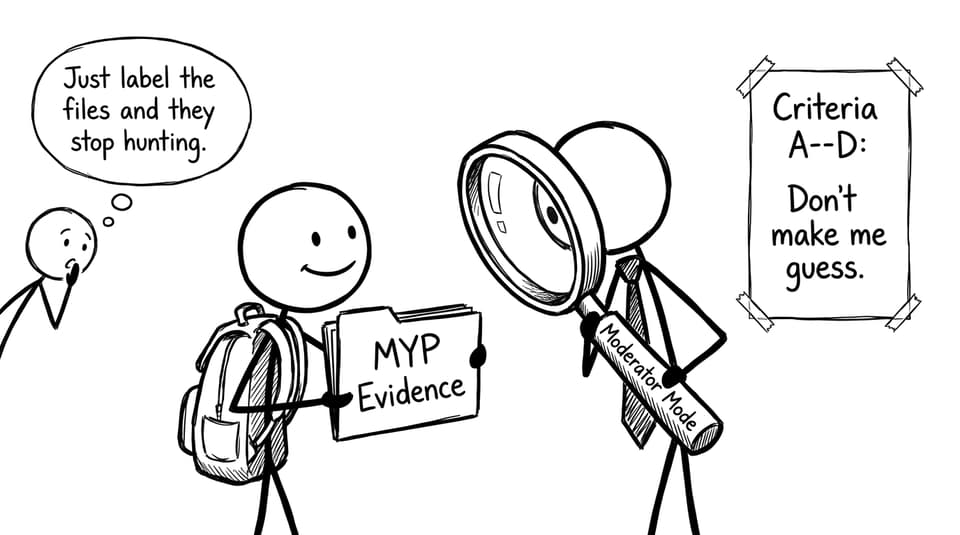
External moderation can feel like a stranger reading your work over your teacher’s shoulder.
That image alone is enough to make a good MYP student overthink everything: the headings, the screenshots, the reflection, even the file name.
But here’s the calmer truth. MYP external moderation is not designed to trick you. It exists to protect the meaning of your grades across schools worldwide, and it rewards something you can control: clear evidence that matches the criteria.
In this guide, you’ll learn what MYP external moderation is, what usually gets moderated, and how to prepare work that is easy to justify against the rubric. Along the way, you’ll see a student-friendly checklist and a simple way to use RevisionDojo’s tools to tighten your evidence and reduce stress.
MYP external moderation in one minute
MYP external moderation is the IB’s quality check on how a school applies assessment criteria. Teachers mark student work using criterion descriptors (often 0-8 per criterion), then the IB reviews a sample to confirm that marking aligns with global standards.
If the sample suggests the school’s marking is consistently too generous or too harsh, results can be adjusted so the standard stays consistent across countries and schools. The point is fairness: an MYP grade should mean the same thing everywhere.
If you want a quick overview of how MYP works across the programme, start with Middle Years Program (MYP) on RevisionDojo.
A short student checklist for MYP moderation readiness
Use this before you submit any major MYP task that might end up in a moderation sample:
-
I can name the exact MYP criteria strands being assessed (not just the task title).
-
My work is structured so a reader can find evidence in under 20 seconds.
-
My screenshots, tables, and appendices are labeled clearly and referenced in the text.
-
My reflection explains decisions and learning, not just feelings.
-
My final file name is sensible (subject_task_criterion or similar), not “final_FINAL_v7”.
-
I can point to where I meet top-band descriptors, with proof.
To understand how criteria convert into grades, read How Are MYP Students Graded? Criteria Explained.
What actually happens during MYP external moderation
Most students imagine every page being inspected. In reality, MYP external moderation usually works like this:
Teachers assess your work internally using criteria
Your teacher marks using MYP criterion descriptors. Across subject groups, you typically have Criteria A-D (the names vary by subject), and each criterion is often scored 0-8.
This is why “doing lots of work” is not the same as “scoring well.” Moderation cares about whether the evidence matches the descriptors, not whether you spent five hours designing a pretty cover.
If you’re fuzzy on rubric language, Creating Rubrics Aligned with IB Criteria in the MYP is a strong reset.
The school selects a representative sample
Schools submit a sample across the achievement range (typically high, middle, and lower scoring work). The sample is meant to show how the school applies the standard, not to single out one student.
Work is submitted digitally with rationale
Alongside the work, teachers may include notes explaining how marks were awarded. Clear organization helps here more than students realize. In MYP moderation, “easy to follow” is a form of academic kindness.
External moderators compare marking to global standards
Moderators review the sample and check if the teacher’s marking matches the intended standard. Schools then receive a report, and marks may be adjusted if needed.
For a similar explanation in the wider IB context (useful mindset-wise), see Are IAs Externally Moderated? What IB Students Must Know.
What types of MYP work can be moderated
In MYP, moderation generally targets internally assessed work across subject groups, such as:
-
Language and Literature
-
Language Acquisition
-
Individuals and Societies
-
Sciences
-
Mathematics
-
Arts
-
Physical and Health Education
-
Design
It can also connect to major programme pieces where evidence and criteria alignment matter intensely. If your school is submitting personal project components, it helps to understand what top-band evidence looks like. This guide is gold: MYP: How to Get a 7 in the Personal Project.
How to make your MYP work “moderator-friendly” (without writing more)
The best moderation preparation isn’t extra paragraphs. It’s better signposting.
Build a visible map from criterion to evidence
Think of MYP criteria like a map key. If a moderator (or your teacher) has to hunt, you lose clarity points even if the thinking is strong.
Practical moves that help immediately:
-
Use headings that match the task sections and reflect criteria focus.
-
Reference evidence explicitly: “See Appendix 2, Table 1” rather than “as shown above.”
-
Label images with what they prove (method change, iteration, evaluation).
-
Use short, honest reflection sentences: “Because X happened, I changed Y, which improved Z.”
If you’re in Language and Literature or Science, these subject-specific breakdowns make the criteria feel concrete:
Replace “rewrite everything” with a tighter study loop
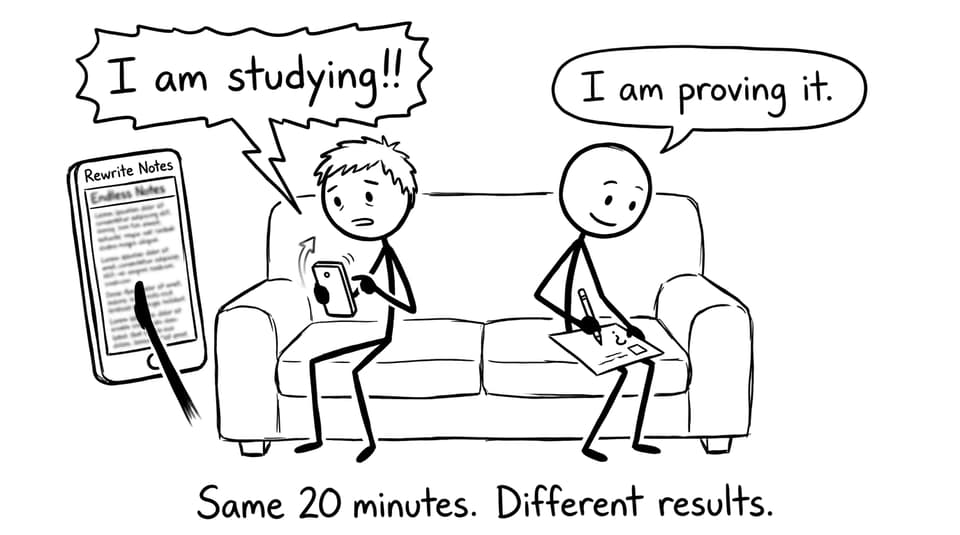
A lot of MYP students respond to moderation anxiety by rewriting notes. It feels safe, but it rarely produces better criterion evidence.
Instead, use a loop that creates proof:
-
Patch understanding with Study Notes.
-
Test yourself with Flashcards.
-
Apply skills with the Questionbank.
-
Ask AI Chat the exact question you’re avoiding.
-
Use Grading tools to get rubric-aligned feedback.
-
Run a timed check with Mock Exams and Predicted Papers.
RevisionDojo is built around that loop, so your study time turns into visible improvement, not just longer documents. If you want a tour of how the tools fit together, read RevisionDojo App: The Smarter Way to Prep for IB Exams.
Use RevisionDojo to pressure-test your evidence
Moderation rewards “easy to justify.” You can practice that skill.
-
Use Questionbank to train command terms and exam-style application.
-
Use Flashcards daily so your explanations stay sharp and concise.
-
If your school uses a major project cycle, run drafts through the MYP Personal Project Grader to spot missing criterion evidence early.
-
Check how top work looks in the IB Personal Project (MYP) Examples library and compare structure, not just content.
Common MYP moderation mistakes students can avoid
Confusing “effort” with “evidence”
In MYP, the rubric doesn’t award marks for how hard it felt. It awards marks for what you can demonstrate. Your job is to convert effort into proof.
Writing reflection like a diary
Reflection is not a mood board. Strong MYP reflection explains decisions, improvements, limitations, and next steps with specific examples.
Leaving organization to the last minute
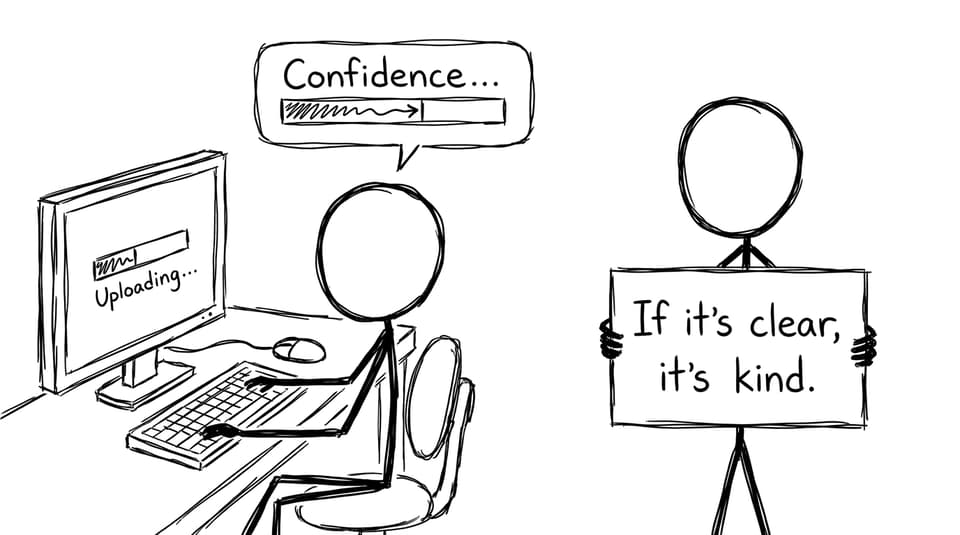
A messy submission can hide good thinking. Clear labeling, consistent formatting, and referenced appendices can raise how confidently your teacher can justify marks, which matters in MYP external moderation.
Closing: Turn MYP moderation into a strength
The students who feel calm about MYP external moderation aren’t magically confident. They just learned the quiet skill moderation rewards: making evidence obvious.
Do that, and moderation stops feeling like judgment. It starts feeling like a spotlight that finally shows what you can do.
If you want one home base to build that clarity, use RevisionDojo: Study Notes to understand, Flashcards to remember, the Questionbank to apply, AI Chat to unblock, Grading tools to tighten criteria alignment, Predicted Papers and Mock Exams to train timing, plus a Coursework Library and Tutors when you need examples and human guidance. Build your MYP work so it’s easy to mark, easy to moderate, and hard to misunderstand.


