

A week before assessments, it happens in almost every classroom.
Someone asks, quietly, as if it might be embarrassing: “So… what do they actually want?”
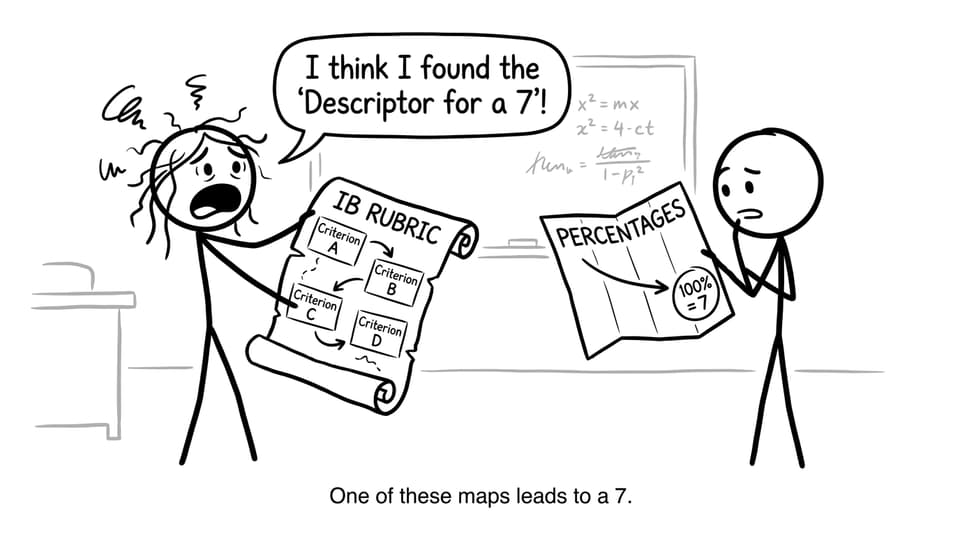
In the MYP, that question is the whole game. Not because the programme is mysterious, but because it is precise. You are not being judged against other students. You are being judged against criteria. A good MYP rubric doesn’t just “grade” you. It tells you how to make your thinking visible, so the marker can reward it.
This matters for exam prep too. The fastest way to improve MYP results is to stop working in the dark and start working with a lamp: the rubric language.
A quick MYP rubric checklist (steal this)
Use this mini-checklist before any major task or timed practice:
-
Identify which MYP criteria (A--D) the task is assessing (usually one or two, not all four)
-
Pull the top-band phrases (7--8) and translate them into “what I must show”
-
Match the task verbs to IB command terms (describe, explain, analyse, evaluate, design)
-
Write one sentence: “A 7--8 response proves… (evidence + skill)”
-
Plan your structure so each section clearly hits the rubric strands
-
Leave space for reflection: what changed, what improved, what you would do next
If you need a bigger picture of how criteria convert into final grades, see How Are IB MYP Students Graded? Criteria Explained.
Why MYP rubrics feel different (and why that’s good news)
Traditional marking often feels like a foggy percentage. In the MYP, assessment is criterion-related: you are assessed against predefined descriptors, not ranked against classmates.
Across subjects, you will see four criteria labeled A, B, C, and D, each typically scored 0--8. The names change by subject group (for example, Sciences vs Language and Literature), but the core idea stays steady: each criterion represents a different skill.
That consistency is powerful for students preparing for exams because it turns improvement into something you can train. If your teacher says you’re weak on organisation, that’s not a personality trait. It’s a criterion. You can practise it.
For subject-specific examples, explore:
Building MYP rubrics aligned to IB criteria (what “aligned” really means)
Aligned doesn’t mean copying the official descriptors and pasting them into a table. It means your rubric:
-
Uses the official MYP criterion focus (what the subject guide intends to measure)
-
Describes a clear progression from basic to sophisticated performance
-
Uses observable language (what a marker can actually see in the work)
-
Fits the task context, so students can act on it
Here’s the hidden truth: most students miss marks not because they “don’t know enough,” but because they don’t show the right evidence for the criterion being assessed. A well-aligned MYP rubric fixes that problem upfront.
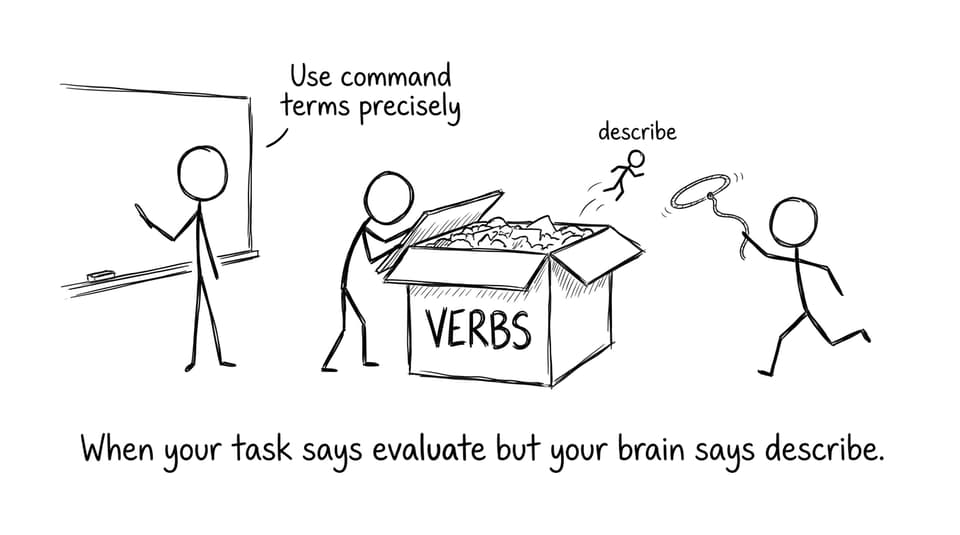
Command terms are the steering wheel of the MYP
A rubric can be beautifully written and still fail if the task’s verbs are vague.
IB-style command terms tell you what kind of thinking earns credit. “Describe” rewards accurate features. “Explain” rewards cause and effect. “Analyse” rewards relationships and patterns. “Evaluate” rewards a judgment with reasons.
If you want a clean guide you can use across subjects, keep this open while you study: How to Use Command Terms Effectively in IB Exams.
A simple process to create (or decode) an MYP rubric
Even if you are not the teacher writing the rubric, you can use this process as a student to “decode” any task. It turns the MYP rubric into a study plan.
Start with the criterion, not the topic
Topics feel big. Criteria are specific.
Ask: “Which criterion is this task really measuring?” A lab might look like it’s about chemistry content, but the marks may come from processing data, evaluating reliability, and reflecting on improvements. That’s MYP logic: the content is the vehicle, the skill is the destination.
If you want more practice reading tasks this way, use Sample MYP Assessment Tasks for Every Subject Group.
Translate top-band descriptors into proof
Top levels often include words like “thorough,” “consistent,” “effective,” and “insightful.” Those aren’t decorations. They point to evidence.
Example translations:
-
“Thorough understanding” = correct knowledge + used accurately in unfamiliar contexts
-
“Effective organisation” = clear line of argument + paragraph control + signposting
-
“Critical thinking” = considers limitations + compares perspectives + justifies conclusions
When your MYP rubric becomes proof-based, it becomes actionable.
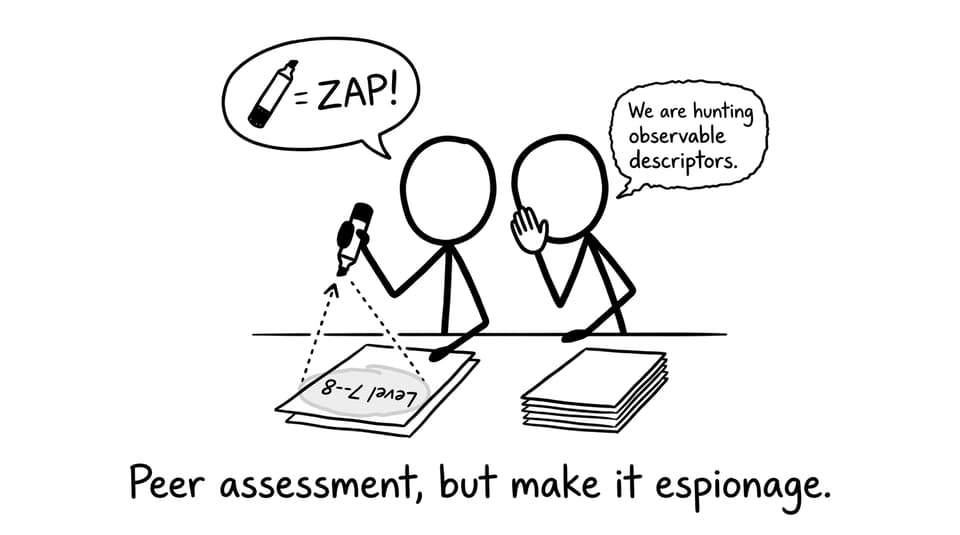
Calibrate levels using observable moves
Vague rubrics create vague studying. Strong rubrics describe moves a marker can see:
-
number and quality of examples
-
precision of terminology
-
logical sequencing
-
explicit evaluation criteria
-
reflection that links decisions to outcomes
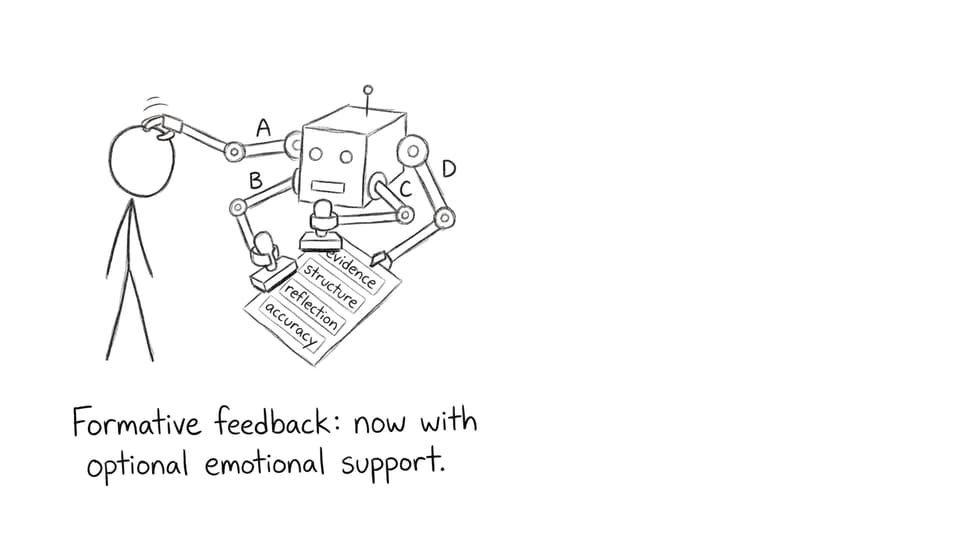
That is also why RevisionDojo’s Grading tools feel so useful: they push you toward evidence-based improvements, not generic encouragement.
Use the rubric before, during, and after drafting
Students often treat the MYP rubric like paperwork you look at after you get the grade. Flip that.
Use it:
-
Before: to plan your headings and decide what evidence to include
-
During: to self-check (did I actually evaluate, or did I just describe?)
-
After: to build an error log for your next timed practice
On RevisionDojo, this loop gets easier when you combine Study Notes (for clear explanations), Flashcards (for quick recall of key terms), Questionbank (for targeted practice), and AI Chat (to test your reasoning and structure).
Common MYP rubric mistakes (and how students can protect themselves)
Even good classrooms sometimes fall into predictable traps. Knowing them helps you respond strategically.
-
Too much text, not enough clarity: if descriptors are long and abstract, make your own “student version” with proof statements.
-
One rubric for every task: a single generic rubric can’t reflect different products (essay vs experiment vs design cycle). Ask which strands are being targeted.
-
Trying to hit all A--D at once: many strong MYP tasks assess only one or two criteria. Trying to do everything leads to shallow evidence.
-
Forgetting reflection: Criterion D in many subjects rewards evaluation and improvement. Reflection is not “I enjoyed it” -- it’s “I changed X because Y, which led to Z.”
For reflection routines, see Encouraging Reflection in MYP Assessments.
Using MYP rubrics as exam preparation (the underrated strategy)
Here’s a quiet advantage: if you train with the MYP rubric language, you also train exam skills.
Rubrics reward the same habits examiners love:
-
Answering the actual question
-
Writing with visible structure
-
Selecting evidence on purpose
-
Explaining reasoning, not just listing facts
-
Evaluating limitations and reaching a justified conclusion
If you want to build structure under pressure, pair your rubric practice with Structure IB Answers to Maximize Marks. Then use RevisionDojo Mock Exams and Predicted Papers to practise timing without guessing what “good” looks like.
Closing: make the MYP rubric your unfair advantage
The MYP is not asking you to be a different person. It’s asking you to show your learning in a specific language: criteria, command terms, and evidence.
If you treat the MYP rubric like a map, you stop wasting effort. You write with purpose. You revise what matters. And you build the same habits that carry into every high-stakes exam later.
When you’re ready to practise this for real, RevisionDojo is built for the full loop: Questionbank drills by skill, Study Notes to rebuild understanding fast, Flashcards for recall, AI Chat for quick clarity, Grading tools for rubric-aligned feedback, plus Mock Exams, Predicted Papers, a Coursework Library, and expert Tutors when you want human guidance.
Start with the rubric. Stay with the criteria. That’s how MYP scores rise.