
The MYP 7 isn't won at the finish line
The night before your submission, your product sits there like a silent witness.
Maybe it's a website. A short film. A cookbook. A prototype. A campaign.
And the panic thought arrives anyway: What if it's not "good enough" for a 7?
Here's the calm truth about the MYP Personal Project: a 7 is rarely about the "impressiveness" of your product. It's about how clearly you prove the project cycle happened in your hands, investigating, planning, taking action, reflecting, with evidence that's easy for a moderator to find.
If you treat MYP success like a story you can document, your report becomes predictable. And predictable is exactly what top marks are built on.
Before you start, set yourself up with the essentials: Middle Years Program (MYP) plus the rubric-aligned MYP Personal Project Grader. They turn your draft into something measurable, which is the whole game in MYP.
A one-page checklist for a 7 in MYP
Use this as your "if I do nothing else, I do this" list:
- Goal: specific, measurable, realistic (one clear finish line).
- Global Context: chosen early and referenced throughout.
- Success criteria: defined before you build the product.
- Process journal: dated entries + screenshots/photos/logs.
- Research: credible sources + proof they changed decisions.
- Planning: timeline + resources + risks + documented changes.
- Evidence of action: drafts, iterations, feedback, testing.
- Reflection: evaluation against success criteria + ATL growth.
- Report structure: mapped to Criteria A to D so markers never hunt.
When you want a model of what "mapped to the criteria" really looks like, keep these open as you work:
- MYP Personal Project: Ultimate Guide
- MYP Personal Project: Report Writing Breakdown
- Writing an Outstanding MYP Personal Project Report
Understand what MYP assessors actually reward
In the MYP, your project is assessed through four criteria. That means your report is not a diary, and it's not marketing for your product. It's a proof document.
A 7-level report does three quiet things consistently:
It makes the goal easy to evaluate
Vague goals create vague evaluation. And vague evaluation caps marks.
A 7-level MYP goal has an audience, an outcome, and a measurable condition.
- Weak: "Learn about nutrition."
- Strong: "Design a 4-week nutrition guide for teenage athletes and test it with two teammates, revising based on their feedback."
If you're still choosing, use MYP Personal Project: How to Choose a Strong Topic and browse Real Examples of IB MYP Personal Projects for Inspiration to see what "specific enough" looks like in the MYP.
It treats evidence like currency
Every high mark in MYP is powered by visible proof: drafts, screenshots, annotated photos, feedback forms, short logs, and decision notes.
One strong screenshot with a caption explaining why you changed something is often worth more than a paragraph of "I worked really hard."
It uses reflection as evaluation, not emotion
Top reflection is structured and evidence-based.
A 7-level MYP reflection sounds like:
- "My goal was X. My success criteria were Y and Z."
- "I met Y because (evidence)."
- "I partially met Z because (evidence)."
- "I changed my method after feedback from (source), which improved (result)."
- "This developed ATL skill (name) because (example)."
If your reflection feels surface-level, it usually means your success criteria were never clear.
Criterion A (Investigating): research that changes decisions
In MYP Criterion A, a 7 isn't "lots of information." It's research that directly shapes what you do.
Build Criterion A with a simple habit:
- After each research session, write one line: "Because I learned X, I decided to change Y."
That single sentence does three things moderators love:
- proves you researched
- proves you understood
- proves it influenced the project
To support your research and writing clarity, RevisionDojo's Study Notes help you summarize ideas cleanly, and Jojo AI helps you turn big topics into tight research questions without drifting off-scope.
Quick A-level evidence you can screenshot
- A table comparing 3-5 sources with credibility notes.
- A short list of research questions and how they evolved.
- A decision log: "Source, then takeaway, then design choice."
Criterion B (Planning): a plan that survives real life
The best MYP plans aren't perfect. They're adaptable and documented.
A 7-level plan typically includes:
- timeline with milestones (weekly is usually ideal)
- resources and tools
- risk planning (what might go wrong, what you'll do)
- revisions to the plan with reasons
The hidden trick: record the changes.
Changing your plan isn't a weakness in MYP. Changing your plan without evidence is.
If you need help with consistency, treat your report like exam prep: short timed sprints. Use RevisionDojo tools to keep your academic rhythm steady alongside the project: the Questionbank for quick practice sessions, and spaced repetition via Flashcards so your other subjects don't quietly collapse.
Criterion C (Taking Action): show the work, not just the result
Criterion C is where students lose marks while still producing a great product.
Why? Because the MYP doesn't grade the final object alone. It grades the process that created it.
So don't just present the finished thing. Present the iterations.
A 7-level evidence stack for Criterion C
Aim to include at least some of the following:
- early draft/prototype + notes on what failed
- second version + what improved
- feedback form or quotes + what you changed because of it
- testing results (even informal)
- screenshots/photos of stages (not just final)
Think like a scientist: the product is your conclusion. Your drafts are your method.
Criterion D (Reflecting): the highest-scoring honesty
In MYP, Criterion D is where a 7 often appears, even with a simple product. Because reflection is where you prove learning.
Use a reflection structure that keeps you analytical:
The 7-level reflection template
- Restate goal and success criteria.
- Evaluate each success criterion with evidence.
- Explain challenges: what happened, why, what you changed.
- ATL growth: choose 2-3 ATL skills and show examples.
- Next time: one specific improvement, not a generic promise.
If you want your reflection to sound like MYP language (without feeling robotic), build a small deck of ATL phrases and command terms in RevisionDojo Flashcards. It's a small habit that makes your report read more precise.
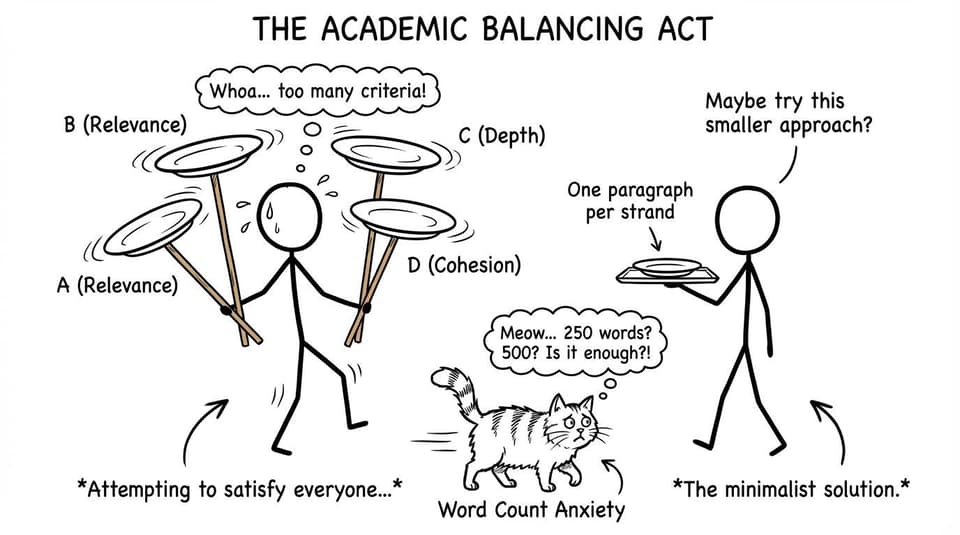
The RevisionDojo workflow: turn your report into a feedback loop
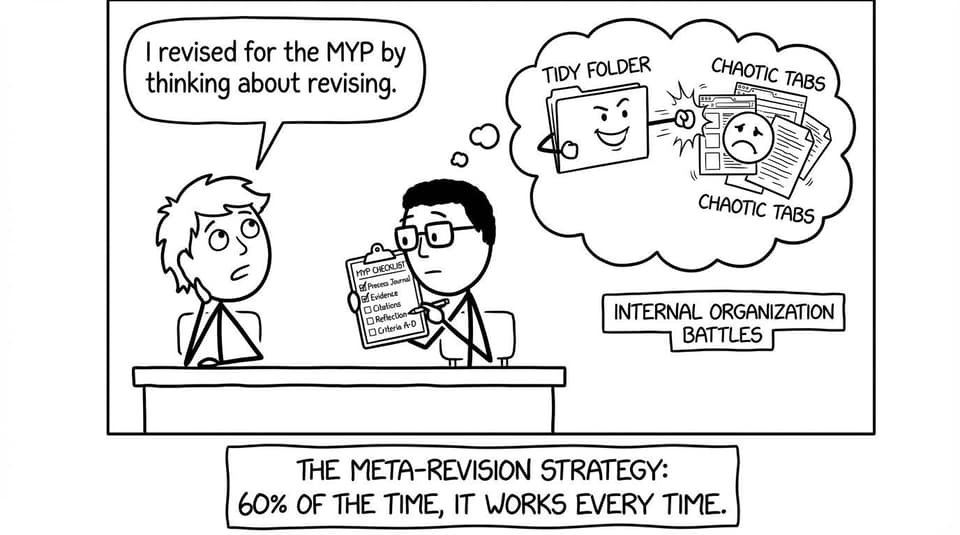
A 7 is usually the result of iteration, not inspiration.
Here's a clean loop that works well in MYP, especially while you're also preparing for exams:
Draft small, then grade early
- Write one criterion section (A, B, C, or D).
- Run it through the MYP Personal Project Grader.
- Fix the missing evidence or unclear explanation.
Benchmark your structure
When you're unsure what "good" looks like, don't guess. Compare.
Use IB Personal Project (MYP) Exemplars to sanity-check your structure and level of specificity.
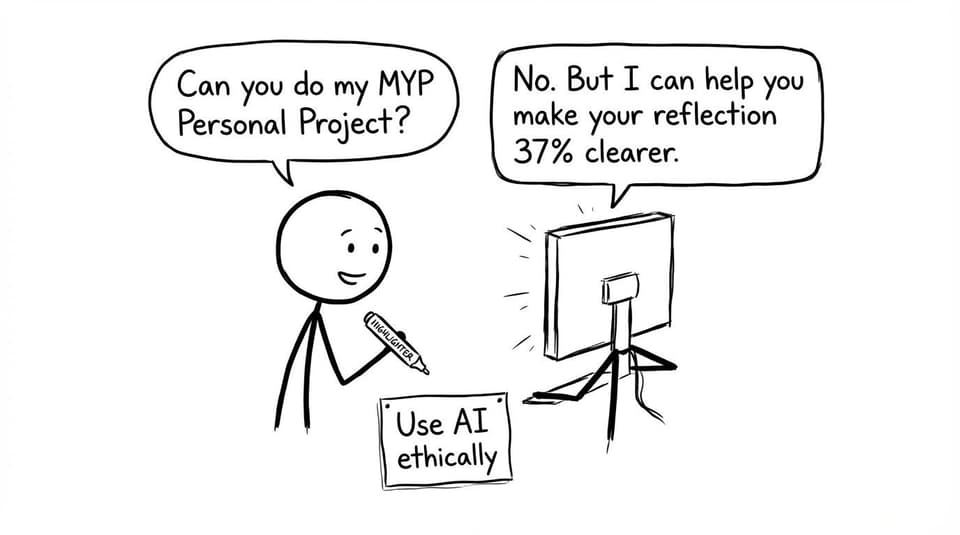
Use AI ethically for clarity, not shortcuts
Jojo AI is most powerful when you ask for:
- clearer phrasing of a paragraph
- a checklist of evidence missing for a criterion
- questions a moderator would ask
- help turning a messy process journal entry into an analytical sentence
That keeps you within academic honesty expectations while improving writing quality.
Common MYP Personal Project mistakes that quietly cap you
Over-scoping the product
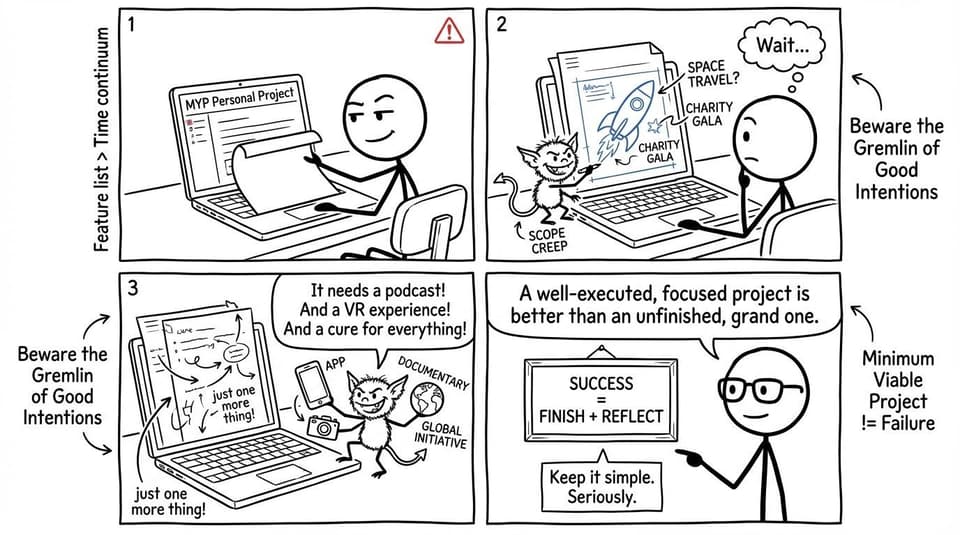
If you feel your project expanding every week, you're not alone. Scope creep is the most common reason students lose time, skip evidence, and rush reflection.
A 7-level MYP strategy is to make the product slightly smaller than you think you need, then invest saved time into documentation and evaluation.
Writing a report that hides the criteria
Markers should never have to guess where Criterion B is happening.
Use headings that match Criteria A to D. Make evidence visible. Label appendices. Add short captions.
Treating the process journal like a diary
The process journal is not "what I did today."
It's "what I did, why I did it, what changed, and what I learned."
Closing: make your MYP project easy to mark
A 7 in the MYP Personal Project is rarely a mystery. It's usually a student who made the assessor's job simple: clear goal, visible evidence, criteria-mapped structure, and reflection that evaluates instead of narrates.
If you want the fastest path to that calm confidence, build your feedback loop with RevisionDojo. Start with the MYP Personal Project Grader, compare against IB Personal Project (MYP) Exemplars, and keep your wider MYP exam prep steady using the Questionbank, Study Notes, and Flashcards.
Do the MYP cycle well once, by investigating, planning, acting, and reflecting, and you'll recognize the same rhythm later in the Diploma Programme, just with higher stakes.