
It is reasonable to worry about the IB workload before your child begins. The Diploma Programme asks students to coordinate six subjects with Theory of Knowledge (TOK), the Extended Essay (EE), Creativity, Activity, Service (CAS), and several forms of assessment. That sounds formidable because it is a genuine step up, not because your child is already behind.
The clearest answer is also reassuring: preparing your child for the IB workload is less about studying the syllabus early and more about building a sustainable way to work. Before DP1, help your child choose appropriate subjects, practise weekly planning, strengthen a few foundational skills, protect sleep, and become comfortable asking for help. The goal is not to manufacture a perfect IB student over the summer. It is to make the first demanding week feel familiar rather than chaotic.
A practical pre-IB checklist for families
Before the programme begins, aim to have these foundations in place:
- Confirm that subject choices fit your child's strengths and possible university plans.
- Learn what six subjects, TOK, the EE, CAS, and internal assessment involve.
- Introduce one shared calendar for deadlines and fixed commitments.
- Practise three or four focused study sessions each week.
- Review essential writing, mathematical, language, or research skills where needed.
- Protect regular sleep, exercise, friendships, and genuine downtime.
- Agree on how parents will offer support without managing every task.
- Identify the DP coordinator, teachers, counsellor, and other sources of help.
This is preparation for capacity, not acceleration. A child who starts DP1 rested, organized, and willing to seek feedback is often better equipped than one who has spent the holiday anxiously trying to get ahead.
Understand what creates the IB workload
The IB Diploma Programme combines breadth with independence. Students complete six subjects and the three-part core: TOK, an independent Extended Essay of up to 4,000 words, and ongoing CAS experiences. The IB also uses both external examinations and internal assessment, which may include investigations, oral work, fieldwork, performances, or other subject-specific tasks.
The difficulty is therefore not simply the amount of content. Several different kinds of work must move forward at once. A student may need to solve mathematics problems, plan an essay, collect data, prepare an oral response, and document CAS within the same month.
Parents do not need to memorize every regulation. They should, however, understand the broad structure. RevisionDojo's guide to how many subjects students take in the IB offers a useful starting point.
Ask the school for its own assessment calendar and programme handbook too. Schools determine many internal deadlines and course arrangements, so the DP coordinator is the best source for questions about local implementation.
Make subject choices with workload in mind
A difficult-looking combination is not automatically an impressive one. Subject selection should balance interest, demonstrated ability, university prerequisites, and the amount of sustained effort each course will require.
Official IB rules normally involve at least three and no more than four Higher Level subjects, with the remaining subjects at Standard Level. HL courses go deeper and carry more recommended teaching time. A fourth HL may be appropriate in some circumstances, but it should not be chosen merely to prove ambition.
Before confirming choices, encourage your child to:
- Shortlist possible university fields without demanding a final career decision.
- Check current entry requirements on universities' official websites.
- Discuss uncertain choices with the school's DP coordinator or counsellor.
- Place genuine strengths and interests at the centre of HL selection.
- Consider the combined workload rather than judging each subject separately.
The guide to choosing IB Higher Level subjects can help frame the conversation. The parent should supply perspective; the student should retain meaningful ownership. That ownership matters when enthusiasm is tested by a difficult unit months later.
Build a weekly system before DP1
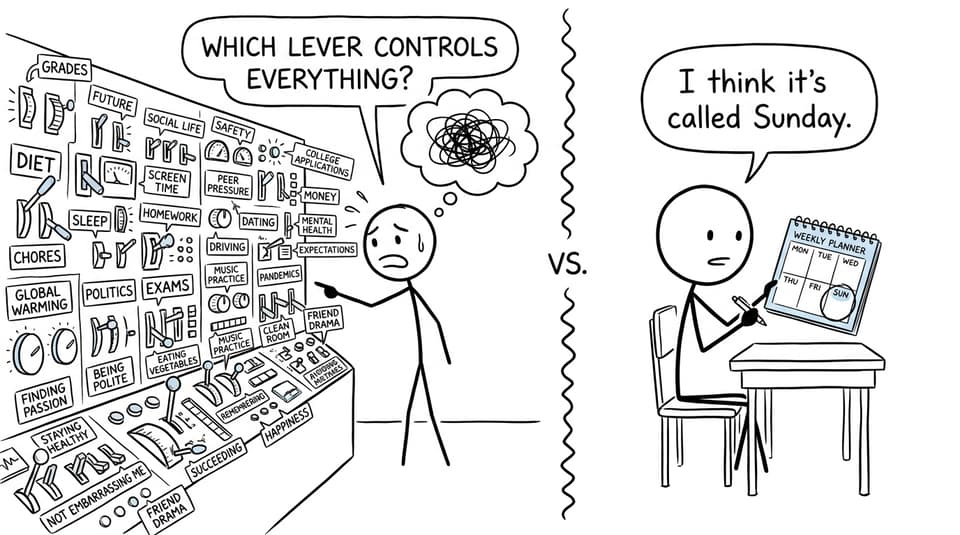
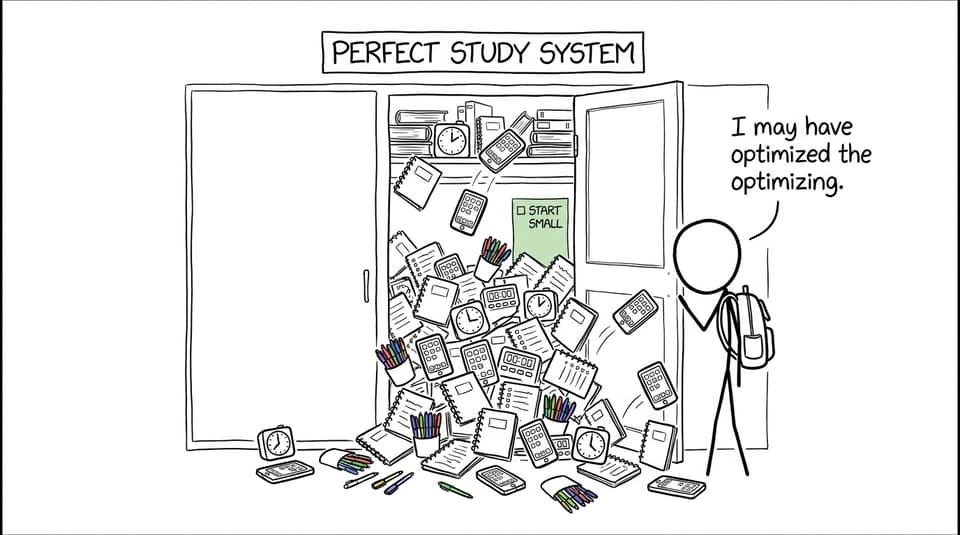
Students rarely become overwhelmed because they forgot to buy the right planner. They become overwhelmed when work remains invisible until it becomes urgent.
Several weeks before DP1, let your child test a simple weekly planning ritual. Once a week, they should review fixed commitments, choose a few important academic tasks, estimate when they will complete them, and leave buffer space. The balanced IB study schedule guide provides a structure that families can adapt rather than copy rigidly.
Use observable tasks. "Study chemistry" is vague; "review bonding notes and answer five related questions" has a finish line. Large projects should become milestones such as choosing a research area, finding sources, drafting an outline, and revising one section.
Parents can initially join a ten-minute weekly review, but the student should operate the calendar. Ask, "What is your plan?" before saying, "Here is what you should do." Research on adolescents and academic stress suggests that supportive parent relationships can encourage strategizing and help-seeking, while negative interactions are associated with more avoidance-oriented coping.
The aim is not parental withdrawal. It is a gradual transfer of control.
Practise an effective study loop, not longer hours
Pre-IB preparation should be light and skill-based. Three or four short sessions each week are enough to rehearse a useful cycle:
- Learn one small concept.
- Close the source and retrieve the main idea.
- Apply it to a relevant question.
- Check the response carefully.
- Record the reason for any significant mistake.
- Revisit the skill after a delay.
This is more valuable than repeatedly highlighting pages. Your child can explore practical IB time-management techniques and the broader step-by-step IB study process before classes begin.
Keep the stakes low. Pre-DP practice is not an attempt to predict final grades. It is a chance to discover whether your child works better with paper or digital planning, needs silence or modest background noise, and can identify confusion before frustration takes over.
Strengthen foundations without teaching the whole course
The most useful preparation depends on the chosen subjects. A future Mathematics HL student may benefit from reviewing algebraic manipulation, functions, graphs, units, and scientific notation. An essay-heavy student can practise forming a claim, selecting evidence, and explaining how that evidence supports an argument. Language students benefit from regular reading, vocabulary retrieval, listening, and short written responses.
Research habits deserve attention across subjects. Before DP1, students should know how to record source details, distinguish quotation from paraphrase, connect notes to their original sources, and follow the school's academic integrity and AI-use policies.
Use teacher feedback or a brief diagnostic task to identify one or two gaps. Do not turn every weakness into a summer curriculum. RevisionDojo's pre-IB preparation checklist helps families focus on transferable foundations instead of racing into advanced content.
Protect sleep and life outside academics
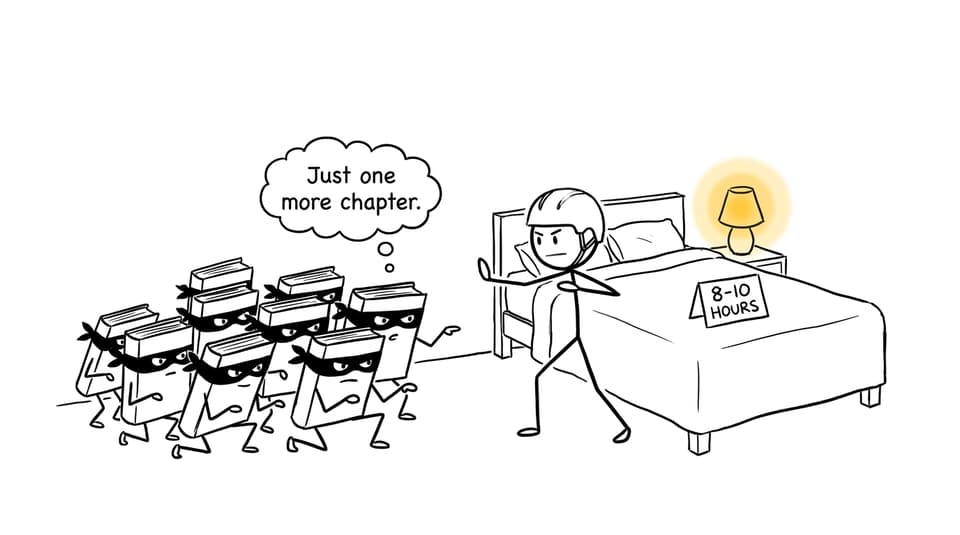
Sleep is not the reward students receive after finishing everything. It is part of their ability to learn. The American Academy of Sleep Medicine recommends that teenagers aged 13 to 18 regularly receive 8 to 10 hours of sleep per 24 hours. Regularly getting less is associated with problems involving attention, learning, behaviour, and health.
Build the household routine backward from a realistic bedtime. Keep meals reasonably predictable, preserve physical activity, and avoid treating hobbies as the first disposable item whenever work increases. CAS itself reflects the IB's broader interest in creativity, activity, and service, but a healthy non-academic life also gives students perspective and recovery.
Watch for persistent exhaustion, disrupted sleep, withdrawal, loss of interest, physical complaints, or a striking change in behaviour. These signs do not establish a diagnosis, but they justify a calm conversation. RevisionDojo's guide to recognizing excessive IB stress explains what parents can notice and how to respond. If wellbeing concerns are persistent or serious, involve the school and an appropriate healthcare professional.
Decide what helpful parenting looks like
Good IB stress support is calm, available, and specific. It does not turn every dinner into a performance review.
Agree on a few boundaries before DP1. Your child might want help protecting quiet study time, remembering occasional administrative deadlines, or talking through priorities. They may not want daily grade checks or unsolicited editing. Parents should never write, rewrite, or substantially shape assessed work.
Try replacing outcome questions with process questions:
- What feels most important this week?
- Where are you stuck?
- Do you want listening, advice, or practical help?
- Is this a planning problem, a knowledge gap, or an energy problem?
- Who at school could clarify this?
If workload begins to affect family relationships, the guide to balancing IB workload and family time offers a useful reset. A family should remain a place where the student is more than a score.
Start small with RevisionDojo before DP1
The months before DP1 are a good time to build a modest revision habit with RevisionDojo, the ultimate IB resource. Your child might begin with two short sessions each week: use Study Notes to understand one foundational idea, Flashcards to retrieve it, and the Questionbank to apply it. AI Chat can help clarify confusion, while an error log turns mistakes into specific next steps.
As the programme progresses, RevisionDojo's Grading tools, Coursework Library, and Tutors can provide more targeted support. Later, Predicted Papers and Mock Exams help students rehearse timing and exam decisions under realistic conditions. The RevisionDojo IB exam-preparation workflow explains how these features connect.
Do not use every tool immediately. Begin with one repeatable loop and let independence grow around it. That is the quiet advantage of starting before the workload hits: when DP1 becomes busy, your child will not need to invent a revision system while trying to survive it.
Prepare the habits, not every answer
You cannot remove every difficult week from the IB, and trying to do so may remove the independence your child needs to develop. You can make those weeks more manageable.
Choose subjects thoughtfully. Make work visible through weekly planning. Practise retrieval and application. Protect sleep. Keep communication warm, and know when to involve the school. Then let RevisionDojo provide a consistent place to learn, practise, receive feedback, and build confidence.
The best preparation is not arriving at DP1 already exhausted from getting ahead. It is arriving rested, informed, and equipped with habits that still work when life becomes busy.