
For IB students sitting exams in May 2028 (started DP1 in August 2026).
The best May 2028 IB language b study advice is to practise reading, listening, writing and speaking every week while building vocabulary around the five prescribed themes. Study under the current Language B guide, first assessed in 2020, because the revised course with first assessment in May 2029 does not apply to your cohort.
Language learning rewards consistency more than occasional intensity. Ten focused minutes spent retrieving vocabulary or speaking aloud can achieve more than an hour spent rereading notes without producing any language.
The goal, then, is not to create the largest folder. It is to build a system that repeatedly asks you to understand, choose and communicate.
Your May 2028 study checklist
- Organize notes around the five prescribed themes.
- Practise all four skills every week.
- Learn vocabulary as phrases rather than isolated words.
- Complete timed writing and receptive-skills tasks regularly.
- Record short spoken responses and review them critically.
- Match every resource to the current guide, first assessed in 2020.
- Prepare for the different SL and HL oral requirements.
- Keep an error log that turns feedback into future practice.
RevisionDojo's IB English B resources bring together Study Notes and Questionbank practice for students taking English B. Students studying another Language B can apply the same planning principles to their target language while using course-specific materials supplied by their school.
Which Language B syllabus applies in May 2028?
Official IB information available in October 2026 confirms that May 2028 students remain on the current Language B course. Its five prescribed themes are identities, experiences, human ingenuity, social organization and sharing the planet.
The IB has announced an updated Language B course, but its first assessment is May 2029. Its curriculum changes therefore do not govern the May 2028 examination session. This distinction matters because online resources may begin discussing the newer guide before your own assessments are complete.
The exact May 2028 examination timetable has not yet been published. Final grade boundaries, specific examination content and session-specific markschemes are also unavailable. Treat websites claiming to know these details with caution and plan from the published guide, official specimen materials and current assessment model instead.
For a fuller thematic overview, use RevisionDojo's Language B syllabus and study strategy.
What you are preparing for
Under the current model, external assessment accounts for 75% of the final result and the individual oral accounts for 25%. Paper 1 assesses productive skills through writing. Paper 2 assesses receptive skills through separate listening and reading components.
| Component | SL preparation | HL preparation |
|---|---|---|
| Paper 1 writing | One task of 250-400 words in 1 hour 15 minutes | One task of 450-600 words in 1 hour 30 minutes |
| Paper 2 listening | Approximately 45 minutes | Approximately 1 hour |
| Paper 2 reading | 1 hour | 1 hour |
| Individual oral | Visual stimulus connected to a prescribed theme | Extract from one of the two studied literary works |
| Recommended teaching time | 150 hours | 240 hours |
Both levels require accurate, appropriate communication rather than ornamental complexity. HL expects a broader range and greater complexity of language, and HL students study two literary works originally written in the target language.
How to make Language B notes that improve performance
A vocabulary list arranged alphabetically is tidy but strategically weak. In an assessment, you need language connected to an idea, audience and purpose.
Create one living page for each subtopic within the five themes. Include:
- 10-15 useful phrases or collocations
- verbs with their natural prepositions
- two or three flexible idiomatic expressions
- contrasting viewpoints
- one cultural example you genuinely understand
- common text-type conventions
- corrections from your own work
For example, a page on technology could group language for describing innovation, weighing benefits, expressing concern and proposing regulation. This prepares you to think with the language rather than translate an English sentence word by word.
Turn the strongest material into Flashcards, but require active production. Seeing a target-language phrase and recognizing it is easier than being given an idea and producing the phrase unaided. RevisionDojo's guide to recommended topics for every Language B theme can help you identify sensible content gaps.
What to practise and how often
A balanced week is more useful than completing five reading tasks while avoiding speaking. Try this repeatable schedule:
| Frequency | Practice |
|---|---|
| Daily, 10-15 minutes | Retrieve vocabulary, review Flashcards or speak about one prompt without notes |
| Twice weekly | Complete one reading or listening extract and justify every answer from evidence |
| Weekly | Write one timed response with the correct text type, audience and register |
| Weekly | Record a 3-4 minute oral response, then identify hesitation, repetition and avoidable errors |
| Every 2-3 weeks | Complete a longer timed set combining multiple skills |
| Monthly | Review your error log and rebuild the next month's plan around recurring weaknesses |
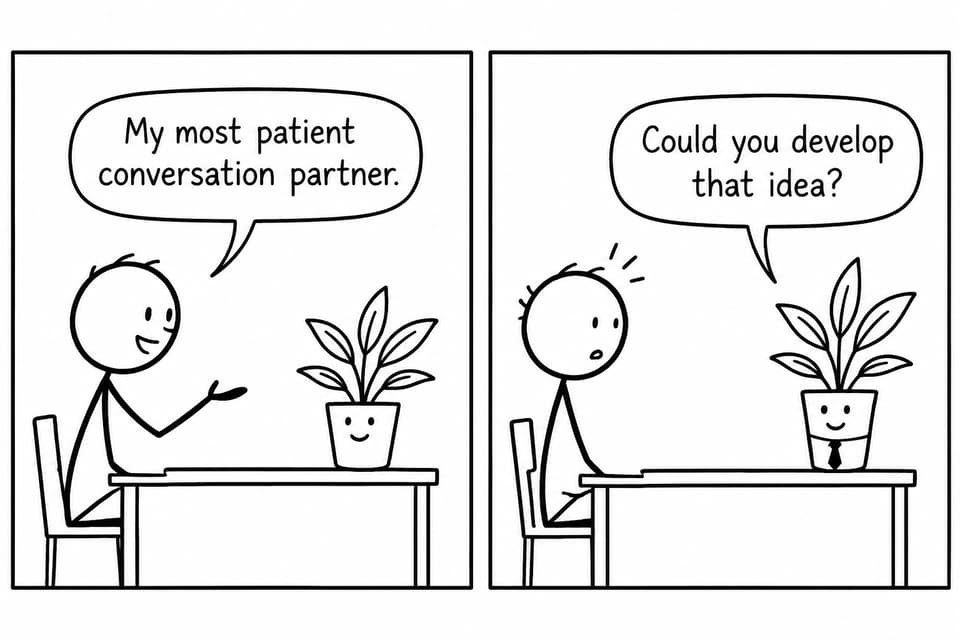
Speaking practice does not always require another person. Describe a visual, compare perspectives or summarize an audio recording aloud. Then use a tutor, teacher or RevisionDojo's AI Chat to test whether your ideas remain coherent when follow-up questions interrupt a rehearsed answer.
For a broader routine, see these essential tips for mastering Language B.
Turn feedback into the next week's plan
Practice becomes useful when it changes what you do next. A mark alone describes a result; an error log explains the decision that produced it. After each task, classify problems under four headings: comprehension, language accuracy, task fulfilment and timing. Then write a specific correction beside each one.
Suppose a writing response loses control near the end. The real problem might be slow planning, limited linking language or too much time spent perfecting the introduction. Each diagnosis leads to a different remedy. One calls for timed outlines, another for retrieval practice, and the third for stricter checkpoints during the task.
Keep the log selective. Recording every missing accent or unfamiliar word can create a document too large to use. Focus on recurring errors, misunderstandings that changed an answer and weaknesses that affected communication. Review three priorities before the next related task, then check whether they appeared again.
Feedback should also produce a small piece of immediate practice. Rewrite an unclear paragraph, answer the missed listening question from the relevant evidence or record the oral explanation again with fewer notes. This closes the distance between recognizing advice and applying it.
At the end of each month, look for patterns across skills. A limited range of connectors may affect writing and speaking, while weak recognition of verb forms may damage listening and reading. Fixing the shared foundation is usually more efficient than treating each task as an isolated problem.
Use materials that match the current syllabus
The safest practice materials are the current guide, official specimen papers, teacher-authorized examination questions and tasks explicitly labelled for the course first assessed in 2020. Materials should test thematic comprehension, appropriate writing choices, authentic listening and reading, and spontaneous oral interaction.
RevisionDojo's Questionbank lets you focus practice instead of searching randomly. Study Notes establish the content, Flashcards support retrieval, and Grading tools help identify weaknesses in a response. Predicted Papers and Mock Exams are most valuable later, once individual skills are reasonably secure. Predictions are practice simulations, not disclosures of what will appear in May 2028.
The Coursework Library can show how purposeful communication is developed, while Tutors can provide human feedback on pronunciation, interaction and recurring language errors. Students concentrating on written production can also use these Language B essay and writing tips.
Common habits that lose marks
Choosing the wrong text type
A response can contain strong vocabulary and still be inappropriate for its purpose. Before writing, identify the audience, desired outcome, register and conventions. Do not force memorized headings or phrases into every task.
Answering listening questions from memory
Write from what the audio communicates, not what seems generally plausible. Watch for negatives, changes of opinion, speaker attitude and distractors that repeat words without conveying the correct meaning.
Copying large sections in reading answers
Locate the evidence, then provide only what the question requires. Check pronoun references and whether the question asks for a reason, example, comparison or inference.
Memorizing an oral script
A polished opening can help, but a fully memorized performance often becomes fragile when the teacher asks an unexpected question. Practise extending ideas with a reason, example and consequence instead.
Using ambitious language without control
Complexity helps only when meaning remains clear. Reliable tense control, agreement, word order and precise vocabulary usually serve communication better than an impressive phrase used incorrectly.
How HL preparation should differ from SL
SL students should prioritize control, thematic vocabulary, flexible text types and confident discussion of visual stimuli. Practise moving from description to interpretation. Explain what a visual suggests about a theme rather than listing everything visible.
HL students need the same foundation plus sustained literary preparation. For each of the two works, build an extract bank containing context, characterization, central concerns, stylistic choices and useful target-language quotations approved through your course. Practise discussing how meaning is created in an unseen selected extract, then moving naturally into broader thematic conversation.
HL does not mean filling every sentence with rare vocabulary. It means communicating more nuanced ideas through a wider and more controlled linguistic range. The RevisionDojo Language B resource collection can support that development throughout DP1 and DP2.
Build a system that becomes more specific
Early preparation should be broad: themes, vocabulary, grammar and regular exposure. During DP2, practice should become increasingly diagnostic. Ask which skill is weak, which error repeats and which task condition causes it.
RevisionDojo works best as the centre of that feedback loop. The Questionbank reveals what you can produce under pressure, Grading tools clarify what to repair, Study Notes fill the gap, and Mock Exams test whether the repair holds when tasks are combined.
Your specific next step is to open RevisionDojo's Questionbank today, choose one current-syllabus Language B task, complete it under timed conditions and record your three most important errors.