



The rumour usually arrives on a specific day.
Results day.
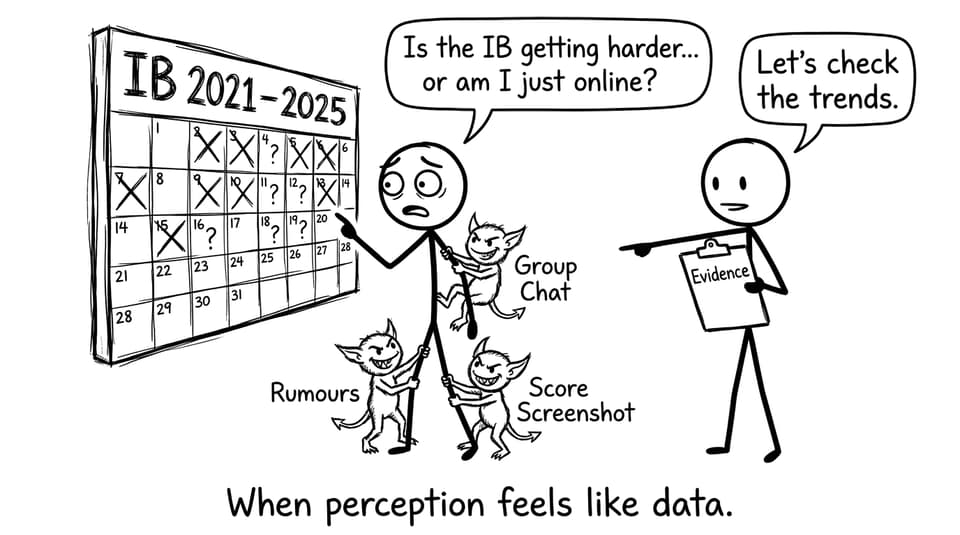
Someone posts a screenshot. Someone else adds a caption: “IB is getting harder.” Within hours, it feels like a fact, not a feeling.
But difficulty is a slippery thing. It changes shape depending on context: the year you sat exams, the sleep you didn’t get, the teacher you did (or didn’t) have, and the Subject Selection you made when you were 15 and optimistic.
This article looks at what 2021-2025 trends actually suggest, why the IB can feel tougher even when the system is broadly stable, and how smart Subject Selection plus better preparation beats rumours every time.
Quick clarity checklist (save this)
-
What changes in outcomes do (and don’t) mean from 2021-2025
-
Why small statistical shifts feel personal
-
What “post-pandemic” really changed (hint: conditions, not magic)
-
How Subject Selection affects perceived difficulty
-
What to focus on for exam performance: controllables, not narratives
Why the IB feels harder (even before you look at data)
Most “IB is harder now” conversations start with lived experience, not evidence. And that’s not irrational. It’s human.
From 2021 onward, many cohorts dealt with disrupted learning, uneven teaching time, and a general sense that the floor beneath them wasn’t stable. Then, at the same time, university competition got louder online. Not necessarily more brutal in every country, but more visible, more constant, more comparison-driven.
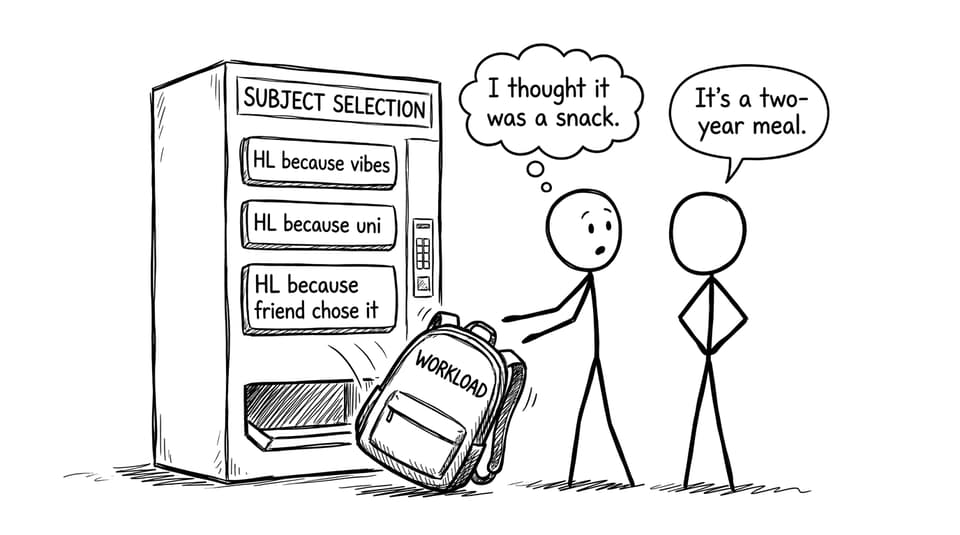
Add one more ingredient: Subject Selection. When students choose HLs because friends did, because it “sounds impressive,” or because someone said it “keeps options open,” they often discover the workload later. That discovery can easily get translated into a bigger claim: “The IB changed.”
If you’re actively choosing subjects now, start with this RevisionDojo guide: Which IB subjects should I take if I don’t know my university plan yet?
What 2021-2025 trends actually show (the boring truth)
Across 2021-2025, what stands out most is continuity.
-
Outcomes fluctuate, but not in a way that screams “the IB secretly raised difficulty.”
-
Cohort size and global context vary, which naturally nudges averages and distributions.
-
One exam session can feel unusually harsh in a specific subject, and that story spreads faster than the broader pattern.
In other words: the IB is demanding, but there’s no clear evidence of a hidden “difficulty ratchet” being turned up every year.
Why does that matter for you right now? Because if you believe the system is spiralling beyond your control, you’ll study differently. You’ll chase panic tactics. You’ll switch strategies late. You’ll over-collect resources and under-practise.
Instead, treat the IB like what it is: a criteria-driven system that rewards trained skills. That’s why tools built around mark-scheme logic are powerful, like RevisionDojo’s Questionbank and targeted practice workflows.
If you want a practical routine, use: How to Study for IB Exams: Step-by-Step Guide
Why small changes feel huge to students
In a global programme, small percentage shifts can be statistically normal but emotionally loud.
A 1-2% change in a pass rate looks tiny in a report. But when it lands on your phone as a screenshot, it feels like a personal message: “Good luck, you’re next.”
Another reason: students anchor to the most vivid example. One unexpectedly tough paper becomes the story of the whole year. And because IB students talk across time zones, the hardest moments become the most shared moments.
This is also where Subject Selection shapes perception. If your combination stacks multiple heavy-writing or heavy-problem-solving courses at HL, your week-to-week effort is higher. The IB hasn’t changed. Your daily reality has.
To understand the baseline structure you’re signing up for, read: How many subjects do you take in the IB?
Did the IB remove “leniency” after the pandemic?
Some students describe 2021-2022 as “easier,” then assume the IB later “tightened up.” What’s more accurate is this: contexts and assessment arrangements changed, but the idea of criterion-based standards didn’t vanish.
When conditions become more normal again, it can feel like the bar moved, because your environment changed. Full exam routines return. Timing pressure returns. The quiet discipline of consistent revision matters again. That transition can feel like difficulty.
The best antidote is rehearsal. Not reading. Not highlighting. Rehearsal.
RevisionDojo makes that easier by connecting practice loops: Questionbank for volume, Study Notes for clarity, Flashcards for recall, AI Chat for fast explanations, and Grading tools to see how marks are actually awarded. Then you pressure-test with Predicted Papers and Mock Exams.
If you want to practise full exam-style sessions, start here: IB Predicted Papers
What actually changed for students (and why Subject Selection matters more now)
What changed most from 2021-2025 isn’t an invisible IB policy. It’s student life.
-
More comparison (scores, study routines, “day in the life” revision content)
-
Less tolerance for last-minute preparation
-
More strategic university planning earlier
-
More pressure to pick “useful” subjects
That last point is why Subject Selection has become a bigger deal. A poor-fit subject choice doesn’t just cost marks. It costs energy, time, and confidence across the whole Diploma.
If you’re deciding between options, zoom out: the best Subject Selection is the one you can sustain for two years while still having enough attention left for TOK, EE, CAS, and your actual life.
For a full beginning-to-end roadmap, keep this bookmarked: The Complete IB Revision Guide: From Subject Selection to Final Exams
What to focus on instead of rumours
Here’s the quiet strategy that wins regardless of session-to-session noise:
-
Learn the assessment language (command terms, mark allocation, structure)
-
Practise exam-style questions weekly (not occasionally)
-
Review mistakes like patterns, not failures
-
Train timing early, so pressure feels familiar
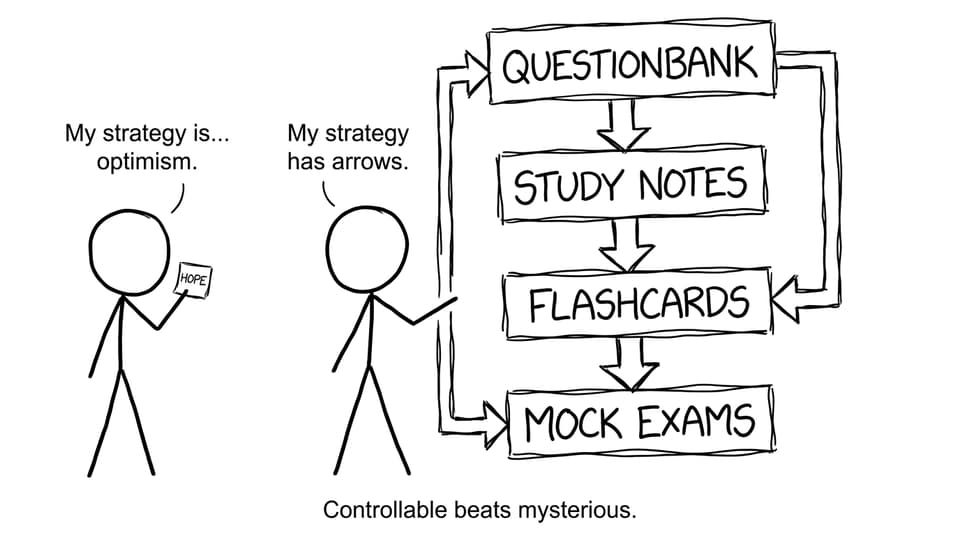
A helpful way to make this real is to build a simple loop:
-
Study Notes for one subtopic
-
Flashcards for daily recall
-
Questionbank for targeted practice
-
Mock Exams for timing
-
AI Chat + Grading tools for feedback
If you need a clean overview of what to use (and when), see: Best resources for IB exam preparation
Closing: the story you tell yourself matters
If you want the honest takeaway from 2021-2025, it’s this: the IB is still hard, but it’s not a moving target you can’t prepare for.
What’s becoming harder is the noise around it. The comparison. The pressure to perform publicly. The feeling that every choice is permanent.
So make one choice that is permanent in the best way: commit to smart Subject Selection, then train the skills the IB actually rewards. RevisionDojo is built for exactly that journey, with Study Notes, Flashcards, Questionbank, AI Chat, Grading tools, Predicted Papers, Mock Exams, a Coursework Library, and Tutors when you want a human to push your thinking.
When you work from evidence, rumours stop sounding like prophecy. They just sound like background.