
The first time most students hear “self taught,” they picture freedom.
No weekly essays. No cold calls. No teacher collecting annotations.
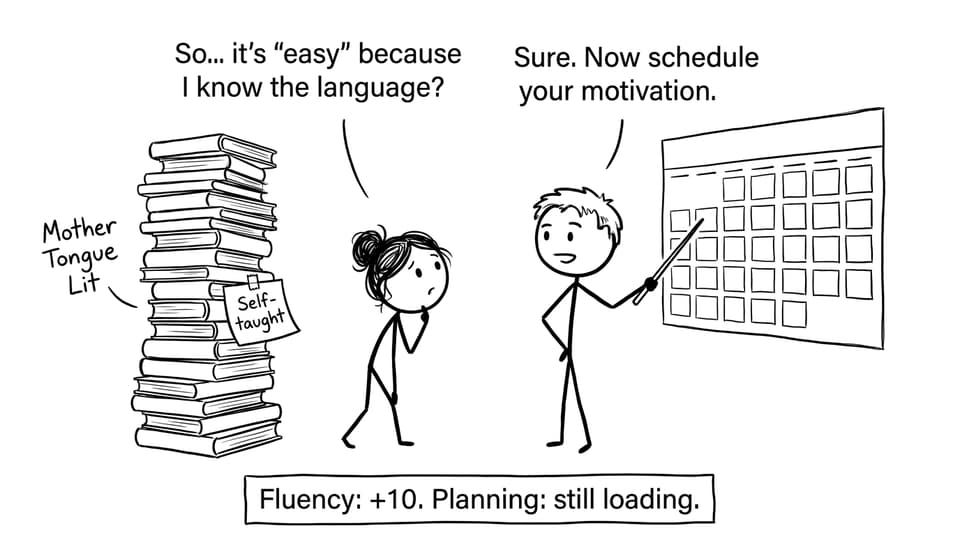
Then the calendar appears. The deadlines don’t disappear; they just become yours.
That’s the quiet truth of IB Self Taught Mother Tongue Lit: it can feel easier in the moment because you already speak the language, and harder over time because the course asks you to build your own structure. If you’re deciding whether SSST is “easier or harder,” the honest answer is: it depends on what kind of difficulty you handle best.
What SSST is (and what it isn’t)
SSST (School Supported Self Taught) Mother Tongue Literature is an IB option that lets you study Language A: Literature in your native language even if your school doesn’t teach it as a regular class. You learn independently, with your school providing organizational support and check-ins.
If you want the official-feeling overview written in student-friendly terms, start here: What is School Supported Self Taught Mother Tongue Literature?
Here’s what IB Self Taught Mother Tongue Lit usually looks like in real life:
-
You choose or confirm a reading list in your mother tongue.
-
You plan your reading, note-making, and practice tasks.
-
Your school supports you (mentor/coordinator) but doesn’t run full lessons in the language.
-
You prepare for the same standard of assessment as any Language A course, just through a different path.
A quick “easier or harder” checklist
Before you label IB Self Taught Mother Tongue Lit as easy or hard, check which side you’re on:
It often feels easier if you...
-
read quickly and naturally in your mother tongue
-
can explain subtle tone and cultural nuance without translating in your head
-
enjoy independent study and don’t need external pressure to start
It often feels harder if you...
-
procrastinate unless someone checks your work weekly
-
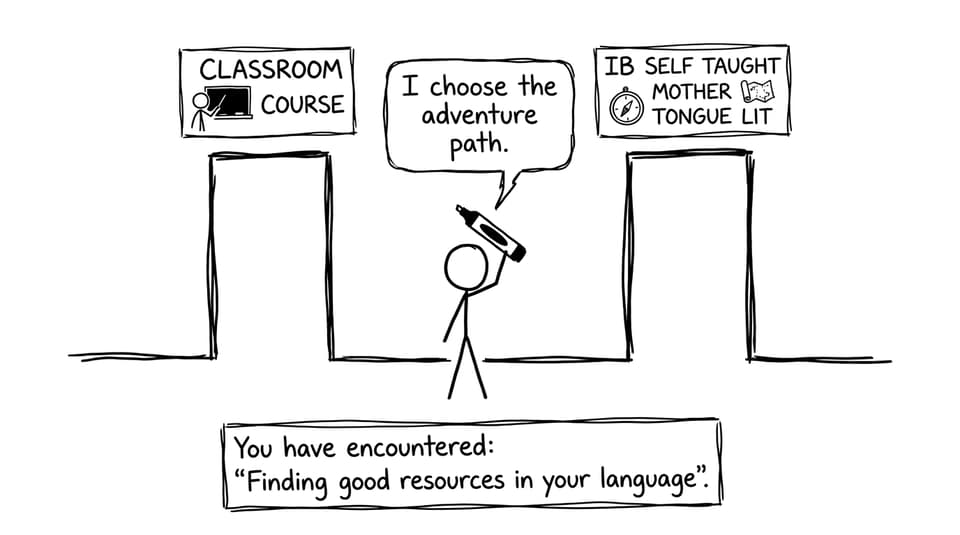
struggle to find high-quality resources in your language
-
feel unsure about what “exam-ready analysis” actually looks like
The course difficulty is less about language and more about systems.
Why IB Self Taught Mother Tongue Lit can feel easier
The “easy” part is real, and it’s not just wishful thinking.
You get the fluency advantage
In IB Self Taught Mother Tongue Lit, you don’t spend mental energy decoding vocabulary or basic sentence structure. That leaves more attention for what examiners actually reward: interpretation, authorial choices, and a clear line of argument.
Cultural context can do half the work
Some literary effects are invisible when you’re outside the culture: irony that relies on shared history, symbolism that draws from folklore, or humor that doesn’t translate cleanly. Studying in your own language can make these layers more accessible, which often leads to richer analysis.
Motivation can come from identity
Many students find that IB Self Taught Mother Tongue Lit hits differently. The texts can feel like home, or like a conversation with family history. When engagement is real, revision stops feeling like punishment.
Why IB Self Taught Mother Tongue Lit can feel harder
The “hard” part is also real, and it’s usually the part nobody warns you about clearly.
Self-direction is a skill, not a personality trait
Students assume you’re either disciplined or you aren’t. But discipline is built through routines.
Without a weekly class, IB Self Taught Mother Tongue Lit can quietly slide to the bottom of your priorities until it becomes urgent. And urgency is a terrible study plan.
Feedback is harder to get
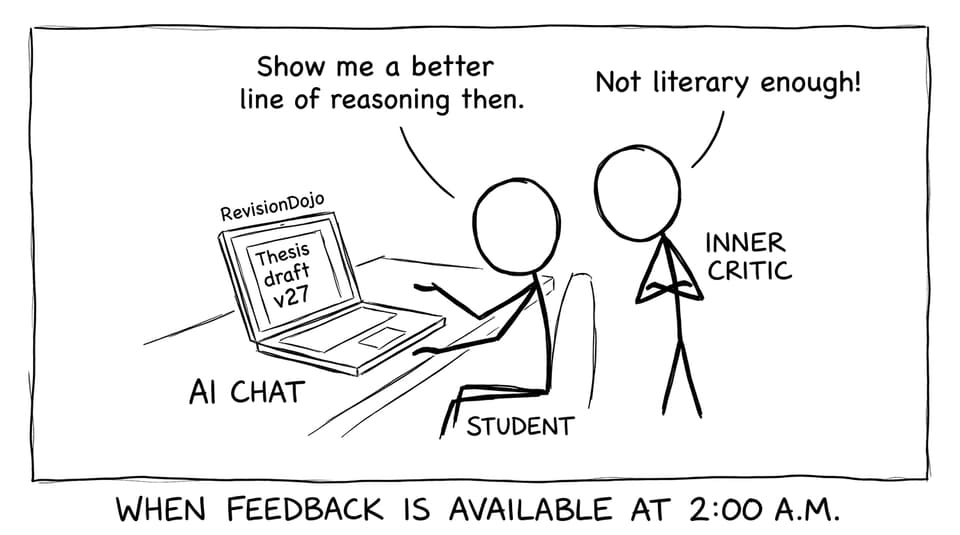
In a standard class, you get ongoing correction: “this is too descriptive,” “this is a sharper thesis,” “this quote is doing nothing.” In IB Self Taught Mother Tongue Lit, you may have fewer chances to get fast, language-specific feedback.
That’s where tools matter. RevisionDojo’s AI Chat can act like a late-night sparring partner for your argument, while Grading tools help you pressure-test writing against criteria before a human ever sees it.
Resources may be uneven in your language
Depending on your mother tongue, you might not find many guides, sample analyses, or school-level discussion communities. If you feel this pinch, don’t guess your way through it: consider structured help from a tutor. This guide is a solid starting point: How to Find a Tutor for SSST Mother Tongue Literature
The strategy that makes SSST manageable (and calmer)
The secret isn’t to “work harder.” It’s to remove decision fatigue.
Try this simple weekly loop for IB Self Taught Mother Tongue Lit:
Build your minimum structure
-
Two reading blocks (30-45 minutes each)
-
One analysis block (45 minutes): pick one passage and write one thesis + one body paragraph
-
One review block (20 minutes): turn mistakes into Flashcards
Use one home base for practice and feedback
RevisionDojo is designed to be that home base. Even if your course is self-directed, you can still anchor your routine using:
-
Study Notes to learn what good analysis looks like (Study Notes feature)
-
Flashcards to keep quotes, techniques, and author aims retrievable under stress (Flashcards feature)
-
Questionbank for targeted practice habits, not random rereading (Questionbank feature)
-
Mock Exams and Predicted Papers to train timing when the exam is close
-
Coursework Library and Tutors to reduce uncertainty when you feel stuck
If you want the mindset shift that helps many students stop comfort-studying, read: You’re Not Lazy: Your IB Study Method Is Broken
Borrow proven Language A strategies (even if you’re SSST)
Even though SSST is different in delivery, the skills overlap heavily with IB English A preparation.
These guides are useful templates you can adapt directly into IB Self Taught Mother Tongue Lit:
-
Effective Study Techniques for IB English A: Language and Literature
-
Understanding the HL Essay for IB English A: Literature and Language and Literature
And if you like browsing by theme and saving posts, RevisionDojo’s topic collections help:
Conclusion: easier language, harder independence
So is SSST Mother Tongue Literature easier or harder?
IB Self Taught Mother Tongue Lit is easier if language was your biggest barrier. It’s harder if structure was your biggest barrier. The course rewards students who can build a calm routine, seek feedback early, and practise the skills that earn marks.
If you want that structure without losing the flexibility, make RevisionDojo your base camp: Questionbank for active practice, Study Notes for clarity, Flashcards for retention, AI Chat for fast feedback, plus Mock Exams, Predicted Papers, a Coursework Library, and Tutors when you need a human reset.
Your mother tongue is already in your pocket. The system is what you build next.