




A week before course choices lock in, schools start to feel like airports in bad weather. Everyone is moving quickly, nobody is certain, and the loudest advice is often the least useful.
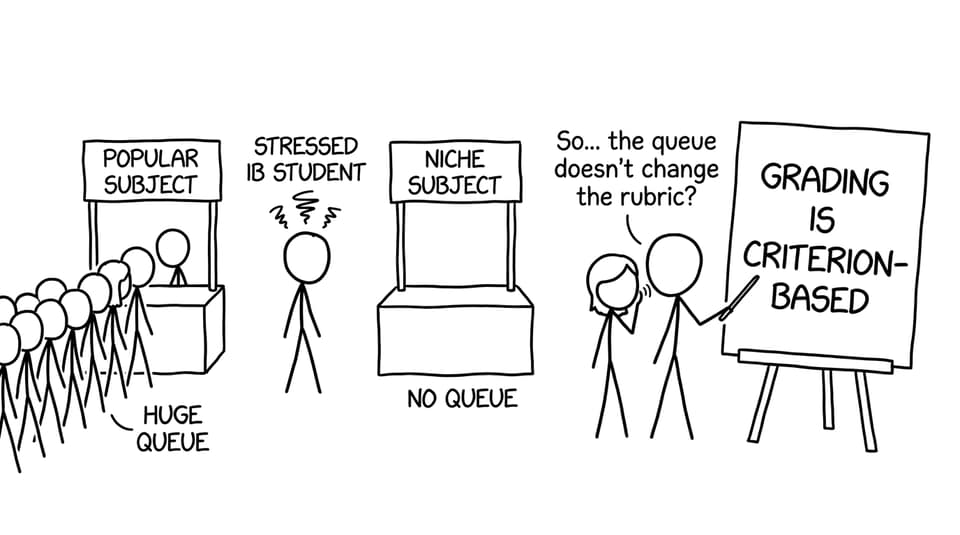
Somewhere in the hallway you will hear it: “If my subject is popular, it’s harder to get a 7.”
It’s a tempting story. Popular subjects look crowded. Crowded things feel competitive. And when you’re anxious, your brain loves explanations that let you keep your dignity: it’s the system, not my method.
This guide is about Subject Selection and the question underneath it: does IB subject popularity change your chances of a 7? It also lays out what actually moves grades, especially when exam season is close.
Quick checklist for smarter Subject Selection
-
Confirm how IB grades are awarded (and what they are not)
-
Understand why popular subjects feel stricter
-
Spot the mistakes that cap students at 5/6
-
Decide Subject Selection based on fit, not rumours
-
Build a repeatable 7-level routine with RevisionDojo
How a 7 is awarded (and why popularity doesn’t “cap” it)
The IB is fundamentally criterion-based. That’s the quiet detail most Subject Selection panic ignores.
In practice, criterion-based grading means:
-
You’re judged against descriptors and markschemes, not ranked against other students.
-
There isn’t a fixed quota of 7s that “runs out” when a subject is popular.
-
If your response consistently hits top-band qualities (accuracy, precision, evaluation, structure), the grade follows.
So no: taking a high-enrolment subject does not mathematically make a 7 rarer because more people enrolled. Your Subject Selection does not change the rubric.
If you want a grounded overview of IB structure while you plan Subject Selection, start with How Many Subjects Do I Need to Take in the IB?.
Why popular subjects still feel harder
Popularity doesn’t create a cap, but it can change the experience of being assessed.
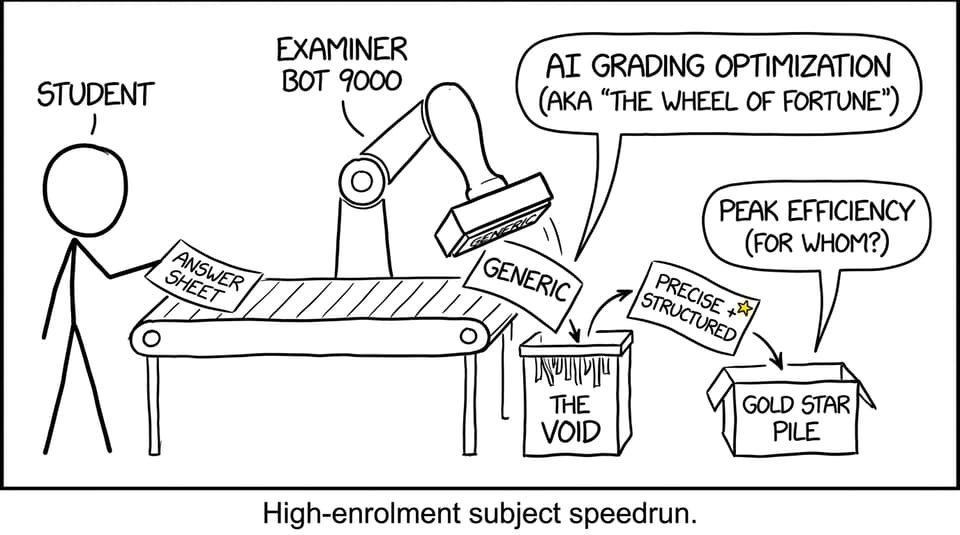
In large-cohort subjects (think widely offered Group 1s, big sciences, common humanities), examiners mark an ocean of scripts. Patterns emerge quickly.
What tends to happen in popular subjects:
-
Generic phrasing becomes easy to spot.
-
“Learned” paragraphs that don’t answer the command term get filtered out fast.
-
Structure matters more because it’s the quickest signal of control.
-
Precision becomes the difference between “good” and “top-band.”
That’s not a harsher standard. It’s the same standard applied at scale.
The real reason students miss 7s in popular subjects
Most students don’t miss a 7 because their Subject Selection was “too common.” They miss it because their answers are built on fragile habits.
A few familiar culprits:
-
Vagueness: writing around the idea instead of landing on it.
-
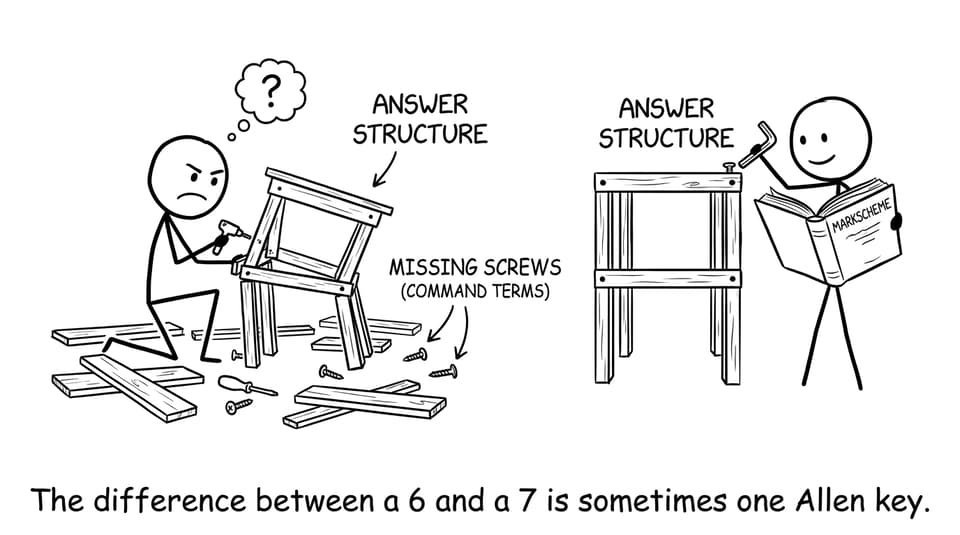
Unclear structure: good knowledge, poor delivery.
-
Command term drift: explaining when the question asked you to evaluate.
-
Memorised content without application: accurate facts, wrong use.
-
Thin conclusions: restating, not judging.
The painful part is that these are all fixable. The hopeful part is that fixing them is boring, which means most people never do it long enough.
This is where RevisionDojo becomes more than a resource folder. The free Questionbank is built to force application: you answer, you get feedback, you adjust, you repeat. Combine it with the RevisionDojo App exam-prep workflow and you stop relying on motivation.
Are 7s easier in less popular subjects?
Sometimes students treat Subject Selection like a stock market: find the “undervalued” subject and ride it to a 7.
Less popular subjects can feel calmer because:
-
classes are smaller,
-
discussion can be more personalised,
-
teachers may give more individual feedback.
But none of that lowers the top-band descriptors. You still need depth, accuracy, and judgement. If you pick a niche subject you don’t actually like, the initial relief often becomes a slow grind.
If you’re weighing Subject Selection around independence, this may help: Which IB Subjects Are Easiest to Self-Study?.
What increases your odds of a 7 in any Subject Selection
Across subjects, 7s tend to come from the same loop:
-
Learn the concept clearly (fast, not perfect).
-
Train recall until it’s automatic.
-
Practice exam-style questions until the markscheme feels predictable.
-
Get feedback that tells you exactly what to change.
-
Repeat under time pressure.
RevisionDojo is designed around that loop:
-
Study Notes for clean explanations you can apply.
-
Flashcards for spaced repetition that survives stress.
-
AI Chat (Jojo) for “unstuck in 60 seconds” moments.
-
Grading tools to translate vague teacher comments into rubric actions.
-
Predicted Papers and Mock Exams for realistic timed rehearsal.
-
Coursework Library so IA/EE/TOK anxiety doesn’t steal revision energy.
-
Tutors when you need a human diagnosis, not more content.
Two links that pair well with Subject Selection decisions and exam prep planning:
Closing: choose Subject Selection for fit, then train for the rubric
Subject Selection doesn’t decide your 7. Your method does.
Popularity can make a subject feel tighter because generic answers disappear faster, not because the IB is “saving” 7s for someone else. If you want a practical edge, stop trying to out-strategize the cohort and start out-executing the markscheme.
Build your loop on RevisionDojo: use the Questionbank for targeted practice, add Flashcards for daily recall, rehearse with Predicted Papers, and tighten your writing with rubric-aware feedback. Then your Subject Selection becomes what it should have been all along: a starting point, not a verdict.