

If you have ever stared at your IB subject choices and felt your confidence quietly drain out of your ears, you are not alone. The question usually sounds simple: is Math HL harder than Physics HL? But it rarely stays simple once you picture the day-to-day reality: timed papers, shaky sleep, and that unsettling moment when a familiar topic appears in an unfamiliar form.
In most schools, the debate is treated like a ranking. As if one stamp on your schedule automatically means a tougher life. In practice, Math HL and Physics HL are hard in different directions. One course tests your ability to think abstractly and stay precise for long stretches. The other asks you to model reality under pressure, switching between concepts, diagrams, and calculations fast.
This comparative analysis is here to help you decide without the noise. Not by pretending one subject is “objectively harder,” but by showing you the specific kinds of difficulty each one demands, and how to prepare for both.
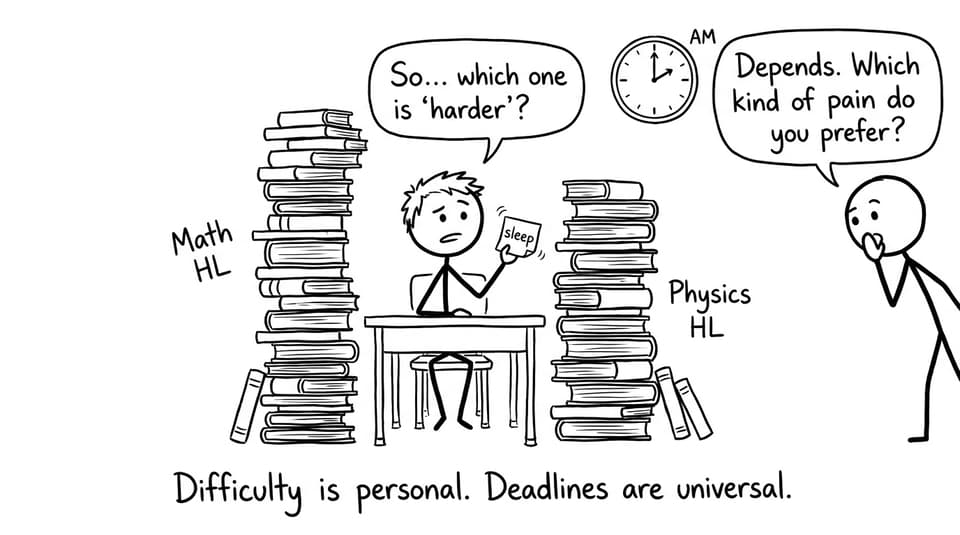
Quick checklist: which subject will feel harder for you?
Use this as a fast self-audit. The more statements you tick in one column, the more that HL is likely to feel “harder.”
Math HL may feel harder if you:
-
Get stuck when questions require a non-obvious method choice.
-
Lose marks from small algebra slips.
-
Dislike long chains of symbolic reasoning.
-
Need more time to build intuition for abstract ideas.
Physics HL may feel harder if you:
-
Struggle to translate words into diagrams and equations quickly.
-
Find multi-topic questions overwhelming.
-
Lose confidence when a “real-world” scenario feels unfamiliar.
-
Dislike practical investigation and evaluation writing.
If you want context on why certain HLs consistently feel intense, compare your instincts with IB Hardest Subjects Ranked (2026): What to Expect.
What makes Math HL hard (and why it surprises good students)
Most students expect Math HL to be difficult because the content is advanced. That is true, but the deeper reason is cumulative thinking. In Math HL, small gaps do not stay small. A weakness in algebra quietly grows into a calculus problem you cannot finish under time pressure.
Math HL difficulty comes from method selection
In many subjects you can start writing and “warm up” into the answer. In Math HL, you often need the right approach before you take the first step. Exams reward students who can:
-
Recognize structure quickly
-
Choose an efficient method
-
Communicate clean reasoning
-
Stay accurate through multiple steps
That is why daily targeted practice matters. RevisionDojo’s IB Mathematics Analysis and Approaches Resources is built for this exact problem: moving from “I understand the topic” to “I can do it under timed conditions.”
Math HL is abstract, and that is the point
Physics can feel grounded because it describes things you can picture: motion, waves, fields. Math HL often asks you to picture things you cannot touch: limits, convergence, transformations, complex numbers. That abstraction is not a side effect; it is the skill being tested.
If your goal is a 7, the best indicator is not how many notes you read. It is how often you face a question that forces you to think. A practical next step is How to Score 7 in IB Math AA HL, then build your routine around deliberate practice.
What makes Physics HL hard (and why it feels different)
Physics HL is not “math with units.” It is a language for describing the world, and the hardest moments often happen when you know the formula but do not know how to start.
Physics HL difficulty comes from modeling
In Physics HL, the exam often asks: can you reduce a messy situation into a clean model? That involves choices:
-
Which principles apply?
-
What assumptions are reasonable?
-
Which diagram makes the problem solvable?
-
What is the best equation pathway?
That is why Physics HL can feel like a sprint. You are not just calculating; you are interpreting. For topic-by-topic support, start with IB Physics Resources.
Practical work adds a “second curriculum”
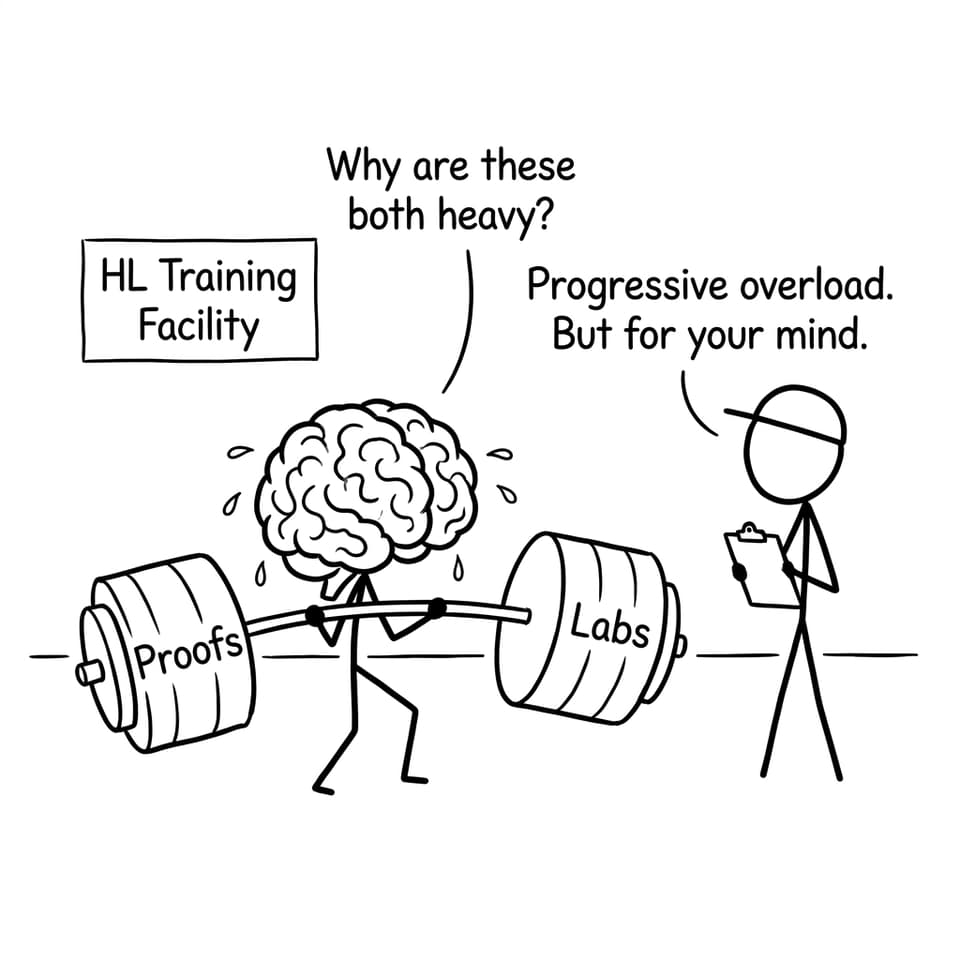
Physics HL also carries a workload that is not always visible when students compare difficulty. Labs, investigation planning, processing uncertainties, and evaluation writing all create a parallel set of skills.
If you want an example of how content and exam practice connect, a focused starting point is IB Physics A.2 Forces and Momentum. You can move from notes to practice questions to flashcards without breaking your flow.
Math HL vs Physics HL: the real comparisons that matter
When students argue about difficulty, they usually mean one of these categories. Compare them honestly.
Workload and time pressure
Math HL workload is consistent. You improve by doing lots of problems, reflecting on mistakes, and repeating until accuracy becomes automatic. It is steady, sometimes relentless.
Physics HL workload is more varied: problem sets plus lab demands plus conceptual review. Some weeks feel manageable, then a lab report arrives and takes your weekend.
Marking and “strictness”
Math HL marking can feel unforgiving because a small algebra mistake can cascade. Even when your reasoning is good, the final answer may be wrong.
Physics HL marking can be kinder in explanation questions if you communicate clearly, but calculation questions still punish slips. And multi-step questions can hide traps in assumptions.
Transfer: can you handle unfamiliar questions?
Both subjects test transfer, but in different ways.
In Math HL, transfer looks like a familiar technique placed in a new costume. In Physics HL, transfer looks like a real-world story that you must translate into a solvable model.
The best predictor: what drains you first?
A reflective truth: “hard” is often about what exhausts you.
-
If precision drains you, Math HL may feel heavier.
-
If interpretation drains you, Physics HL may feel heavier.
-
If uncertainty in wording drains you, Physics HL can feel stressful.
-
If long symbolic chains drain you, Math HL can feel endless.
This is also why smart subject choice matters. If you are still deciding your HL mix, use How Do I Choose My HL Subjects Wisely? to pressure-test your decision.
How to make either HL feel easier (without pretending it is easy)
Difficulty becomes manageable when it becomes specific. Here is what that looks like in a RevisionDojo-style workflow.
Build a two-lane routine: learning + exam performance
Many students only do the “learning lane” (notes, examples, re-reading). For Math HL and Physics HL, you need a second lane that trains performance.
Use RevisionDojo like this:
-
Study Notes to compress the theory quickly
-
Flashcards to keep definitions, key steps, and common traps fresh
-
Questionbank for targeted daily drilling (topic, difficulty, style)
-
AI Chat to unpack why your method failed, not just what the answer was
-
Grading tools to learn what examiners reward in explanations and structure
For Physics, add realism with Physics Predicted Papers (Free) and full timed practice using Mock Exams.
Use the Coursework Library to prevent deadline chaos
Even if this post is about exams, your stress level during exam season is determined by what happened months earlier. RevisionDojo’s Coursework Library and Grading tools help you avoid last-minute rewrites and unclear criteria.
And if you hit a wall, Tutors are not a last resort. They are often the fastest way to fix one misunderstood idea that keeps costing you marks.
Closing: choose the difficulty you can train for
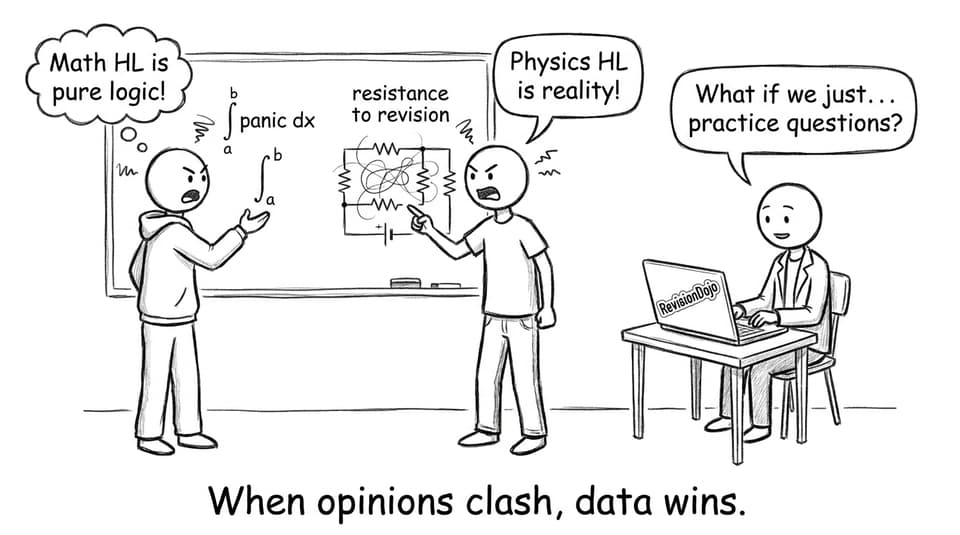
So, is Math HL harder than Physics HL? Sometimes. But the more useful answer is this: each subject is hard in a way you can predict and prepare for.
Math HL is the long game of precision and method choice. Physics HL is the art of translating reality into a solvable model. If you know which style of difficulty fits your mind, you can stop chasing the “harder” label and start building a plan that wins marks.
If you are preparing for exams right now, make your next study session concrete: open RevisionDojo, pick a topic, run a short Questionbank set, use AI Chat to diagnose mistakes, and lock in the fix with Flashcards. That is how Math HL and Physics HL become less intimidating: not through motivation, but through momentum.