



If you’ve ever opened your notebook, seen a page of half-finished equations, and felt your motivation evaporate in real time, you’re not alone. IB Sciences have a special way of turning “I get it” into “wait, why is this happening?” within a single lesson.
The strange part is that the hardest IB Sciences rarely feel hard for the same reason. One subject punishes weak algebra. Another overwhelms you with vocabulary. Another asks you to be calm with uncertainty, literally and emotionally.
This guide breaks down what makes certain IB Sciences feel toughest, which courses students most often struggle to score top grades in, and how to build a calmer system before exams.
Quick checklist: why some IB Sciences feel harder
Before ranking anything, run this honest checklist. Most “hard” stories in IB Sciences come from one (or more) of these:
-
Concept density: lots of ideas that connect, not just facts.
-
Math + modeling pressure: multi-step problems where one slip breaks everything.
-
Content volume: the syllabus keeps expanding, even when you’re revising.
-
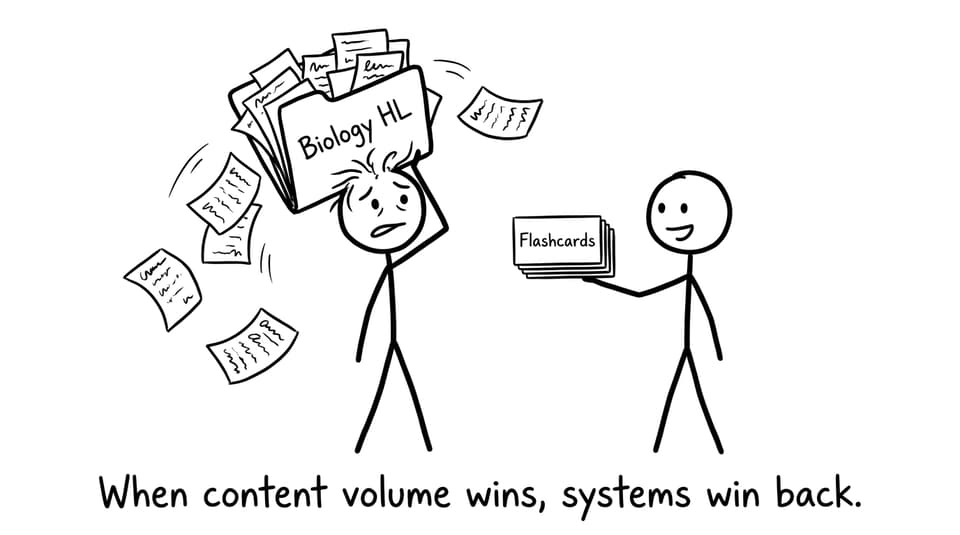
Practical work + IA load: planning, processing, and writing under criteria.
-
Exam technique: knowing content, but not answering in IB-style language.
If you want a broader perspective on difficulty across the Diploma, see The Hardest IB Subjects Ranked (and Why).
IB Chemistry: hardest when accuracy becomes a lifestyle
Chemistry often tops “hardest IB Sciences” conversations because it combines three stressors at once: abstract models, calculations, and precision.
At HL especially, Chemistry doesn’t reward “roughly right.” It rewards reliably correct work: units, significant figures, oxidation states, energetic signs, and explanations that match markschemes.
What helps most is training like an athlete instead of studying like a tourist:
-
Learn a concept briefly, then prove it with questions.
-
Fix mistakes immediately, then retest within 48 hours.
-
Build a one-page “common errors” list and rewrite it from memory.
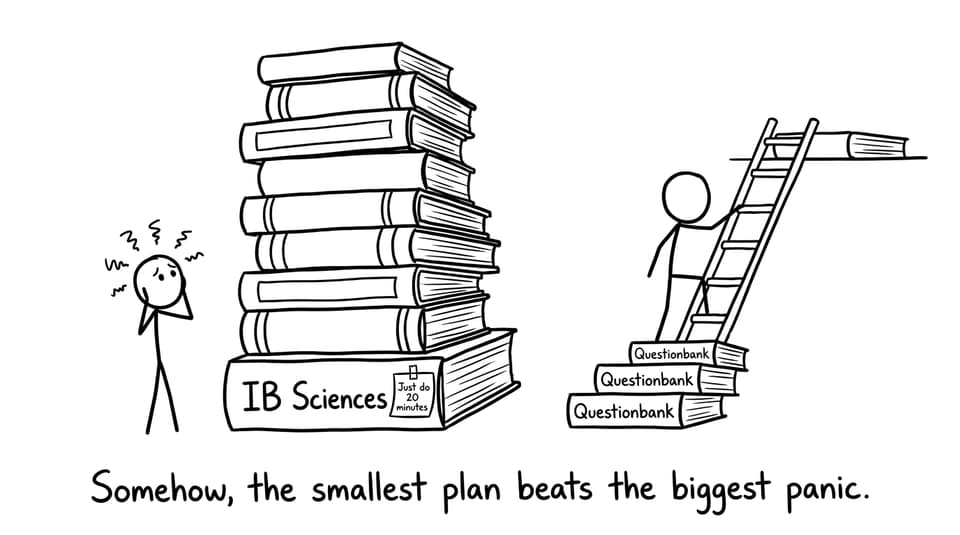
RevisionDojo makes this loop easier: use Study Notes to clarify, the Questionbank to drill topic-by-topic, and AI Chat to explain the one step you keep missing. Start here: IB Chemistry Resources, then deepen your approach with IB Chemistry HL: Complete Guide for Success.
IB Physics: hardest when time pressure meets abstraction
Physics is a different kind of hard. The syllabus is not just knowledge, it’s a language for describing reality. Under exam timing, that can feel like trying to translate while sprinting.
Physics tends to be the hardest of the IB Sciences for students who:
-
rely on memorisation instead of modeling,
-
struggle with algebraic manipulation,
-
or freeze when the question looks unfamiliar.
The best strategy is to practice “small and mixed”:
-
Do micro-topics (one concept, one question type).
-
Use the data booklet during practice, not just in exams.
-
Add weekly timed sets early, so pressure stops being new.
A strong roadmap is How to get a 7 in IB Physics (New Syllabus 2025 Onward), and you can anchor your revision from IB Physics Resources. If you need extra exam realism, RevisionDojo’s Mock Exams and Predicted Papers help you rehearse the pace, not just the content.
IB Biology: hardest when the syllabus becomes a flood
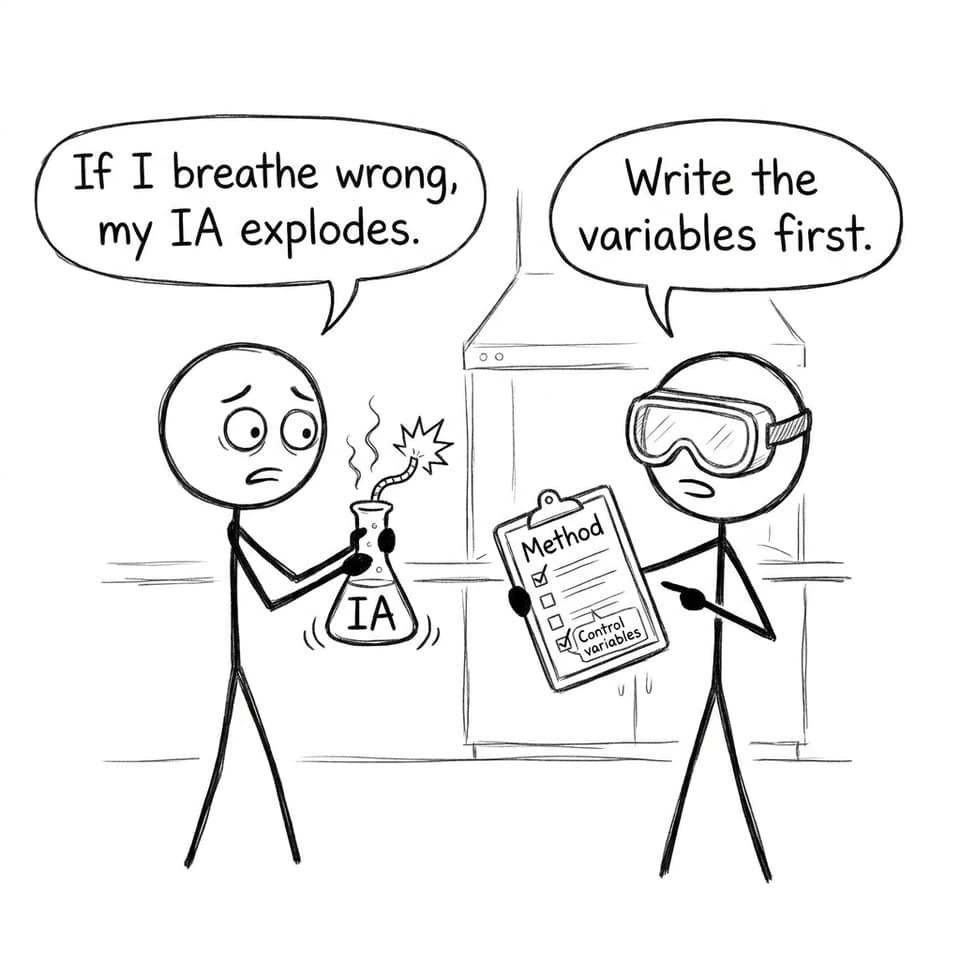
Biology can be less math-heavy than other IB Sciences, but it’s heavy in a different direction: volume.
It’s not just the number of terms. It’s that the course rewards connected explanations (structure to function, cause to effect) and detailed application to unfamiliar contexts. Students often revise Biology by rereading, then feel shocked when the exam asks them to interpret data, evaluate a method, or explain a process under strict command terms.
What works better:
-
Turn notes into questions (active recall).
-
Use spaced repetition to keep definitions alive.
-
Practice data-based questions weekly so graphs stop feeling like traps.
Start with IB Biology: Complete Guide for IB Exam Prep, then train exam technique with IB Biology Paper 1 and Paper 2: Complete Exam Guide. RevisionDojo’s Flashcards and Questionbank are especially effective for Biology because they convert content volume into a system you can repeat.
ESS: hardest when you underestimate the writing and evaluation
Environmental Systems and Societies (ESS) sometimes gets labeled “easier,” but many students discover a hidden difficulty: it’s interdisciplinary, case-study heavy, and rewards evaluation.
In ESS, you’re often graded on how well you can:
-
use evidence,
-
discuss trade-offs,
-
and write balanced conclusions.
If your revision routine is only memorising definitions, ESS can still sting. The trick is to practice structured responses and build a personal bank of real examples.
If you’re weighing ESS against other IB Sciences, compare perspectives in Is ESS the easiest IB Science?.
How to make the hardest IB Sciences feel manageable
When students improve quickly in IB Sciences, it usually isn’t because they suddenly became “a science person.” It’s because they stopped relying on vibes.
A simple system that works across Chemistry, Physics, Biology, and ESS:
-
Study Notes for clarity (short, focused)
-
Questionbank for proof (topic-targeted)
-
Flashcards for retention (daily)
-
Grading tools to see what earns marks (not what feels smart)
-
AI Chat to unblock confusion fast
-
weekly Mock Exams for timing and stamina
RevisionDojo is built around that loop: one place to study, practice, get feedback, and repeat.
Closing: choose a system, not a struggle
The hardest IB Sciences aren’t designed to break you. They’re designed to reward the student who can stay calm, practice deliberately, and learn from patterns.
If you want a single home base to do that, RevisionDojo gives you the full setup: Study Notes, Flashcards, Questionbank, AI Chat, Grading tools, Predicted Papers, Mock Exams, a Coursework Library, and Tutors when you need human support.
When your revision becomes a routine instead of a mood, IB Sciences stop feeling impossible and start feeling trainable.
Keep exploring: All IB Sciences Posts, Which Science Should I Take in IB? Biology vs Chemistry vs Physics, and How many hours should I study for IB Science.