



In IB Math, there’s a quiet moment almost everyone knows: you open a question, your eyes skim the context, and your brain searches for a familiar template. Sometimes it finds one. Sometimes it doesn’t.
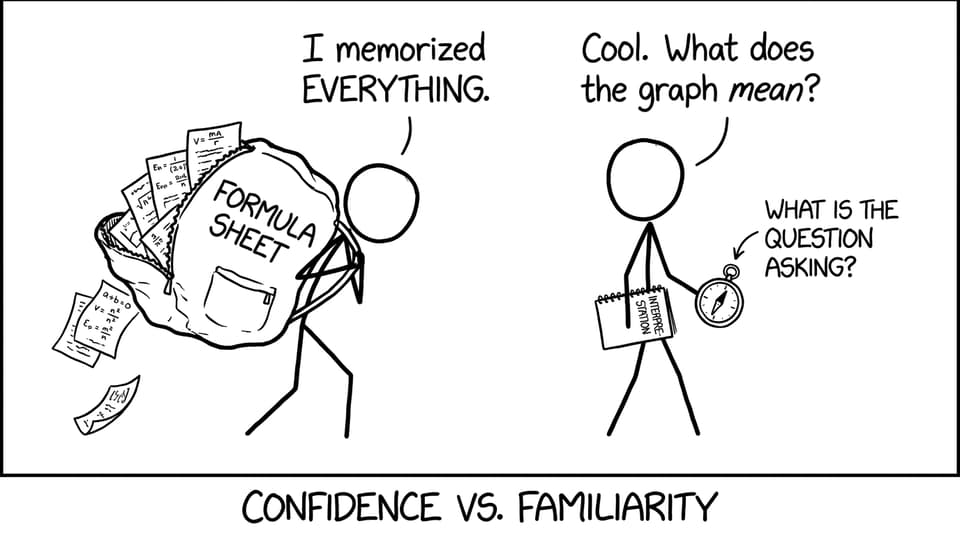
That second scenario is where many students think they’ve “lost confidence.” But what you’ve actually lost is familiarity. Real IB Math confidence isn’t built by stacking more formulas in your memory. It’s built by learning how to interpret information when the surface of a problem changes.
The quick checklist: interpret first, compute second
When an IB Math question feels unfamiliar, run this short loop before you touch your calculator:
-
Identify the goal: what is the final quantity or decision?
-
Translate the context into math objects: variables, units, constraints.
-
Choose a method (not a formula): regression? probability model? derivatives?
-
Explain your reasoning in one sentence before calculating.
-
After calculating, interpret the result in context (and check if it makes sense).
If you want guided practice that forces this habit, start with the IB Mathematics Applications & Interpretation hub and build a small daily routine from Notes + Questionbank.
Why interpretation builds IB Math confidence
Memorisation works in a world where problems repeat with minor cosmetic changes. IB Math is not that world. Even when the mathematics underneath is familiar, the exam often hides it in a story: a data table, a model with assumptions, a graph with a twist.
Interpretation is what travels well between questions. If you genuinely understand what a correlation coefficient means, you can handle it whether it appears in a healthcare study, a sports dataset, or a finance context. That’s why students who interpret well look calm: they are responding to meaning, not chasing a matching template.
To train this, pair examiner-aligned explanations with targeted practice. Use RevisionDojo Notes for IB Math AI concepts, then immediately test interpretation using the Questionbank. The loop matters.
Memorisation confidence is fragile under exam pressure
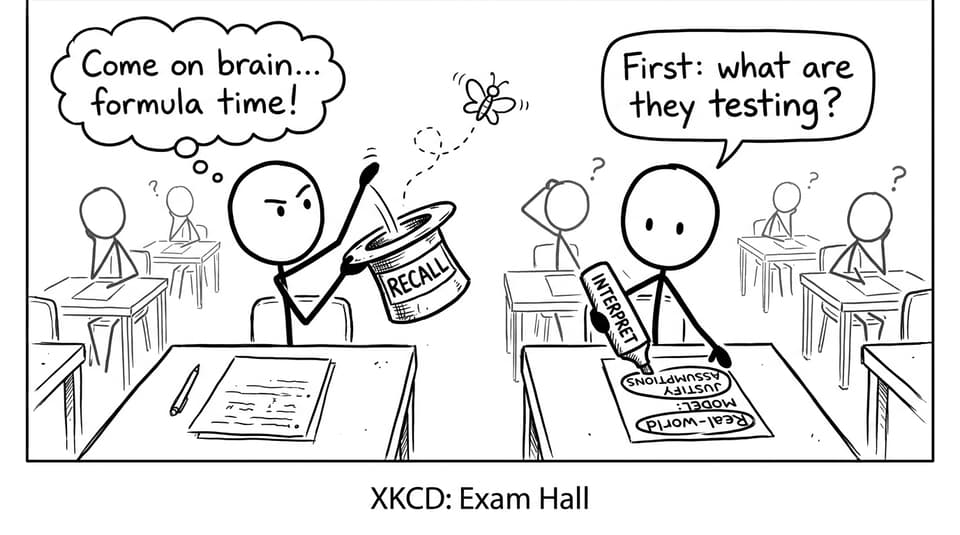
Stress is a ruthless editor. It deletes the least stable information first, and rote recall is often the first to go. When confidence is built on memorisation, one missing step can create a cascade: panic, rushing, blanking, then more panic.
Interpretation gives you something steadier: a way to reason forward even if you can’t instantly recall a procedure. In IB Math, that ability often saves marks because method marks and communication marks reward what you understand and explain, not just the final number.
Interpretation also helps you recover marks when you’re wrong
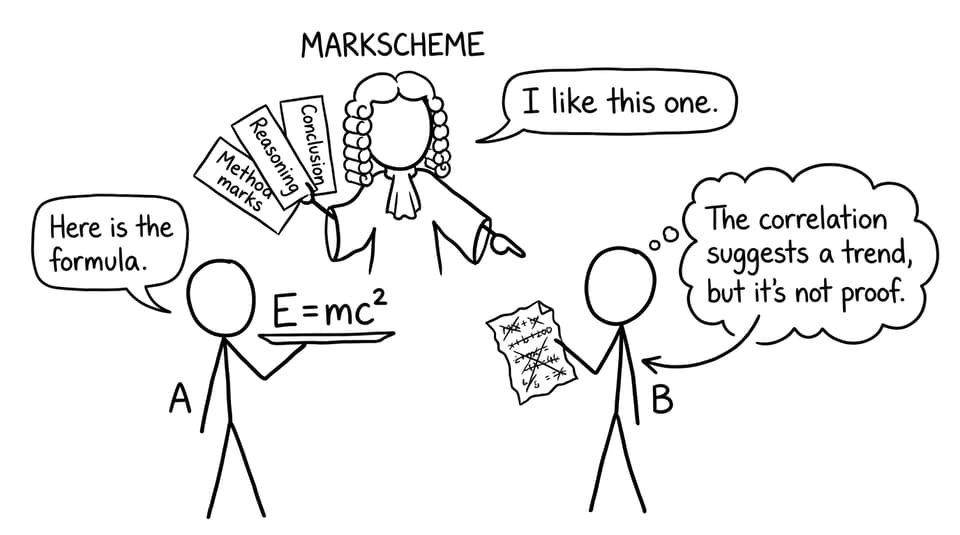
A surprising truth about IB Math is that your work can be imperfect and still valuable. If you state assumptions clearly, justify a method, and interpret a result cautiously, you often earn marks even when a calculation slips.
This matters most in modeling-heavy topics, where the examiners want judgement: What does the model suggest? What are its limitations? Is an extrapolation reasonable? If you’ve ever felt unsure about how to write that kind of evaluation, read Why extrapolation feels risky but still gets tested in IB Maths. It’s basically a guide to scoring with interpretation.
How to practice interpretation in IB Math (without studying longer)
Interpretation is a skill, so it needs reps. Try these three high-yield habits:
Write one sentence of meaning after every answer
After you compute, add: “This means…” and finish the thought in context. Do it in practice until it feels automatic.
Train decisions, not just procedures
In timed work, pause and ask: “Why this method?” That’s the part that transfers.
Use tools that give feedback on thinking
RevisionDojo’s Questionbank, AI Chat, and Grading tools are built for this exact gap: you practise, you explain, you get feedback on reasoning. Add Flashcards for light daily recall, use Study Notes for clarity, then pressure-test with Mock Exams and Predicted Papers when you’re closer to exams.
If you’re still choosing between courses, bookmark Should I take IB Math AA or AI? and AA vs AI, SL vs HL: how to choose. Choosing the right track makes the practice more meaningful.
Conclusion: build IB Math confidence that survives new questions
If your confidence collapses the moment a question looks new, you don’t need a bigger memory. You need a better interpretation habit. In IB Math, the students who score consistently are the ones who can translate context into mathematics, justify choices, and explain what results mean.
That’s exactly what RevisionDojo is built to train: Study Notes for clarity, Flashcards for quick recall, a deep Questionbank for targeted practice, AI Chat for instant explanations, and Grading tools, Mock Exams, Predicted Papers, and Tutors when you want realistic feedback and momentum. Build interpretation first. Let memorisation support it. Then walk into the exam with confidence that actually holds.