


Choosing IB subjects can feel like a quiet, private gamble.
You picture two futures: one where you pick the “hard” subjects and earn respect (and maybe a university offer), and another where you choose what feels manageable and keep your sanity intact. For New Students, that crossroads shows up early, before you even understand how fast the IB calendar moves.
Here’s the honest truth: hard subjects are only “worth it” when they are hard for the right reasons. Not because they sound impressive. Not because someone else says they’re the correct path. But because they match your goals, your strengths, and the way you actually learn under exam pressure.
This guide helps you decide calmly, then build a plan that makes your choice survivable.
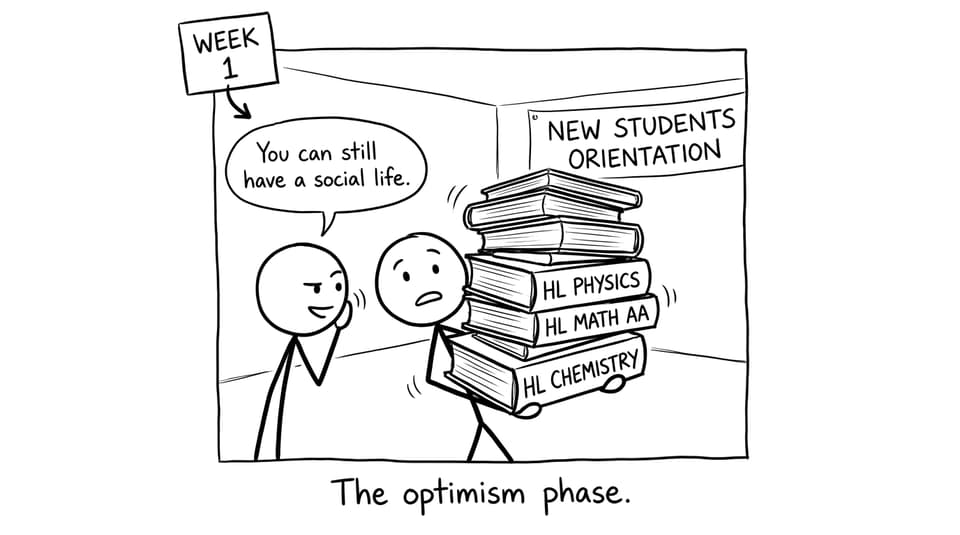
Quick checklist for New Students choosing hard subjects
Use this as your first filter. If you get mostly “yes,” hard IB subjects can be worth it.
-
Do my target degrees require specific subjects or HL choices?
-
Have I enjoyed this subject before, even when it got difficult?
-
Do I handle feedback well (and use it), or do I avoid it?
-
Can I commit to a weekly routine of timed practice and review?
-
Do I have support tools ready: notes, questions, explanations, and marking?
If you get mostly “no,” the answer isn’t “don’t challenge yourself.” It’s “don’t pay for ambition with preventable stress.”
To ground your choice, start by scanning what the IB structure demands in practice: How Many Subjects Do I Need to Take in the IB?
What “hard subjects” really means in IB
For New Students, “hard” usually means one of three things:
Hard because the skills are unforgiving
Subjects like Math AA HL and Physics HL can punish small gaps. One missed algebra step becomes a cascade. The difficulty isn’t only the content, it’s the precision.
Hard because the workload is heavy
Some subjects carry a constant load: labs, problem sets, reading, internal tasks. Difficulty becomes time pressure.
Hard because the assessment style doesn’t match you
Essay-heavy subjects can feel “hard” if you think clearly but struggle to write fast. Or a science can feel “hard” if you like theory but dislike data handling and evaluation.
If you want a realistic picture of what students report as most challenging, read: The Hardest IB Subjects Ranked (and Why)
When choosing hard IB subjects is worth it
Hard subjects pay off when they create options, not burnout.
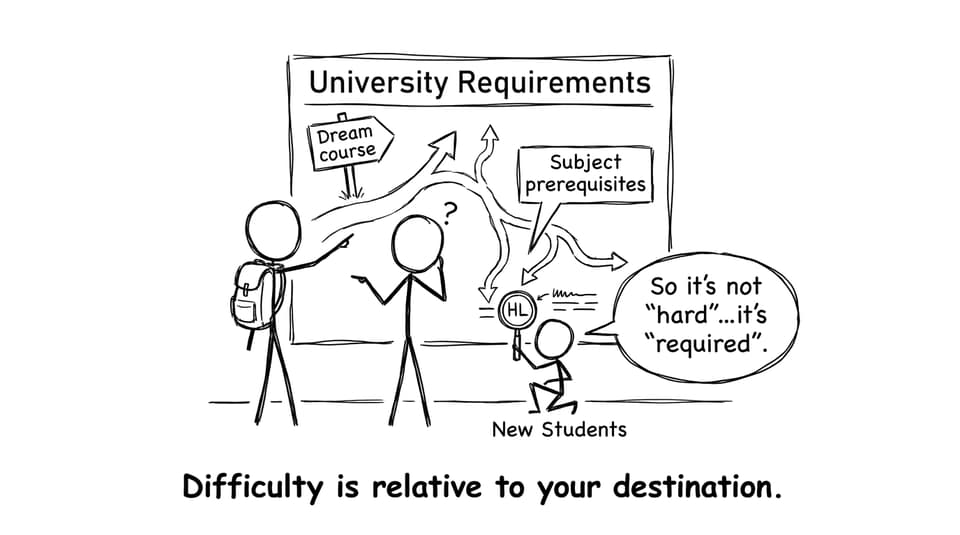
University prerequisites and credibility
Sometimes the choice isn’t about difficulty at all. It’s about access. Engineering, physics, medicine, economics, and certain competitive programs may prefer or require specific subjects or HLs. In those cases, the “worth it” question becomes: will this subject unlock my next step?
To make this decision cleaner, use a structured HL filter: How Do I Choose My HL Subjects Wisely?
You build thinking skills that transfer
A hard subject can be a gym for the brain. Not in the motivational-poster way, but in a measurable way: you learn how to break problems down, test assumptions, and communicate under time.
That’s why hard subjects often feel easier by the time you reach university. You’ve already rehearsed pressure.
You learn resilience without drama
There’s a specific kind of confidence that comes from seeing a difficult topic, not understanding it, then building understanding anyway.
RevisionDojo supports that cycle naturally: Study Notes to clarify, Flashcards for recall, Questionbank for targeted drills, and AI Chat when you need a fast explanation without waiting for the next lesson.
When hard IB subjects are not worth it
This is the part many New Students need permission to say out loud.
When “hard” becomes “too many hard things at once”
Three tough HLs can be fine. Three tough HLs plus heavy extracurriculars plus perfectionism is usually a slow leak. You don’t notice the damage until you’re behind in multiple places.
If you’re unsure what “manageable” actually looks like in the IB, start here: What IB Subjects should you take?
When the stress cost cancels the grade benefit
Universities don’t reward “I suffered” the way students think they do. They reward outcomes.
If taking a very demanding subject drops multiple grades across your diploma, that trade-off may not be strategic.
When coursework quietly eats your exam time
Hard subjects often come with internal assessments that expand to fill all available space.
If you want to estimate that load early, read: Which IB Subjects Have an IA? The Complete Guide
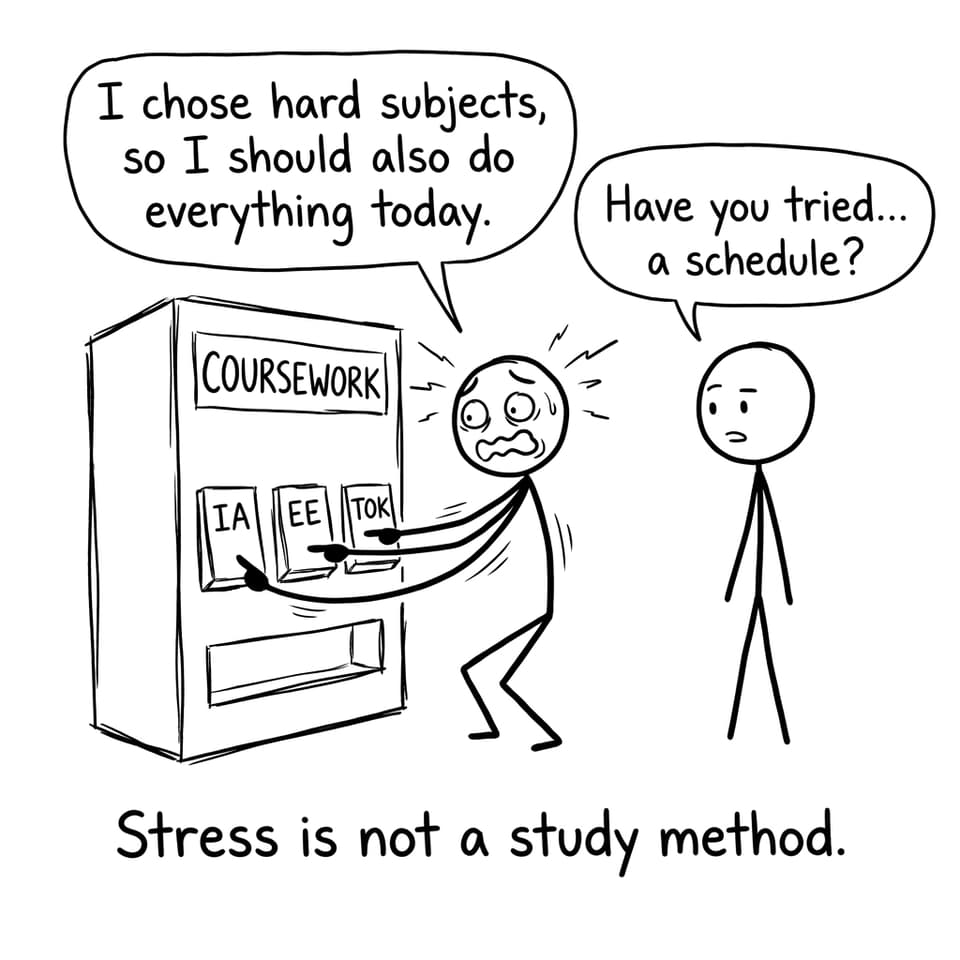
A practical decision framework for New Students
Instead of asking “Can I handle it?”, ask these three sharper questions.
Does it match my destination?
If your degree path needs HL Math or a specific science, the decision is often made for you. You can still choose how you prepare.
Does it match my learning style?
If you learn by doing, subjects with lots of practice problems may suit you. If you learn by argument, essay-based subjects may feel more natural.
Do I have a system, not just motivation?
Hard subjects become manageable with a loop:
-
Learn one slice (RevisionDojo Study Notes)
-
Practise that slice (RevisionDojo Questionbank)
-
Mark and identify the pattern (RevisionDojo Grading tools)
-
Convert mistakes into memory (RevisionDojo Flashcards)
-
Ask one precise question (RevisionDojo AI Chat)
-
Re-test weekly (RevisionDojo Mock Exams and Predicted Papers)
If you want perspective on how difficulty shows up specifically in exam season, read: How Hard Are IB Exams? A Realistic Guide
How to survive hard subjects while preparing for exams
This section is your “make it real” plan.
Keep your week small and repeatable
Hard subjects don’t need heroic weekends. They need consistency.
-
10-15 min daily: Flashcards (definitions, steps, key diagrams, quotes)
-
30-45 min most days: Questionbank sets on one micro-topic
-
60-120 min weekly: timed practice using Mock Exams or Predicted Papers
If your stress starts rising, don’t add hours. Improve feedback and clarity first.
For stress tools built for IB candidates, use: Exam Stress Management Tips for IB Candidates
Balance hard with stabilizing
A smart diploma often has a mix: subjects that stretch you, plus at least one that stabilizes your week.
If you’re choosing sciences, this guide helps you pick with fewer regrets: How to Choose the Right Group 4 Subject for You
Use support before you’re in trouble
Hard subjects punish “I’ll fix it later.”
RevisionDojo makes early support feel normal: use the Coursework Library for exemplars and structure, Tutors when you need steady accountability, and AI Chat when a concept is blocking progress at 10pm.
Closing: the calm answer for New Students
Hard IB subjects are worth it when they expand your options and you have a system to support them. They are not worth it when they shrink your life, drain your grades, and turn every week into survival.
For New Students, the best move is simple: choose subjects that match your destination, then commit to a repeatable routine that makes exam performance inevitable. RevisionDojo exists for exactly that routine: Study Notes for clarity, Flashcards for memory, Questionbank for accuracy, AI Chat for speed, Grading tools for feedback, and Predicted Papers plus Mock Exams for realism. Add the Coursework Library and Tutors when you need structure and accountability, and the “hard subject” label stops being scary.
If you’re still deciding, start by reading: Which Subjects Should I Take at IB if I Don’t Know What to Take?; then build your plan on RevisionDojo before the calendar speeds up.