When people say the IB is “hard,” they usually mean a specific moment: a mock exam where time runs out, an IA draft that refuses to behave, or a Paper 2 plan that turns into a pile of half-remembered quotes.
The strange part is that difficulty doesn’t always come from being “bad” at a subject. It often comes from the type of thinking the subject demands. That’s why the smartest Revision Tips aren’t universal pep talks. They’re targeted tools for the specific kind of hard you’re facing.
Below is a realistic ranking of the hardest IB subjects (based on common student pain points: complexity, assessment style, workload, and exam pressure), plus Revision Tips that actually translate into marks.
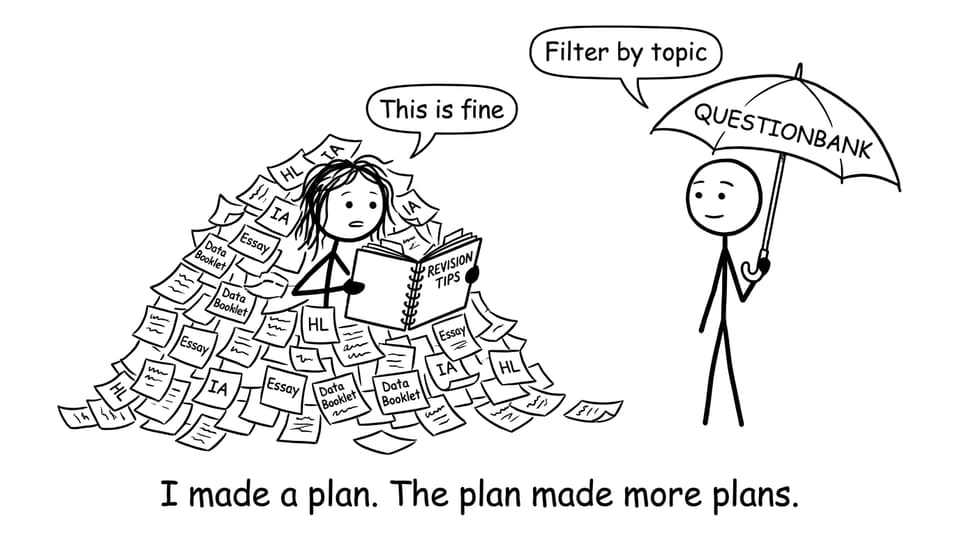
Quick checklist: why a subject feels “hard” (and what to do)
Use this as your 30-second diagnostic before you panic:
-
Is it conceptually abstract? (Then you need small-topic clarity + immediate practice.)
-
Is it technique-heavy? (Then you need repetition, timing, and an error log.)
-
Is it writing-heavy? (Then you need structure templates + feedback loops.)
-
Is the workload the problem? (Then you need a weekly system, not a heroic weekend.)
For a full study system that works across every course, anchor your plan to How to Study for IB Exams: Step-by-Step Guide and The Ultimate Guide to Revision for IB Students.
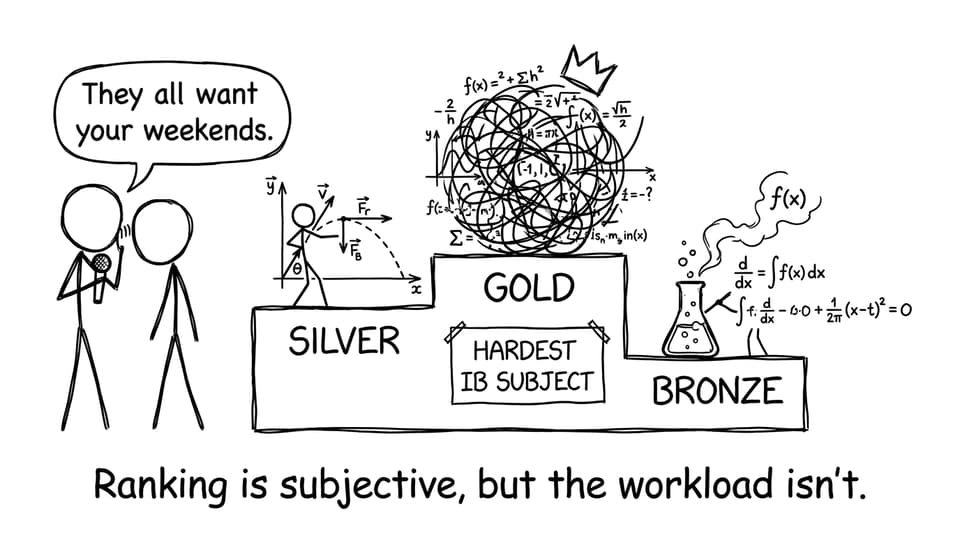
The hardest IB subjects ranked (and why)
IB Mathematics AA HL
Math AA HL is hard because it punishes vague understanding. You can “get” a topic in class and still lose marks because your algebra slips, your method is inefficient, or you choose the wrong approach under time pressure.
Revision Tips: stop revising topics and start revising question types. Use the IB Mathematics Analysis and Approaches Resources as your map, then drill one sub-skill at a time with IB Math: Targeted Revision Using the Questionbank. On RevisionDojo, pair Study Notes (clarity) with the Questionbank (application), then add Mock Exams when you need stamina.
IB Physics HL
Physics HL is hard because it’s two exams at once: one in concepts, one in translation. The question is rarely “do you know the formula?” It’s “can you model this situation correctly, fast?”
Revision Tips: make mechanics your “home base,” then expand. Work in loops: read one idea, do 5--10 questions, log the mistake pattern. Start from the IB Physics Resources, and when you need a clean entry point, revise with focused notes like IB Physics A.1 Kinematics Notes. RevisionDojo’s AI Chat helps you diagnose misconceptions quickly, and the Grading tools keep your written explanations exam-ready.
IB Chemistry HL
Chemistry HL is hard because it demands range: memorisation (definitions, conditions), calculations (stoichiometry, pH), and precision (units, sig figs) under strict marking.
Revision Tips: treat the data booklet like a skill, not a reference. Build “micro-mastery” by topic: one pathway, one calculation type, one bonding model. Use the IB Chemistry Resources hub and the streamlined IB Chemistry Revision Notes (SL/HL) to avoid rewriting everything. Then lock it in with Flashcards and targeted Questionbank sets.
IB Economics HL
Economics HL feels deceptively hard because you can understand the theory and still score poorly if your diagrams, evaluation, and real-world examples don’t land. It’s a “performance subject.”
Revision Tips: build a “paragraph machine.” Practice writing short, timed evaluation paragraphs and use RevisionDojo’s Grading tools to see what the criteria reward. Use Flashcards for definitions and diagram labels so memory stops stealing time.
IB English Literature HL
English Lit HL is hard because it’s not only about insight. It’s about insight under a clock, with structure that makes marks easy to award.
Revision Tips: don’t just reread books. Train repeatable moves: thesis, technique, evidence, analysis, link. If you’re doing coursework, use Understanding the HL Essay for IB English A. For exam writing, keep a structure reference like How to Write a Good Essay for IB English Literature open while you practice. RevisionDojo’s Coursework Library is also gold when you need to see what strong analysis looks like.
IB History HL
History HL is hard because knowledge alone doesn’t score. You need selective evidence, constant relevance, and clear judgement. Under timed conditions, many students start narrating.
Revision Tips: plan faster than you write. Use a strict essay framework so your argument stays visible. Start with IB History Essay Structure: Plan Fast, Write Better and build retrieval with Flashcards (dates, historiography terms), then timed practice with Mock Exams.
IB Biology HL
Biology HL is hard because the syllabus is wide, and the links between topics matter. It’s easy to “know everything” in fragments and still miss data-based questions.
Revision Tips: treat Biology as connected systems, not isolated chapters. Use IB Biology Resources plus IB Biology Revision Notes (SL/HL), then use Flashcards for daily recall. Finally, use the Questionbank to train interpretation, not just memory.
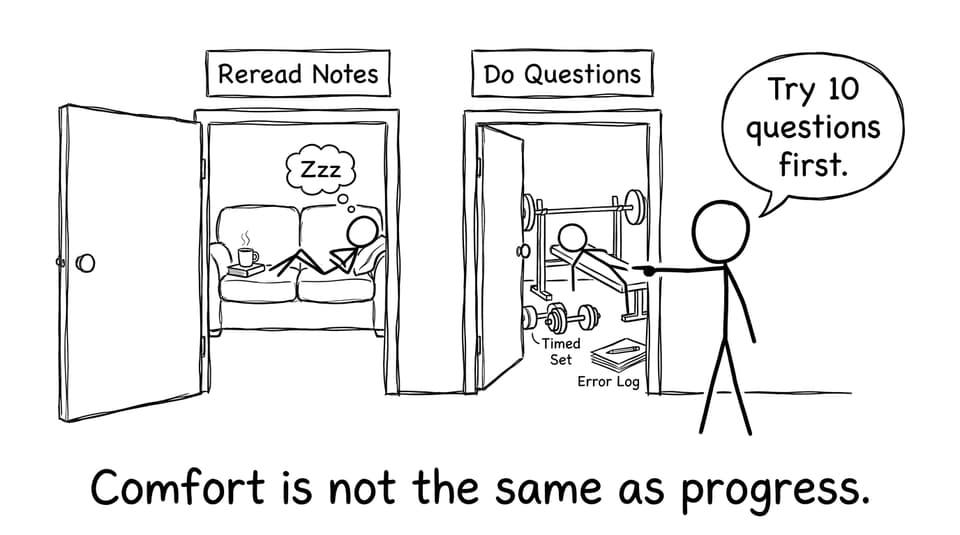
The Revision Tips that beat “hard” subjects
Hard subjects don’t require longer hours. They require cleaner feedback.
-
Study Notes for clarity: short, syllabus-aligned, no rewriting marathons.
-
Flashcards for recall: small daily sessions that compound.
-
Questionbank for application: where understanding becomes performance.
-
AI Chat for stuck moments: quick explanations, then immediate retesting.
-
Mock Exams and Predicted Papers for realism: train timing and stamina.
-
Grading tools: turn vague “good effort” into criterion-based improvements.
-
Coursework Library and Tutors: when you need models, strategy, and accountability.
If you want broader Revision Tips across every course, The Ultimate IB Subject Guide: Specific Revision Tips for Every Course is a strong companion piece.
Conclusion: rank the subjects, but train the skills
The hardest IB subjects aren’t “hard” because you’re not smart enough. They’re hard because they demand precision, stamina, and a specific style of thinking under pressure.
The good news is that difficulty becomes manageable when your Revision Tips are built like training: clear notes, daily recall, exam-style practice, feedback, and repetition. RevisionDojo brings that whole loop into one place with Study Notes, Flashcards, Questionbank, AI Chat, Grading tools, Predicted Papers, Mock Exams, Coursework Library, and Tutors.
If you want to turn your hardest subject into your most predictable one, start by picking a single topic today, then run the loop: understand it, test it, fix it, retest it.

