
Starting the IB Diploma can make an ordinary week feel strangely small. Six subjects compete for space. Homework arrives at different speeds. CAS, TOK, friendships, exercise, family commitments, and sleep all need time too.
The answer is not to schedule every minute. Effective IB weekly planning means deciding what matters, giving important work a realistic place, and preserving enough flexibility for life to happen. For most new IB DP1 students, a useful plan contains a short weekly review, 2-3 priorities, focused study blocks, protected rest, and one catch-up period.
The goal is not a perfect-looking calendar. It is a week you can actually live.
Your weekly planning checklist
Before building the schedule, gather the information that usually floats around in separate places:
- Check subject deadlines and upcoming assessments.
- Review your school assessment calendar.
- Choose 2-3 academic priorities for the week.
- Break large assignments into visible next actions.
- Schedule homework, retrieval practice, CAS, and core work.
- Protect sleep, meals, exercise, and genuine free time.
- Leave one buffer block for unfinished or unexpected work.
- Decide when you will review the plan again.
If your current system is scattered across notebooks, messages, and memory, begin with a planner designed around the IB workload. One trusted calendar is usually more useful than five sophisticated systems you rarely check.
Why IB DP1 needs a different kind of weekly plan
The IB Diploma curriculum combines six subject groups with a core consisting of TOK, CAS, and the extended essay. Not every component becomes equally demanding at once, particularly in DP1. The difficulty is that each one creates obligations on a different timescale.
Tomorrow's chemistry questions feel urgent. A language oral next month feels distant. An early extended essay conversation may feel optional. Good weekly planning connects those timescales before distant work becomes an emergency.
This is why a conventional to-do list often fails. It records what exists, but not when the work will happen or how much energy it requires. A weekly plan forces useful decisions:
- Is this task genuinely urgent?
- What would meaningful progress look like?
- Does it require deep concentration or light review?
- What can wait without creating trouble later?
New students should also expect an adjustment period. The first few weeks of DP1 are partly about discovering how long work actually takes. Treat your first plans as estimates, not promises carved in stone.
Build your week in five practical steps
Start with fixed commitments
Add lessons, travel, meals, activities, appointments, and regular CAS commitments first. These are the walls of the room. Your study plan must fit inside them.
Next, protect your normal bedtime and at least one substantial period each week when you are not doing schoolwork. Rest should not be whatever remains after studying. If it is not protected, it tends to disappear.
Look two weeks ahead
A weekly plan works better when you briefly inspect the following week too. Record tests, presentations, drafts, practical work, and school events. The aim is not to start everything immediately. It is to notice approaching pressure while you still have choices.
Your school's calendar should guide this process. If deadlines seem unclear, use this guide to understand your IB assessment calendar, then confirm local dates with your teachers or DP coordinator.
Choose three weekly outcomes
A long task list creates motion without direction. Choose no more than three outcomes that would make the week feel meaningfully successful.
For example:
- Complete the first workable draft of a history essay.
- Correct errors from the latest mathematics assessment.
- Learn and test this week's biology vocabulary.
These are better than vague intentions such as “do history” or “revise biology.” An outcome describes what finished means.
Then divide each outcome into small actions. “Draft history essay” might become outline argument, choose evidence, write introduction, draft two body paragraphs, and revise citations. Small actions lower the effort needed to begin.
Match tasks to your energy
Not every free hour has equal value. If you concentrate best soon after school, reserve that time for demanding work such as mathematics problems or essay drafting. Use lower-energy periods for Flashcards, organising notes, reading, or uploading CAS evidence.
RevisionDojo can help you match the tool to the task. The Questionbank and AI grading tools suit active practice. Study Notes and Flashcards help with review. AI Chat can clarify a confusing idea, while the Coursework Library can help you understand what strong academic structure looks like. Predicted Papers and Mock Exams become more useful when you need timed, exam-style practice rather than everyday homework.
The key distinction is active versus passive study. Rereading can feel smooth because the material looks familiar. Answering a question without support reveals whether you can actually use it.
Add a buffer before the week begins
Do not plan at 100% capacity. A lesson may produce extra homework. A journey may take longer. You may simply be tired.
Reserve one 60-90 minute block, often on Friday afternoon or the weekend, for overflow. If nothing needs rescuing, use it for light review or take the time back. Empty buffer time is not waste. It is evidence that the system worked.
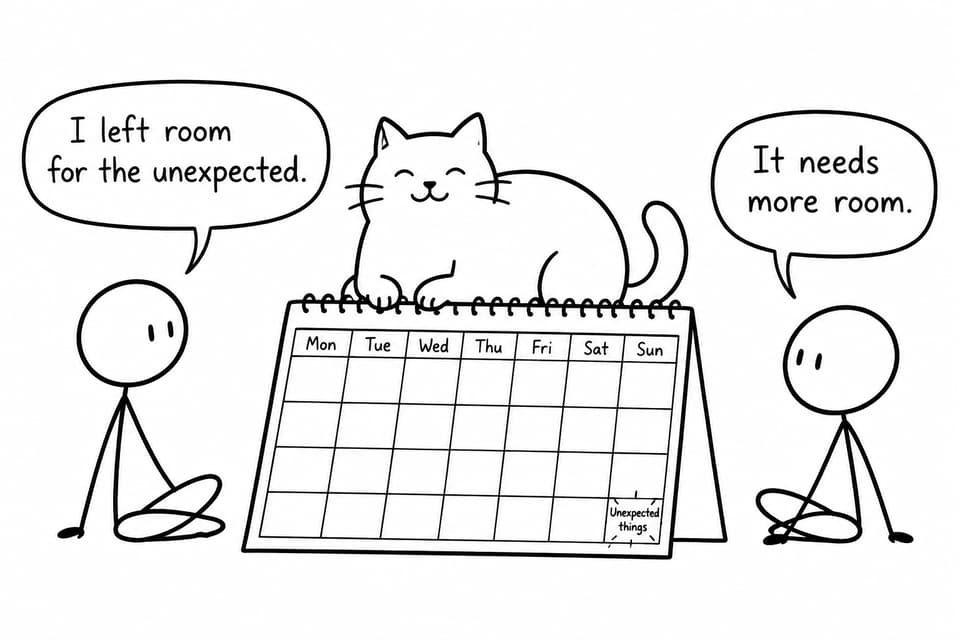
Two students reconsider how much calendar space unexpected events deserve.
A concrete weekly routine for a new IB student
The following routine is a model, not a universal prescription. Adapt it around your school day, travel, activities, and personal energy. Students wondering about total workload can also read how much to study outside class in DP1.
| Day | Suggested focus | Example routine |
|---|---|---|
| Monday | Orient and begin | Review deadlines for 10 minutes, then complete one 45-60 minute priority block |
| Tuesday | Deep work | Complete two 40-minute blocks on a demanding subject, with a proper break between them |
| Wednesday | Consolidate | Finish homework, then use Questionbank practice or Flashcards for 30-45 minutes |
| Thursday | Core and coursework | Work on TOK, CAS records, an IA step, or early extended essay exploration for 45-60 minutes |
| Friday | Buffer and reset | Finish loose ends, organise materials, and stop early if the week is complete |
| Saturday | Longer focused session | Complete 2-3 blocks in the morning, then protect part of the day for life outside school |
| Sunday | Light review and planning | Review errors, preview lessons, and plan the next week in 20-30 minutes |
This routine separates maintenance from progress. Homework keeps current responsibilities under control. Focused practice improves subject knowledge. A small core block prevents TOK, CAS, and coursework from becoming invisible.
During busy periods, the pattern may change. Internal assessment work should be spread across manageable stages rather than allowed to dominate an entire weekend. The IB internal assessment term-by-term planner can help you anticipate those stages.
Reduce IB stress without ignoring the work
Planning cannot remove every source of IB stress. It can, however, replace vague worry with specific decisions.
When you feel overwhelmed, make three lists:
- Must happen: urgent work with real consequences.
- Should happen: valuable work that can move slightly if necessary.
- Could happen: optional improvement, extra practice, or organisation.
Complete the must list first. Renegotiate deadlines early when appropriate. Avoid sacrificing several nights of sleep to preserve a plan that was unrealistic from the beginning.
If you repeatedly cannot begin work, feel persistently anxious, lose sleep, or believe the workload is becoming unmanageable, do not treat it as a private productivity failure. Speak to a parent or guardian, teacher, DP coordinator, school counsellor, or another trusted adult. They can help distinguish a difficult week from a pattern that needs practical or emotional support.
A reset may also be more useful than trying to catch up with everything simultaneously. This IB DP1 reset plan explains how to identify the most important gaps and rebuild momentum calmly. If exhaustion is becoming seasonal or persistent, review the warning signs of IB student burnout.
Review the system, not just your performance
Spend 10-15 minutes each Sunday asking:
- What did I complete?
- What kept being postponed?
- Which task took longer than expected?
- When was my concentration strongest?
- Did I leave enough room for rest and surprises?
- What should change next week?
This short review turns planning into a learning process. If Tuesday evenings are consistently unproductive after sports practice, the solution is not harsher self-criticism. Move demanding work elsewhere. If large writing tasks keep stalling, make the first step smaller.
DP1 is the right time to learn these patterns. Your workload will evolve, but a calm weekly review remains useful throughout the programme. Setting realistic goals for your first IB term can help you connect each week to a broader direction without overloading the calendar.
Make next week easier to see
A good week does not require flawless discipline. It requires a few clear priorities, enough focused practice, visible deadlines, and room to recover when plans change.
RevisionDojo brings that work into one place. You can move from Study Notes or AI Chat to targeted Questionbank practice, receive feedback through Grading tools, and use Predicted Papers or Mock Exams when timed preparation becomes appropriate. If you need individual guidance, RevisionDojo Tutors can help you address a specific subject or study obstacle.
For a simple starting point, create a free RevisionDojo account and download the free DP1 planner. It gives your deadlines, weekly priorities, study blocks, and buffer time a practical home. Fill in the fixed commitments first, choose three outcomes, and plan only the next seven days. That is enough to begin.