
IB mock 3 to finals 6: the uncomfortable truth
You don't forget the number.
A 3 in your mock sits in your head like a verdict. Not loud, just persistent. It shows up while you're brushing your teeth, while you're "revising," while you're trying to fall asleep. And the worst part is how quickly a mock score becomes an identity: I'm a 3 student.
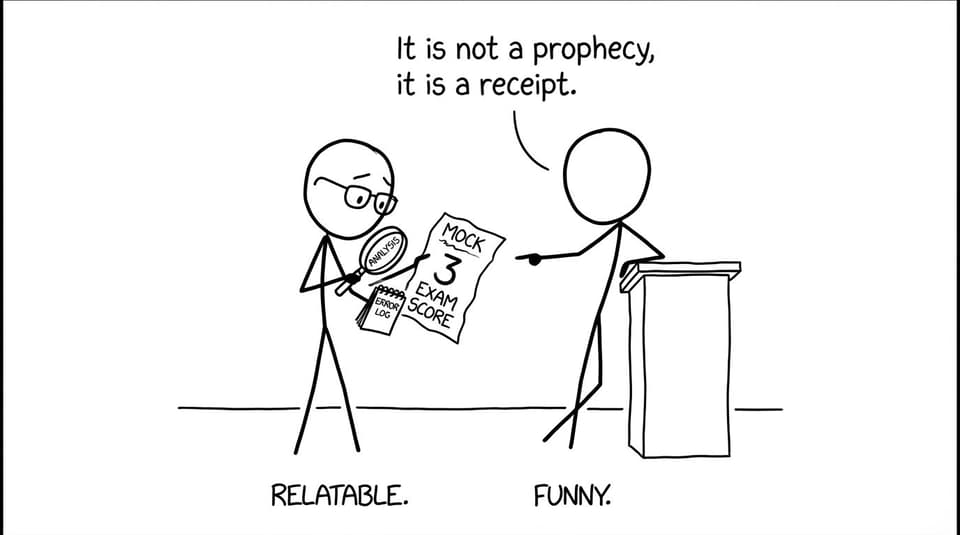
But the IB is strange in a hopeful way. It's not a personality test. It's a performance system. Your mock wasn't a prophecy; it was a snapshot taken under specific conditions: what you revised, what you didn't, how you slept, whether you practiced under time, and how well you understood what the mark scheme actually rewards.
So can you go from 3 to 6 in IB finals?
Yes, but only if you treat your mock like data, not drama.
A quick checklist: what has to change to move from 3 to 6 in IB
Before we get tactical, here's the fast diagnostic. If you want a 6 in IB finals, you need improvements in at least three of these four areas:
- Content coverage: you actually learned enough of the syllabus
- Retrieval strength: you can recall under pressure (not just recognize in notes)
- Exam technique: command terms, structure, and mark allocation
- Timing and stamina: you can finish and stay accurate while tired
The easiest trap is to only fix the first one. Most mock 3s are not "I know nothing." They're "I know pieces, but I can't consistently produce marks."
Why your IB mock score is usually lower than your ability
Mocks often expose three hidden gaps.
The "I studied" illusion
In the IB, studying can mean anything from copying notes to doing timed sets. Those activities feel similar emotionally (you were busy), but they produce completely different results.
A mock 3 often comes from preparation that was heavy on reading and light on retrieval and application. You might genuinely understand the topic when someone explains it, yet still lose marks because you can't generate the answer shape fast enough.
This is why tools like the RevisionDojo Questionbank matter: they force you into the form the IB uses to award points, questions, mark schemes, and repeatable patterns.
The mark scheme mismatch
The IB doesn't grade your intention. It grades what you wrote.
A student can be "kind of right" and still earn almost nothing, especially in structured questions, explanations, and essays where keywords, steps, and evaluation points matter.
If you want to understand how fast feedback speeds this up, read IB Mock Exam Feedback: Get Instant Results and Explanations.
The time-pressure tax
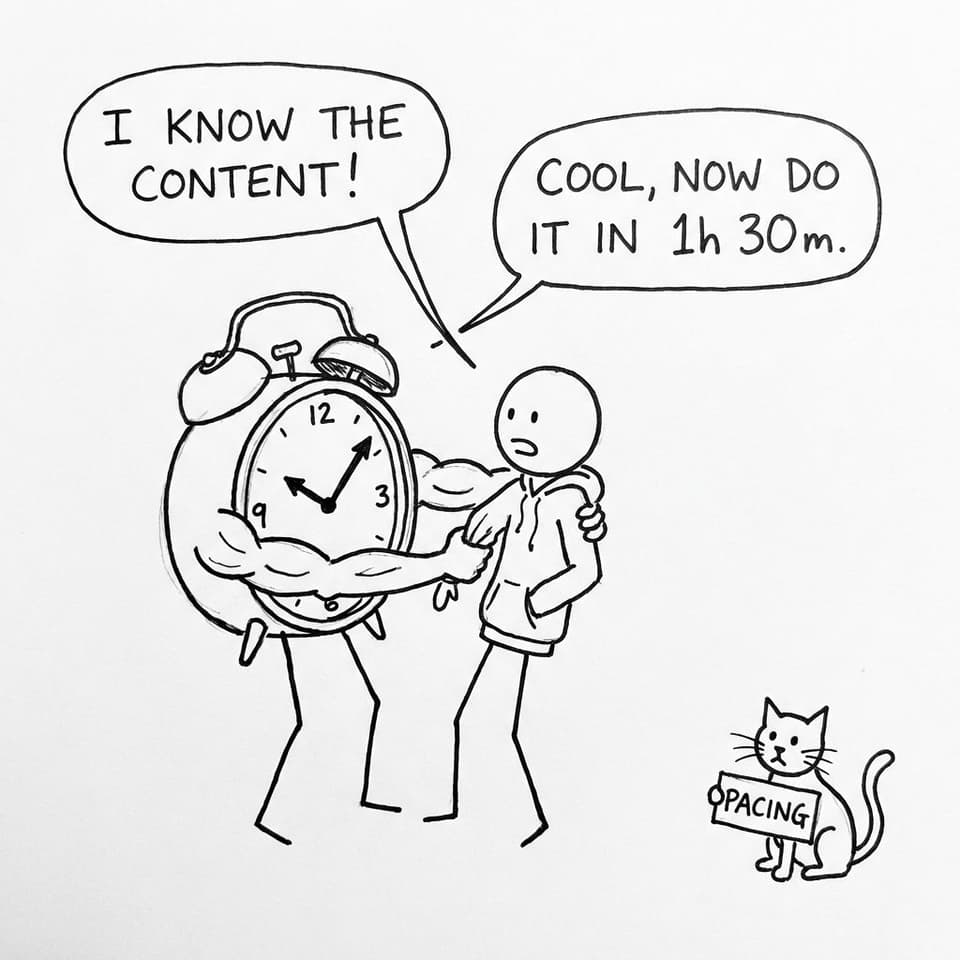
Many mock 3s would be 4s or 5s with unlimited time. But the IB doesn't offer that. Timing isn't a side skill; it's the container that holds every other skill.
The solution isn't "work faster" as a vague instruction. The solution is repeated, timed exposure with review that diagnoses why you slowed down.
How to turn a 3 into a 6 in IB: the score jump formula
A jump from 3 to 6 sounds like magic until you break it into components.
A 6 is usually built from:
- fewer empty answers
- fewer repeated mistakes
- better command term execution
- better question selection (especially in longer papers)
- more marks from method/structure, even when content is imperfect
In other words: a 6 is often the result of being consistently exam-accurate, not perfectly knowledgeable.
The formula you want is:
Practice (questions) + Feedback (why marks were lost) + Repair (targeted repetition) + Simulation (timed sets)
That loop is basically the design of RevisionDojo: Study Notes to patch gaps, Flashcards for daily retrieval, AI Chat to get unstuck, Grading tools for rubric-aware feedback, and then Mock Exams and Predicted Papers to rehearse the real pressure.
The plan: a realistic 4-week IB comeback after a mock 3
This works best when your mock is recent and finals are 4-10 weeks away, but the structure still helps even if you have less time.
Week 1: rebuild clarity and stop guessing
Your job in Week 1 is not to "revise everything." It's to stop being vague.
- Make a list of the top 10 mark-losing topics from your mock.
- For each one, write: Is this content, technique, or timing?
- Fix the biggest confusion first using notes and quick explanations.
Use:
- RevisionDojo App: The Smarter Way to Prep for IB Exams to set up an end-to-end routine.
- Study Notes for fast clarity (don't rewrite them, use them to answer questions).
- Jojo AI Chat for the one concept you keep avoiding.
Then immediately switch to questions. Don't wait until you "feel ready."
Week 2: build retrieval and accuracy (the quiet engine of IB gains)
This week is about compounding.
- 10 minutes/day: Flashcards for definitions, processes, formulas, case studies, quotes, diagrams, or key vocabulary.
- 30-60 minutes/day: topic-filtered Questionbank sets.
- 10 minutes/day: error log.
Try the RevisionDojo Flashcards feature for spaced repetition. In the IB, retrieval is free marks that most students never fully claim.
Your error log should be small and brutal:
- what you did
- why it lost marks
- what rule fixes it next time
Week 3: train timing like it's content
If you want a 6, you need timed practice early enough that it stops feeling dramatic.
Do two timed blocks this week:
- one shorter (30-45 minutes)
- one longer (full section or paper)
Then do more review than you want to.
Use guides like:
- How Mock Exams Can Improve Your IB Scores by 2 Grade Points
- IB Mock Exam Tips: Expert Strategies for Better Performance
If you need a structured setup for timed work, follow How to Run Timed IB Mock Exams in RevisionDojo (Exam Mode + Test Builder).
Week 4: simulate, diagnose, repeat
By now, your goal is not comfort. It's evidence.
- Sit one full mock (or a close equivalent) under exam rules.
- Use feedback to identify your "top 3 recurring patterns."
- Build the next week's practice around those patterns, not around what feels familiar.
If you struggle to stay consistent when you're tired, read Why Some IB Students Stay Consistent. Consistency is a strategy, not a personality trait.
The highest-leverage move: stop being a multi-tab student
A subtle reason mocks stay low: your study life is scattered.
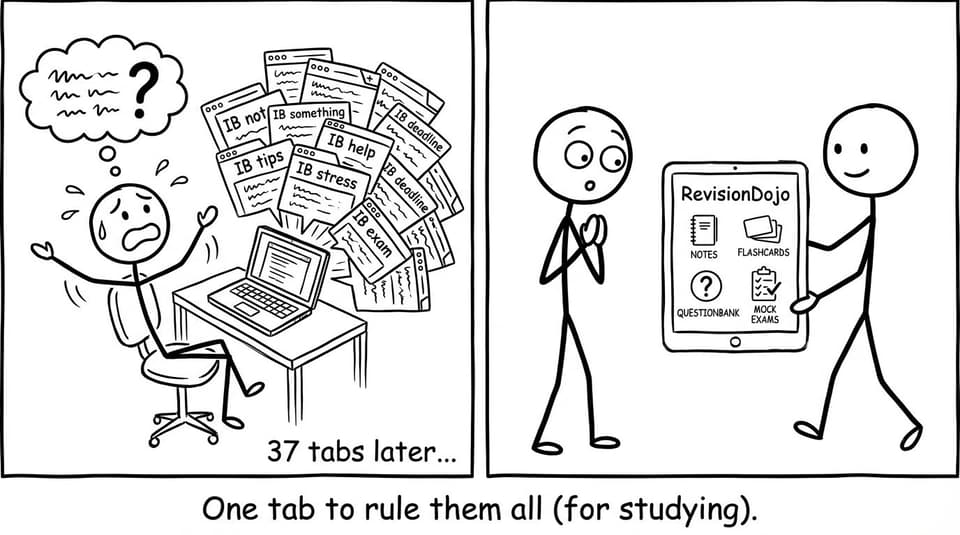
One tab for notes. One for videos. One for "tips." One for a forum thread that makes you panic. The cognitive cost adds up. You do fewer real reps, and you feel behind even while working.
A single workflow helps:
- Learn quickly with Study Notes
- Remember with Flashcards
- Apply with Questionbank
- Get unstuck with AI Chat
- Build realism with Mock Exams and Predicted Papers
- Reduce coursework stress using Grading tools and the Coursework Library
- Get a human plan with Tutors when you need it
That's the point of RevisionDojo as a full IB system, not just another resource.
Closing: your IB mock is a receipt, not a sentence
A mock 3 hurts because it feels like the future arriving early.
But the IB rewards something quieter than talent: the ability to run a loop when you're tired. Practice questions. Feedback. Repair. Timed simulation. Repeat.
If you want the cleanest way to run that loop in one place, build your routine inside RevisionDojo: Questionbank for targeted marks, Study Notes for fast clarity, Flashcards for daily recall, AI Chat to stay unstuck, Mock Exams and Predicted Papers for realism, Grading tools plus the Coursework Library to reduce uncertainty, and Tutors when you need a human to steady the plan.
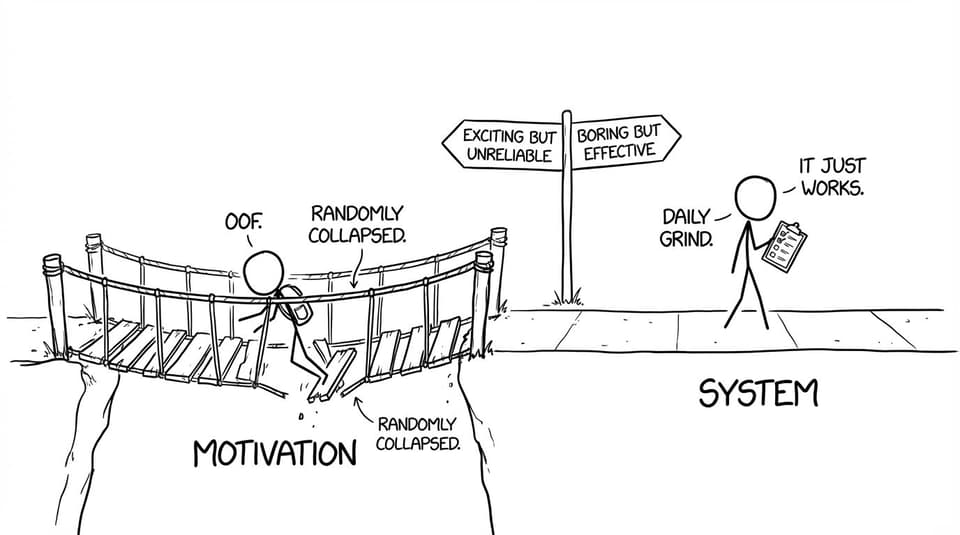
Your next IB grade isn't hidden in motivation. It's hidden in the next 20 focused reps you do after reading this.