
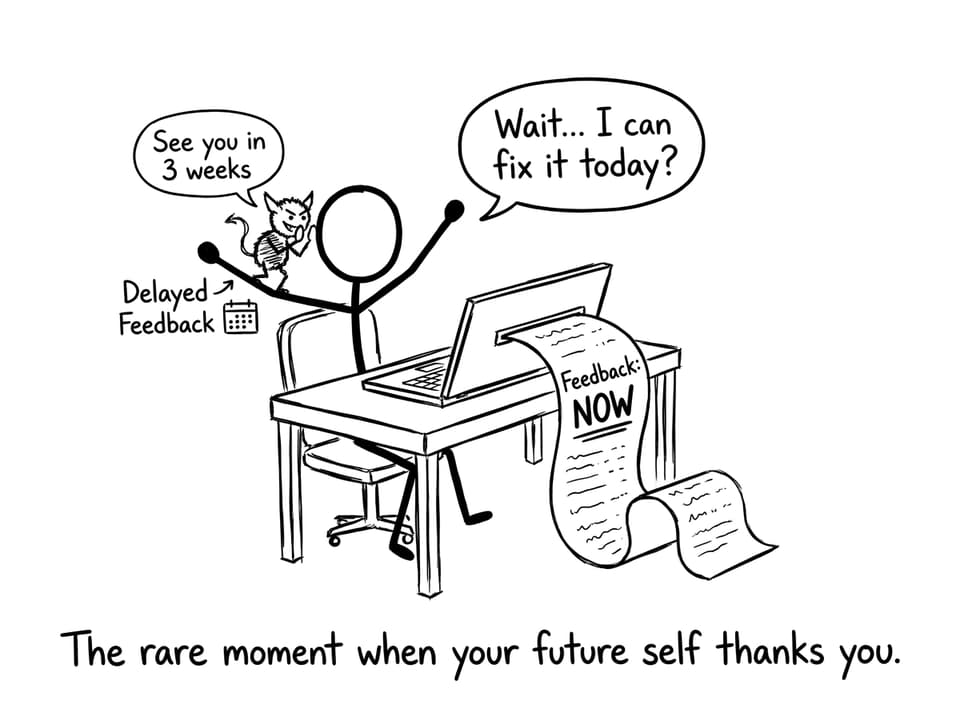
If you have ever walked out of an IB mock thinking, “I’ll fix this when I get my paper back,” you already know the quiet problem: by the time feedback arrives, the emotion is gone, the details are blurry, and your next study session becomes guesswork.
Instant feedback flips that story. It turns a mock from a verdict into a conversation: here’s what happened, here’s why you lost marks, and here’s exactly what to do next.
That is the promise of IB mock exam feedback done well, and it is why RevisionDojo built tools like Mock Exams, Exam Mode, and Jojo AI grading to make improvement feel predictable.
IB mock exam feedback checklist (use this every time)
Before you even look at your score, run this quick IB checklist:
-
Do I understand why I lost each chunk of marks?
-
Is the feedback tied to how marks are awarded (not just “be clearer”)?
-
Can I see my strengths and weaknesses by topic and skill?
-
Do I have pacing data (where did time leak)?
-
Do I have a retest plan within 48-72 hours?
RevisionDojo is designed around this loop: learn with Study Notes, lock recall with Flashcards, apply with the Questionbank, then rehearse under pressure with Mock Exams and Exam Mode, supported by AI Chat, Grading tools, Predicted Papers, the Coursework Library, and Tutors.
Why instant IB feedback makes mocks actually work
There is a compounding effect in IB preparation that most students miss: the shorter the distance between mistake and explanation, the faster your brain updates its model of “what counts as a good answer.”
Delayed feedback often creates two traps:
-
You repeat the same error pattern because you never saw it clearly.
-
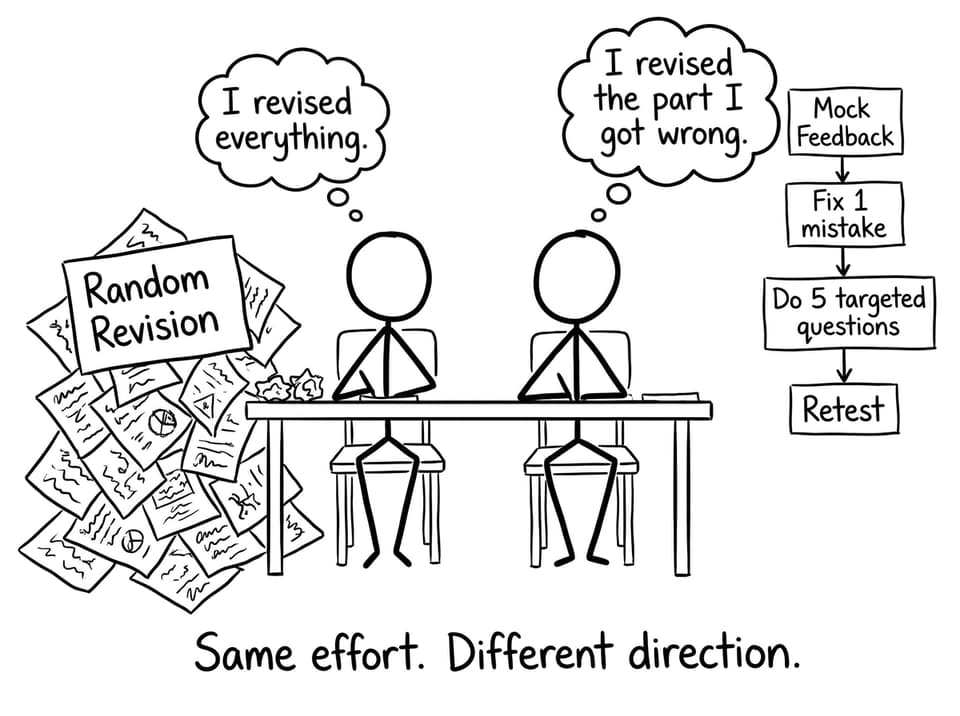
You “revise more” instead of revising better.
With instant IB mock exam feedback, the mock becomes active learning. You are not just collecting scores. You are collecting information.
If you want a bigger-picture framework, pair this post with IB Mock Exam Tips: Expert Strategies for Better Performance and Ultimate Guide to IB Mock Exams.
How RevisionDojo gives IB mock exam feedback with explanations
Instant error analysis (not just right or wrong)
Good IB feedback does more than circle the wrong line. It explains the logic of marking.
In RevisionDojo, Jojo AI grading can point out what went missing (a definition, a step in reasoning, a command-term requirement, a labeling convention) so you stop guessing. That matters whether you are drilling in the Questionbank or sitting a timed session.
When you hit a confusing explanation, the fastest save is to ask AI Chat to translate the mistake into a rule you can reuse: “What would a full-mark answer include next time?” That small question is how IB clarity is built.
Strengths and weaknesses by topic and skill
A total score is emotionally loud and strategically quiet.
What you actually need for IB improvement is a breakdown: which topics leak marks, which question types trigger careless errors, and which skills (data handling, evaluation, method selection, essay structure) are undertrained.
This is where a platform helps you avoid wasting time. You can patch understanding with RevisionDojo App: The Smarter Way to Prep for IB Exams, then go straight into targeted practice rather than rereading everything.
Timing and pacing insights you can act on
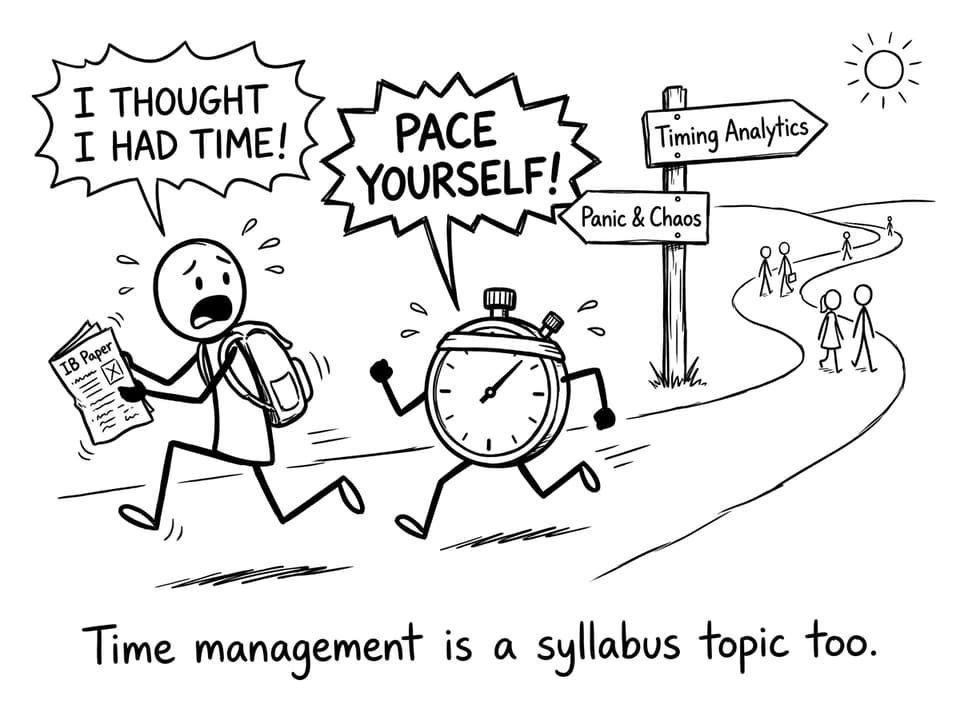
Many IB students do not lose marks because they “don’t know content.” They lose marks because they run out of time with two questions left, or spend ten minutes proving something the mark scheme wanted in three lines.
RevisionDojo’s Exam Mode is built for this: it simulates timing pressure, then shows where pacing drifted. That feedback is uncomfortable in a useful way, because it gives you a specific training target.
For more strategy on using pacing data, see IB Mock Exam Strategies: How to Use Practice Tests Effectively.
How to turn IB mock feedback into points (a simple loop)
Here is a realistic loop you can run weekly during IB season:
-
Sit one timed block using mocks (full paper or a heavy section). Use How to Study for IB Mocks (Without Burning Out) as your structure.
-
Review immediately and write 3 “error rules” (short sentences you can apply next time).
-
Patch one gap using Study Notes and Flashcards (not the whole chapter).
-
Drill targeted questions in the Questionbank on that exact weakness.
-
Retest within 48-72 hours.
If your last mock went badly, do not panic-study. Use Failed Mock Exams? You Can Still Pass IB as your reset.
FAQ
Is instant IB mock exam feedback actually reliable?
Instant IB mock exam feedback is reliable when it is grounded in clear marking logic and consistent criteria. The point is not to replace your teacher’s judgment, but to give you fast, structured guidance you can act on the same day. With RevisionDojo, explanations aim to reflect how marks are typically awarded: what must be present, what is optional, and what wording or structure the question is really asking for. That matters most in the messy middle of studying, when you are deciding what to do next. The real advantage is repetition: you see the same error pattern called out multiple times until it stops happening. Over weeks, that feedback becomes less about “this answer” and more about “this habit.”
How should I use IB mock exam feedback if I feel overwhelmed?
Start by shrinking the problem. Pick the five questions where you lost the most marks, and label each loss as either content gap, method gap, command term mismatch, or timing issue. Then choose one fix per label, not ten fixes per label. Use Study Notes to clarify just enough to attempt another question, then switch to Questionbank practice to make the fix real. If you are stuck, use AI Chat to ask for one concrete improvement you can apply in the next attempt, like a sentence frame or a step you always forget. Overwhelm usually comes from trying to repair everything at once; IB progress comes from repairing one pattern at a time.
How often should I retake mocks in IB preparation?
For most IB students, the best rhythm is one meaningful timed session per week plus smaller timed sections during the week. The exact frequency depends on your energy and subject load, but the principle stays the same: retest soon enough that the feedback is still fresh. A retest within 48-72 hours is ideal for locking in a correction, because it forces active recall and application. If you only take mocks without retesting, you create a collection of scores, not a collection of skills. Use RevisionDojo’s Mock Exams, Predicted Papers, and Exam Mode to create those repeated rehearsals, and combine them with Flashcards and Study Notes so your improvements stick. Over time, your confidence becomes evidence-based, which is the calmest kind of confidence.
Final thought: make IB mock feedback fast, specific, and repeatable
A mock exam is not a mirror. It is a map.
When IB mock exam feedback arrives instantly, with explanations you can trust and pacing data you can train, you stop studying in circles. You start studying in loops: attempt, diagnose, fix, retest.
If you want one home base for that loop, RevisionDojo brings it together: Questionbank, Study Notes, Flashcards, AI Chat, Grading tools, Predicted Papers, Mock Exams, a Coursework Library, and Tutors. Take your next mock in Exam Mode, read the feedback immediately, and turn it into points this week; not “someday.”