
Mock exams have a strange superpower in the IB.
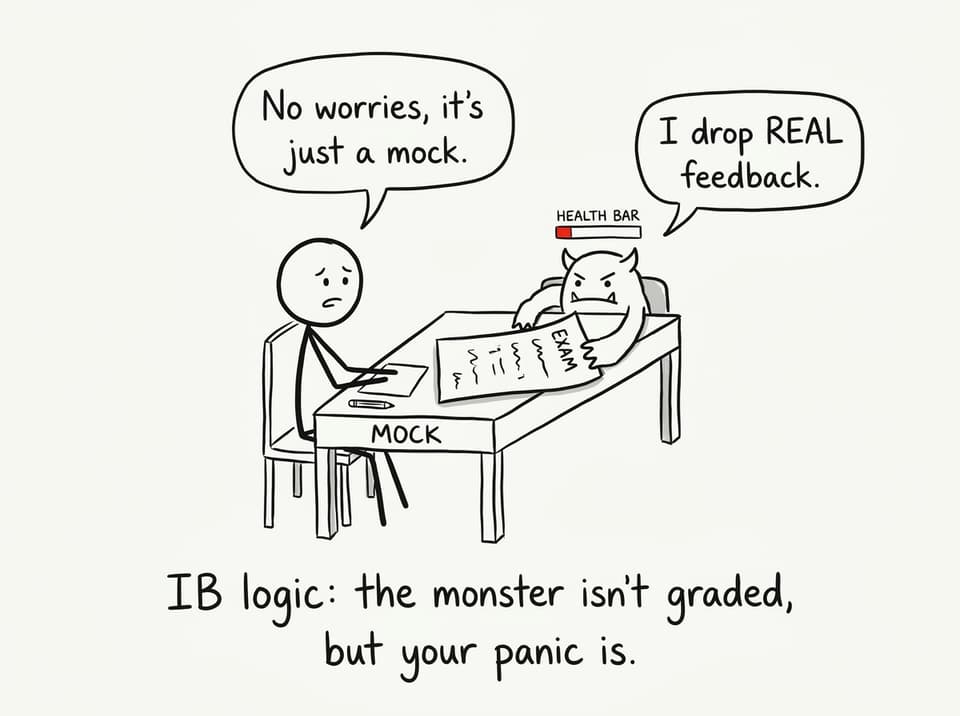
They are “not real,” so you walk in lighter. But they feel real enough to reveal the exact habits that quietly steal marks: the rushed conclusion, the half-read command term, the paragraph that makes sense in your head but not to an examiner. And once you see those habits in ink, you can finally change them.
The students who gain 2 IB grade points by finals usually don’t become different people. They become clearer testers of their own work. They stop guessing. They start running experiments. IB mock exams are the cleanest experiment you can run.
The quick checklist: how to use IB mock exams
If you want the simplest path to better IB results, follow this loop:
-
Sit a full IB mock exam under exam conditions (silence, timing, no notes).
-
Mark and diagnose: why did you lose marks (content, command terms, timing, structure, stress)?
-
Fix one pattern at a time with targeted practice.
-
Retest the same skill within 48-72 hours.
-
Repeat weekly with short timed sections and one longer mock block.
RevisionDojo is built around that loop: Mock Exams for realism, Questionbank for volume, Study Notes for clarity, Flashcards for recall, AI Chat for fast explanations, and Grading tools to make feedback concrete.
What IB mock exams actually change (even if they “don’t count”)
In the IB, mock exams are rarely just practice. They influence the things that do affect your outcomes.
Predicted grades and teacher confidence
Mock performance often informs predicted grades, and predicted grades shape university applications and how teachers support you in the final stretch. A teacher who sees a clear upward trend is more likely to trust your trajectory, give sharper feedback, and push you toward top-band habits.
Familiarity with the real IB exam experience
The IB isn’t only content. It’s format, pacing, stamina, and the ability to write answers that are “markable.” Mocks make the exam hall familiar enough that your brain spends less energy on panic and more on thinking.
Your revision priorities
Without a mock, revision becomes a comfort activity: rewriting notes, highlighting, “covering” topics. With a mock, revision becomes a decision: fix the three things that cost the most marks.
If you want a broader exam plan that fits around mocks, use How to Study for IB Exams: Step-by-Step Guide.
Why improving by 2 IB grade points is realistic
A 2-point jump in the IB sounds dramatic until you notice where marks actually leak.
Most students don’t lose marks because they know nothing. They lose marks because they:
-
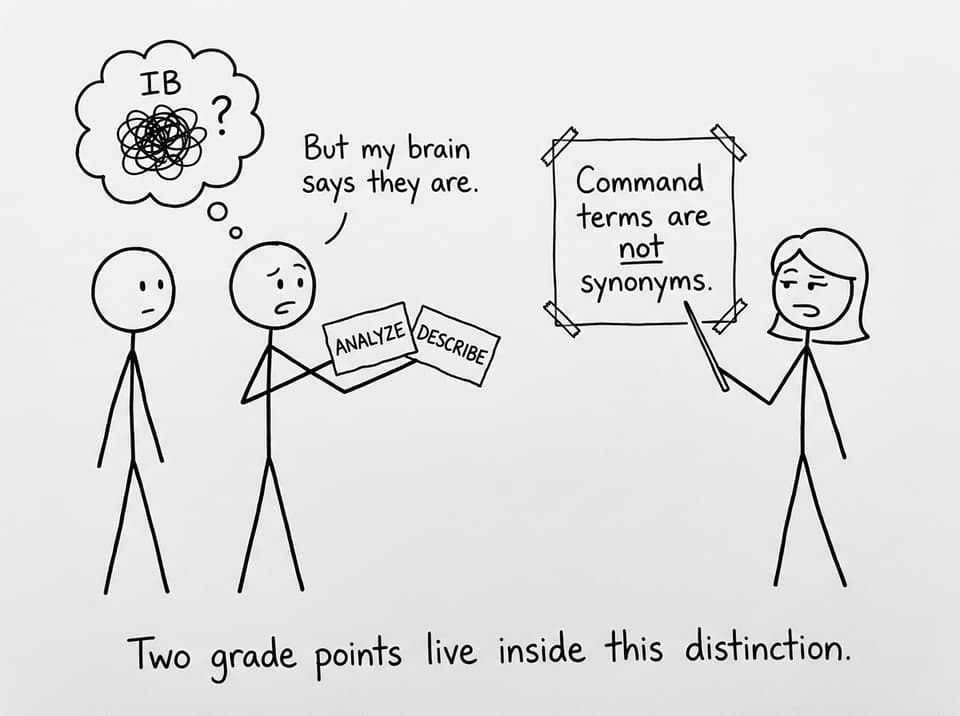
Misread IB command terms (describe vs analyze vs evaluate)
-
Write answers at the wrong depth
-
Run out of time on the highest-mark questions
-
Don’t show working or reasoning clearly
-
Freeze when the question looks unfamiliar
Fixing any one of those can shift a subject grade boundary. Fixing two or three across multiple subjects is how students climb 2 grade points overall.
RevisionDojo’s Failed Mock Exams? You Can Still Pass IB captures the mindset shift: don’t “study harder,” study clearer.
How IB mock exams create a 2-point improvement loop
You train pacing under pressure (instead of hoping for it)
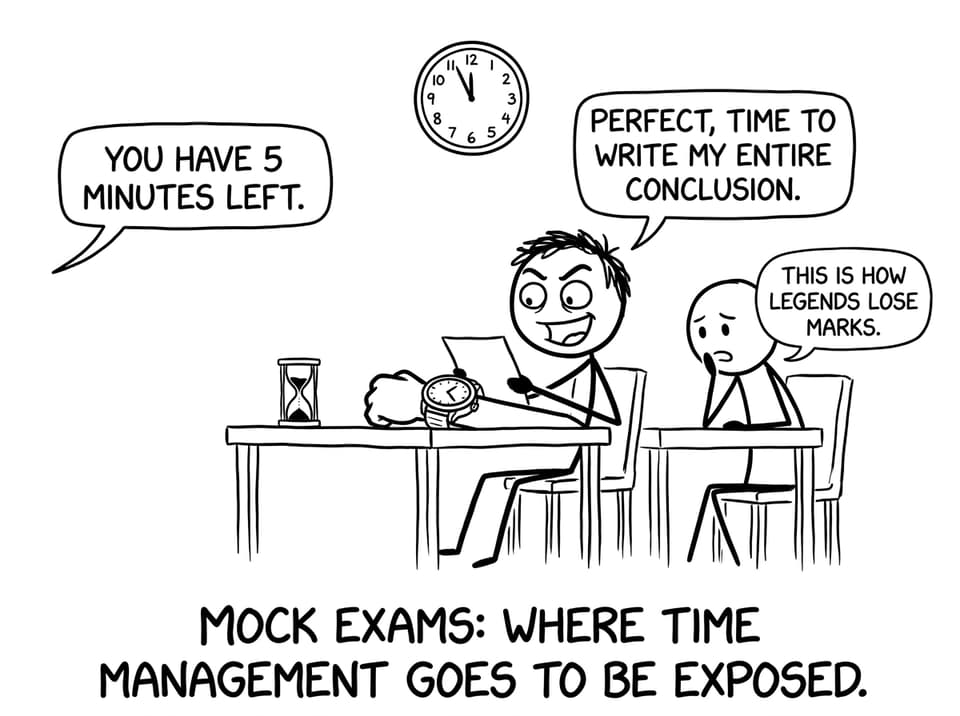
In the IB, timing isn’t a side skill. It’s the container your knowledge has to fit inside.
A proper mock teaches you:
-
How long your “average” answer really takes
-
Which question types slow you down
-
When perfection is stealing finished marks
Then you can build timing into your practice: short timed sections during the week, one longer sit on weekends.
To reinforce practical routines around exam week, read What to Do the Night Before IB Exams and Unwritten Rules of IB Exams No One Tells You.
You convert “I understand” into “I can score”
This is the quiet difference between revision and performance.
In a mock, you learn whether you can:
-
Use the correct structure for extended responses
-
Make your method obvious in Maths and Sciences
-
Select evidence efficiently in Humanities
-
Follow the mark scheme logic instead of your own internal logic
If you want a model of how top scorers build that conversion, use How 45-Point IB Students Prepare for Exams.
You get a diagnostic, not a mood swing
A mock should not be a verdict on your intelligence. In the IB, it’s data.
The best post-mock review asks:
-
Was this a content gap (I didn’t know it)?
-
A command term gap (I knew it but answered the wrong task)?
-
A structure gap (my ideas weren’t markable)?
-
A timing gap (I ran out of minutes, not knowledge)?
-
A stress gap (I panicked and made avoidable mistakes)?
When you label the failure type, you unlock the correct fix.
A practical 7-day IB mock exam plan (repeatable)
This is a realistic week you can run during IB exam season.
Day 1: Sit the mock (or a half-paper)
Do a timed sit. Treat it like the real IB environment. If you need a framework for building a realistic paper simulation, use IB Test Templates: Pre-Made Exams for Quick Practice.
Day 2: Review with a “marks lost” lens
Don’t just circle wrong answers. Write a short error log:
-
What happened?
-
Why did it happen?
-
What is the smallest fix?
-
When will I retest?
Day 3: Clarify weak content fast
Use RevisionDojo for IB to jump into Study Notes for the exact subtopic you missed. Ask AI Chat the one question you keep avoiding until it becomes simple.
Day 4: Drill the weak pattern in the Questionbank
Do 20-40 targeted questions (same topic, same skill) using the Questionbank. Tag the ones that expose the same mistake.
For a deeper overview of how targeted drilling works, see Comprehensive IB Question Bank: Thousands of Practice Questions.
Day 5: Flashcards for the “easy marks”
Turn recurring facts, definitions, and command-term phrasing into Flashcards. This is how you stop relearning the same thing every week.
Day 6: Retest under time
Do a short timed section that matches the weakness you found. The goal is not a perfect score; it’s proof the pattern is changing.
Day 7: One reflective adjustment
Ask: what’s the next highest-impact change for my IB score? Then repeat the loop.
The final point: IB mock exams reward awareness
The IB doesn’t just reward hard work. It rewards the kind of work that creates feedback.
Mock exams are feedback with teeth. They show you what you actually do under time, what you actually misunderstand, and what the mark scheme actually wants. If you run that loop weekly, it’s common to reclaim enough marks to lift your total by 2 IB grade points.
If you want the cleanest next step, start inside RevisionDojo: run a timed mock, use the Questionbank to drill the exact weakness it reveals, build Flashcards for the recurring gaps, and use AI Chat plus Grading tools to tighten your answers until they look like marks.