
The night before an IB mock, most students do the same thing: they try to feel prepared.
They reread notes. They highlight. They open five tabs, then close them again. It’s a familiar kind of motion: busy, loud, and strangely unconvincing.
But IB mocks don’t reward motion. They reward systems. The students who improve fastest aren’t magically smarter; they’re simply running a tighter loop: simulate, mark, diagnose, fix, retest.
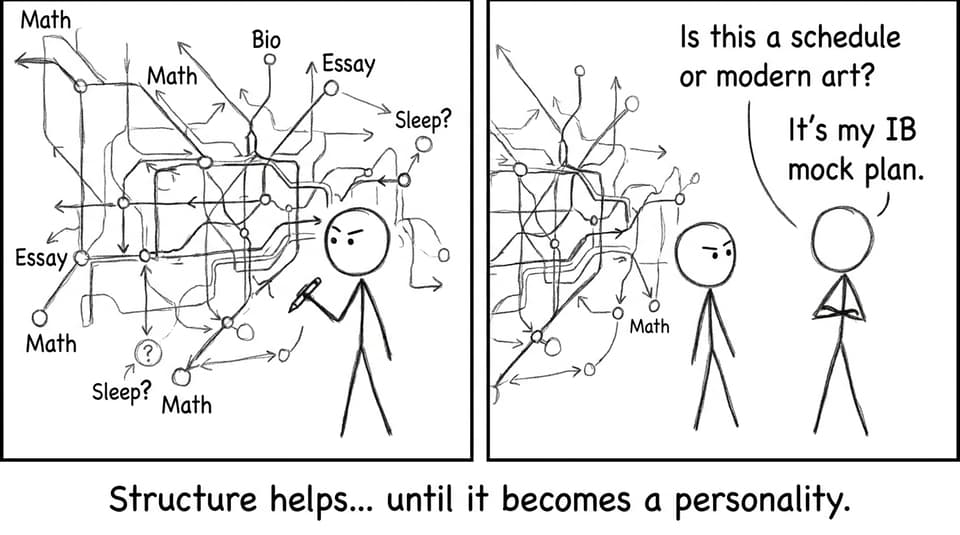
IB mock exam checklist (save this)
Use this before every IB mock so you don’t “revise broadly” and hope for the best:
-
Choose the exact paper/section you’re training for
-
Sit it timed, silent, and uninterrupted
-
Mark it the same day
-
Write a short mistake log (pattern, not pain)
-
Drill the weak skill using targeted questions
-
Turn recurring errors into Flashcards
-
Retest within 48 hours
If you want one home base for this loop, RevisionDojo connects Study Notes, Flashcards, Questionbank, AI Chat, Mock Exams, Predicted Papers, Grading tools, the Coursework Library, and Tutors so your process stays consistent even when school gets chaotic.
IB mock exam tips that actually move your grade
Start earlier than you think (90 days is calm, not extreme)
The most effective IB mock prep usually begins about 8-12 weeks out. Not because you need endless hours, but because you need repeats. Strategy only becomes instinct after enough cycles.
A simple weekly rhythm:
-
3-5 short sessions: topic practice + review
-
1 timed session: a section or full paper
-
1 review block: mistake log + retest plan
If you’re unsure how to structure the weeks, borrow the workflow from How to Study for IB Mocks (Without Burning Out).
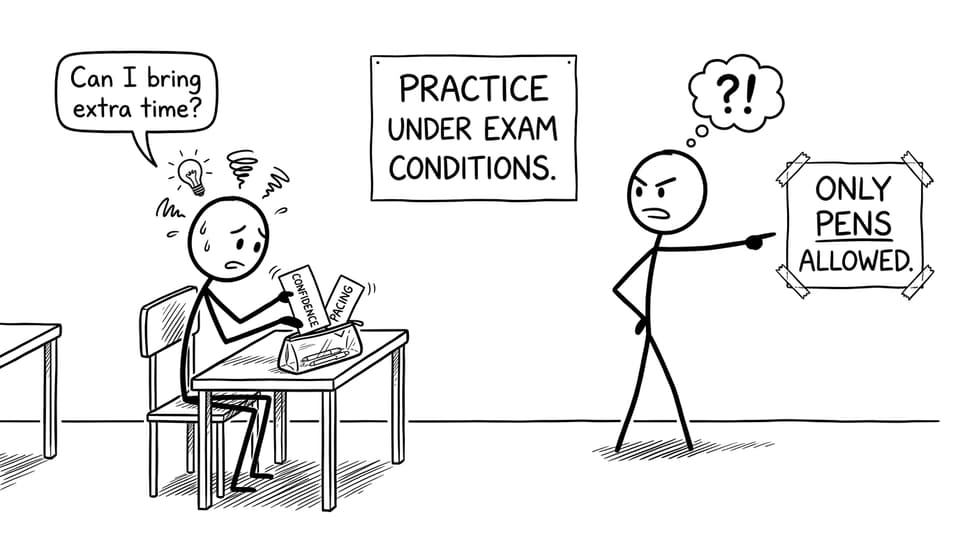
Treat your IB mock like a rehearsal, not a “practice day”
A mock only teaches pacing if you respect the clock.
Sit your IB mock the way you want to sit the real exam:
-
phone out of the room
-
strict timing (no “pause breaks”)
-
clean desk
-
start-to-finish focus
This is where realistic tools matter. RevisionDojo’s Mock Exams style practice and timed routines help you build calm under pressure rather than just knowledge in theory.
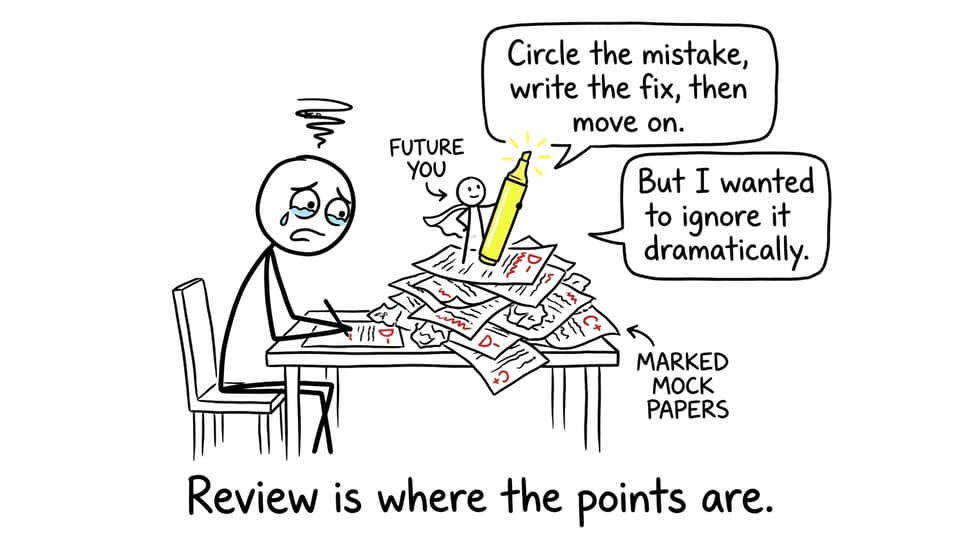
Mark aggressively, then rewrite one “model” response
Marking is not a judgement; it’s data.
After each IB mock, do two things the same day:
-
Categorize mistakes: content gap, method gap, command term mismatch, time panic, careless error.
-
Rewrite one answer properly (not ten). Pick the response that lost the most marks and rebuild it in mark-scheme language.
If you need a clear method, use IB Mock Exam Strategies: How to Use Practice Tests Effectively.
Drill weak areas with a Questionbank, not random revision
Weaknesses don’t disappear from rereading. They disappear from reps.
In the IB, improvement often comes from fixing a small number of recurring leaks: the same command term, the same algebra step, the same evaluation move.
Use RevisionDojo’s Questionbank feature to filter practice by topic and difficulty, then retest the same skill 24-48 hours later. That retest is where confidence becomes earned.
Use AI feedback to shorten the time between “wrong” and “fixed”
The hidden danger of mock exams is slow feedback. If you wait a week to understand your mistake, you’ve already practiced it again.
RevisionDojo’s AI Chat can explain why an answer loses marks, generate a follow-up set, and help you translate feedback into an actionable next session. When you pair that with Grading tools (especially for written subjects), your mock becomes a feedback engine, not a one-off score.
To see how RevisionDojo fits into a full routine, read RevisionDojo App: The Smarter Way to Prep for IB Exams.
Subject-specific IB mock strategies
Sciences and Math
For IB Sciences and Math, points usually leak from method and speed, not just knowledge.
-
Train short timed sets to build accuracy under pressure
-
Track “error types” (units, rounding, setup, interpretation)
-
Retest the same question type after two sleeps
Essays and Humanities
For IB essay-heavy subjects, your structure is your safety net.
-
Practice introductions as mini-drills
-
Build paragraph templates tied to command terms
-
Get fast rubric-aligned feedback using Grading tools and, when needed, Tutors
If mocks have gone badly and you need a reset, follow Failed Mock Exams? You Can Still Pass IB.
FAQ
How many IB mock exams should I do?
Most IB students improve with a mix of frequency and realism. Early on, one timed mock section per week plus one larger mock every few weeks is enough to build momentum without burnout. As exams get closer, increase the realism: more timed work, more strict conditions, and faster review. The real goal is not a magical number of mocks; it’s the number of complete feedback loops you run. If a mock isn’t marked and converted into targeted practice, it’s mostly just stress. A good rule is: never sit a mock you don’t have time to review the same day.
Should I review every IB mock in full detail?
Yes, but “full detail” doesn’t mean rewriting the entire paper. In IB prep, the best review is selective and surgical: find the biggest mark losses and the repeating patterns. Write a short mistake log that labels what went wrong and what the smallest fix is. Then do a short retest set within 48 hours, because that’s when the brain updates the habit. If you only circle answers and move on, you collect scores but not improvement. Review turns your mock into a teacher.
How do I avoid burnout while doing IB mocks?
Burnout usually comes from pretending every day must be heroic. A sustainable IB plan is built from small, repeatable blocks: notes for clarity, questions for proof, review for correction. Alternate heavy days (timed sections or full mocks) with lighter days (Flashcards, targeted drills, short review). Keep sleep non-negotiable, because recall is part of performance, not a bonus feature. Use tools that reduce friction: RevisionDojo keeps Study Notes, Flashcards, Questionbank, and timed practice in one place so you spend less energy setting up and more energy learning. When you’re stuck, ask for faster feedback using AI Chat or a session with Tutors instead of grinding in confusion.
Final thought: make your IB mocks a compounding loop
The best IB mock exam tips aren’t complicated. They’re consistent: sit it like it’s real, review like an analyst, drill the weak skill, and retest fast.
If you want that loop to feel simpler (and a lot less lonely), build it inside RevisionDojo using Questionbank, Study Notes, Flashcards, AI Chat, Mock Exams, Predicted Papers, and Grading tools. Your next mock can be more than a score; it can be the turning point.