


The quiet moment when the numbers stop being scary
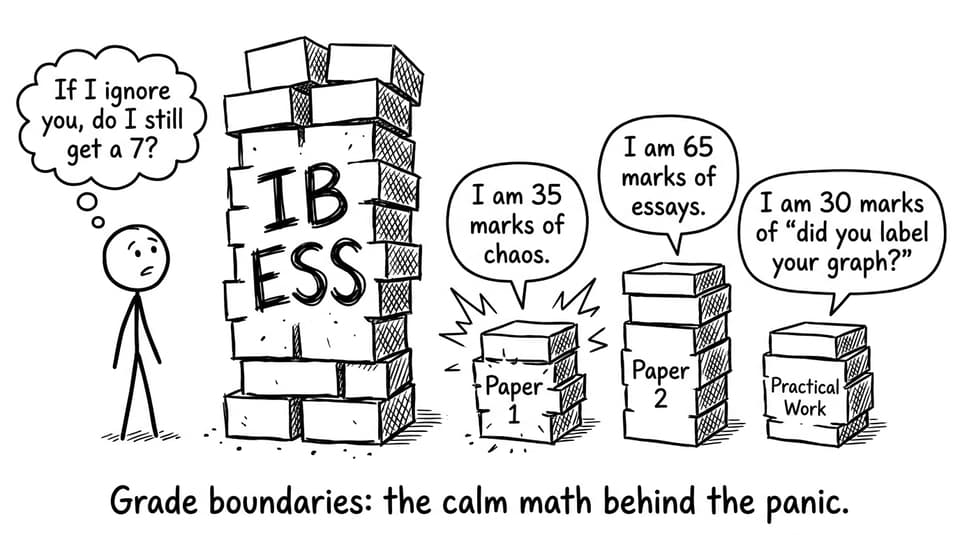
The week before exams, IB ESS revision can feel like carrying three different worries at once: Paper 1 speed, Paper 2 writing, and Practical Work details. But grade boundaries do something comforting. They turn panic into arithmetic.
If you know the IB ESS grade boundaries for 2025 (TZ1), you can estimate where you are, decide what to fix next, and avoid over-revising the wrong component.
Quick checklist: how to use IB ESS grade boundaries
-
Convert your practice scores into a realistic target band.
-
Identify the “cheapest marks” (usually weak command terms or missed graph skills).
-
Balance revision time across Paper 1, Paper 2, and Practical Work.
-
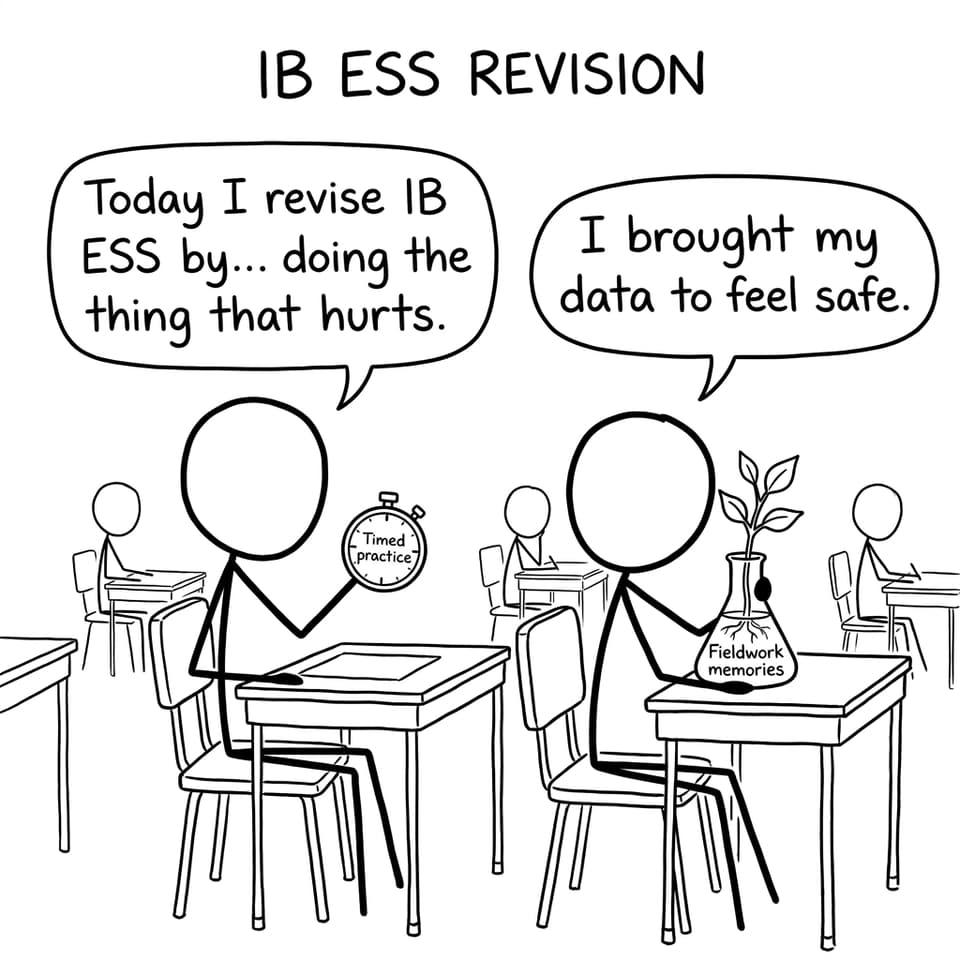
Train under time, then review mistakes like an examiner.
For a structured course map, start with the IB Environmental Systems and Societies resources hub and pair it with the RevisionDojo Questionbank to drill weak areas efficiently.
IB ESS 2025 (TZ1) grade boundaries by component
Below are the IB ESS grade boundaries for 2025 (TZ1), split by assessment component.
Paper 1 (out of 35)
-
Grade 7: 26-35
-
Grade 6: 22-25
-
Grade 5: 17-21
-
Grade 4: 13-16
-
Grade 3: 10-12
-
Grade 2: 5-9
-
Grade 1: 0-4
Tip: Paper 1 is often about calm interpretation. If you rush, you lose marks you actually understand.
Paper 2 (out of 65)
-
Grade 7: 41-65
-
Grade 6: 33-40
-
Grade 5: 24-32
-
Grade 4: 16-23
-
Grade 3: 11-15
-
Grade 2: 6-10
-
Grade 1: 0-5
Tip: Strong Paper 2 answers look “organized” before they look “smart.” Use clear paragraphing, case studies, and evaluation.
Practical Work (out of 30)
-
Grade 7: 24-30
-
Grade 6: 21-23
-
Grade 5: 17-20
-
Grade 4: 14-16
-
Grade 3: 9-13
-
Grade 2: 5-8
-
Grade 1: 0-4
If your practical work is also linked to your investigation skills, use the IB ESS IA Grader rubric tool to see what “top-band” detail looks like.
Final IB ESS 2025 grade boundaries (TZ1) (out of 100)
-
Grade 7: 69-100
-
Grade 6: 57-68
-
Grade 5: 43-56
-
Grade 4: 32-42
-
Grade 3: 22-31
-
Grade 2: 11-21
-
Grade 1: 0-10
This is why students who feel “average” in one paper can still score high overall in IB ESS: boundaries reward consistency across components.
A smarter way to move your score (without studying more hours)
If you want fast gains in IB ESS, do this loop:
-
Learn missing concepts using IB ESS revision notes or focused topic pages like Topic 4: Water.
-
Practice with the ESS Foundations Questionbank or a targeted set like Water Questionbank.
-
Simulate exam conditions using ESS Predicted Papers.
-
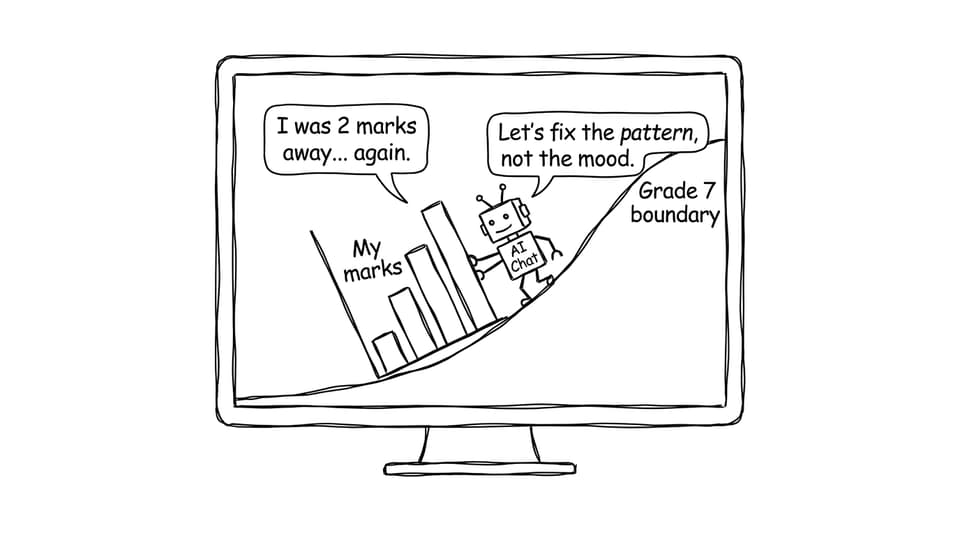
Unstick confusing feedback with RevisionDojo’s AI Chat, and tighten your writing using Grading tools and model responses.
FAQ
Do IB ESS grade boundaries change every year?
Yes, IB ESS grade boundaries can shift between sessions because paper difficulty and cohort performance vary. That said, boundaries usually stay within a reasonable range, so they’re still useful for planning. The best way to use them is as a targeting tool, not a prediction machine. If you’re consistently landing in a band during timed practice, you’re building real exam readiness. Use boundaries to decide whether you need broad content review or just better technique. And keep your focus on what earns marks: command terms, clear explanation, and evaluation.
How should I split revision between Paper 1, Paper 2, and Practical Work?
Start by converting your recent scores into the IB ESS grade boundaries so you can see which component is furthest from your target. Many students default to rereading notes, but the highest returns often come from timed practice and review. Paper 1 improves with frequent short drills: data interpretation, definitions, and applying concepts quickly. Paper 2 improves with structure: essay plans, case study recall, and evaluation language. Practical Work improves with clarity and method-quality thinking: variables, reliability, graphing, and justified conclusions. A balanced plan is ideal, but a targeted plan is faster.
What’s the fastest way to improve my IB ESS Paper 2 score?
Paper 2 marks in IB ESS are often lost through vague writing, not lack of knowledge. Train yourself to answer the command term directly, then build paragraphs that explain, apply, and evaluate. Use case studies like tools: one or two flexible examples that you can adapt to multiple questions. After each timed response, check what you didn’t do: define key terms, use data, compare perspectives, discuss trade-offs, or conclude clearly. This is where RevisionDojo helps because you can practise exam-style questions, get feedback, and then immediately patch content gaps with Study Notes and Flashcards. Over a few cycles, your answers start to look more “examiner-friendly,” which is the whole game.
Final thought: let the boundaries guide your next move
The most effective IB ESS students aren’t the ones who revise the longest. They’re the ones who revise with feedback, targets, and calm repetition.
Use the IB ESS grade boundaries above to choose your priority, then build your next week around RevisionDojo’s Questionbank, Study Notes, Flashcards, AI Chat, Grading tools, Predicted Papers, Mock Exams, Coursework Library, and Tutors. When your prep becomes a system, the exam stops feeling like a surprise.