
You don’t notice the number until it starts staring back at you.
4,000.
Not as a goal, but as a ceiling. The kind that makes every extra paragraph feel like it has weight. And if you’re asking Q3: “Is the IB EE still 4,000 words in 2027?” you’re probably already living inside that feeling: curiosity mixed with quiet panic, plus a spreadsheet of drafts you don’t want to open.
Here’s the clean answer you can trust: Yes. The maximum word count for the essay itself remains 4,000 words in 2027.
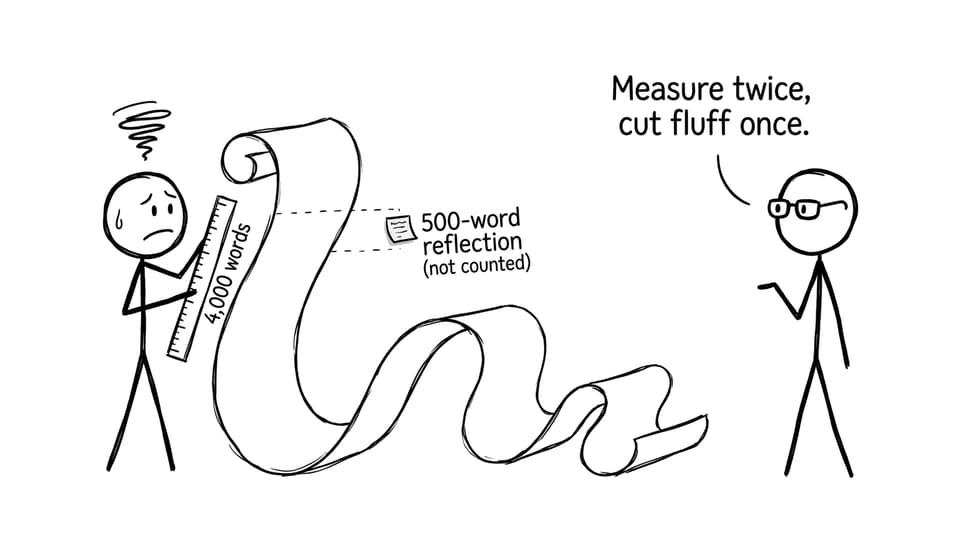
And here’s the part students miss (because it’s new enough to feel like a rumor): you also write a reflective statement of up to 500 words on the Reflection and Progress Form (RPF). That 500-word reflective statement is not included in the 4,000-word count.
That’s the rule. Now let’s make it useful.
The 2027 EE word limit: what’s staying the same
The EE is still a maximum of 4,000 words for the essay itself. That part hasn’t budged.
What that means in practice is simpler than it feels:
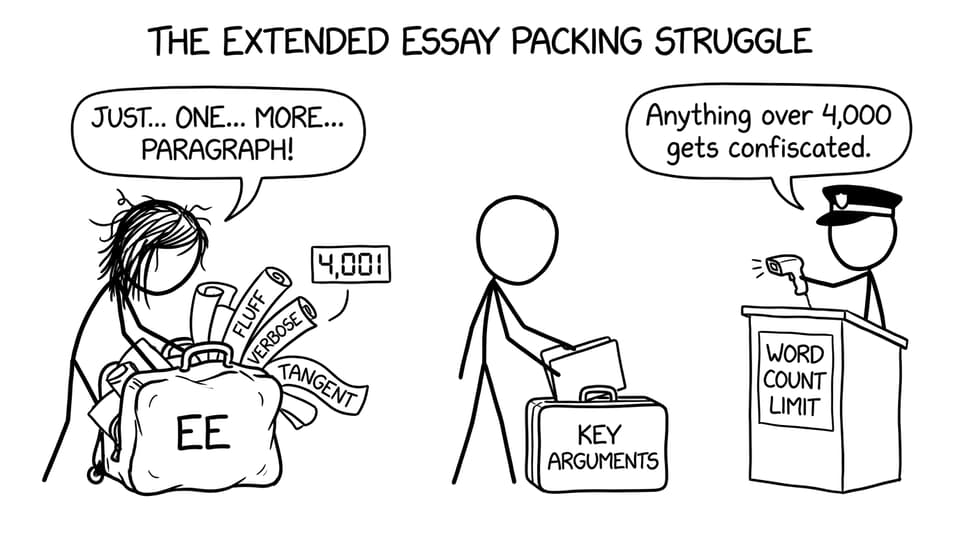
- If your EE is 4,012 words, the extra section isn’t “mostly fine.” It’s risky.
- Your best strategy isn’t to gamble with the boundary. It’s to write with intention.
Many students treat the 4,000-word maximum like an opponent to defeat. The students who score well treat it like a set of guardrails that keeps the work sharp.
If you want a practical breakdown of what usually counts and what doesn’t, use Mastering the IB Extended Essay Word Count and keep it open while you trim.
What changed: the 500-word reflective statement on the RPF
In 2027, the EE isn’t “longer” in the essay document. But it is broader in what you submit.
You now write a reflective statement of up to 500 words on your RPF.
Two things matter here:
- The reflective statement is separate from the essay.
- The reflective statement is not included in the EE 4,000-word count.
So if your essay is 3,980 words and your reflective statement is 480 words, you’re still within the rules.
Where students slip is not the arithmetic. It’s the mindset. They assume reflection is “extra writing,” so they delay it. But reflection is often the easiest place to earn marks because it’s the place you’re allowed to be honest about decisions, changes, trade-offs, and learning.
To get this right, read How Reflection Strengthens Your IB Extended Essay and then write your reflection like a researcher, not like a diary.
Quick checklist: what to do if you’re planning your EE for 2027
Use this as a fast pre-flight check before you write another sentence of your EE:
- Confirm your EE max essay word count is 4,000.
- Plan to write the RPF reflective statement up to 500 words (separate from the essay).
- Choose a research question you can actually answer within 4,000 words.
- Build your structure before you “fill it in.”
- Save your best words for analysis, not background.
- Leave time to cut 5-10% at the end.
For topic selection and scope sanity checks, 10 Powerful Tips to Choose a Strong EE Topic is a solid starting point.
Why the 4,000-word EE limit still matters for exam-focused students
You might be thinking: “I’m preparing for exams. Why obsess over the EE word count?”
Because the skills that lift your EE also lift your exam performance:
- Writing a focused line of argument
- Using evidence instead of vibes
- Cutting weak claims
- Explaining what your data or quotes actually prove
The EE is where you learn to think in paragraphs that earn marks. Exams reward the same discipline.
That’s why RevisionDojo treats coursework and exams as one ecosystem. You revise content with Study Notes, drill skill with the Questionbank, lock memory with Flashcards, and pressure-test understanding with Mock Exams and Predicted Papers. Then you tighten writing using Grading tools, reduce uncertainty with the Coursework Library, and get unstuck fast with AI Chat or Tutors.
If you want a hub for EE expectations and subject-specific guidance, start with IB Extended Essay Guides and explore from there.
The practical word-count strategy: write like everything costs money
A quiet truth about the EE: most students don’t need more words. They need better words.
Here’s a high-scoring way to think about your 4,000-word budget.
Spend words on analysis, not touring the syllabus
Background is comforting because it’s easy. Analysis is harder because it requires choices. The IB doesn’t reward you for knowing “a lot of stuff.” It rewards you for arguing something specific and proving it.
If you’re bloated on context, use a ruthless test:
- Does this sentence directly help answer my research question?
- If I delete it, does anything break?
If not, it’s not worth its rent.
Build a structure that prevents “panic paragraphs”
Most word-count disasters happen in the final week, when you try to patch gaps by adding paragraphs. The fix is structural, not motivational.
Try a simple model:
- Introduction: research question, why it matters, how you’ll answer it
- 2-4 body sections: each section makes one claim and proves it
- Counterargument or limitation: show control, not perfection
- Conclusion: answer the question clearly, then reflect on implications
For introductions specifically, 7 Key Steps to Write a Strong Extended Essay Introduction helps you avoid the “two pages of background, zero direction” trap.
Cut with a scalpel, not a chainsaw
Cutting 300 words feels like losing work. But it’s usually just losing repetition.
A good trimming routine:
- Remove repeated definitions
- Replace long quotes with shorter ones plus your commentary
- Turn “It is important to note that…” into nothing
- Merge paragraphs that make the same point
And if you’re not sure what to cut, RevisionDojo’s Coursework Grader can help identify where your writing is descriptive rather than analytical, so you cut the right things first. See IB Coursework Grader.
How to use the RPF reflective statement without wasting it
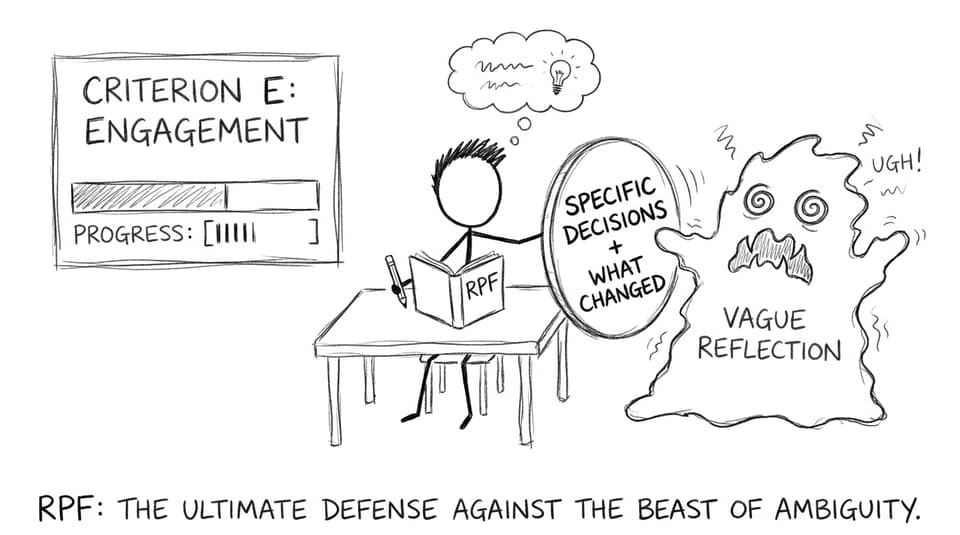
Students hear “reflective statement” and assume it’s about feelings. It’s not. It’s about decisions.
A strong RPF reflective statement usually includes:
- What your research question was at first, and how it changed
- What method you tried that didn’t work, and what you did instead
- How your sources or data changed your thinking
- What you learned about the subject (and about research)
If you want to practice reflection like a skill, not a chore, RevisionDojo has targeted help for engagement and reflection processes in posts like IB Coursework Progress Tracking and the wider All IB Extended Essay Posts.
A calm workflow: treat the EE like training, not one big event
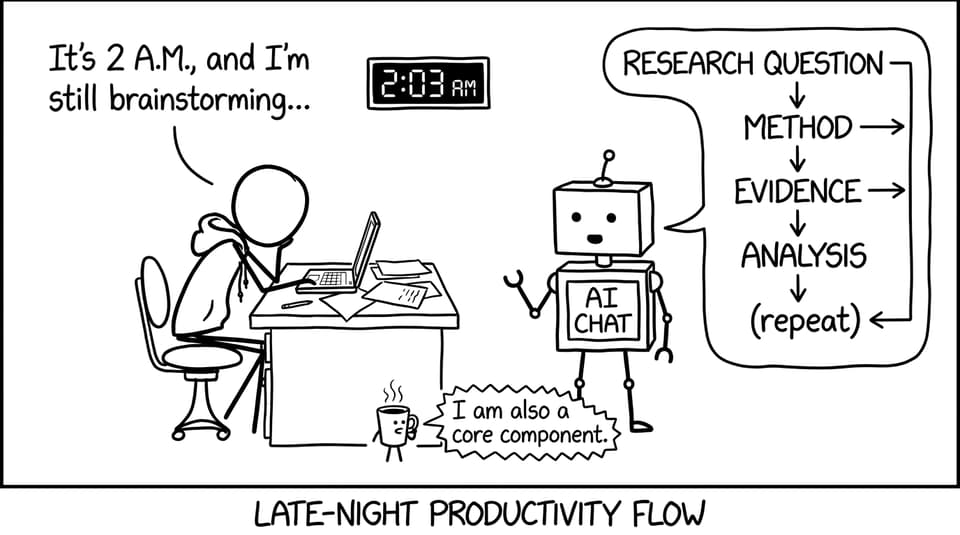
One reason the EE feels heavy is that students treat it like a single monster task. But it’s easier when it becomes a loop.
A loop RevisionDojo students use:
- Use Study Notes to clarify the theory or context
- Use AI Chat to stress-test your research question and argument map
- Draft one section
- Run it through Grading tools for criterion-aware feedback
- Turn recurring issues into Flashcards (yes, even for writing habits)
And when exam season collides with EE season, you keep your system intact: do your daily Questionbank sessions, schedule weekly Mock Exams or Predicted Papers, then keep the EE moving in small blocks. For an exam-ready workflow mindset, RevisionDojo App: The Smarter Way to Prep for IB Exams connects the pieces.
The takeaway: the EE is still 4,000 words; but your strategy should change
So yes: in 2027, the EE is still 4,000 words for the essay itself. And yes: you now also write a separate RPF reflective statement of up to 500 words, not counted in the 4,000.
If you remember only one thing, make it this: the best EE plan isn’t “write more.” It’s “write sharper.” Build a research question that fits the constraint, spend words on analysis, and use reflection to show intelligent decision-making.
When you’re ready to turn that plan into an actual draft (and keep exam prep alive at the same time), RevisionDojo is built for exactly this kind of season: Study Notes, Flashcards, Questionbank, AI Chat, Grading tools, Predicted Papers, Mock Exams, Coursework Library, and Tutors in one place. Start with the IB Extended Essay Guides, then use the tools to keep your EE moving forward without losing your exam momentum.