In IB SEHS, exercise responses are one of those topics that feels “obvious” until you sit a timed question and realise you’ve written five true facts… and earned two marks. The problem usually isn’t knowledge. It’s shape. Examiners reward clear cause-and-effect, correct terminology, and a performance link under pressure.
That’s why revising exercise responses in IB SEHS should feel less like memorising and more like rehearsing a reliable explanation.
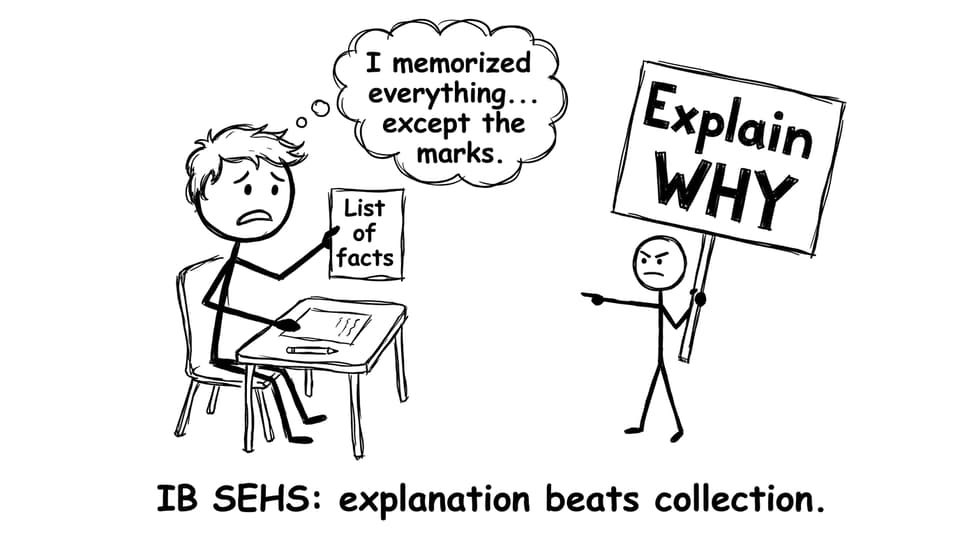
Stick-figure examiner asking for WHY
Quick checklist: your IB SEHS exercise response routine
Use this checklist every time you revise IB SEHS exercise responses:
Define the response as acute (immediate, short-term) before you start writing.
Revise by system (cardiovascular, respiratory, muscle/metabolic, endocrine).
Use one structure: Identify -- Explain -- Link to performance.
Practise how the response changes with intensity.
Compare your wording to markscheme-style language using targeted practice.
Start with the big picture (so you don’t mix concepts)
Exercise responses in IB SEHS are the body’s immediate adjustments to meet rising demand for oxygen delivery, carbon dioxide removal, and ATP production. If you don’t anchor that idea first, it’s easy to drift into training adaptations (which happen after repeated sessions over weeks).
To keep your definitions tight, build a mini set of daily recall cards using Flashcards for A.3 Response. The goal is quick, accurate language you can deploy in seconds.
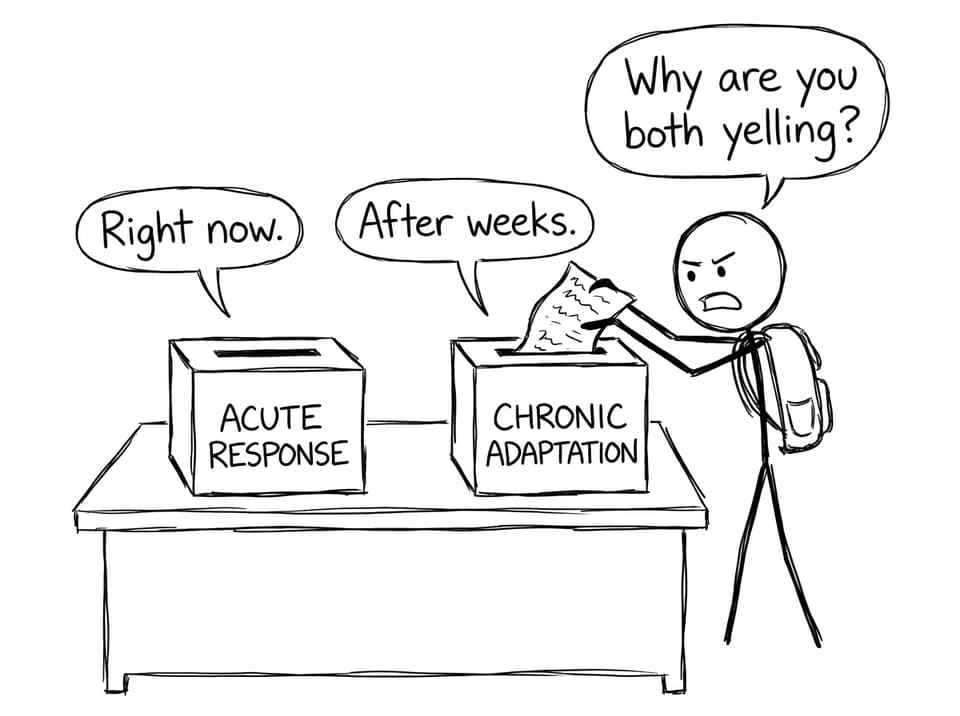
Acute vs chronic boxes arguing
Revise exercise responses by system (the fastest way to feel organised)
System-by-system revision is the most efficient approach for IB SEHS because it creates predictable patterns.
Cardiovascular and respiratory: write the chain, not the list
Instead of listing “heart rate increases” and stopping, train yourself to complete the chain:
Identify: heart rate increases.
Explain: sympathetic stimulation and rising demand increase cardiac output.
Link: more oxygen delivery helps sustain aerobic ATP production and delays fatigue.
Then mirror that logic in the lungs. If you want a focused refresher on intensity changes, use Respiratory Responses to Exercise Intensity and practise converting the ideas into 2--4 sentence exam answers.
Endocrine and muscle/metabolic: stay precise
In IB SEHS, precision is a multiplier. “Hormones increase” is vague; “adrenaline rises to increase heart rate and mobilise energy substrates” is mark-friendly. The same goes for muscle responses: name the variable, name the cause, link to energy supply.
The exam structure that keeps you calm: Identify -- Explain -- Apply
The most reliable way to score in IB SEHS exercise responses is to repeat one structure until it becomes automatic.
Identify the response (be specific).
Explain the physiological reason (cause and mechanism).
Apply/Link to exercise performance (why it matters).
Build speed with short, mixed practice sets from the A.3 Response Questionbank. Then use RevisionDojo’s AI Chat and grading tools to check whether your “why” is actually a “why,” not a reworded fact.
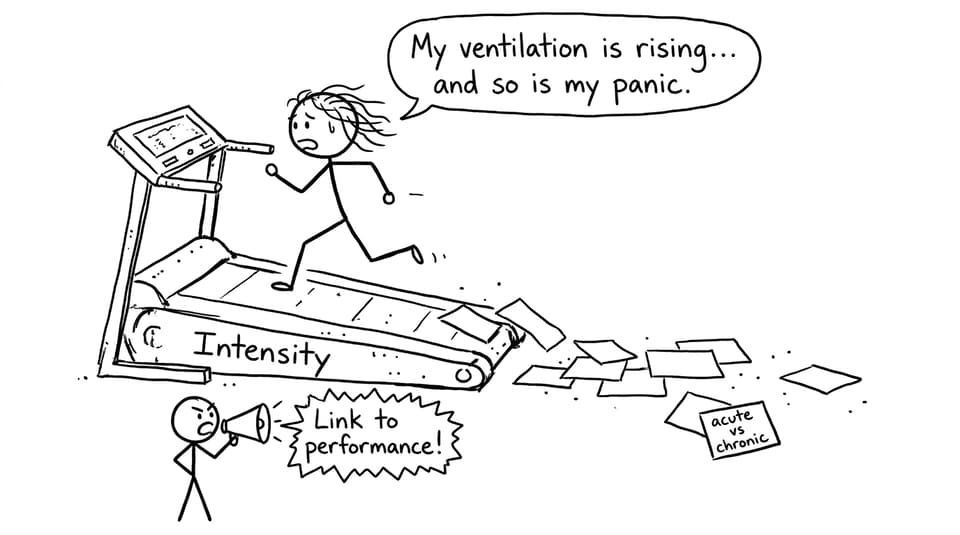
Running uphill on “Intensity” treadmill
Common mistakes IB SEHS students make (and how to fix them)
Mixing acute responses with chronic adaptations: label your answer “during exercise” in the first line.
Writing generic intensity statements: practise phrases like “increases progressively until near maximal effort” and explain what limits further increase.
Forgetting the performance link: finish with oxygen delivery, CO2 removal, thermoregulation, or fatigue delay.
Final takeaway: practise like the examiner is reading fast
To revise exercise responses well, IB SEHS students should stop collecting facts and start rehearsing explanations. Use system-based organisation, apply the Identify -- Explain -- Link structure, and train intensity-based phrasing until it’s automatic.
When you’re ready to turn that into exam performance, use RevisionDojo as your hub: the Questionbank, Study Notes, Flashcards, AI Chat, Grading tools, Predicted Papers, Mock Exams, and Tutors are built to make your IB SEHS answers clearer, faster, and more mark-ready.
For more targeted reading, browse all IB SEHS posts and keep your revision focused on what examiners actually reward.
IB SEHS goal setting in sport made simple: goal types, SMART targets, common mistakes, and exam-ready tips using RevisionDojo practice tools.