


Introduction
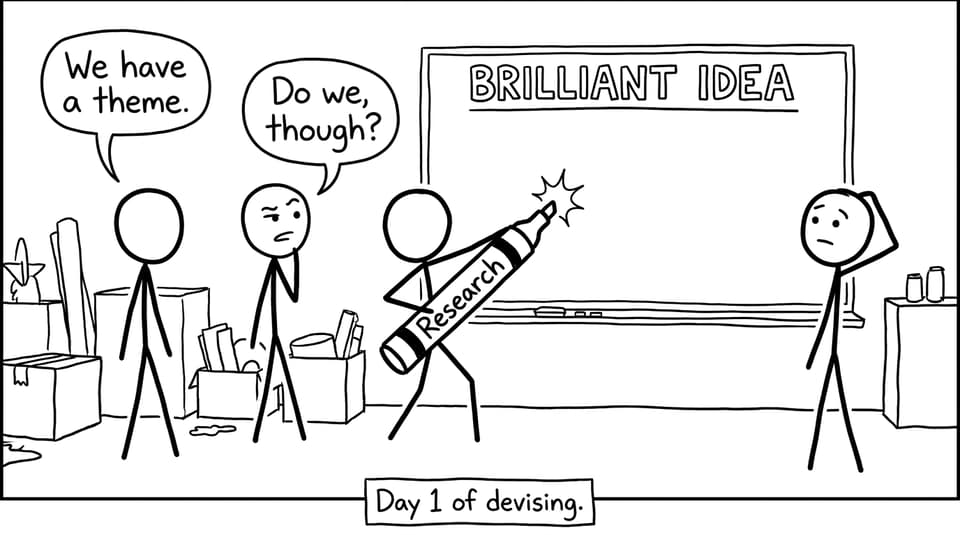
The first rehearsal of a devised piece often looks like failure. Someone has a "theme." Someone else has a playlist. The floor is covered in half-finished ideas, and the most confident person in the room keeps saying, “Trust the process,” like it’s a spell.
That moment matters in IB Theatre because it’s the exact moment you learn what the course is really assessing: not just a final performance, but your ability to create meaning with other people, under pressure, with evidence.
This guide shows how to develop original theatre collaboratively for IB Theatre in a way that feels creatively alive and also cleanly assessable.
Quick workflow checklist (save this)
-
Choose one strong starting point your ensemble actually cares about
-
Run fast experiments before you “decide” anything
-
Bring research into the room early (practitioners or world traditions)
-
Assign roles so contributions are visible and accountable
-
Document after every session (actions, choices, outcomes, next step)
-
Refine toward a clear audience impact
If you need the big-picture structure of the course while you plan, keep this nearby: Dive into the World of IB Theatre: Syllabus Overview.
Why collaborative devising scores well in IB Theatre
Collaborative creation is not a “nice extra” in IB Theatre. It’s central to what examiners look for: how you generate material, how you test ideas, how you apply research, and how you reflect on decisions.
If you want a direct overview of what gets rewarded, read Understanding the Collaborative Project in IB Theatre and then cross-check your process against How to Succeed in the IB Theatre Collaborative Project.
Start with a starting point that can survive arguments
A good starting point is resilient. It can be pushed, questioned, and reshaped without collapsing.
In IB Theatre, the best starting points usually have three qualities:
-
Tension: a contradiction, dilemma, or question (not just a topic)
-
Images: moments you can stage without explanation
-
Research pathways: obvious links to practitioners, styles, or world theatre traditions
Try this in the room: each person proposes one stimulus (image, headline, object, memory, sound). Then do two-minute improvisations for each. You’re not picking “the best idea”; you’re picking the idea that generates the most stageable moments.
For a deeper method, use Using Starting Points Effectively in the Collaborative Project.
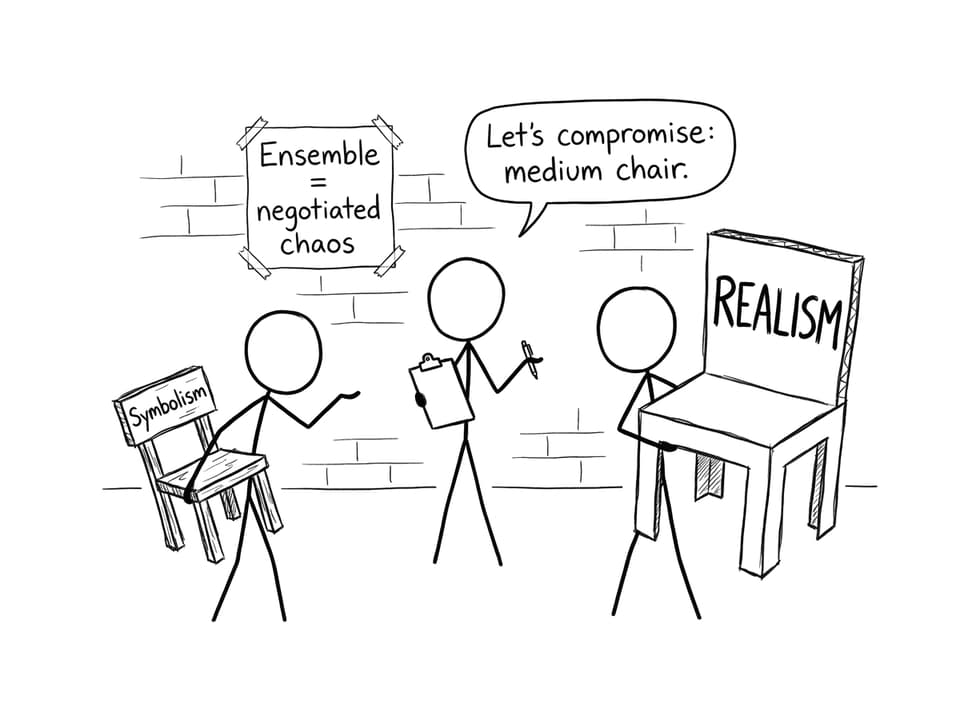
Brainstorm like an ensemble, not a committee
Committees talk until the energy dies. Ensembles test.
Use a three-lane devising sprint:
-
Talk (5 minutes): what are we investigating?
-
Try (15 minutes): improvise three versions with different rules (silence only, direct address, chorus)
-
Name (5 minutes): what did we discover that we couldn’t have planned?
Repeat this cycle. In IB Theatre, that repeatability becomes your evidence: you can show development, not just inspiration.
Want exercises that make this faster? Use Best Ensemble-Building Exercises for IB Theatre Students.
Bring research into rehearsal early (so it shapes choices)
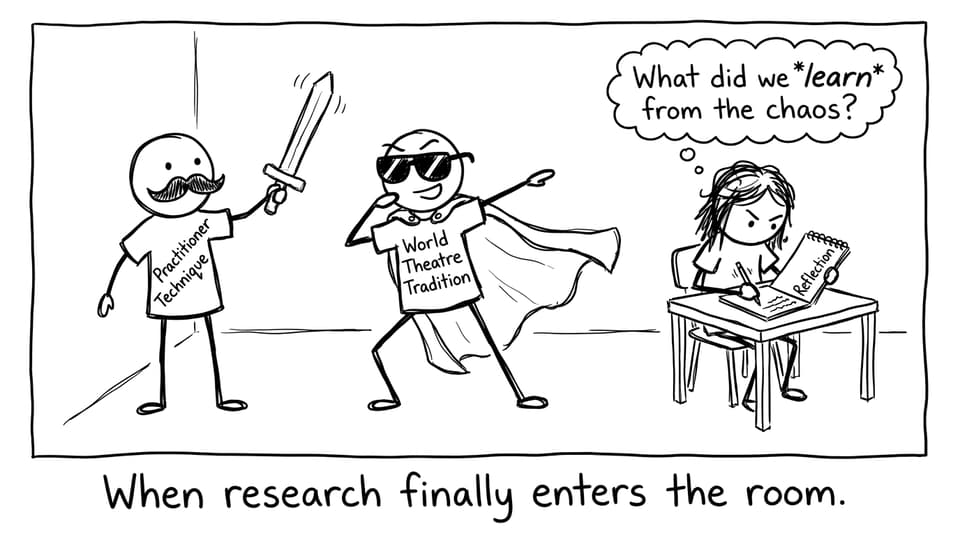
A common trap in IB Theatre is treating research like decoration: adding a practitioner name after the piece is already made.
Instead, let research create constraints. Constraints produce style.
Examples of rehearsal constraints:
-
Brecht influence: one scene must interrupt itself to comment on power
-
Artaud influence: one moment must be built from sound and sensation first, text last
-
Commedia influence: status and physicality decide the scene before dialogue
If you’re choosing traditions and want options that are rich but usable, see Best World Theatre Traditions to Research for IB Theatre Assessments.
Assign roles so your contribution is clear (and fair)
Original theatre can feel “equal,” but assessment is individual. Roles don’t limit creativity; they make responsibility visible.
Useful IB Theatre roles (you can rotate weekly):
-
Director/Outside eye: runs feedback and keeps the intention clear
-
Dramaturg: tracks theme, structure, and research links
-
Designer lead: owns space, props, costume, sound or multimedia choices
-
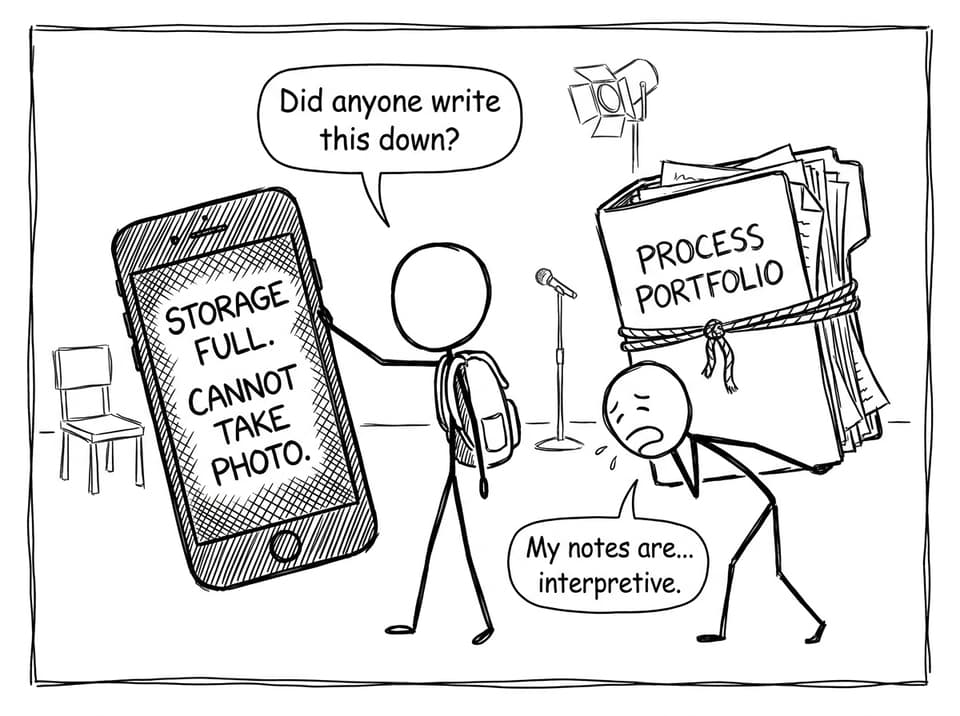
Documenter: captures photos, rehearsal notes, and reflection prompts
When conflict arrives (it will), treat it as data about the piece. Then handle it like professionals. This guide helps: How to Manage Conflict in IB Theatre Ensembles.
Reflection: write what changed, not what happened
Examiners don’t need a diary. They need thinking.
After every rehearsal, answer:
-
What did we try?
-
What surprised us?
-
What did we change (and why)?
-
What research or theatre language explains that change?
-
What will we test next?
To level up your reflection language and structure, use How to Reflect on the Collaborative Project for Maximum Marks.
How RevisionDojo supports IB Theatre devising (without killing the art)
When the creative process gets messy, you don’t need more chaos; you need a system that protects the work.
RevisionDojo helps IB Theatre students do that with:
-
Study Notes for practitioner theory and theatre vocabulary
-
Flashcards for quick recall before reflections and write-ups
-
AI Chat to pressure-test your intention (“What is our audience impact?”)
-
Grading tools to self-check rubric alignment (especially when your reflection feels vague)
-
Mock Exams and Predicted Papers to keep your exam prep moving alongside practical work
-
A Coursework Library and Tutors when you need examples, feedback, or structure fast
To build a broader study routine around rehearsal weeks, pair this with Best Study Strategies for IB Theatre Students (SL & HL).
Conclusion
Collaborative devising in IB Theatre is a skill you build the same way you build a performance: by showing up, testing boldly, and refining honestly. Start with a stimulus that can handle pressure. Experiment before you commit. Let research shape your rehearsal, not just your write-up. And document what changed each day, because change is the real story of your process.
When you want that process to feel calmer and more controllable, use RevisionDojo’s Study Notes, Flashcards, AI Chat, Grading tools, Mock Exams, Predicted Papers, Coursework Library, and Tutors to keep your IB Theatre work both creative and high-scoring.