


Conflict doesn’t usually arrive like a thunderclap in IB Theatre. It shows up quietly: a rehearsal that runs long, a joke that lands wrong, a scene that keeps getting “fixed” by the same person. And because you’re building something fragile together, the tension can feel like it’s threatening the whole piece.
But in IB Theatre, conflict isn’t proof you’re failing. It’s proof you’re collaborating. The difference between a group that spirals and a group that levels up is simple: they treat conflict like rehearsal material, not personal drama.
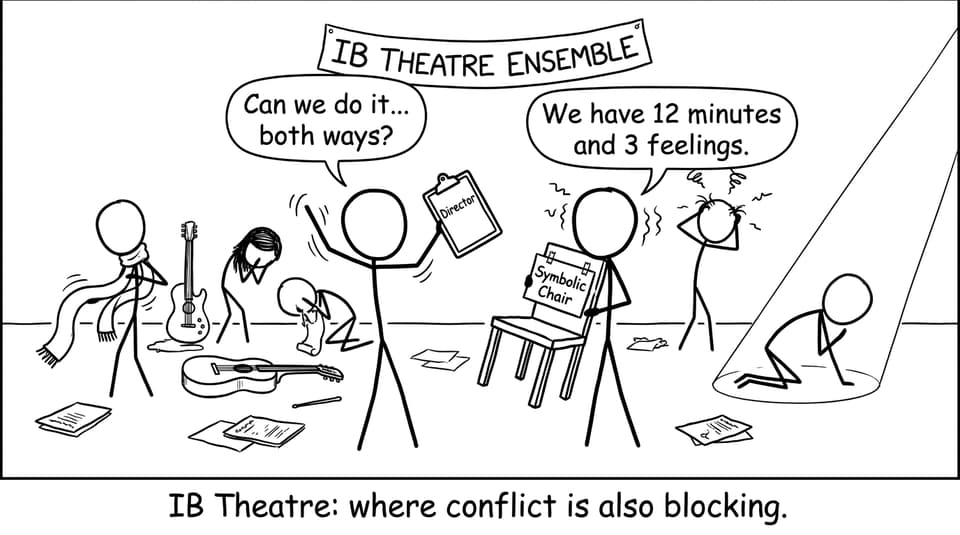
Quick conflict checklist for IB Theatre ensembles
Use this when things start to feel stuck:
-
Name the conflict early (out loud, calmly).
-
Separate idea feedback from person feedback.
-
Switch from debating to testing (run both versions).
-
Rotate leadership for warm-ups, blocking, and notes.
-
Record decisions and reflections while they’re fresh.
If you’re unsure how this fits into the course expectations, keep the syllabus lenses nearby with Exploring the IB Theatre Syllabus: A Comprehensive Guide.
Why conflict management matters in IB Theatre
The Collaborative Project isn’t just about the final performance. It’s about the process: choices, collaboration, and reflection. Examiners don’t expect a perfect ensemble. They expect evidence that you can work through artistic friction with maturity.
Handled well, conflict can improve your IB Theatre outcomes in three ways:
-
It forces clearer communication (which strengthens intention).
-
It creates better experimentation (which improves staging decisions).
-
It gives you real reflection material (which lifts your documentation).
If your group needs a refresher on how the Collaborative Project is assessed, use Understanding the Collaborative Project in IB Theatre as your anchor.
The most common conflicts in IB Theatre ensembles
Creative disagreements (the “what does it mean?” fight)
One person wants naturalism. Another wants abstraction. Someone says “Brechtian” without explaining what that means in this scene.
When this happens, go back to audience impact. Ask: What do we want the audience to feel, notice, or question? That single question turns taste-based arguments into intention-based decisions.
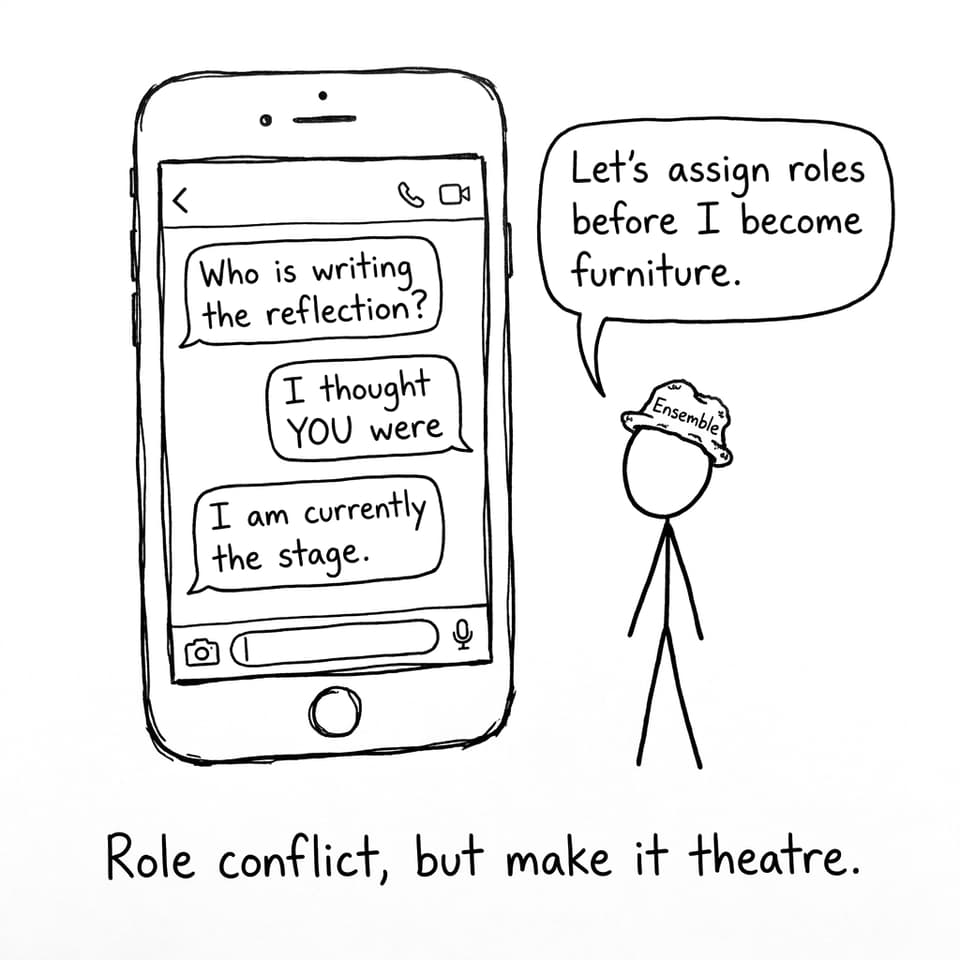
Role and workload conflict (the invisible labor problem)
This is the conflict nobody wants to admit: one person is writing, scheduling, and organizing while others “bring vibes.” Even when everyone is trying, unclear responsibilities create resentment.
A practical fix is a role map that changes weekly. For guidance, borrow the structure in How to Balance Roles and Responsibilities in the Collaborative Project.
Personality and communication clashes (the tone problem)
In IB Theatre, you’re not just sharing ideas; you’re sharing space, vulnerability, and time pressure. Some people process feedback fast. Others need a minute. Some speak bluntly. Others hear bluntness as disrespect.
The solution is a rehearsal norm: “assume good intent, request clear language.” Not everyone will communicate the same way, but everyone can commit to clarity.
Strategies that actually work (even when you’re stressed)
Pause the rehearsal, don’t poison it
When tension rises, don’t try to “push through.” Call a two-minute reset. Water. Silence. Then return with one sentence: “I think we’re stuck on X. Can we agree what decision we’re making?”
Use active listening with a theatre twist
Try this structure:
-
Person A explains their idea in 30 seconds.
-
Person B repeats it back without disagreeing.
-
Then Person B adds their idea in 30 seconds.
This feels basic, but in IB Theatre it prevents the most common failure: arguing against something nobody fully understood.
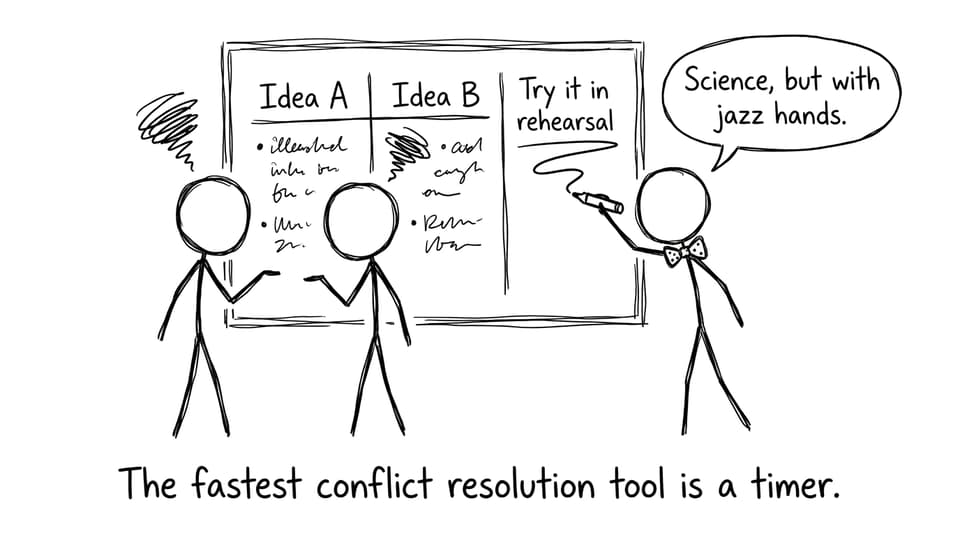
Turn debate into a rehearsal experiment
When two options compete, stop talking and run them both. Set a timer. Do Version A once. Version B once. Then debrief using evidence: What changed in pace, clarity, tension, focus, audience impact?
For ensembles that need more practice working as one body, add one warm-up from Best Ensemble-Building Exercises for IB Theatre Students.
Document conflict like it’s part of the craft
Don’t erase the messy parts. In IB Theatre, the messy parts often create your strongest reflection.
Right after a conflict is resolved (or even if it isn’t), write:
-
What was the disagreement really about?
-
What process did we use to address it?
-
What did I learn about my collaboration style?
-
What will I do differently next rehearsal?
Use How to Reflect on the Collaborative Project for Maximum Marks to keep your reflection analytical, not diary-like.
How RevisionDojo helps IB Theatre students stay calm and prepared
In a tense week, you don’t need more pressure. You need structure.
RevisionDojo supports IB Theatre ensembles with:
-
Study Notes to clarify vocabulary for feedback and analysis
-
Flashcards to lock in key terminology fast
-
AI Chat to help rephrase reflections so they sound focused and evaluative
-
Grading tools to sense-check your documentation against criteria language
-
Questionbank to practise exam-style thinking that sharpens your evaluative writing
-
Mock Exams and Predicted Papers to keep exam prep steady while rehearsals stay intense
Closing: make conflict part of your craft
In IB Theatre, the ensemble is the instrument. Conflict is the moment you tune it. If you name problems early, test ideas in rehearsal, rotate power, and document what you learn, tension becomes momentum.
When you’re ready to turn messy rehearsals into clear marks, use RevisionDojo to tighten your reflection, sharpen your terminology, and stay steady through exam season. Your group doesn’t need to be conflict-free. It needs to be honest, structured, and brave enough to keep creating.