
A hook that feels familiar
There’s a moment in every IB Theatre Collaborative Project where the room goes quiet. Someone asks, “So… what are we actually making?” And suddenly you realise the project isn’t only about theatre. It’s about decision-making under pressure, communicating clearly, and proving your thinking while the work is still messy.
That’s why the Collaborative Project matters so much in IB Theatre. It’s the course distilled into one task: create something original with other people, then show, with evidence, how and why it became what it became.
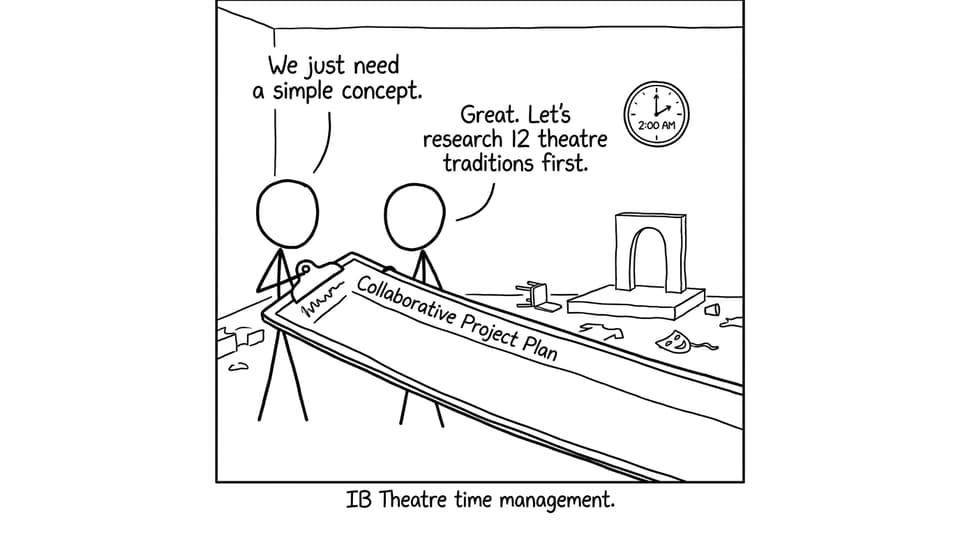
Collaborative Project overview (save this checklist)
Use this as a quick compass while you work through the IB Theatre process:
-
Form a group (2-6 students) and agree on a clear starting point
-
Research theatre practices, styles, and traditions that can change what you create
-
Experiment in rehearsal (don’t just discuss)
-
Define roles and responsibilities, then document your individual contribution
-
Refine through feedback and iteration
-
Perform a 7-10 minute original piece and record it for submission
-
Write an individual reflection that connects intention, choices, problems, and outcomes
For bigger-picture context, keep the syllabus structure nearby: Exploring the IB Theatre Syllabus: A Comprehensive Guide.
What the IB Theatre Collaborative Project actually is
At its core, the IB Theatre Collaborative Project is group-devised theatre built from a shared stimulus (an image, text, theme, issue, or other starting point). You and your group generate an original performance, but your grade is not “the group grade.” It’s individual. That detail changes everything.
A strong project doesn’t look like perfect harmony. It looks like a clear artistic intention, tested ideas, and visible learning. If you want a practical success framework, read: How to Succeed in the IB Theatre Collaborative Project.
The process: from starting point to performance
Form the group and agree on a starting point
Groups in IB Theatre are small enough to move fast, but big enough to create friction. Decide early how you’ll make decisions (vote, director call, consensus with time limits). Then pick a starting point that invites experimentation.
If your ideas keep staying abstract, use this guide to force action in the room: Using Starting Points Effectively in the Collaborative Project.
Research and exploration that actually helps
Research in IB Theatre isn’t there for name-dropping. It’s there to offer tools. The best research changes what you do next rehearsal: a movement score, a staging convention, a relationship to audience, a use of space, or a design rule.
A useful method is to pick one world theatre tradition or practitioner and run 2-3 short studio experiments inspired by it. Then reflect on what you kept, what you rejected, and why. This is exactly the kind of intercultural and practical thinking the course rewards.
Experimentation and roles (without boxing yourself in)
Assign primary roles early (director, performer, dramaturg, designer, stage manager, etc.), but stay flexible. In IB Theatre, your role should create a trail of evidence. If you’re directing, capture annotated blocking diagrams and rehearsal notes. If you’re designing, photograph prototypes and explain trade-offs. If you’re performing, record skill development and interpretive choices.
When roles start overlapping (they will), this article helps you keep collaboration fair and clear: How to Balance Roles and Responsibilities in the Collaborative Project.
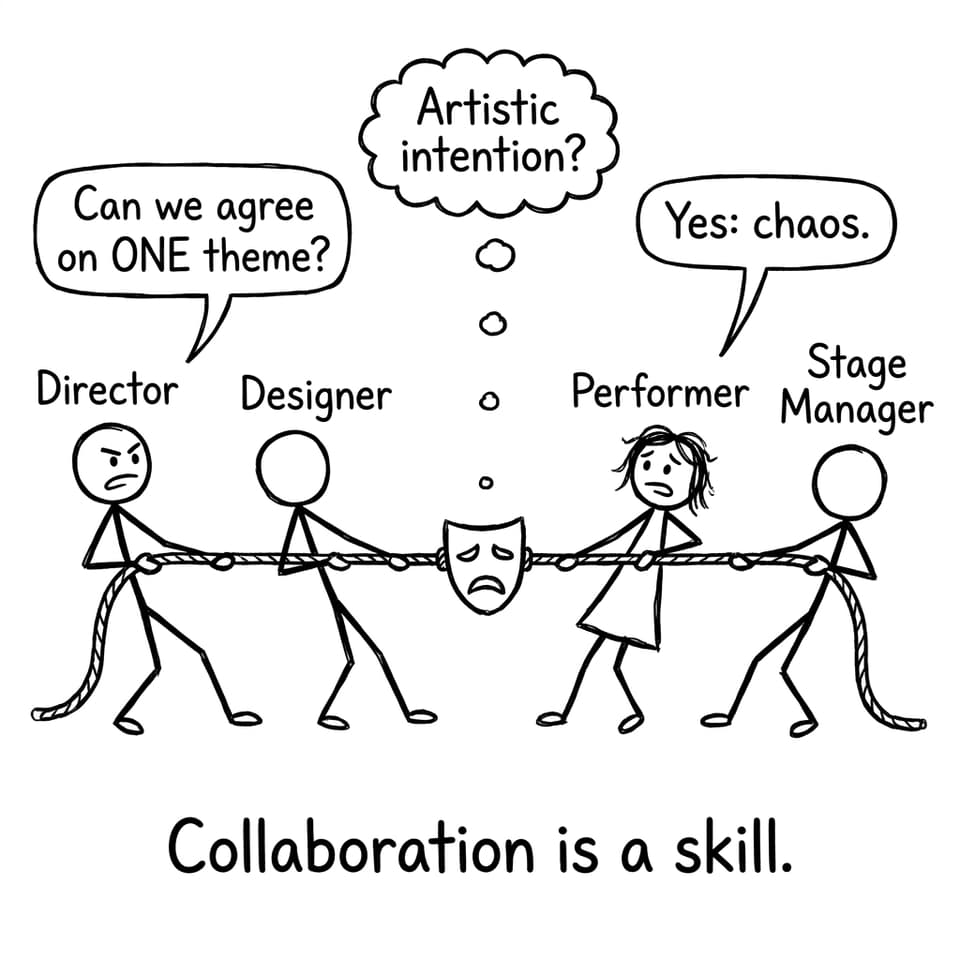
How the Collaborative Project is assessed (what to optimise)
The IB Theatre Collaborative Project tends to reward four things you can control:
Artistic intention and concept clarity
Examiners are looking for a coherent idea: what you wanted the audience to think, feel, or question. Your intention should be simple enough to repeat, but specific enough to guide choices.
Collaboration and individual contribution
You must show you collaborated well and that your personal contribution shaped the work. Keep evidence from the first rehearsal, not just the final week.
Exploration and development over time
Iteration is the point. Show what changed: cuts, additions, re-blocking, design revisions, shifts in tone. The “before and after” is where your marks live.
Performance and presentation quality
The final piece matters. But in IB Theatre, polish is strongest when it’s connected to purpose: every staging choice should be doing a job.
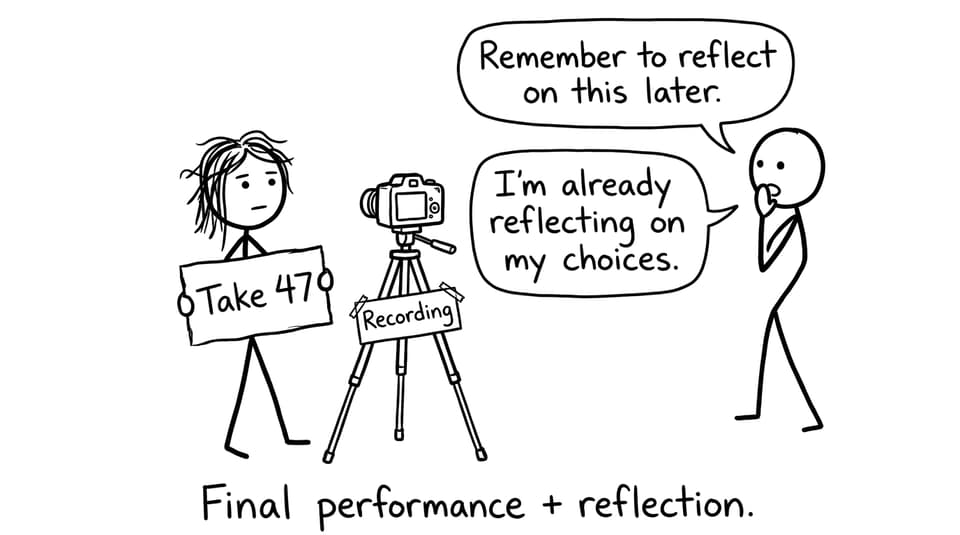
Reflection: the quiet tool that raises your mark
Most students treat reflection like homework at the end. High scorers treat reflection like rehearsal equipment. After each session, write 6-8 lines that answer:
-
What did we try today?
-
What did I do specifically?
-
What problem showed up?
-
What did we change because of it?
-
What evidence proves this?
-
What is the next experiment?
If you want reflection prompts that are easy to repeat, use: How to Reflect on the Collaborative Project for Maximum Marks.
How RevisionDojo helps with IB Theatre (especially near exams)
When deadlines stack up, IB Theatre can feel like you’re revising a subject that lives in the air. RevisionDojo makes it concrete.
-
Use the Study Notes to lock in syllabus language and assessment expectations
-
Use Flashcards to memorise practitioner conventions, key terminology, and reflection sentence starters
-
Use the Questionbank to practise writing under time pressure with examiner-style prompts
-
Use AI Chat to clarify confusing criteria language or tighten an artistic intention statement
-
Use Grading tools and the Coursework Library to improve how you present evidence and analysis
-
Use Mock Exams and Predicted Papers to build confidence before final assessments
-
If you’re stuck, use Tutors to get specific feedback on your plan and documentation approach
To organise your revision routine around these tools, the tag hub is a great starting point: IB Theatre resources.
Closing: turn collaboration into exam confidence
The Collaborative Project can feel chaotic because theatre is made in real time, with real people, and real constraints. But that’s exactly why IB Theatre values it: it proves you can create, adapt, and explain your choices like a theatre-maker.
If you want your process to feel less stressful and more structured, build your routine inside RevisionDojo: revise concepts with Study Notes, reinforce with Flashcards, practise examiner-style prompts in the Questionbank, and use AI Chat to sharpen reflection language. Your final performance will still be a leap. You’ll just land it with evidence.