



If you have ever tried to compress a messy real-world political issue into a clean 10 minutes, you already know the secret of IB Global Politics: the world refuses to stay inside your slides.
Your Internal Assessment presentation is not won by sounding like a news anchor. It is won by sounding like a student who can argue, evaluate, and stay balanced when the issue gets complicated. That is exactly what the best IB Global Politics presentations do: they make complexity feel navigable.
The 10-minute checklist (what high marks usually look like)
Before you rehearse your opening line for the 30th time, make sure the foundations are solid:
-
A focused, globally significant political issue you genuinely care about
-
A clear claim (your argument) you can defend in one sentence
-
2-3 main points, each with evidence and a counter-perspective
-
Explicit links to course concepts (power, sovereignty, human rights, development, peace/conflict)
-
A conclusion that answers the “so what?” in IB Global Politics terms
If you want a quick refresher on the bigger course picture, keep Understanding IB Global Politics: A Comprehensive Guide open while you plan.
Choose a topic that makes analysis unavoidable
A strong IB Global Politics IA topic is not “important” in a vague way. It creates tension between actors, interests, and values.
Instead of picking something huge like “climate change,” narrow it into a political conflict you can actually evaluate in 10 minutes:
-
Who has power, and how are they using it?
-
Who claims legitimacy, and who rejects it?
-
Which rights are protected on paper but violated in practice?
When you are stuck, read a concept primer like What Is Power in Global Politics? and let the concept point you toward a case where the concept is contested.
For students deciding how deep to go (and why HL sometimes feels like a different sport), Understanding the Differences Between IB Global Politics SL and HL can help you calibrate scope.
Build a simple structure that sounds inevitable
In IB Global Politics, clarity is not “basic.” It is a competitive advantage.
Hook and thesis (1-2 minutes)
Start with one sharp detail: a statistic, a short quote, a dilemma. Then immediately give context and a thesis.
Aim for a thesis that has movement, not just description:
- “This case shows that X actor’s power is effective in the short term, but undermines legitimacy over time because…”
Two to three arguments (6-7 minutes)
Use a repeatable rhythm:
-
Claim (your point)
-
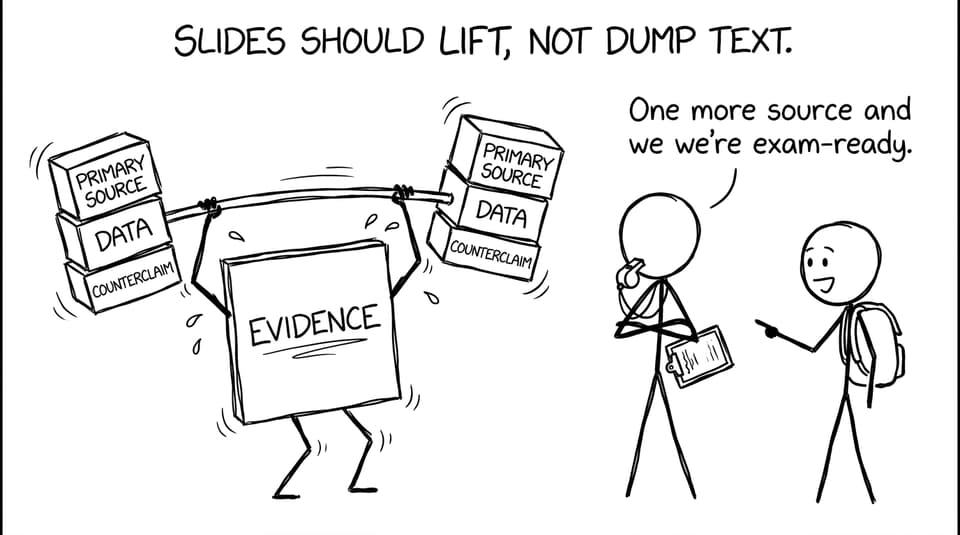
Evidence (data, policy, credible reporting, primary material)
-
Evaluation (limitations, trade-offs, counterclaim)
-
Link to concept (say the concept out loud)
RevisionDojo helps here because you can practice the same rhythm in different formats: build targeted drills in the Questionbank, tighten definitions with Study Notes and Flashcards, and pressure-test your arguments with AI Chat before you speak them.
Conclusion (1-2 minutes)
Do not just summarise. Judge.
Tell the examiner what your analysis implies about the wider global political challenge. That final step is often the difference between a good presentation and a top IB Global Politics presentation.
Slides: make them do one job
Your slides are not your script. Their job is to carry evidence and structure, so your voice can carry analysis.
Use:
-
One idea per slide
-
Short labels, not paragraphs
-
One key graph/quote per argument
If you want models of what strong student work looks like, use IB Global Politics Examples to see how top work stays focused.
Rehearsal that actually improves your marks
Most students rehearse to sound smooth. Rehearse to sound evaluative.
Try this:
-
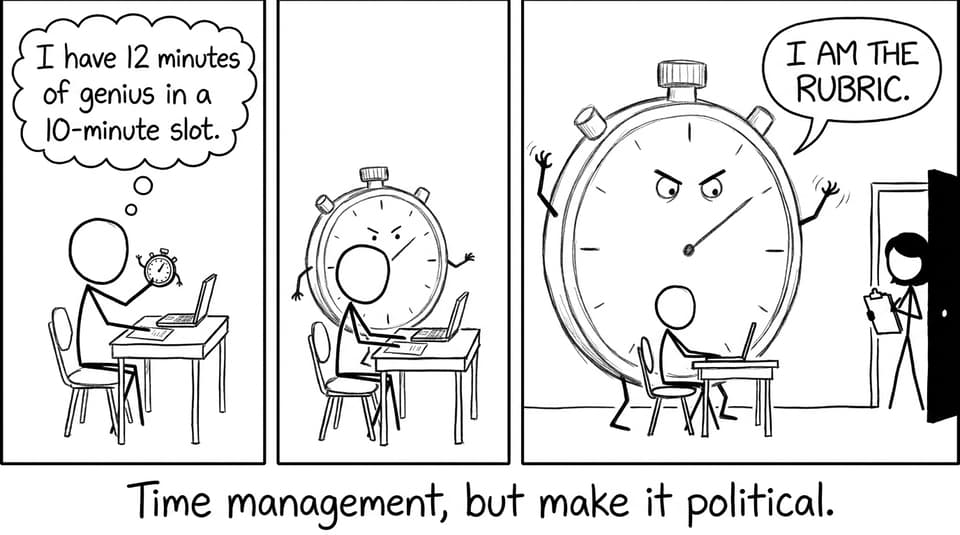
Run the talk at 12 minutes, then cut to 10 by removing description, not analysis
-
Record once, then rewrite only the transitions (they create the “inevitable” feel)
-
Add one counter-perspective to every main point
For timing and exam readiness beyond the IA, How to Revise Effectively for IB Global Politics pairs well with your presentation prep.
Handling questions like a political analyst (not a panic poet)
The Q&A is where you prove you own the issue.
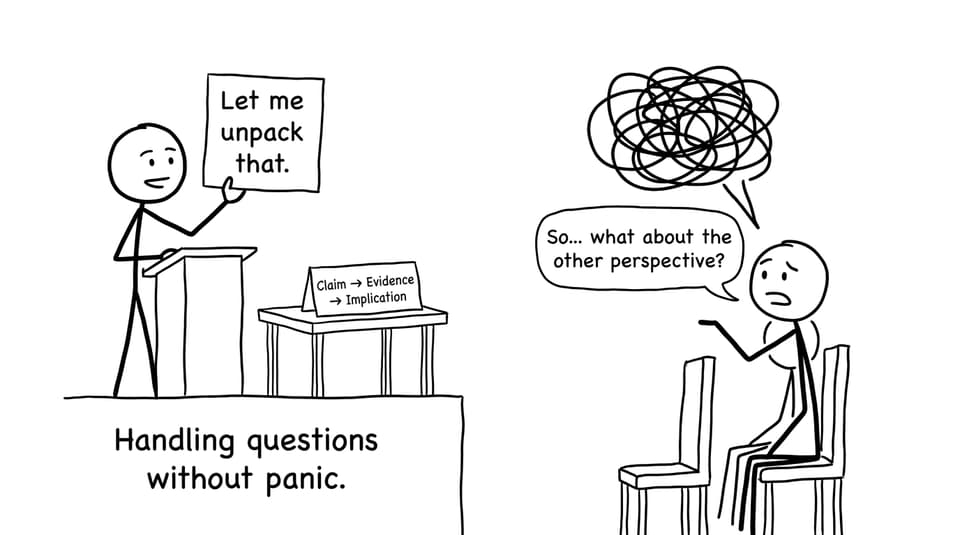
When a question lands, do three things:
-
Clarify what they are asking.
-
Answer in one sentence.
-
Unpack with claim, evidence, implication.
If your IA includes engagement evidence, tools like RevisionDojo’s Grading tools can keep you aligned with criteria: see the IB Global Politics HL IA: Global Political Challenges Grader or the Global Politics IA: Engagement Activity Grader.
Closing: make the room feel smaller
A great IB Global Politics IA presentation does not feel like a performance. It feels like you have invited the examiner into your thinking, step by step, until your conclusion is the only honest place to land.
When you want that feeling of control, build it with RevisionDojo: practise targeted skills in the Questionbank, refine key concepts with Study Notes and Flashcards, rehearse arguments with AI Chat, and check alignment using the Grading tools, Mock Exams, and Predicted Papers. Then walk into your 10 minutes like it is not a gamble; it is a case you have already won.