



Global Politics can feel like standing in front of a moving train and being told to explain the timetable.
One day it’s a border dispute. The next it’s climate policy, media influence, or a human rights debate you can’t neatly “solve.” That’s the point. IB Global Politics asks you to think like a careful adult in a messy world, and it sits right at the heart of Group 3, where arguments matter as much as content.
If you’re an IB student preparing for exams, this guide breaks Global Politics into a system you can actually revise: concepts, units, exam moves, and how to practise with RevisionDojo.
Group 3 snapshot: what IB Global Politics is really testing
IB Global Politics is a Group 3 Individuals and Societies subject that blends political science, international relations, sociology, and contemporary case studies. But in exams, it’s less about “knowing lots” and more about showing judgement.
Here’s the practical checklist most students wish they had earlier:
-
Define key concepts clearly (not poetically)
-
Apply concepts to a real example or stimulus
-
Use evidence selectively (details that do work)
-
Consider different perspectives (and why they differ)
-
Evaluate limits, trade-offs, and context
Your fastest home base for topic-by-topic revision is the IB Global Politics Resources hub, especially if you want Study Notes, Flashcards, and Questionbank practice in one place.
Group 3 concepts that unlock almost every exam question
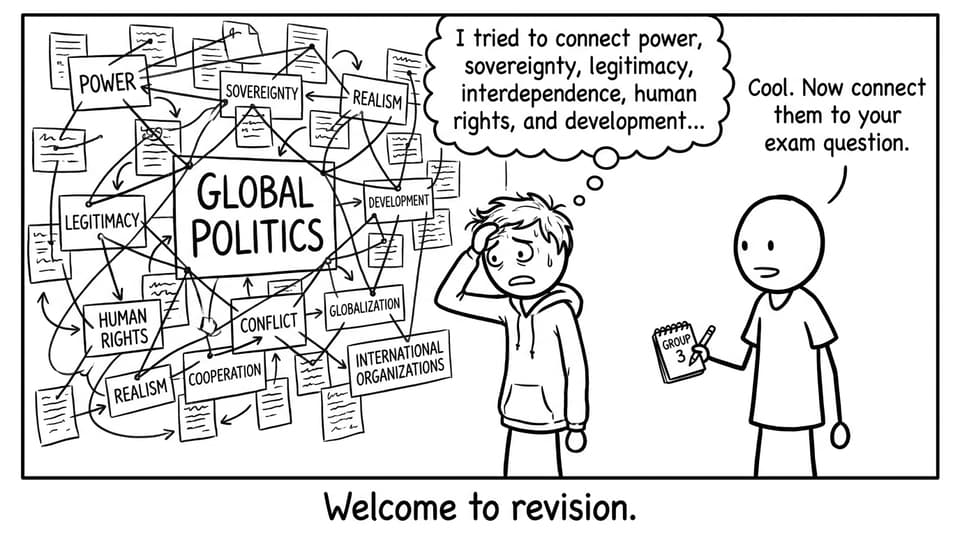
Most Global Politics questions are secret questions about concepts. If you can define and apply them quickly, you stop panicking and start choosing.
Power
Power is about who can shape outcomes, directly or indirectly. It shows up in states, institutions, media, corporations, and social movements. If you want a clean framework for types of power and exam-ready phrasing, use RevisionDojo’s Power in IB Global Politics.
Sovereignty and legitimacy
Sovereignty is authority over territory and decision-making; legitimacy is whether people accept that authority as justified. In Group 3 exam responses, the easy mistake is describing a government action without judging the political justification and its consequences.
Interdependence
Interdependence is the quiet background of modern politics: trade, migration, technology, alliances, and global institutions. A strong answer shows how interdependence creates both cooperation and vulnerability.
Human rights and development
Human rights asks “what should be protected?” Development asks “what counts as progress?” The highest-scoring answers admit tension: rights can conflict with security; development can increase inequality.
How the course is organized (and how to revise it)
Global Politics is usually taught in four core units:
-
Power, Sovereignty, and International Relations
-
Human Rights
-
Development
-
Peace and Conflict
A smart way to revise Group 3 content is to revise by concept first, then map each concept across units. If you want a ready-made approach, follow How to Revise Effectively for IB Global Politics and keep your practice anchored to exam tasks, not just reading.
For Peace and Conflict specifically, you can drill the syllabus with the topic hub: Peace and Conflict (SL/HL) resources.
SL vs HL: what changes and what doesn’t
Students often think HL is “SL plus more content.” Sometimes. But the bigger difference is depth and expectation.
-
Both SL and HL cover the same core units.
-
HL adds an extension focused on global political challenges (studied in more depth).
If you’re deciding or adjusting your plan, read Understanding the Differences Between IB Global Politics SL and HL. It helps you predict workload honestly, which is a survival skill in Group 3.
Case studies: stop collecting, start using
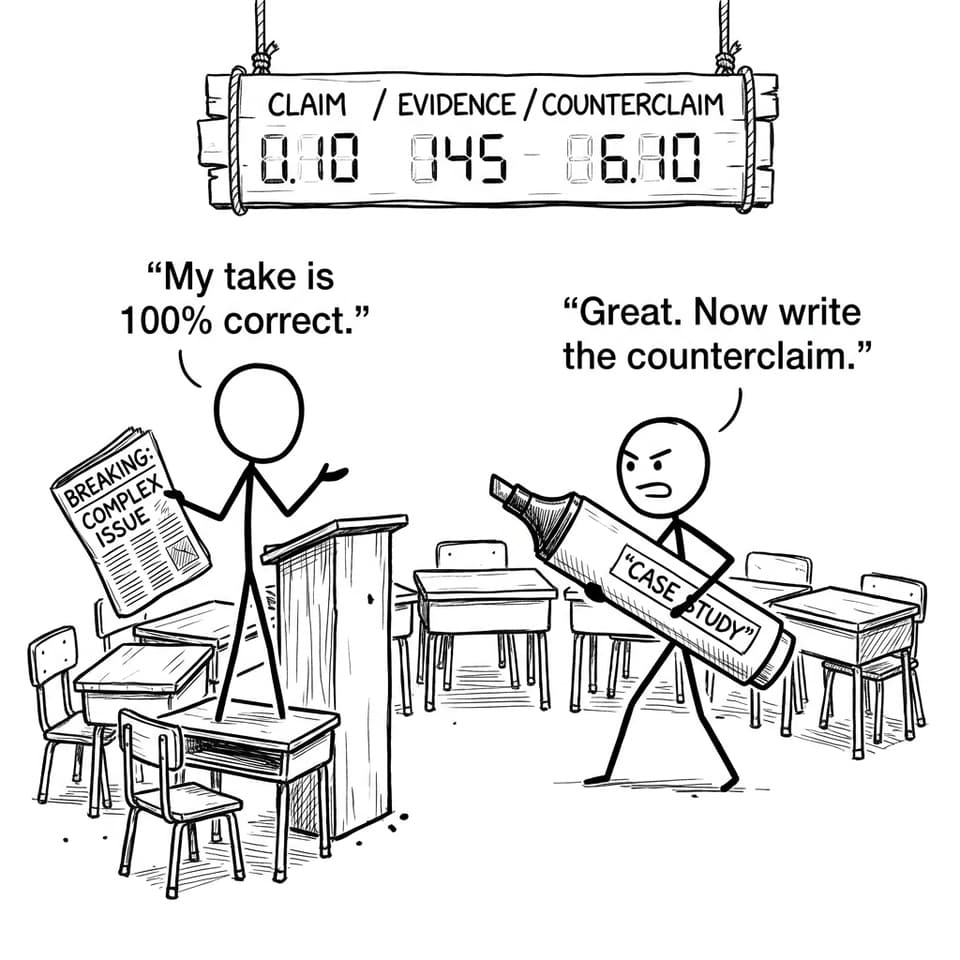
A case study is not a Wikipedia summary. It’s evidence for an argument.
A good Group 3 case study does three jobs:
-
Proves a claim
-
Applies a concept (power, legitimacy, interdependence, rights)
-
Enables evaluation (limits, context, counterexample)
Use How to Use Case Studies in IB Global Politics to turn “interesting events” into reusable exam tools.
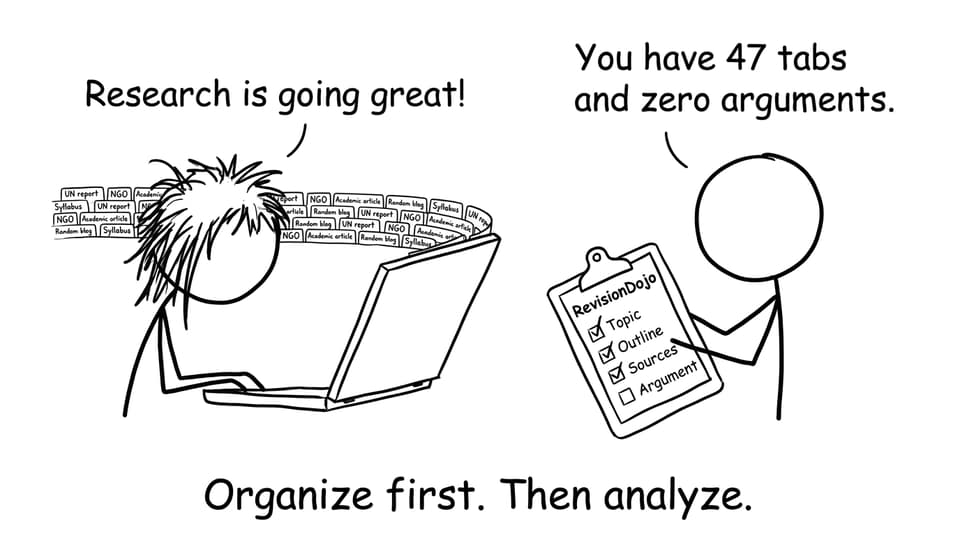
A simple exam-prep loop built for Group 3 students
Global Politics rewards routines you can repeat when you’re tired.
Try this weekly loop using RevisionDojo:
-
Learn with Study Notes in the Global Politics hub
-
Lock definitions with Flashcards
-
Practise under exam conditions using the Questionbank
-
Fix mistakes with AI Chat (ask why your evaluation is thin)
-
Simulate pressure with Mock Exams and Predicted Papers like IB Global Politics Predicted Papers
-
Get feedback on writing using Grading tools and the Coursework Library (especially if your argument structure drifts)
If you want to understand how RevisionDojo connects these tools into one workflow, see RevisionDojo App: The Smarter Way to Prep for IB Exams.
Closing: make Group 3 feel learnable again
IB Global Politics can feel endless because the world is endless. But your exam isn’t testing whether you can read everything. It’s testing whether you can think clearly, define precisely, apply intelligently, and evaluate honestly, classic Group 3 skills.
Build a small system, run it consistently, and let practice do the heavy lifting. Start in the IB Global Politics Resources hub, then use RevisionDojo’s Questionbank, Study Notes, Flashcards, AI Chat, Grading tools, Predicted Papers, Mock Exams, Coursework Library, and Tutors to turn “global chaos” into exam-ready clarity.