



If you’ve ever stared at your IA draft and thought, I’m working… so why am I getting nowhere? you’re in crowded company. The strange part is that the students who feel most lost with their IA often aren’t “weak” students. They’re the ones who revise hard, hit deadlines, and usually do well on tests.
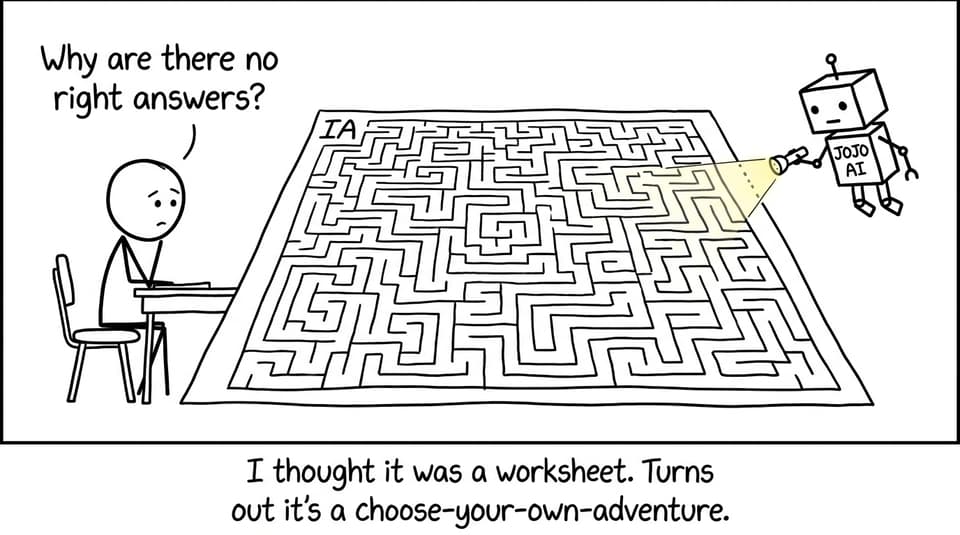
The real problem is simpler and more unsettling: the IA rewards a different kind of thinking than most school tasks. And until you can see what the IB is actually asking you to show, your IA can feel like walking through fog with a flashlight that keeps dying.
A quick IA clarity checklist (steal this)
Before you write another paragraph of your IA, check these five things:
-
Do you know which criteria you’re trying to earn marks in today?
-
Can you explain your focus in one sentence without using “and also”?
-
Are you collecting evidence, or interpreting it?
-
Is your evaluation visible, or just implied?
-
Do you have one source of truth for structure (a guide or exemplar), not five conflicting ones?
If even two of these feel shaky, feeling lost with your IA is a predictable outcome, not a personal failure.
The IA is open-ended on purpose
Most students are trained on tasks where the path is implied: question, method, model answer. The IA removes that scaffolding. There’s no fixed list of prompts, no single “correct” approach, and no obvious moment when you can say, Yes, this is exactly what the examiner wants.
That freedom is the point. The IB wants to see independent decision-making: what you chose to study, why you chose it, and how you justified each step.
When you need help translating that freedom into an actual plan, start with RevisionDojo’s subject hubs and guides, like the IB Coursework Guides and the more focused IB IA Guides. A good IA stops feeling mysterious when you can see the rubric as a set of moves, not a set of vibes.
Why your IA effort doesn’t always turn into progress
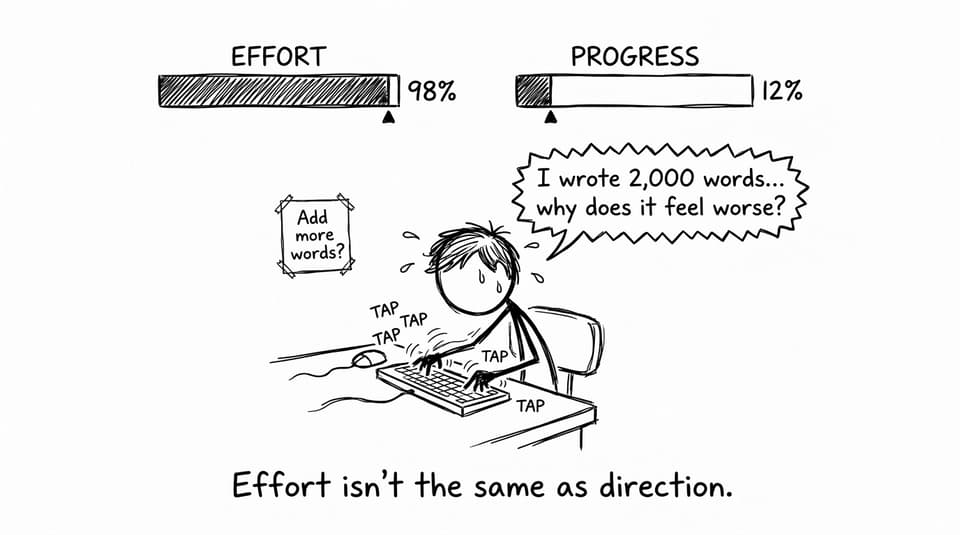
Here’s the trap: IA work feels productive because it’s time-consuming. You can spend three hours rewriting a background section, finding more data, polishing formatting, or adding “one more” source.
But the IA doesn’t reward volume. It rewards alignment: every paragraph clearly doing a job the criteria can recognize.
Common signs you’re working hard but drifting:
-
You keep changing the research question because nothing feels “good enough.”
-
You add more content instead of sharpening analysis.
-
You’re stuck in description: what happened, what you found, what the article said.
-
You’re afraid to evaluate because it feels like guessing.
A small fix that works: open a high-quality model, then compare your draft against it once per week. RevisionDojo’s Coursework Exemplars are built for exactly this. You’re not copying; you’re calibrating.
Feedback can make your IA feel even messier
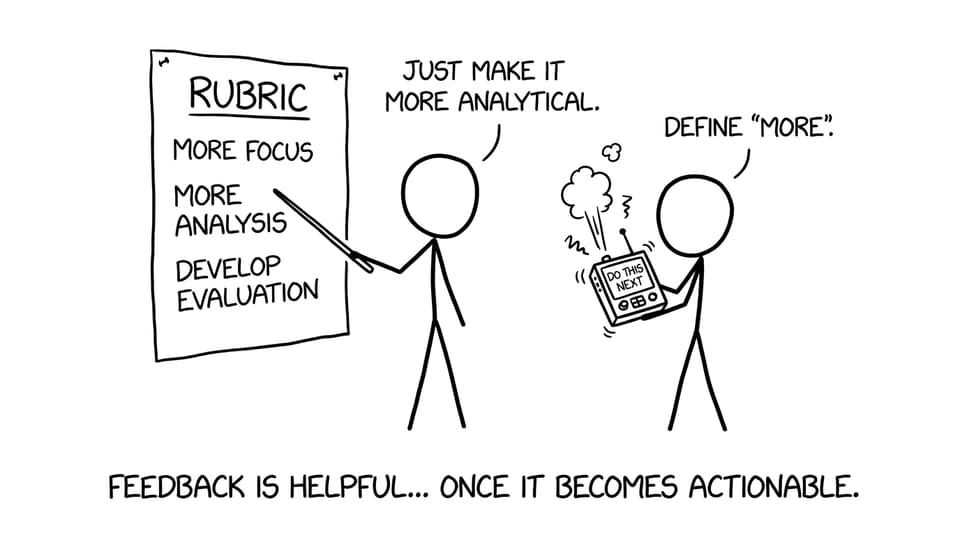
Most IA feedback is technically correct and emotionally useless.
“More focus.” “More analysis.” “Develop evaluation.”
Those comments don’t tell you what to do next, so your brain fills the gap with panic. You revise randomly, then ask for feedback again, and the cycle repeats.
This is where rubric-aligned tools help. RevisionDojo’s IB Coursework Grader can turn vague advice into specific targets tied to criteria language. Pair that with Jojo AI Chat to ask narrow questions like: “Which paragraph is descriptive?” or “What would an explicit evaluation sentence look like here?”
The IA demands skills you may not have practiced yet
Your IA is often your first long project that requires sustained academic judgment. That means you’re learning while performing:
-
Planning your own stages
-
Choosing what to include (and what to cut)
-
Writing analysis that connects evidence to concepts
-
Making evaluation explicit and defensible
If planning is the pain point, this guide helps you build stages instead of stress: How to Plan an IB IA Without Falling Behind. If your research question is the wobble, use How to Write a Strong IA Research Question.
A simple framework to stop feeling lost with your IA
Try this three-step loop (it’s boring, which is why it works):
Use one rubric, one structure, one weekly goal
Pick your guide and stick with it. Start with RevisionDojo’s IA guides. Then set one weekly deliverable: “finalize method,” “write analysis for Table 1,” “draft evaluation,” etc.
Reduce the draft to decisions
Every section of your IA should show decisions: why this method, why this data, why this model, why this interpretation. If you can’t point to a decision, it’s probably filler.
Get feedback that creates actions
Use the Coursework Grader for criterion-based feedback, then fix one criterion at a time. If you want examples of what “good” looks like in your subject, browse the Coursework Exemplars library.
Closing: turn your IA confusion into a system
Feeling lost with your IA usually means you don’t lack effort; you lack a reliable process. Build that process with one clear guide, one weekly deliverable, and feedback that turns into actions.
If you want the quickest path from “I’m stuck” to “I know what to do next,” use RevisionDojo’s IA Guides, check strong models in the Coursework Exemplars, and run your draft through the Coursework Grader. The IA is still challenging, but it stops being mysterious, and that’s when your work finally starts to compound.


