


The IA time trap nobody warns you about
You sit down thinking your IA will be “a focused little project.” A few sources, a method, some writing, done. Then, three evenings later, you’re still rewriting the same paragraph and wondering how time can move so fast and so slowly at once.
If your IA feels like it’s taking longer than it should, it’s not automatically a motivation problem. Often it’s a design problem: the IA is one of the first assignments where you’re asked to think like a researcher, not just complete a task. That shift changes how long everything takes.
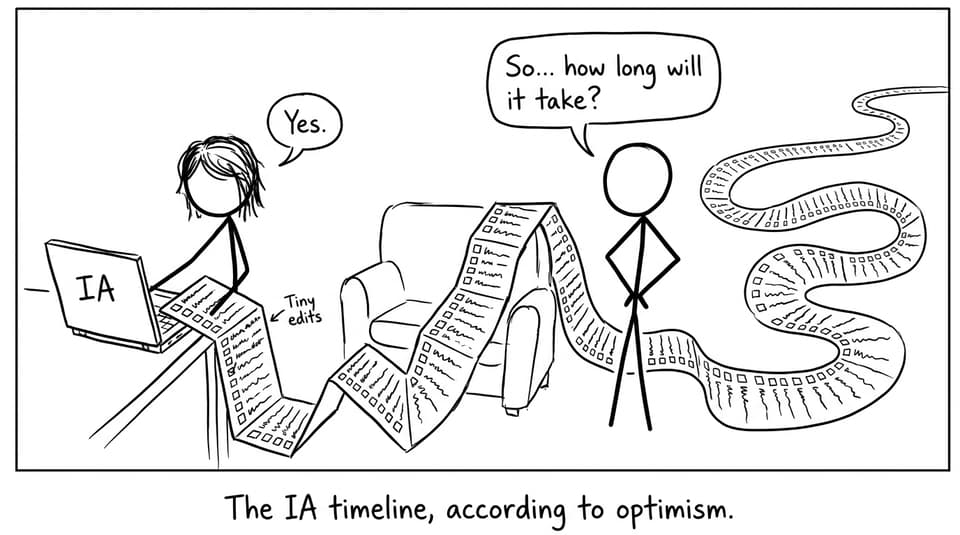
Quick checklist: why an IA expands
-
Your question changes mid-way, and the whole IA has to follow
-
“Small edits” trigger big rewrites across sections
-
Analysis takes longer than collecting information
-
You get stuck making independent choices (decision fatigue)
-
Unclear rubric expectations cause repeated reworking
-
Perfectionism makes you polish too early
-
Other subjects interrupt momentum, stretching the calendar
Your IA is iterative (and that’s the point)
A normal essay can sometimes be drafted in one clean pass. An IA usually can’t.
In an IA, the research question, method, and analysis talk to each other. Tighten the question and you may need new data. Adjust the method and you may need different processing. Improve the evaluation and you may need to reframe the conclusion. Students don’t plan for those loops because school rarely trains you to expect them.
If you’re still shaping your question, use How to Write a Strong IA Research Question and browse IB IA Guides to see what “focused” looks like in real rubrics.
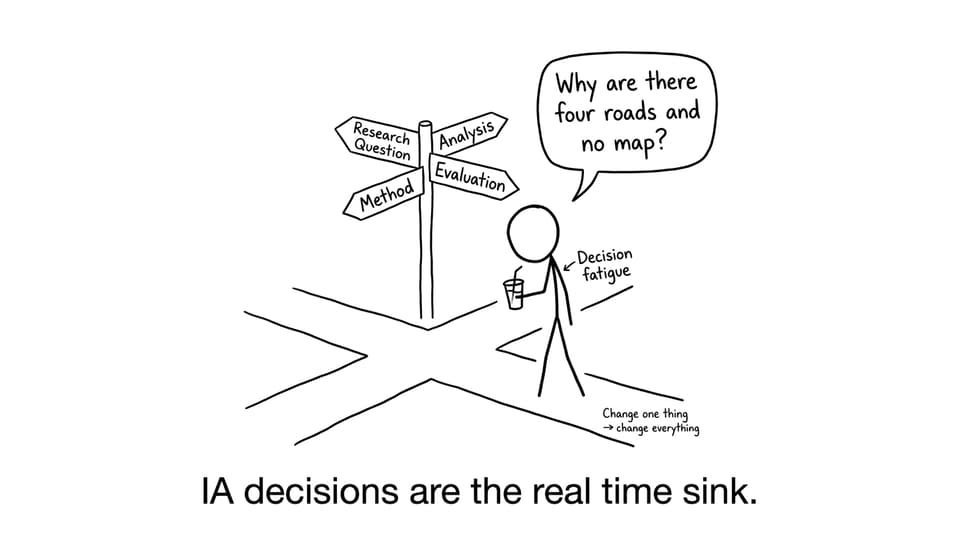
Decision fatigue is real, and your IA creates it
The quiet reason your IA drags is that it forces constant judgment calls: what to include, what to cut, what counts as evidence, what qualifies as evaluation, what the examiner will reward.
That mental load feels like slow progress, even when you’re doing high-quality work. The fix isn’t working longer; it’s reducing choices. One practical move: anchor each revision session to a single criterion-based goal. If you need help understanding what examiners mean by “analysis,” read What Real Analysis Looks Like in an IB IA.
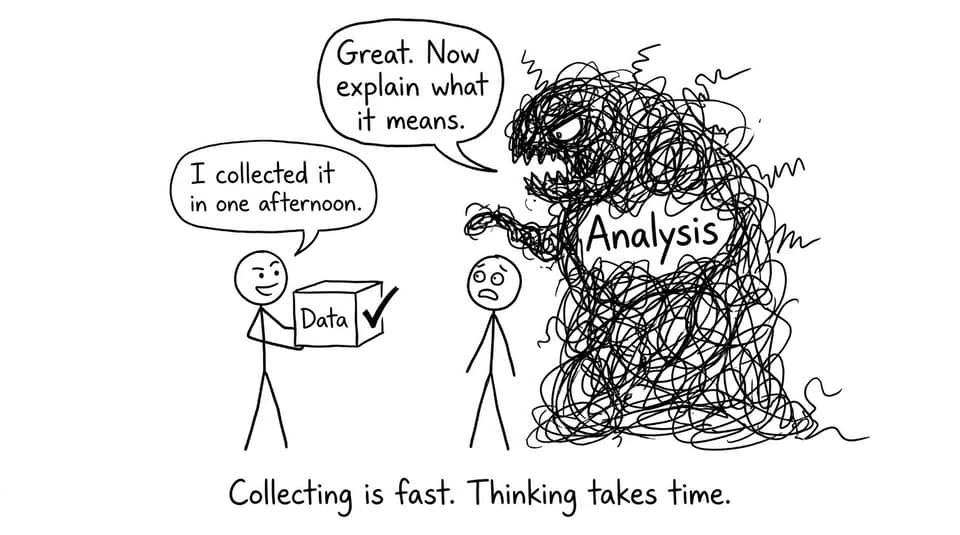
Analysis takes longer than “doing the work”
Collecting data, finding examples, or building a table can feel efficient because it’s visible progress. Analysis is slower because it’s invisible until it’s written well.
In a strong IA, analysis is where you interpret meaning, make links back to the research question, and justify your claims. That involves judgment, precision, and clear writing. And it’s hard to rush.
If your IA uses visuals, avoid losing hours to messy presentation by using Tips for Organizing Graphs and Tables in Your IA. The goal is simple visuals that support analysis, not visuals that become a second project.
Unclear expectations create “rewrites without confidence”
When you don’t know what the rubric rewards, your IA turns into a guessing game: rewrite, reword, rearrange, repeat. That’s how students spend hours polishing sections that don’t gain marks, while missing easier improvements.
This is where RevisionDojo can save time in a very calm way:
-
Use the IB Coursework Grader to get rubric-aligned feedback you can act on.
-
Compare your structure against IB Coursework Guides.
-
Look at high-level models in IB Coursework Examples: IA, EE and TOK Exemplars.
Those tools reduce uncertainty, which reduces rewrites.
The “perfectionism first” mistake
Many students try to make the opening perfect before the middle exists. But an IA needs coherence, and coherence only emerges once the whole draft is on the page.
A better approach is to draft fast, then run improvement cycles:
-
One pass for structure
-
One pass for analysis depth
-
One pass for evaluation and limitations
-
One final pass for style and clarity
If you want coursework-specific direction across subjects, start with Coursework on RevisionDojo and use it like a map: draft, check, revise, then stop.
Finish your IA with less stress (and more marks)
If your IA is taking longer than expected, it’s often because you’re doing the kind of thinking the IB actually wants. The win is learning to plan for iteration, limit decision fatigue, and focus your revisions on what earns marks.
When you want that process to feel clearer, use RevisionDojo as your coursework home base: Coursework Library exemplars for direction, Grading tools for rubric-focused feedback, AI Chat for quick fixes, and your exam system (Questionbank, Study Notes, Flashcards, Mock Exams, Predicted Papers) so coursework doesn’t swallow revision. Start with IB IA Guides and give your IA a timeline that matches reality.


