


The quiet shock of a lower IA mark
You can spend weeks on an IA, sacrifice sleep, and still open your feedback to see a number that feels… unfair. The hard part isn’t the mark itself. It’s the story your brain tells: I worked hard, so I should score high.
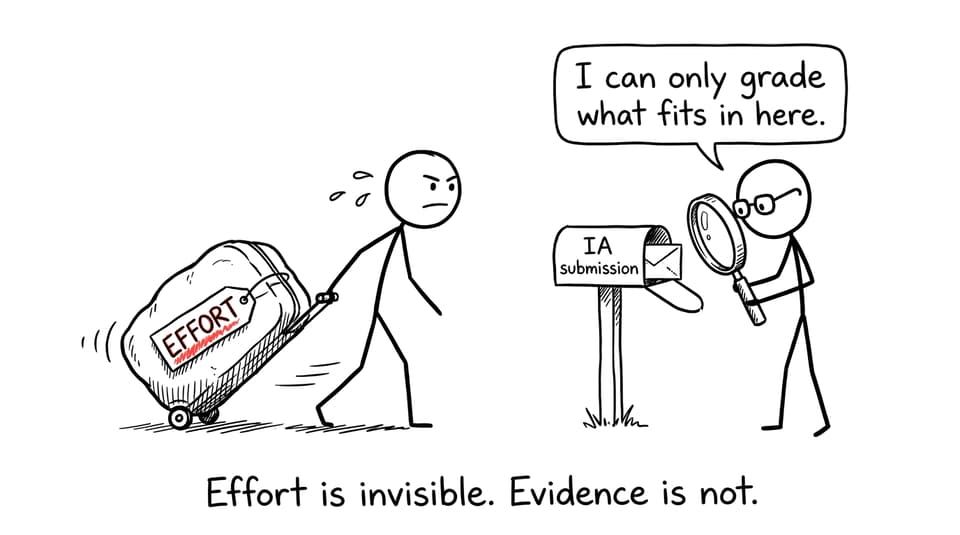
But an IA isn’t graded like effort. It’s graded like a snapshot. Examiners never see the messy drafts, the planning documents, or the “I’ll just fix one more graph” nights. They only see the final version and ask one thing: Is the evidence of the criteria clearly on the page? That’s why an IA can lose marks even when you’ve genuinely worked hard.
IA mark-loss checklist (quick self-audit)
Before you edit a single sentence, check these:
-
Is the IA focus/research question tight and measurable?
-
Does every paragraph clearly earn a criterion, not just add information?
-
Are you showing analysis and evaluation (the “why”), not only description (the “what”)?
-
Is your structure examiner-friendly (signposts, headings, clear links back to the question)?
-
Is complexity controlled (variables, evidence quality, method limits explained)?
If you want a baseline for expectations, start with IB Internal Assessment: A Complete Guide.
The biggest reason an IA loses marks: the criteria aren’t visible
A painful truth: in IB coursework, good thinking that isn’t clearly shown doesn’t score. Many students have strong ideas but hide them inside long paragraphs, vague claims, or unlabelled evidence.
Two fast fixes:
-
Use the rubric language as a guide for what must be obvious on the page.
-
Make your “mark-earning moments” easy to find: topic sentences, clear justifications, explicit links back to the research question.
RevisionDojo’s IB IA Guides help you translate vague “make it better” advice into criterion-based edits that actually move marks.
Complex topic, weaker IA: why ambition can backfire
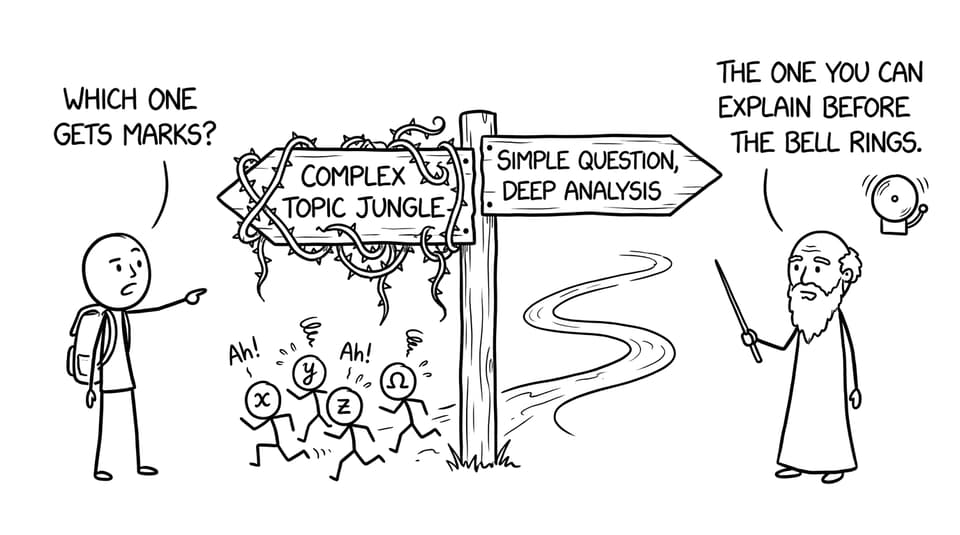
Many students assume a harder topic earns higher marks. In practice, a complicated IA often creates silent problems: uncontrolled variables, unclear reasoning, weak data, or a discussion that becomes a summary of confusion.
A simpler IA with tight scope can win because it gives you room to do what the IB rewards: explain choices, interpret results, evaluate limitations, and justify conclusions.
If you’re still choosing or refining your question, use How to Write a Strong IA Research Question and then sanity-check your plan with exemplars in Coursework Exemplars.
“Interesting” content that doesn’t earn marks
Another common IA trap is adding background knowledge because it feels impressive. Examiners don’t reward extra content unless it directly supports the task.
Think of your IA like a suitcase with a strict weight limit: every paragraph must justify its existence. If it doesn’t strengthen analysis, evidence, or evaluation, it’s costing you clarity.
For targeted improvement ideas, see Troubleshooting Common Mistakes in IB Internal Assessments.
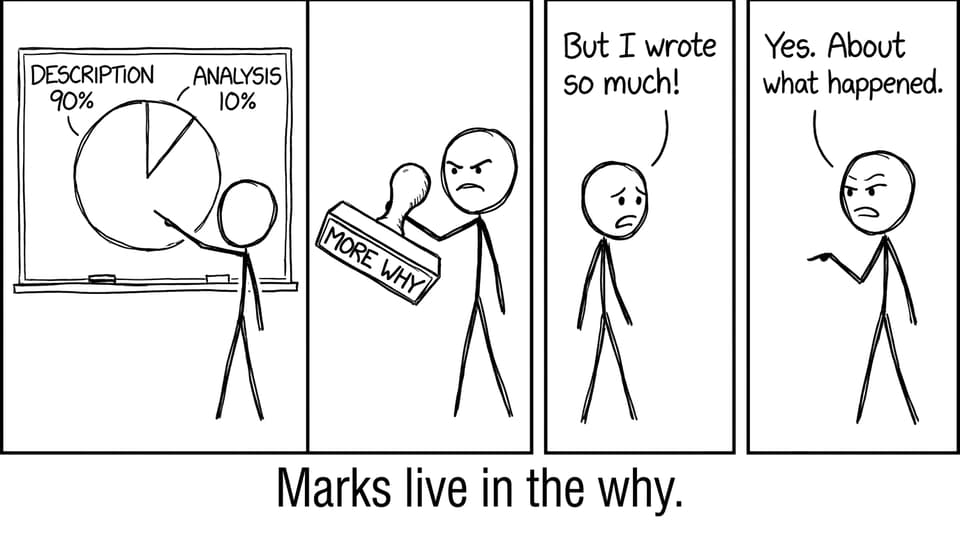
Description vs analysis: where marks actually live
Description is: what you did, what happened, what the data shows.
Analysis is: why it happened, what it means, how it answers the research question, and what the limitations imply.
A hardworking IA often becomes descriptive because description feels “safe.” Analysis feels risky because it forces you to commit to an interpretation. But the rubric rewards the risk, when it’s justified.
If you’re in a science IA, this is where strong statistics can help you prove your interpretation. Use Using Statistical Analysis Effectively in an IB Science IA as a guide.
How RevisionDojo turns IA effort into marks
Effort becomes marks when you shorten the feedback loop.
With RevisionDojo, students typically:
-
Calibrate quality using the Coursework Guides and IA Guides
-
Compare structure in the Coursework Exemplars library
-
Get criterion-by-criterion direction using the IB Coursework Grader
-
Use AI Chat to clarify rubric language, tighten claims, and improve evaluation
-
Keep exam skills alive alongside the IA with Questionbank, Study Notes, Flashcards, Mock Exams, Predicted Papers, and Tutors
That combination matters because an IA is not just writing. It’s performance against criteria.
The calm takeaway
If your IA lost marks, it doesn’t mean your effort was wasted. It means the effort didn’t convert into visible criterion evidence.
Treat your IA like a display, not a diary: show the thinking, justify the choices, and make the analysis impossible to miss. When you want a clear path, use RevisionDojo’s IA Guides, Coursework Exemplars, Grading tools, AI Chat, and your exam toolkit (Questionbank, Study Notes, Flashcards, Mock Exams, Predicted Papers, Tutors) to turn hard work into a higher-scoring IA.