



When “Politics at Uni” Stops Being a Vibe and Becomes a Plan
There’s a moment every IB student recognises: you stop saying “I might study Politics” and start quietly opening university course pages at 1:00 a.m. Suddenly, subject choices feel less like timetables and more like identity. If that’s you, IB Global Politics is usually the anchor subject, not because it guarantees admission, but because it teaches the exact kind of thinking a Politics degree demands: concepts, arguments, evidence, and judgement.
This guide helps you choose a smart, balanced set of IB subjects for Politics, while keeping your exam performance strong and your workload realistic.
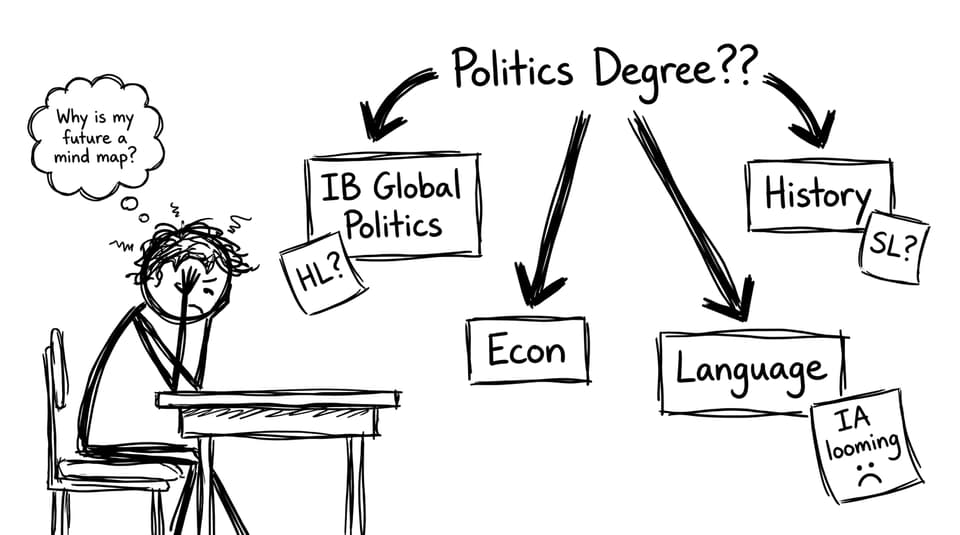
Quick checklist: choosing Politics-friendly IB subjects
Before you lock anything in, run this checklist:
-
Do you have IB Global Politics (ideally at HL if it fits your strengths)?
-
Do you have at least one subject that builds serious writing stamina (Language A and/or History)?
-
Do you have one subject that improves quantitative or data confidence (Math, Economics)?
-
Do you have a subject that keeps you connected to real-world policy problems (ESS, Economics)?
-
Are you choosing HLs you can score well in, not just ones that “sound impressive”? (See: How Do I Choose My HL Subjects Wisely?)
Why IB Global Politics is the most direct match for a Politics degree
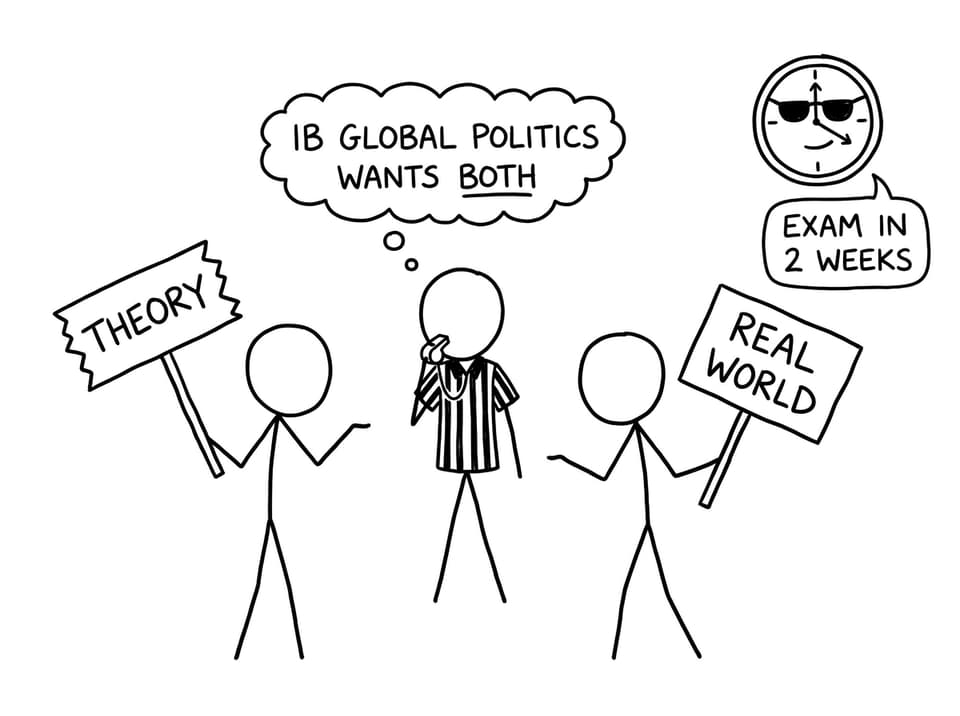
Politics degrees reward students who can do three things: define ideas clearly, apply them to real cases, and evaluate competing explanations without panicking. IB Global Politics trains exactly that.
You’ll work with concepts like power, sovereignty, legitimacy, human rights, and interdependence, then test them against contemporary case studies. If you want a clearer feel for the course, start with Understanding IB Global Politics: A Comprehensive Guide and the curated IB Global Politics Resources.
Exam prep matters too. A huge chunk of Politics success is structured writing under time pressure, which is why resources like How to Structure IB Global Politics Paper 2 Essays and How To Write A Top-Scoring IB Global Politics Essay are worth bookmarking early.
The best supporting subjects (and what they actually train)
Group 1: Language A (Literature or Language and Literature)
Politics at university is reading and writing. A lot. Language A builds precision, argument flow, and the ability to quote and interpret responsibly. It’s also your daily workout for clarity, a skill that pays off directly in IB Global Politics essays and exam responses.
Group 2: A second language (Language B or ab initio)
A second language quietly signals international awareness and cultural range, especially if you’re interested in international relations, diplomacy, or comparative politics. More importantly, it trains you to notice how meaning shifts across context, a politics superpower.
Group 3: History, Economics, and of course IB Global Politics
If IB Global Politics is your core, History and Economics are your strongest amplifiers.
-
History teaches you to handle evidence, competing narratives, and long-term causation. If you want proof this skillset is exam-relevant, look at What Is a Primary Source? | IB History Source Analysis Guide.
-
Economics helps you talk about policy trade-offs like you mean it. A Politics student who can interpret incentives, budgets, and unintended consequences is instantly more credible.
If you’re deciding between Group 3 options, this guide helps: Choosing the Right IB Group 3 Subject for Your Career Goals.
Group 4: ESS (the policy-world doorway)
Environmental Systems and Societies is underrated for Politics. Climate policy, sustainability, resource conflict, migration, these are not “science topics” anymore; they’re central political challenges. ESS gives you vocabulary, systems thinking, and evidence-based reasoning.
Group 5: Mathematics (AA or AI)
You don’t need to become a statistician to study Politics, but you do need comfort with data: polling, public finance, research methods. Math AA and AI both develop analytical discipline, which supports clearer argumentation in IB Global Politics.
Group 6: Arts, Philosophy, or another Group 3
If available, Philosophy is excellent preparation for political theory and ethical debate. Otherwise, an additional Individuals and Societies subject can deepen your perspective.
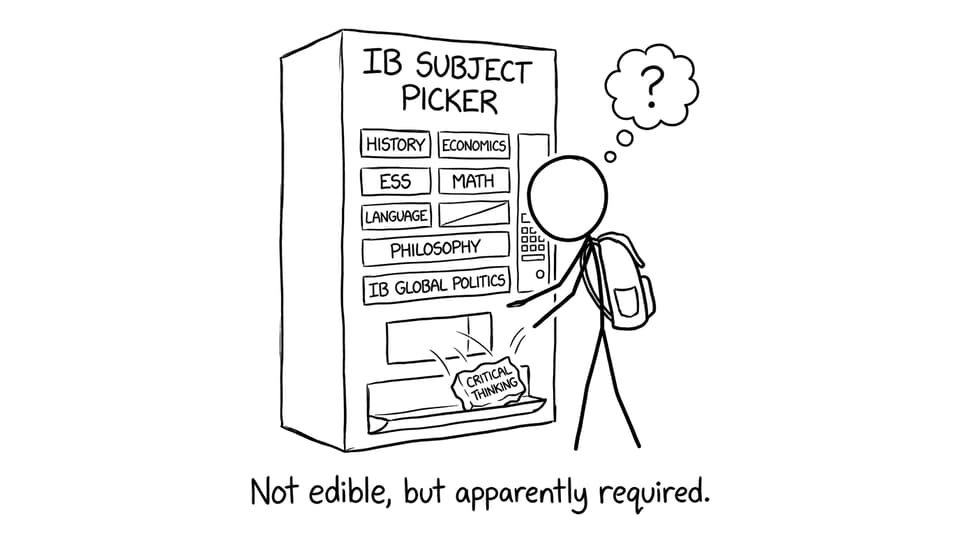
A balanced sample subject combination for Politics
A common, strong mix looks like this:
-
Language A HL
-
IB Global Politics HL
-
History HL
-
Economics SL
-
ESS SL
-
Math SL (AA or AI)
-
Language B SL
Adjust based on your strengths and school offerings. The best combination is the one you can sustain through deadlines, mocks, and final exams.
How RevisionDojo helps you turn subject choices into exam scores
Choosing IB Global Politics is a start. Scoring highly requires repetition, feedback, and structure.
RevisionDojo supports that with:
-
A targeted Questionbank for exam-style practice
-
High-clarity Study Notes and Flashcards for active recall
-
AI Chat for explaining concepts and building arguments safely
-
Grading tools (including rubrics) to self-check quality
-
Predicted Papers and Mock Exams for timed performance
-
A Coursework Library with exemplars
-
Tutors when you need human-level feedback
For the Politics-specific coursework side, see How to Ace Your IB Global Politics Internal Assessment Presentation and explore IB Global Politics Exemplars.
Final thought: choose subjects that build political thinking, not just a political label
A university Politics degree is less about having opinions and more about building arguments you can defend. IB Global Politics is the clearest way to train that muscle, especially when paired with writing-heavy subjects like Language A and History, plus at least one course that sharpens policy realism like Economics or ESS.
If you want to turn that subject choice into exam confidence, start with IB Global Politics Resources and use RevisionDojo’s Study Notes, Flashcards, Questionbank, AI Chat, Grading tools, Predicted Papers, and Mock Exams to keep improving week by week. That’s how IB Global Politics stops being a subject you take and becomes a skillset you own.