



Globalization feels invisible until it breaks.
One day your phone app updates and your news feed changes. A shipping delay raises prices. A platform bans an account and a protest spreads across borders in hours. In IB Global Politics, those moments are not random noise. They are clues that political power no longer sits neatly inside a single capital city.
Globalization reshapes global political power by moving influence into networks: supply chains, financial systems, institutions, data infrastructure, and cross-border ideas. States still matter, but they share the stage with companies, NGOs, and global governance rules that can quietly steer outcomes.
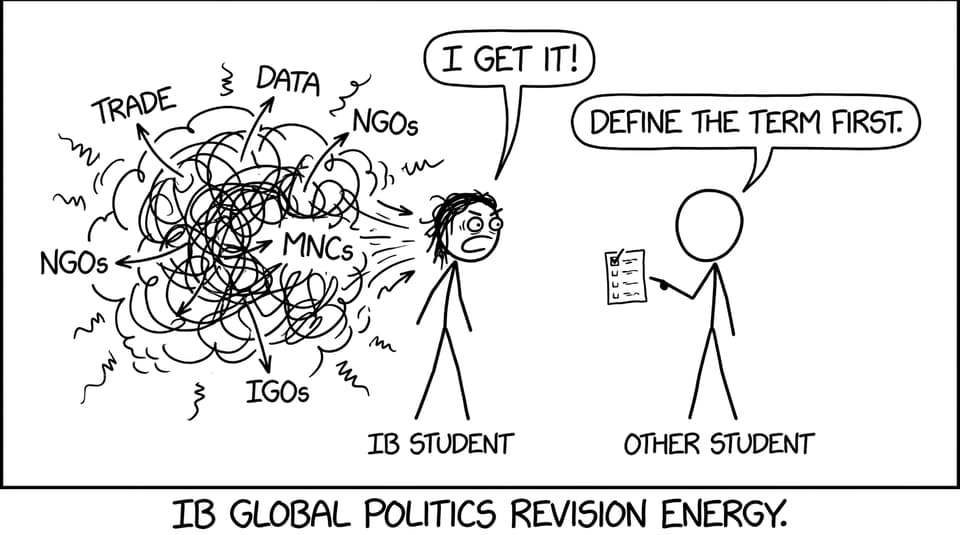
Quick exam checklist for IB Global Politics
Use this mini-checklist when you see a globalization + power question in IB Global Politics:
-
Define globalization clearly (interconnectedness across borders)
-
Identify who gains power (states, IGOs, MNCs, NGOs, platforms)
-
Explain how power works (hard, soft, structural, economic, ideational)
-
Show trade-offs (autonomy vs influence, efficiency vs vulnerability)
-
Add one sharp case study and evaluate winners/losers
For clean definitions, keep the IB Global Politics Glossary open while you revise.
Globalization and IB Global Politics: why state power feels “smaller”
In theory, sovereignty sounds absolute. In practice, globalization makes autonomy expensive.
A state can still pass laws, control borders, and build armies. But it cannot easily control the flows that shape modern outcomes: investment, data, supply chains, and narratives. This is why globalization often reduces the dominance of unilateral decision-making. Even powerful governments bargain with markets, negotiate with institutions, and respond to public pressure accelerated by digital communication.
If you want a syllabus-aligned anchor for this, revise the concept of power itself in Power (Understanding Power and Global Politics).
IB Global Politics and non-state actors: who gains power through globalization?
Globalization does not just weaken old power. It creates new power-holders.
Multinational corporations can influence development paths, tax policy, labour standards, and investment decisions simply by choosing where to build, hire, or exit. NGOs and transnational advocacy networks can shift agendas, expose abuses, and pressure governments through legitimacy and media reach. Platforms and media ecosystems can shape what populations believe is urgent or true.
To revise these actors efficiently, use Notes on Private Actors and Private Companies and pair it with a focused example like How Do Multinational Corporations Affect Development?.
In IB Global Politics, the high-mark move is to explain legitimacy: why people accept influence from an actor that has no territory. Practise that skill using the Legitimacy in Global Politics Questionbank.
Network and structural power: globalization’s quiet reshaping of control
Some of the most important power today is structural: embedded in systems that feel “normal.”
Trade rules, finance standards, and institutional procedures can constrain what governments can realistically do, even without direct enforcement. Meanwhile, network power comes from controlling chokepoints: payment rails, shipping routes, data centers, or technical standards. Influence becomes indirect but persistent.
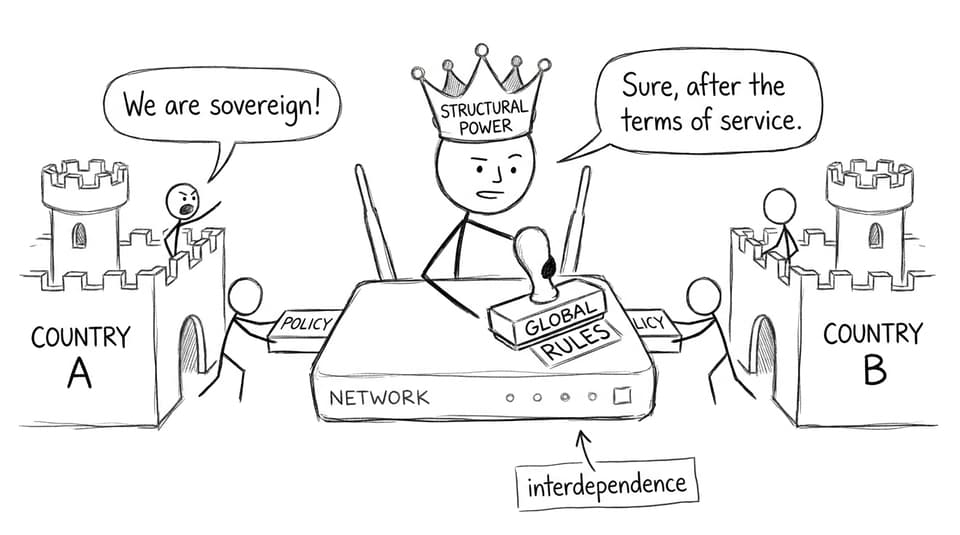
To connect this to course content, revise global governance structures in Notes on Intergovernmental Organizations, then broaden your essay framing with How Is Power Exercised in International Relations?.
Interdependence, vulnerability, and the new logic of power
Globalization increases interdependence. That means power is often about managing risk.
Supply chain disruption, financial contagion, pandemics, and cyber operations spread fast across borders. The same connections that create prosperity can create vulnerability. In IB Global Politics, you can evaluate this as a shift from direct control toward resilience, coordination, and strategic positioning within global systems.
For targeted practice, use the Interdependence Questionbank and build timed responses with IB Global Politics Predicted Papers.
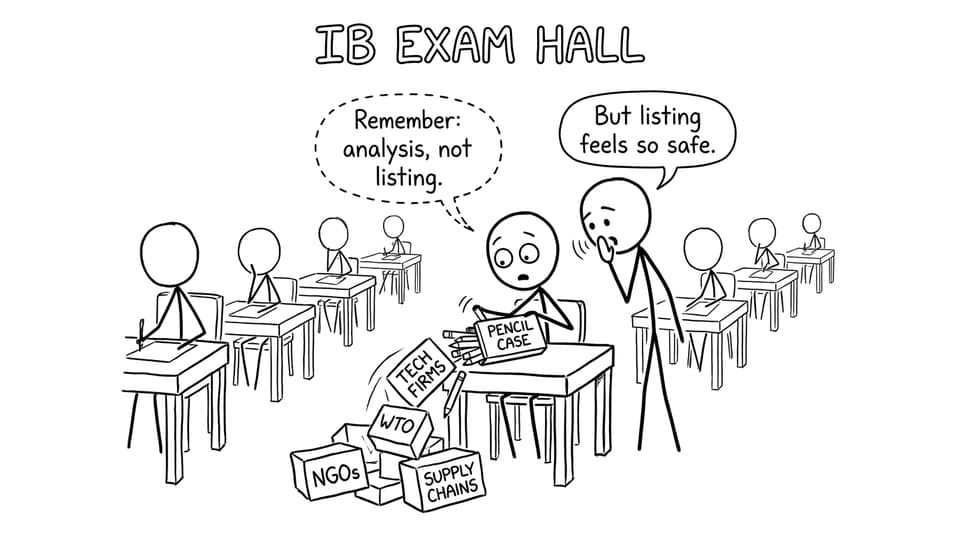
How to write it in the exam (without just listing)
A strong IB Global Politics paragraph has a simple rhythm:
-
Claim: globalization diffuses power beyond states
-
Mechanism: explain the pathway (markets, institutions, networks, legitimacy)
-
Evidence: one case study with one specific detail
-
Evaluation: who benefits, who loses, what changes over time
If you need a full map of what to revise next, start from Global Politics - IB Resources and use RevisionDojo’s Study Notes, Flashcards, AI Chat, and Questionbank to keep your examples sharp. When you draft essays, RevisionDojo’s grading tools and Mock Exams help you practice judgement, not just knowledge.
Conclusion: your IB Global Politics takeaway
Globalization does not delete power politics. It relocates them.
For IB Global Politics, the exam-ready insight is that power is increasingly exercised through interdependence, networks, institutions, and legitimacy as much as through force. If you want to turn that insight into marks, build a small toolkit: one definition, two mechanisms, one case study, and one evaluation.
Next step: revise the key concepts in the IB Global Politics Glossary, then practise timed responses using RevisionDojo’s Questionbank, Flashcards, AI Chat, and Predicted Papers to make your analysis feel inevitable on exam day.