A war breaks out. A sanction lands. A leader announces a “red line.”
But if you study IB Global Politics long enough, you notice something quieter: the biggest shifts in international relations often happen without a single dramatic headline. They happen when rules get written, when agendas get set, and when one idea becomes “common sense” while another becomes “unthinkable.”
This guide breaks down how power is exercised in international relations in a way you can actually use in Paper 1, Paper 2, or HL extensions. We’ll keep the concepts tight, connect them to mechanisms, and end with the kind of exam-ready checklist that helps you write faster and score higher.
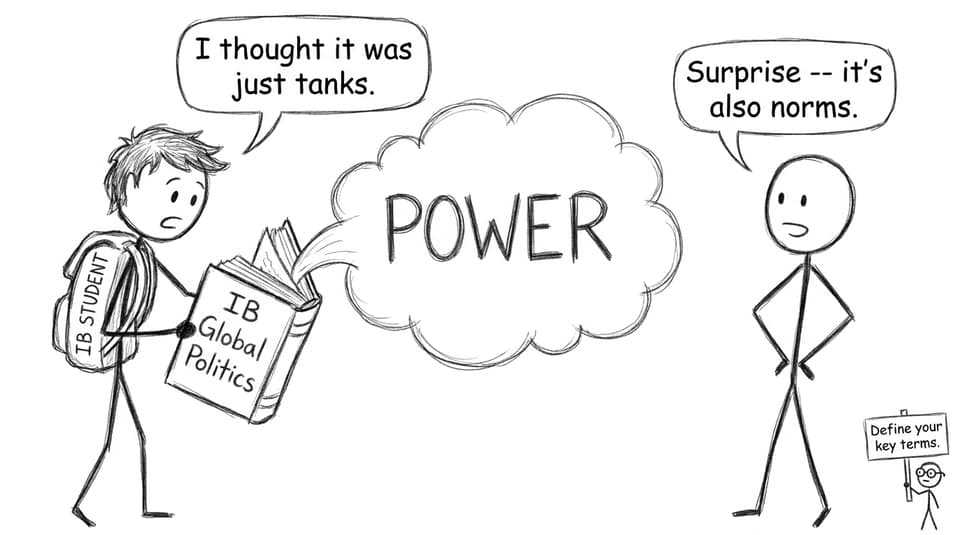
Comic: Power cloud escapes textbook
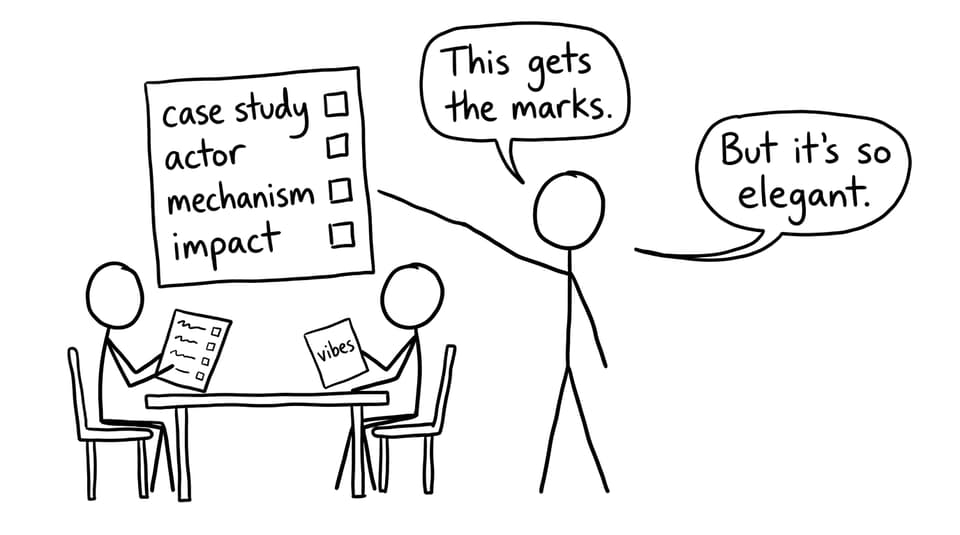
The IB Global Politics exam checklist for “power”
When a question asks how power is exercised, you’re rarely being asked to list categories. You’re being asked to explain mechanisms.
Use this quick checklist (and build paragraphs from it):
Actor: state, IO, NGO, MNC, leader, movement
Form of power: coercive, economic, diplomatic, ideational, structural
Military power: coercion, deterrence, and signalling
The most visible way to exercise power in international relations is military force, but IB examiners want more precision than “strong army.”
Military power is exercised through:
Coercion: using or threatening force to change behaviour
Deterrence: preventing action by making the costs look unacceptable
Signalling: military exercises, deployments, alliances, or doctrine announcements that shape perceptions
In IB Global Politics, the key move is evaluation: military tools can be immediate, but they are risky, expensive, and often politically costly. They can also generate blowback by undermining legitimacy or escalating insecurity.
RevisionDojo’s Power topic page is useful here because it pushes you beyond “hard power” labels and into types, definitions, and exam-style practice.
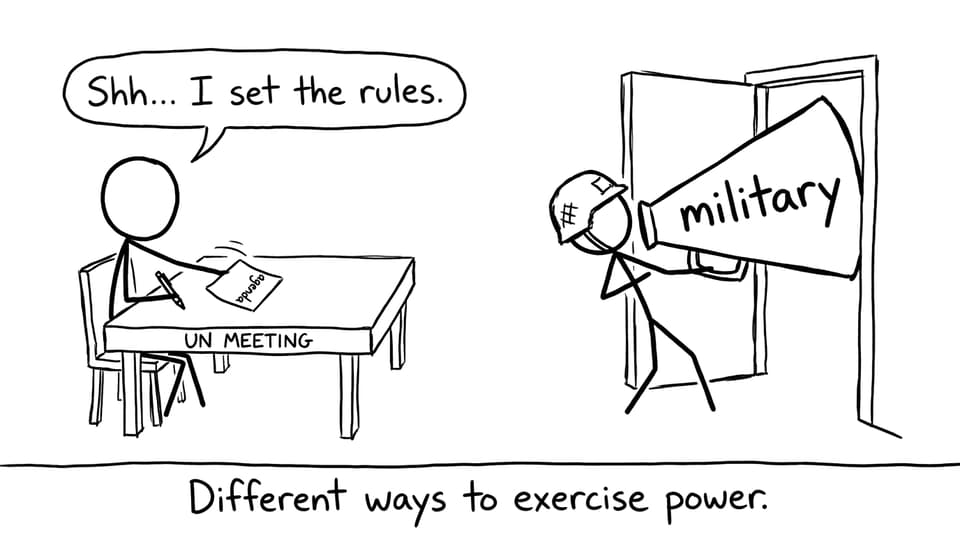
Comic: Agenda sticky note vs megaphone
Economic power: incentives, sanctions, and interdependence leverage
Economic power is often more politically “usable” than military force because it can be scaled and disguised as policy.
States and other actors exercise economic power through:
Sanctions and restrictions: limiting access to markets, finance, or technology
Trade deals and conditionality: access in exchange for behaviour change
Aid and investment: rewarding alignment or stabilising partners
Resource control: leverage through energy, food, or critical supply chains
A strong IB Global Politics answer adds nuance: economic tools can pressure elites, but they can also harm civilians, encourage black markets, or push the target toward alternative partners. Interdependence can be a source of mutual gain, or a vulnerability that powerful actors exploit.
To connect economic power to broader course concepts, pair it with interdependence and legitimacy from the IB Global Politics Resources hub.
Diplomatic power: persuasion, coalition-building, and agenda control
Diplomacy is where power gets exercised through language, relationships, and timing.
Diplomatic power includes:
Negotiation and persuasion: shaping the “acceptable” range of outcomes
Coalition-building: creating voting blocs in institutions and forums
Recognition and isolation: signalling legitimacy or denying it
Agenda-setting: deciding what gets discussed, and what never reaches the table
In practice, diplomacy rewards credibility. A state that breaks promises may still have resources, but its diplomatic power erodes because others stop believing its commitments. That’s why in IB Global Politics, diplomacy often links naturally to legitimacy.
Control narratives through media, education, and public diplomacy
Frame issues so some solutions look moral, inevitable, or modern
This is where IB Global Politics becomes quietly philosophical: if people internalise a norm, compliance can happen without force. But norms are contested, unevenly applied, and sometimes used selectively by powerful actors.
A useful bridge topic is human rights, because rights language can empower victims and constrain states, yet can also become a tool of reputation politics. See What Are Human Rights in Global Politics?.
Structural and institutional power: writing the rules of the game
Structural power is exercised when powerful actors design systems that feel neutral.
Examples include:
Creating international rules that reflect certain interests
Building institutions where some actors have more influence
Setting standards (financial, legal, technological) that others must follow
This form of power matters in IB Global Politics because it can produce long-term advantage without constant intervention. The “game” itself does the work.
In international relations, power is not a medal you hang on a wall. It’s a set of actions you take, choices you frame, and rules you quietly build so the world leans your way.
If you want to revise IB Global Politics with that mindset, RevisionDojo is built for it: practise mechanisms in the Questionbank, lock in definitions with Flashcards, tighten arguments with AI Chat and Grading tools, and pressure-test your timing with Predicted Papers and Mock Exams. When your notes, practice, and feedback loop are all in one place, “power” stops being a vague word and becomes something you can explain, evaluate, and score with.