



If you have ever held a phone that was designed in one country, assembled in another, and sold everywhere, you have already met one of the most powerful forces in IB Global Politics: the multinational corporation.
MNCs do not run elections or command armies. But their choices about investment, supply chains, and taxes can quietly decide which communities get jobs, which governments can fund schools, and which environments absorb the costs. In IB Global Politics, that makes them a high-impact non-state actor in debates about development.
What you need to say in IB Global Politics answers
Use this mini-checklist when a question asks how MNCs affect development in IB Global Politics:
-
Define MNCs as non-state actors with cross-border operations and major economic power
-
Explain benefits (investment, jobs, skills, technology, infrastructure)
-
Explain risks (exploitation, tax avoidance, environmental harm, policy capture)
-
Evaluate: outcomes depend on regulation, governance capacity, and accountability
For quick concept refreshers, the IB Global Politics Glossary is useful when you need precise definitions under time pressure.
How multinational corporations can support development
In many development narratives, MNCs enter with capital and scale. They can build factories, expand logistics networks, and create employment. When wages rise (even modestly), households often spend more on health, nutrition, and education. Governments may also gain revenue through corporate taxes and payroll-related contributions, which can strengthen state capacity.
Just as important for IB Global Politics evaluation: MNCs can transfer skills. Training local workers, introducing quality-control systems, and spreading new technologies can raise productivity and support long-term growth. This is the argument you will see in more market-friendly perspectives on development: integration into global markets can accelerate change.
To connect this to the course framework, it helps to revisit how actors and power fit together in What Is the Framework of Global Politics?.
How multinational corporations can undermine development
The same mechanisms that create growth can also concentrate benefits.
First, labour issues. When states compete for foreign investment, labour protections may be weak, enforcement may be inconsistent, and workers can end up with low wages, long hours, and limited collective bargaining power. In IB Global Politics, this becomes a rights and justice debate: are we measuring development by GDP figures, or by lived outcomes for communities?
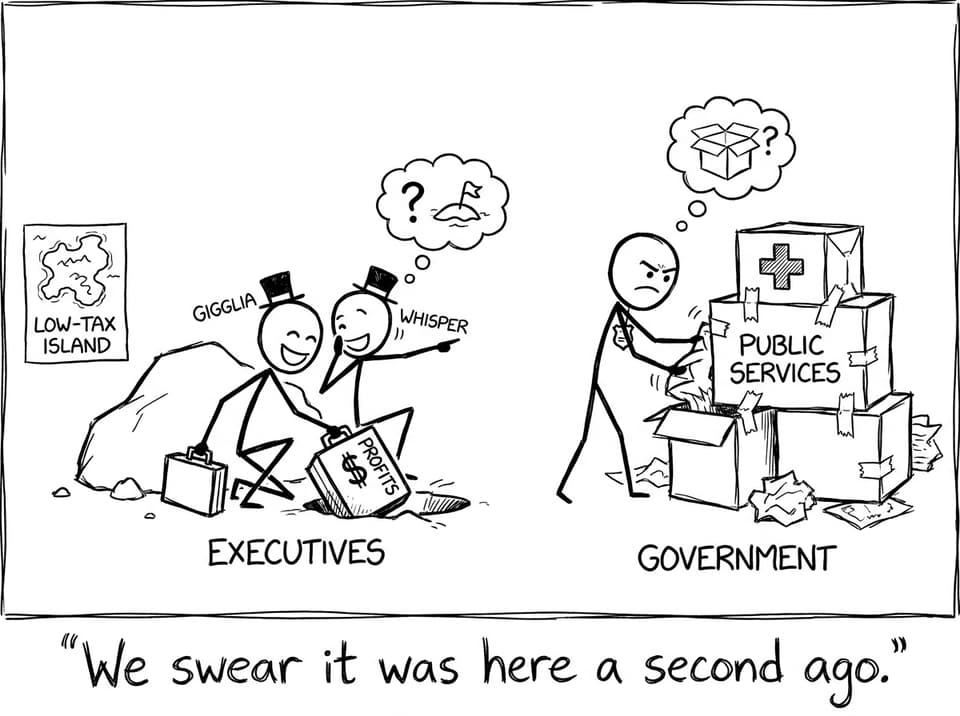
Second, tax avoidance. Some corporations shift profits through complex structures to reduce taxable income in host states. The development impact is blunt: less public revenue means fewer resources for hospitals, schools, and infrastructure. This is a classic IB Global Politics point about economic power constraining sovereignty.
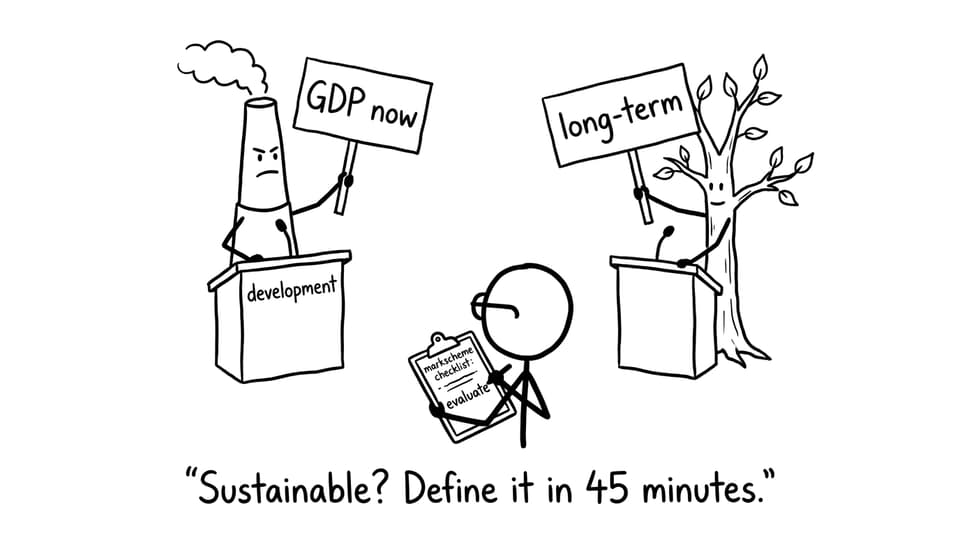
Third, environmental costs. Extractive industries, pollution-heavy manufacturing, and unsustainable resource use can boost short-term growth while damaging long-term wellbeing. In exam terms, link this to sustainability: development that destroys ecosystems can be development that does not last.
If you want broader context on how non-state actors shape outcomes beyond MNCs, see How Do Non-State Actors Influence Global Politics?.
The highest-mark move: evaluate power and regulation
In IB Global Politics, top responses avoid declaring MNCs “good” or “bad.” Instead, they explain conditions.
-
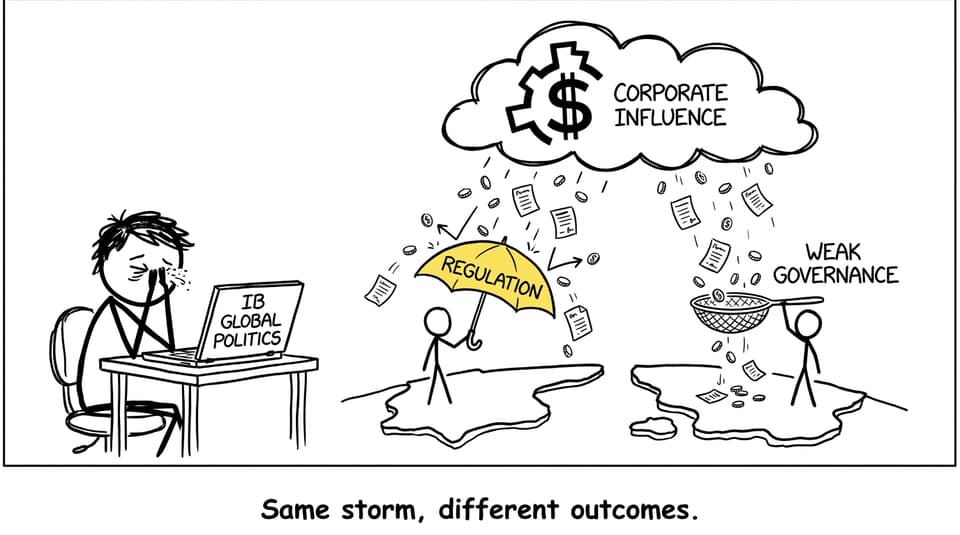
Strong governance can bargain for better wages, enforce environmental rules, and reduce corruption.
-
Weak governance can produce a race to the bottom, where investment comes at the cost of rights and sustainability.
-
International norms and public pressure (including CSR and consumer activism) can matter, but accountability is uneven.
When you practice this kind of judgement, the fastest way to sharpen it is timed questions with feedback. RevisionDojo’s Global Politics - IB Resources connects you to Study Notes, Flashcards, and AI Chat that helps you test counterarguments. Pair that with the Questionbank style practice in Sovereignty in Global Politics - IB Questionbank to keep your evaluation exam-ready.
Conclusion: turn this into an exam advantage
In IB Global Politics, multinational corporations are a perfect test of real-world complexity: they can widen opportunity and deepen inequality at the same time. Your job in exams is to trace mechanisms, then evaluate who has power, who benefits, and who pays.
If you want to turn this topic into reliable marks, build a short case-study bank and practise arguments using RevisionDojo’s Questionbank, Study Notes, Flashcards, AI Chat, and Grading tools. Development questions stop feeling unpredictable when you have a system, and RevisionDojo is built to be that system for IB Global Politics students.