

The night before the stress really shows, it usually looks ordinary.
A teenager is at the kitchen table. A laptop is open. A highlighter is uncapped. They’re “studying,” but nothing is sticking. You can feel the quiet panic underneath the silence.
In the IB, that moment is common. The workload is heavy, the stakes feel personal, and the calendar doesn’t care how tired you are. Burnout before exams isn’t laziness. It’s a nervous system that has been running at full speed for too long.
This guide is for parents and IB students who want a better conversation before exams -- one that lowers pressure, protects motivation, and leads to a realistic plan.
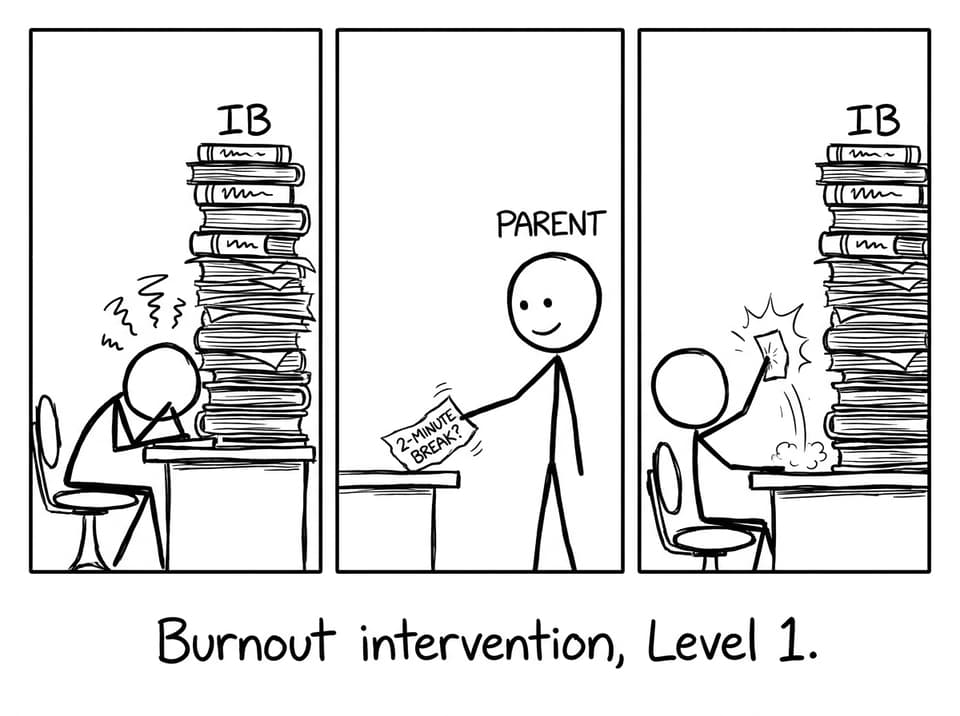
A quick IB burnout conversation checklist
If you only have five minutes, use this:
-
Start with what you’ve noticed, not what you assume.
-
Ask for a rating: “On a scale of 1--10, how fried do you feel?”
-
Validate the feeling, then shift to one small next step.
-
Replace “study longer” with “study smarter” (active recall, short sets).
-
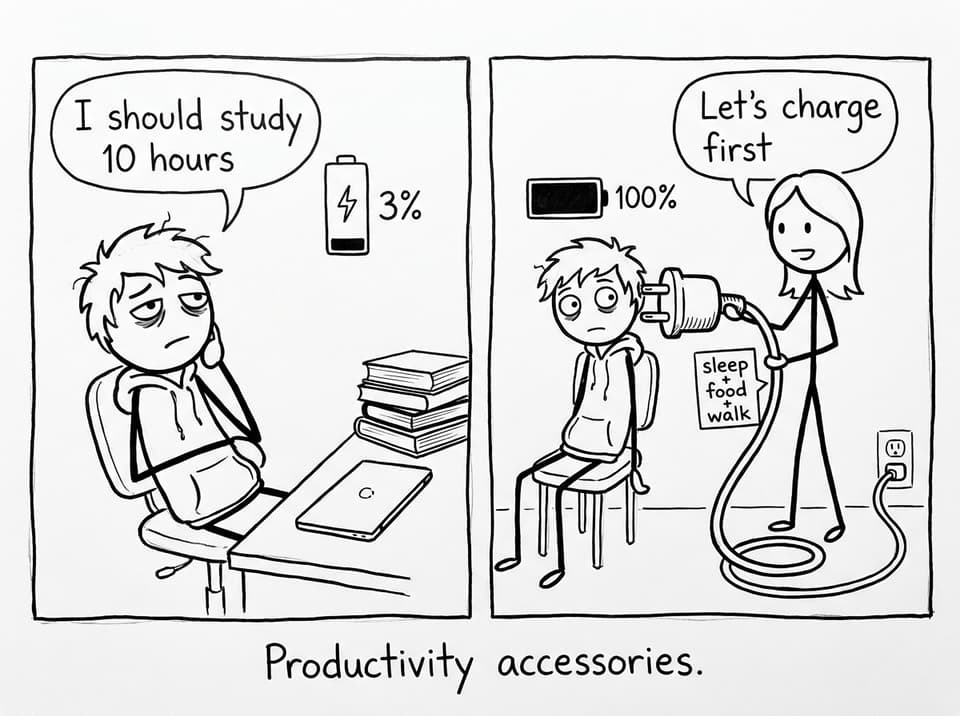
Agree on one recovery habit (sleep anchor, food, walk, phone break).
When you need a structured reset, you can also share these deeper guides: IB Burnout Is Real: How to Fix It Fast and IB Exam Fatigue: How to Survive the Final Stages.
What burnout looks like for IB students (and why it happens)
Burnout is usually a mix of exhaustion and hopelessness. In the IB, it often shows up as:
-
Studying more hours but remembering less
-
Irritability, shutting down, or sudden tears
-
Avoiding the subjects they used to handle fine
-
Feeling guilty when resting (even briefly)
-
Trouble concentrating even after sleep
A big reason burnout hits IB students is that revision can become “infinite.” There’s always more content, another essay plan, another topic to review. That’s why efficiency matters. Active recall beats passive rereading, and feedback beats guessing.
If you want a student-friendly explanation of the mechanism, this is worth reading together: IB Burnout Psychology: Why It Happens and How to Recover.
How to start the IB burnout talk without making it worse
Lead with observations, not accusations
Try: “I’ve noticed you’re studying a lot, but you don’t seem like yourself. Are you feeling burned out?”
That sentence matters because it doesn’t corner them into defending their effort -- something many IB students already feel they’re failing at.
Listen like you’re collecting data
If they vent, don’t correct the details. Ask follow-ups:
-
“What part feels heaviest right now?”
-
“Is it the volume, the fear, or the uncertainty?”
-
“What would make tonight 10% easier?”
In the IB, feeling understood often returns more energy than another study tip.
Normalize the experience, then offer a tiny experiment
Normalize: “A lot of IB students hit this wall.”
Experiment: “Let’s try one 45-minute block: notes for 10, questions for 25, review for 10.”
RevisionDojo is built for that kind of loop: Study Notes for clarity, Flashcards for retention, and the Questionbank for exam-style practice with feedback.
How to reset study routines when IB burnout is close to exams
Burnout recovery isn’t a motivational speech. It’s a redesign.
Swap endless revision for high-signal practice
Instead of “revise Biology all day,” do:
-
10 minutes: targeted Study Notes
-
25 minutes: Questionbank set (one subtopic)
-
10 minutes: mistake review and “error rules”
If your teen needs proof that shorter can be better, share: IB: I Study All Day but Remember Nothing.
Use flashcards to make progress on low-energy days
Burnout days need tasks that are small but real. A 7-minute flashcard session is often doable.
RevisionDojo’s IB Flashcards with Spaced Repetition (SRS) help IB students keep key definitions, processes, and formulas alive without long sessions.
Add support without taking control
Parents can reduce load in practical ways:
-
Protect a quiet window (and guard it from interruptions)
-
Provide food and water within reach
-
Offer a “planning buddy” role: you hold the timer, they choose the task
When students need extra structure, RevisionDojo also offers AI Chat, Grading tools, Mock Exams, Predicted Papers, a Coursework Library, and Tutors -- not as pressure, but as scaffolding when the brain is tired.
What parents should avoid during IB exam burnout
-
Minimizing: “You’ll be fine” can feel like being unseen.
-
Escalating: adding consequences or comparisons fuels panic.
-
Overplanning: taking the schedule away removes their sense of control.
-
Chasing perfection: in the IB, “good enough, consistently” often beats “perfect, occasionally.”
If math is a major trigger, this targeted resource can help: How to Avoid Burnout During Math Exam Season.
Closing: make the IB conversation about energy, not hours
The most helpful burnout conversations don’t sound dramatic. They sound specific and calm: “What’s one change that makes tonight survivable?”
In the IB, exams reward clear thinking, not heroic suffering. If you want a practical way to shift from pressure to progress, build a repeatable routine with RevisionDojo: use the Questionbank for measurable practice, Study Notes for fast clarity, Flashcards for daily recall, and Mock Exams plus Predicted Papers to rehearse exam pressure in a controlled way. When the plan is smaller, the mind gets quieter -- and that’s often when students start moving again.