
IB burnout is real (and it usually starts quietly)
The first sign of IB burnout rarely looks dramatic.
It looks like rereading the same paragraph three times and absorbing none of it. It looks like sitting down to revise, opening a tab, and feeling your chest tighten as if the tab itself weighs something. It looks like telling yourself you'll "start after this break," then realizing the break has become your whole evening.
In the IB, you don't just study. You carry. Six subjects, internal assessments, deadlines, expectations, comparisons. And at some point, your brain does the most reasonable thing it can do when it's overloaded: it protects itself by refusing to engage.
The hopeful part is this: IB burnout is often fixable faster than you think, but only if you stop treating it like a motivation problem. Burnout is usually a systems problem first. Your workload may still be heavy, but your loop is broken.
This guide gives you a fast reset you can do in 24-72 hours, plus a sustainable plan you can keep running until exams.
The fast IB burnout fix checklist (save this)
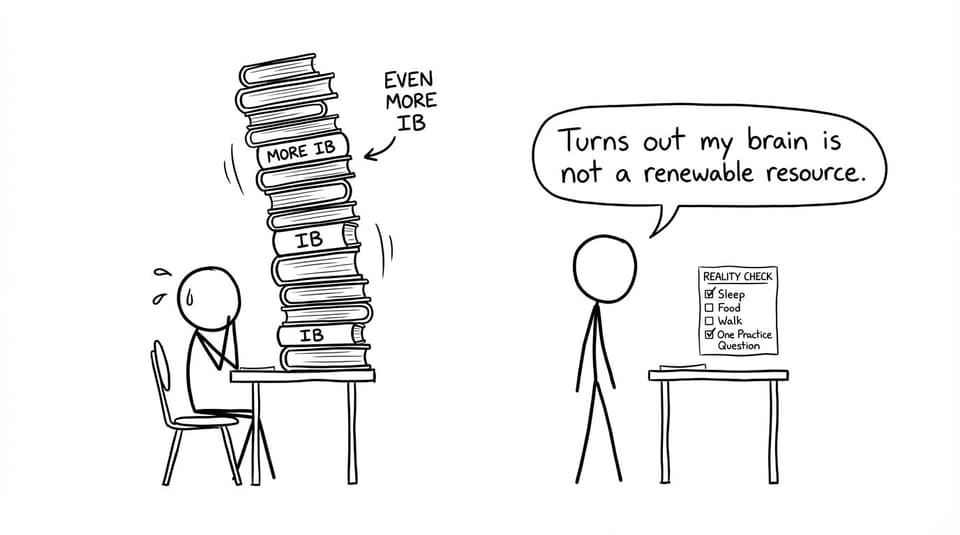
If you can't think clearly right now, don't plan. Execute.
Use this IB burnout reset checklist for the next 3 days:
- Sleep anchor: fixed wake time, and a hard stop 30 minutes before bed.
- Minimum viable revision: 7-10 minutes of recall + 10-25 minutes of questions.
- One paper focus: pick one subject and one paper skill (not "revise Biology").
- Mistake log: 3 bullets only (pattern, fix, example).
- One real break: food + water + 10 minutes outside.
- Reduce friction: one tab rule (one platform, one task).
If you want a structured, exam-focused system that keeps this loop simple, keep How to Study for IB Exams: Step-by-Step Guide | RevisionDojo open as your "map."
Why IB burnout happens (so you stop blaming yourself)
Burnout is effort without believable feedback
A lot of IB students work hard and still feel behind because they can't see progress. Notes look neat. Hours look impressive. But without feedback, your brain doesn't trust the effort.
That's why practice-first study can feel emotionally stabilizing. A set of questions, a score, and a mistake pattern is proof. Proof calms the nervous system.
RevisionDojo was built around that proof loop: Study Notes for clarity, Flashcards for daily recall, and a Questionbank that turns effort into measurable feedback.
To see how that ecosystem fits together, read RevisionDojo App: The Smarter Way to Prep for IB Exams.
Burnout is also decision fatigue
Another hidden IB problem: every session begins with 20 micro-decisions.
What topic? Which resource? Which questions? How long? Should I do IA work instead? Do I even remember this?
When decisions stack up, your brain starts treating revision like danger, not learning. That's when procrastination becomes automatic.
A simple fix is to reduce choices. One workflow. One loop. One place.
The 24-hour reset: what to do today (even if you're exhausted)
This is the fastest way to feel functional again in IB without "taking a week off" you don't have.
Do one tiny set to rebuild trust
Pick one subject. Then do:
- 10 minutes: review a small slice of notes (one subheading only)
- 15 minutes: do a short question set on that exact slice
- 10 minutes: review mistakes and write one "error rule"
That's it.
The point is not coverage. The point is to show your brain: We act, we get feedback, we adjust.
If you need high-quality practice immediately, start with Questionbank | RevisionDojo.
Use "unstuck help" instead of spiraling
Burnout often includes shame: "I should already know this." Shame makes you hide from the confusion, and hiding makes you slower.
Use an "unstuck button" instead. Ask one precise question, then return to practice.
That's the best use of AI Chat: not replacing your thinking, but shortening the time you spend stuck.
The 72-hour reboot: the IB routine that restores energy fast
If your IB burnout is real, your goal is sustainable output. Not hero sessions.
Use this three-part routine for the next week.
Daily: recall that's small enough to do on bad days
- 7-12 minutes: Flashcards (definitions, processes, formulas, quotes)
Short recall sessions are how you stop "forgetting spirals" that make IB feel endless.
Use Flashcards | RevisionDojo for spaced repetition that stays light.
Three times a week: the "learn then apply" block
Do 45-75 minutes, one topic only:
- 10-15 minutes: Study Notes
- 25-40 minutes: Questionbank practice on that same subtopic
- 10-15 minutes: review mistakes and write 3 error rules
This is how you rebuild confidence in IB: clarity, then proof.
Once a week: pressure training (small, controlled)
Burnout gets worse when the exam stays mythical. Timed exposure turns fear into something measurable.
Start with:
- 10-20 minutes timed section
- then 25-35 minutes
- then longer sections
When you're ready, use Mock Exams and Predicted Papers as controlled simulations. Keep the goal simple: practice calm under time.
A practical reference: How to Run Timed IB Mock Exams in RevisionDojo (Exam Mode + Test Builder).
Fix IB burnout by changing what "a good day" means
Most students burn out because they define a good IB day as "I studied for hours."
That's a fragile definition. Because the day you feel tired, you can't win.
Replace it with a sturdier definition: "I did the loop."
A good day becomes:
- flashcards (small)
- one question set (measurable)
- one mistake rule (compounding)
If you want a deeper mindset-and-systems take, read IB Stress: How to Stay Motivated Without Burning Out and How to Stay Sane During IB Exam Season.
The "stop making it heavier" rules (small changes, big relief)
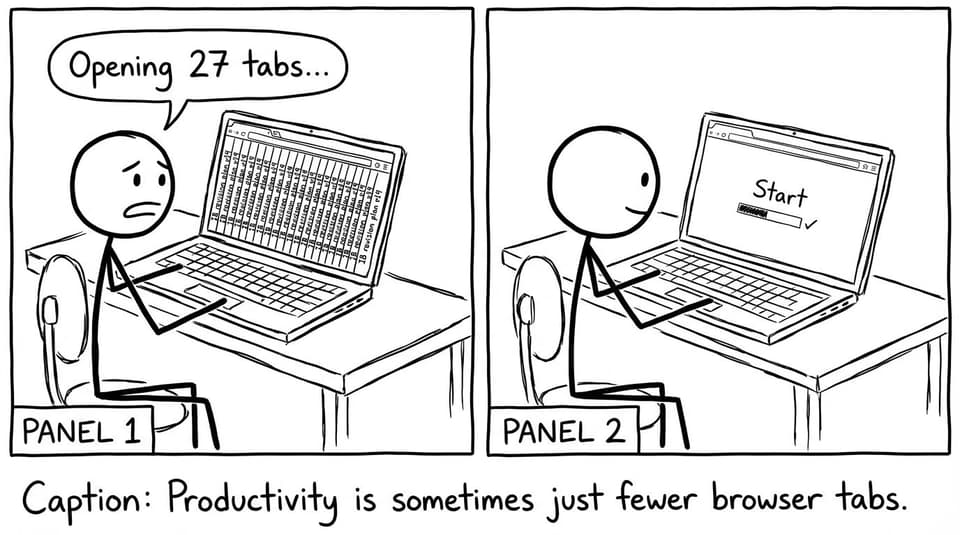
Use the one-tab rule
Every extra tab is an extra decision. Extra decisions become fatigue. Fatigue becomes avoidance.
In IB season, your tech setup should reduce choices, not multiply them.
If you struggle with distraction and tab-switching, read IB Tech Boundaries: Use Technology Without Losing Control.
Separate coursework windows from exam windows
A hidden IB burnout trigger is overlap: you revise while feeling guilty about coursework, then do coursework while feeling guilty about revision.
Set 2-3 fixed coursework windows per week. Outside them, you're in exam training.
When coursework uncertainty is the stress source, fast feedback helps. RevisionDojo's Grading tools and Coursework Library exist to turn "Is this good?" into "Here are the next steps," and Tutors are there when you need a human to triage priorities.
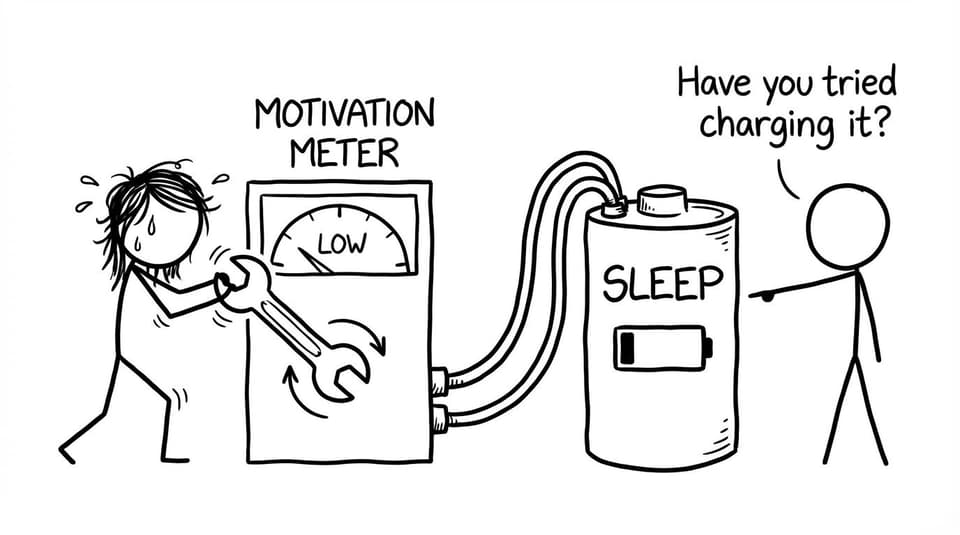
Don't negotiate with sleep
In the IB, sleep isn't a luxury. It's consolidation.
If you can only fix two things this week:
- consistent wake time
- screens off 30 minutes before bed
It's not glamorous, but it's one of the fastest burnout fixes available.
Use RevisionDojo as a calm IB control panel (not a resource buffet)
When students feel behind in IB, they collect resources. More videos, more notes, more documents.
But burnout doesn't come from a lack of information. It comes from too many inputs and too little feedback.
A calmer way to use RevisionDojo is to assign each tool a single job:
- Study Notes: quick clarity, no rewriting marathons
- Flashcards: daily recall that stays small
- Questionbank: topic-specific practice that produces proof
- AI Chat: unblock confusion quickly, then return to questions
- Mock Exams: stamina and pacing under time
- Predicted Papers: exam-style realism and readiness
- Grading tools: rubric-aligned feedback for coursework
- Coursework Library: examples to stop guessing what "good" looks like
- Tutors: human strategy when you need triage
If you need a simple starting point with core tools, use Notes + Flashcards + Question Bank (Free) - RevisionDojo.
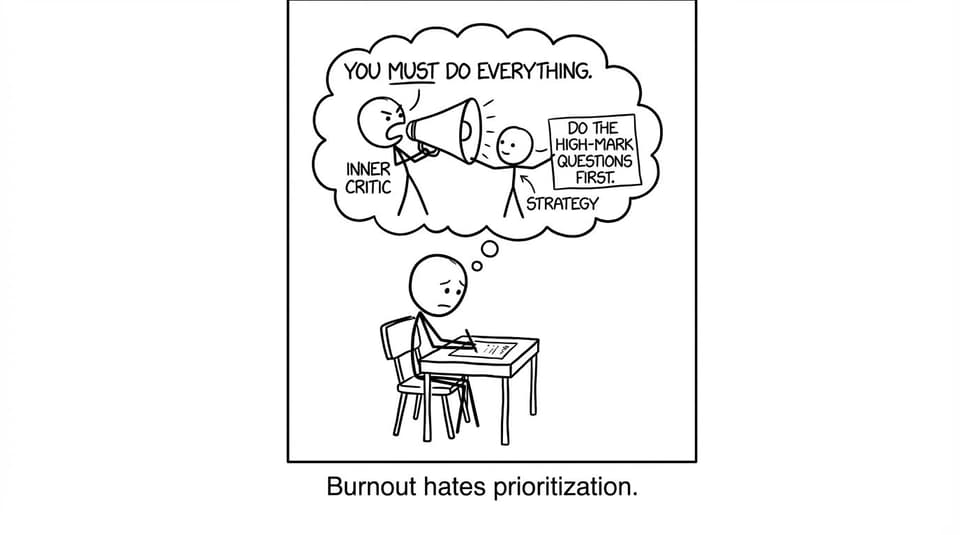
Closing: fix IB burnout fast by making progress smaller
The most dangerous part of IB burnout is not the tiredness. It's the story it tells you: that you're falling behind, that you're not built for this, that you need a perfect plan before you begin.
But the IB isn't won by perfect plans. It's won by repeatable loops.
If you want the fastest path back to energy and confidence, shrink the unit of work until you can do it today. Then repeat it tomorrow. Use Study Notes for clarity, Flashcards for memory, the Questionbank for proof, AI Chat and Grading tools for faster correction, and weekly Mock Exams plus Predicted Papers to build calm under pressure. Add the Coursework Library when uncertainty creeps in, and use Tutors when you need a human voice to simplify the knot.
Your job is not to become someone who never gets tired.
Your job is to build a IB system that still works when you are.